
 Voorvertoning
 Verstuur
 Delen
Delen
 Details bekijken

 Download
 Vergelijkbare items
 Röntgenonderzoek
 Diavoorstelling
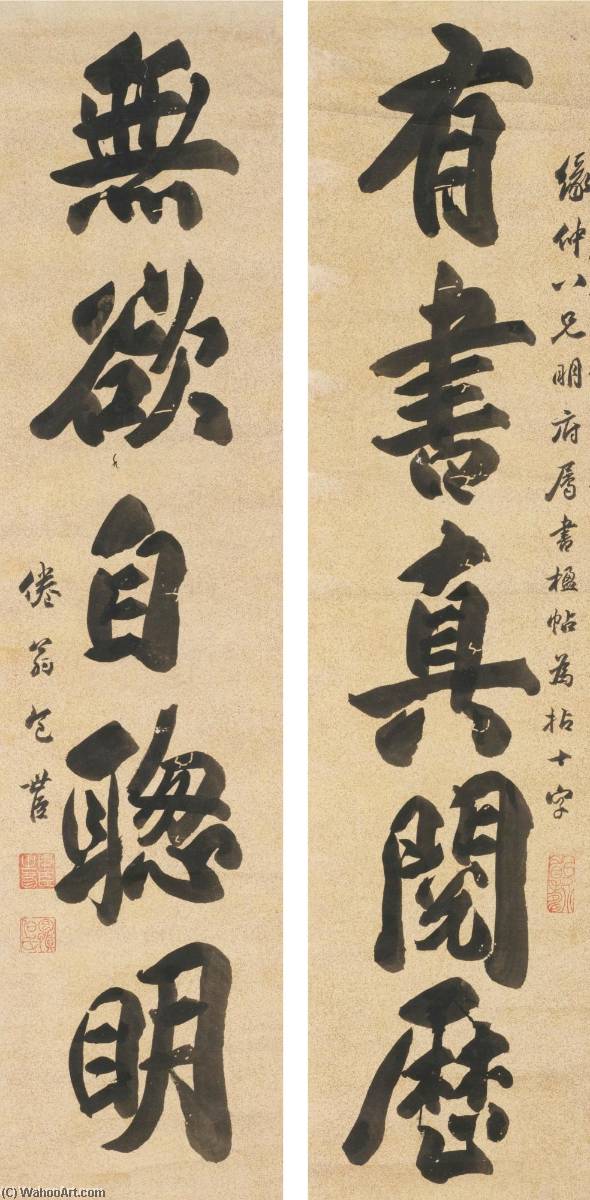
COUPLET IN RUNNING SCRIPT
 156.0 x 39.0 cm
 Lees meer
Giclée / Kunstafdrukken
Giclée- of canvasafdruk van museumkwaliteit met een snelle productie en flexibele afwerkingsmogelijkheden. ( Bestel handgeschilderde reproductie Koop afbeelding)




































Kies uit onze vooraf ingestelde maten die overeenkomen met de originele verhoudingen van het kunstwerk.

U kunt uw eigen afmetingen opgeven om in een specifieke lijst of ruimte te passen. Als de door u gekozen maat niet overeenkomt met de proporties van het originele kunstwerk, zullen wij de afbeelding bijsnijden of uitbreiden met een gespiegelde of effen rand. Een digitaal mockup wordt ter goedkeuring naar u verzonden voordat de productie begint.
Houd er rekening mee dat de preview op het scherm de werkelijke bijsneding of uitbreiding niet weergeeft. Alleen de mockup toont de uiteindelijke compositie nauwkeurig.
Hoewel aangepaste maten beschikbaar zijn, raden wij aan een afmeting uit de vooraf bepaalde lijst te kiezen om de originele proporties te behouden.
Wereldwijde levering () binnen 2 weken in plaats van de standaard 4/5 weken. (30 augustus)

Gratis wereldwijde expressverzending

Hoogwaardig linnen canvas

Volledige verzendverzekering

Garantie op terugbetaling van invoerrechten

Garantie op exacte kleurweergave

Retourbeleid van 60 dagen (alleen bij defecten)

100% Geld-terug-garantie

Korting bij meerdere afnames
 De optie voor glas is alleen beschikbaar bij een formaat kleiner dan 110 cm.

COUPLET IN RUNNING SCRIPT
Giclée / Kunstafdrukken
Afmetingen reproductie
-


Eindtotaal
$ 81
Biografie van de kunstenaar
The Scholar of Resilience: The Life and Legacy of Bao Shichen
In the turbulent landscape of late Qing Dynasty China, few figures embodied the spirit of intellectual perseverance as profoundly as Bao Shichen (1775–1855). Born into a modest Confucian family in Jiangsu Province, Bao’s life was a testament to the struggle between personal ambition and the rigid structures of imperial society. Though he faced the heartbreak of repeated failures within the grueling imperial examination system—thirteen times denied the prestigious jinshi degree—this very hardship forged a scholar whose vision extended far beyond the halls of government bureaucracy. His early years, shaped by the discipline of his father, a low-ranking officer in the Green Standard Army, instilled in him a unique blend of martial stoicism and scholarly depth, creating a man who was as much a reformer of statecraft as he was a master of the brush.
Bao’s intellectual journey was deeply rooted in the pragmatic traditions of statecraft scholarship. Influenced by the transformative teachings of thinkers like Hong Liangji, Bao sought to address the pressing socio-political crises of his era, ranging from military reform to agricultural improvement. His writings were not merely academic exercises but urgent calls for national rejuvenation. This commitment to real-world utility mirrored his approach to art; just as he believed in reforming the political fabric of China, he sought to revitalize the aesthetic traditions of Chinese calligraphy. He became a leading voice in advocating for the bold, vigorous styles found in the ancient stone monuments of the Six Dynasties period, famously articulating these ideals in his influential treatise, Paired Oars for the Boat of Art.
A Mastery of Line and Spirit
To observe a work by Bao Shichen is to witness a profound dialogue between ink and intention. While he was a versatile creator whose output included landscapes, birds, and flowers, his true soul resided in the rhythmic dance of calligraphy. He moved with mastery through various scripts, most notably the running script (xingshu), where he achieved a balance of elegance and structural precision. His technique was heavily informed by the Wei style, characterized by its strength and architectural integrity, yet he possessed the ability to infuse his characters with an informal, fluid grace reminiscent of classical brush-written models (tie).
His artistic achievements often blended text and image into a singular, emotive experience. In works such as Two Riders, the calligraphy does not merely sit upon the silk; it dominates the composition, serving as both a visual element and a philosophical commentary. Through his inscriptions, Bao explored themes of ambition, contentment, and the transient nature of worldly pursuits. His ability to use simple ink lines and washes to evoke complex emotional landscapes allowed him to communicate the interconnectedness of nature and human morality—a core tenet of his Confucian worldview.
Historical Significance and Enduring Influence
The historical weight of Bao Shichen’s life is felt in both his political advocacy and his aesthetic contributions. As a scholar-official who rose through merit and connection despite the obstacles of the examination system, he represented a bridge between the traditional literati class and the emerging need for practical reform. His death in 1855, while fleeing the chaos of the Taiping Rebellion, marked the end of a life lived in constant pursuit of stability and excellence amidst profound national upheaval.
Bao’s legacy survives through several vital channels:
- Calligraphic Innovation: By championing the bei style of stone inscriptions, he helped shift the trajectory of Chinese calligraphy, inspiring subsequent generations to value strength and antiquity over mere decorative smoothness.
- Intellectual Reform: His contributions to the discourse on military, legal, and economic reforms provided a blueprint for the pragmatic scholarship that sought to navigate China's transition into the modern era.
- Preservation of Tradition: Through the diligent work of his son, Bao Cheng, who published many of his father’s works, Bao Shichen’s philosophical and artistic insights were preserved for posterity, ensuring his voice remained a part of the Chinese cultural canon.
Today, the works of Bao Shichen stand as more than mere artifacts of the Qing Dynasty; they are windows into a mind that refused to be defeated by circumstance. His art remains a powerful reminder that true mastery is found in the intersection of disciplined technique and an unyielding commitment to one's principles.

bao shichen
1775 - 1855
Belangrijkste feiten
- Artistic Movement Or Style: Jinshi Scholarship
- Artists Or Movements Influenced By This Artist: ['Wei Style']
- Artists Who Influenced This Artist: ['Hong Liangji']
- Date Of Death: 1855
- Full Name: Bao Shichen
- Nationality: Chinese
- Notable Artworks:
- Two Riders
- Calligraphy Couplet in Xingshu
- Preface of the Orchid Pavilion
- Place Of Birth: China

