German Expressionism
Milliner (August Macke)
August Macke (1887–1914) maakte Milliner. Het behoort tot de German Expressionism-stroming. Het is gemaakt van Oil On Canvas. Het is te vinden in Museum Folkwang in Essen, Duitsland.
- Oil On Canvas
- Museum Folkwang, Essen

 Voorvertoning

 Met de hand geschilderd olieverfwerk
 Verstuur
 Delen
 Informatieblad


 Download
 Vergelijkbare items
 Röntgenonderzoek
 Diavoorstelling
 Vraag & antwoord

 Statistieken
Milliner, in het kort
- Titel
- Milliner
- Kunstenaar
- August Macke (1887–1914)
- Geboren in [jaar]
- Meschede, Duitsland
- Medium
- Oil On Canvas
- Te zien in
- Museum Folkwang, Essen, Duitsland
- Beweging
- German Expressionism
- Onderwerp
- street scene, woman portrait, hat shop display, umbrella, birds, thun lake
Wat stelt Milliner voor?
A Moment Captured on the Thuner Lake Promenade
August Macke’s Milliner transports us to a sun-drenched summer afternoon in Hilterfingen, a place that held such profound resonance for the artist during his final years. This painting is more than just a depiction of a street scene; it is an immersion into a specific, luminous moment—a pause in the vibrant flow of daily life along the Thuner Lake promenade. The composition centers on a woman, elegantly poised with her parasol held nearby, seemingly absorbed by the colorful spectacle of the hat shop display before her. Macke masterfully captures the interplay between human stillness and the riotous energy suggested by the merchandise and the scattered birds that populate the scene.
The Geometry of Light and Commerce
What immediately draws the eye is the fascinating tension between structure and spontaneity. The façade of the hat shop, along with the surrounding showcase walls, are rendered as strictly structured geometric planes. These architectural elements provide a stable, almost crystalline framework against which the softer, more organic forms—the woman’s drapery, the curve of the umbrella, the flutter of wings—are set in delightful contrast. This structural underpinning hints at Macke's fascination with modern urban life and the way commerce organizes our visual experience. One can almost feel the crisp geometry of the painted glass and polished wood.
Echoes of Impressionism and Modernity
While rooted in the vibrant palette associated with German Expressionism, this work carries a distinct echo of Impressionist light play, perhaps even nodding toward Delaunay’s explorations of simultaneous windows. However, Macke tempers that potential dynamism with a calmer, almost meditative quality. The colors—the striking red of the woman's coat against the pastel tones of the shop display—are applied with a luminous touch, suggesting the way sunlight refracts off various surfaces. It is a study in controlled color theory, where every hue contributes to the overall atmospheric glow.
Symbolism and Emotional Resonance
The inclusion of the birds adds a layer of delicate symbolism. They are fleeting elements, embodying freedom and the ephemeral nature of beauty itself. Paired with the woman’s statue-like contemplation, they invite the viewer to ponder what holds our attention in the modern world—is it the dazzling display, the quiet moment of reflection, or the simple act of observing life unfold? Owning a reproduction of Milliner is not merely decorating a space; it is inviting a piece of that luminous, contemplative summer air into your home, transforming any room into a gallery overlooking a sunlit European promenade.
In welk museum bevindt Milliner zich?
Museum Folkwang
Essen, Duitsland
Oorsprong en geschiedenis van Museum Folkwang De geschiedenis van Museum Folkwang begint bij de samensmelting van twee uiteenlopende nalatenschappen. In 1902 stichtte Karl Ernst Osthaus het particuliere Folkwang Museum, een collectie die werd gedreven door een specifieke visie op moderne expressie. Hieraan voegde zich later het Essener Kunstmuseum, dat in 1906 was opgericht.

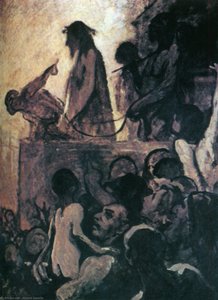

Hoogwaardige afbeeldingen van Milliner

Publiek domein: de kunstenaar is overleden in 1914.
Andere formaten, uitsneden en citatie →August Macke, Milliner, Museum Folkwang. Publiek domein
De kleuren zijn door een digitale expert afgestemd op het origineel en het bestand is zorgvuldig geretoucheerd, trouw aan de penseelstreken van de kunstenaar.
Koop het bestand in hoge resolutieVragen over Milliner, beantwoord
Waar kan ik het originele werk "Milliner" door August Macke bewonderen?
Het originele "Milliner" door August Macke wordt bewaard in Museum Folkwang, Essen, Duitsland. Een reproductie maakt het mogelijk om het werk thuis tentoon te stellen.
Met welk medium is "Milliner" door August Macke uitgevoerd?
"Milliner" is uitgevoerd in Oil On Canvas.
Wat stelt "Milliner" voor?
De onderwerpen van "Milliner" zijn street scene, woman portrait, hat shop display, umbrella, birds, thun lake, outdoor life.
Is "Milliner" vrij van auteursrecht?
Wat betreft het auteursrecht valt "Milliner" onder bevindt zich in het publiek domein - de auteursrechten zijn verlopen.
Wie is de kunstenaar achter "Milliner"?
De kunstenaar achter "Milliner" is August Macke. Het werk is gecatalogiseerd onder de naam van August Macke.
Bij welke kunststroming behoort "Milliner" door August Macke?
De kunststroming die verbonden is aan "Milliner" door August Macke is German Expressionism. Deze classificatie plaatst het werk binnen een context van verwante kunstenaars en kunstwerken.
Uit welke fase van de carrière van August Macke is "Milliner"?
"Milliner" vertegenwoordigt de Summer 1914 van August Macke.
Waarom heeft het kunstwerk "Milliner" deze auteursrechtelijke status?
"Milliner" door August Macke is bevindt zich in het publiek domein - de auteursrechten zijn verlopen. De auteursrechtelijke bescherming loopt vanaf het overlijden van de kunstenaar, dat plaatsvond in 1914.
Wordt "Milliner" door August Macke bewaard in het land van herkomst van de kunstenaar?
Ja - het kunstwerk wordt bewaard in het land van herkomst van de kunstenaar. Het geboorteland van August Macke is Duitsland, en het museum waar het origineel van "Milliner" zich bevindt, ligt in Duitsland.
Over de kunstenaar, August Macke
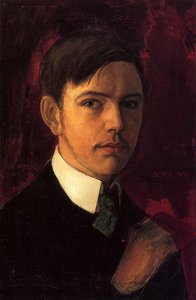
1887–1914, Duitsland
August Macke
Vroege jaren, familie en opleiding Het verhaal van August Macke begint in het Duitse stadje Meschede, waar hij op 3 januari 1887 werd geboren. Hij was de enige zoon van August Friedrich Hermann Macke, een aannemer en amateurkunstenaar, en Maria Florentine. Zijn jeugd werd gevormd door de wisselende fortuinen van het bedrijf van zijn vader, wat de familie naar Keulen en later naar Bonn bracht. Al als kleine jongen was de drang naar visuele expressie duidelijk voelbaar; hij bracht zijn vroege jaren door met het schetsen en ontwerpen van decors voor schooltoneelstukken, waarmee hij al een manier vond om zijn omgeving op papier te vertalen, lang voordat hij ooit een formele academie zou betreden.
Ook van August Macke
 Vrouw in een groene jas1913
 Bathing Girls with Town in Background1913
 De Hut1913
 Portrait of the Artist's Wife with Hat1909

Essays over Milliner
 Biedermeier vs. Romanticism: Understanding Two 19th-Century StylesMaster the nuances between Biedermeier and Romanticism through expert analysis. Discover the soul of 19th-century art today.
 Impressionism vs. Expressionism: Capturing Light and EmotionMaster the technical differences between Impressionism and Expressionism. Discover the art of light and emotion now.
 August Macke: Expressionist Visions of Harmony & Modern LifeExplore the vibrant Expressionist paintings of August Macke (1887-1914). Discover his key role in Der Blaue Reiter, Fauvist influences, and…