

 Voorvertoning
 Verstuur
 Delen
Delen
 Details bekijken

 Download
 Vergelijkbare items
 Röntgenonderzoek
 Diavoorstelling
 Statistieken
Self portrait
 Concrete Art
 36.0 x 46.0 cm
 MAGA - Museo Arte Gallarate
 Lees meer
Giclée / Kunstafdrukken
Giclée- of canvasafdruk van museumkwaliteit met een snelle productie en flexibele afwerkingsmogelijkheden. ( Bestel handgeschilderde reproductie Schakel over naar digitale afbeelding)




P118B $10

P118H $10

P118W $10

P438Z $10

P508JH $12

P508YH $12

P805H $10

P805Z $10

P919BZ $10

P919G $10

P919XJ $10

P959ZH $10

P968JZ $12

W106C $8

W218G $10

W218JH $8

W218Y $10

W307PJ $10

W316G $10

W316PJ $8

W316Y $10

W398PJ $8

W4111J $10

W500HY $15

W500JH $15

W692G $12

W849H $8

W940BG $15

W953PJ $8




Kies uit onze vooraf ingestelde maten die overeenkomen met de originele verhoudingen van het kunstwerk.

U kunt uw eigen afmetingen opgeven om in een specifieke lijst of ruimte te passen. Als de door u gekozen maat niet overeenkomt met de proporties van het originele kunstwerk, zullen wij de afbeelding bijsnijden of uitbreiden met een gespiegelde of effen rand. Een digitaal mockup wordt ter goedkeuring naar u verzonden voordat de productie begint.
Houd er rekening mee dat de preview op het scherm de werkelijke bijsneding of uitbreiding niet weergeeft. Alleen de mockup toont de uiteindelijke compositie nauwkeurig.
Hoewel aangepaste maten beschikbaar zijn, raden wij aan een afmeting uit de vooraf bepaalde lijst te kiezen om de originele proporties te behouden.
Wereldwijde levering () binnen 2 weken in plaats van de standaard 4/5 weken. (17 september)

Gratis wereldwijde expressverzending

Hoogwaardig linnen canvas

Volledige verzendverzekering

Garantie op terugbetaling van invoerrechten

Garantie op exacte kleurweergave

Retourbeleid van 100 dagen (alleen bij defecten)

100% Geld-terug-garantie

Korting bij meerdere afnames
 De optie voor glas is alleen beschikbaar bij een formaat kleiner dan 110 cm.

Self portrait
Giclée / Kunstafdrukken
Afmetingen reproductie
-


Eindtotaal
$ 81
Biografie van de kunstenaar
Atanasio Soldati: A Pioneer of Italian Abstraction
Born in Parma, Italy, in 1896, Atanasio Soldati’s life and artistic journey represent a pivotal moment in the development of abstract art not just within Italy, but across Europe. Initially trained as an architect – a discipline that instilled a deep appreciation for structure and form – Soldati’s path shifted dramatically in the early 1920s when he encountered the burgeoning world of Milanese modernism. This encounter proved transformative, leading him away from architectural precision towards the radical experimentation of abstraction.
Early influences were rooted in purist figurative painting, but a crucial turning point arrived with his association with the Futurist movement and later, the Concrete Art group. The influence of Fernand Léger, whom he met during his time in Milan, was particularly significant. Léger’s exploration of geometric forms and vibrant color palettes provided a foundational framework for Soldati's own evolving language. However, Soldati quickly moved beyond mere imitation, developing a distinctly personal style characterized by dynamic compositions, bold colors, and an underlying sense of drama – a departure from the purely formal concerns of early Concrete Art.
The Development of ‘Ambiguity’ and Beyond
Soldati's most celebrated work, “Ambiguity” (1934), exemplifies this evolution. This large-scale canvas is not simply an abstract composition; it’s a deeply emotive exploration of the human condition. The painting’s fragmented cityscape, rendered in stark contrasts of red and black, evokes a sense of urban alienation and psychological tension. The deliberate ambiguity of the forms – suggesting both recognizable shapes and amorphous masses – invites multiple interpretations, reflecting Soldati's belief that art should engage with the viewer on an emotional level rather than offering definitive answers.
Following “Ambiguity,” Soldati continued to push the boundaries of his artistic practice. He experimented with a more lyrical approach in the mid-1930s, drawing inspiration from Paul Klee and Wassily Kandinsky – artists who had both profoundly influenced his thinking about color, form, and composition. This period saw a shift towards greater expressiveness, incorporating elements of symbolism and personal mythology into his work. His self-portraits, particularly the iconic “Self-Portrait” (1930), are notable for their raw emotional honesty and psychological depth.
Concrete Art and Italian Modernism
A defining moment in Soldati’s career arrived in 1948 when he co-founded the Concrete Art Movement alongside Bruno Munari, Gillo Dorfles, and Gianni Monnet. This movement represented a radical departure from traditional artistic conventions, advocating for a non-figurative language that prioritized pure form and color over representational imagery. Unlike earlier abstract movements, Concrete Art sought to liberate art from any pretense of objectivity, embracing instead the inherent expressive potential of line, shape, and hue.
Soldati’s role within Concrete Art was crucial. He championed a philosophy that emphasized the autonomy of the visual element – arguing that color and form should be understood as independent entities, capable of conveying meaning without relying on external references. This approach profoundly influenced the development of Italian modernism in the post-war era, shaping the work of countless artists and contributing to a broader cultural shift away from traditional artistic values.
Legacy and Historical Significance
Despite facing challenges during World War II – including forced participation in the Resistance – Atanasio Soldati remained a vital force in Italian art. After the war, he held a professorship at the Brera Academy in Milan, continuing to teach and inspire generations of artists. His work is now recognized as a cornerstone of Italian abstract art, demonstrating a remarkable ability to synthesize influences from diverse sources while forging a uniquely personal artistic vision.
Soldati’s legacy extends beyond his individual achievements. He played a key role in establishing Italy as a center for abstract expressionism, paving the way for future generations of artists to explore new possibilities in visual language. His paintings continue to resonate with viewers today, offering a powerful testament to the enduring power of art to evoke emotion and challenge our perceptions of reality.

atanasio soldati
1896 - 1953
Belangrijkste feiten
- Artistic Movement Or Style: Concrete Art, Abstract art
- Artists Or Movements Influenced By This Artist:
- Munari
- Garau
- Artists Who Influenced This Artist:
- Léger
- Klee
- Kandinsky
- Date Of Birth: 1896
- Date Of Death: 1953
- Full Name: Atanasio Soldati
- Nationality: Italian
- Notable Artworks:
- Ambiguity
- Incompiuto
- Place Of Birth: Parma, Italy
Gerelateerde artikelen

Crimson Threads of Narrative: Exploring Symbolism & Representation in Artworks Featuring the Red Dress
Explore the rich symbolism of the red dress in art history! From ancient power displays to iconic portraits like Cézanne’s 'Madame Cezanne', discover the cultural and artistic significance behind this captivating color. Expert analysis & insights.

Kandinsky's Meesterwerken: 25 Abstracte Kunstparels voor uw Interieur | OriginalUniqueArt
Ontdek de 25 meest iconische werken van Wassily Kandinsky! Duik in zijn abstracte wereld vol kleur, expressionisme & spirituele diepgang. Vind museumkwaliteit reproducties en interieurinspiratie op OriginalUniqueArt.com.
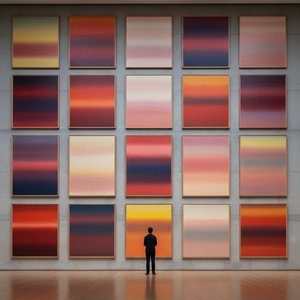
Mark Rothko's Top 25 Meesterwerken: Kleur, Emotie & Abstracte Kunst voor uw Interieur
Ontdek de top 25 meesterwerken van Mark Rothko! Duik diep in zijn emotionele kleurveldschilderijen en abstract expressionisme. Vind museumkwaliteit Rothko reproducties & interieurinspiratie op OriginalUniqueArt.com.

Top 10 Abstract Expressionisme Meesterwerken: Kunst voor uw Interieur | OriginalUniqueArt.com
Ontdek de 10 meest invloedrijke werken van Abstract Expressionisme! Leer over Jackson Pollock, Mark Rothko & meer. Museumkwaliteit kunst reproducties voor uw interieur. Bekijk de collectie op OriginalUniqueArt.com.

Top 10 Meesterwerken van de Geometrische Abstractie | OriginalUniqueArt.nl
Ontdek de 10 meest invloedrijke meesterwerken van de geometrische abstractie! Van Mondriaan tot Malevich, leer over kunstenaars, technieken & kleuren. Museumkwaliteit reproducties op OriginalUniqueArt.com – voor een unieke interieurstijl.