

 Voorvertoning
 Verstuur
 Delen
Delen
 Details bekijken
 Gids
Gids

 Download
 Vergelijkbare items
 Röntgenonderzoek
 Diavoorstelling
 Statistieken
Sirius Cove
 Acryl op canvas
- Wanddecoratie
- Heidelberg School Impressionism
 1895
1895 168.0 x 688.0 cm
 National Gallery of Australia
 Lees meer
Handgemaakte olieverfreproductie
Met de hand geschilderd in olieverf op canvas in uw gewenste maat en lijst, op bestelling gemaakt door onze kunstenaars. ( Schakel over naar print Schakel over naar digitale afbeeldingen)




P118B €10

P118H €10

P118W €10

P438Z €10

P508JH €12

P508YH €12

P805H €10

P805Z €10

P919BZ €10

P919G €10

P919XJ €10

P959ZH €10

P968JZ €12

W106C €8

W218G €10

W218JH €8

W218Y €10

W307PJ €10

W316G €10

W316PJ €8

W316Y €10

W398PJ €8

W4111J €10

W500HY €15

W500JH €15

W692G €12

W849H €8

W940BG €15

W953PJ €8




Kies uit onze vooraf ingestelde maten die overeenkomen met de originele verhoudingen van het kunstwerk.

Voer de breedte en hoogte in die u nodig heeft, passend bij uw lijst of uw muur. Omdat dit handgeschilderd is, kan de kunstenaar bij een afmeting met een andere beeldverhouding iets meer rondom het schilderij schilderen of juist iets meer weglaten — u kiest zelf. Wij sturen u een digitaal mockup ter goedkeuring voordat het schilderwerk begint. De afbeelding die op deze pagina wordt getoond, is niet het uiteindelijke resultaat — alleen de mockup geeft dit weer.
Na de bestelling zal het team van OriginalUniqueArt.com per e-mail contact opnemen met de klant voor instructies en een mockup-voorbeeld sturen.
Wereldwijde levering () binnen 3 tot 4 weken in plaats van de standaard 5 weken. (27 oktober). Zonder concessies aan de kwaliteit.

Gratis wereldwijde expressverzending

Hoogwaardig linnen canvas

Volledige verzendverzekering

Garantie op terugbetaling van invoerrechten

Garantie op exacte kleurweergave

Retourbeleid van 100 dagen (alleen bij defecten)

100% Geld-terug-garantie

Korting bij meerdere afnames
 De optie voor glas is alleen beschikbaar bij een formaat kleiner dan 110 cm.

Sirius Cove
Druktechniek
Afmetingen reproductie
-


Eindtotaal
€ 264
Een Gebroken Zonneschijn Over Sirius Cove
Sirius Cove, geschilderd door Arthur Streeton in 1895, is een prachtige belichaming van de Australische lichtschouwkunst en een essentieel werk binnen de Heidelberg School. Het beeld wordt gekenmerkt door een bijna hypnotiserende eenvoud die voortkomt uit Streetons innovatieve gebruik van verticale houtsplinters en natuurlijke kleuren om een studie te creëren in positieve en negatieve ruimte, waarbij vlakke vormen en tonale contrasten elkaar opvolgen en terugtrekken. Deze compositie doet denken aan een Japanse rolbeschrijving, waardoor het kunstwerk een gevoel van tijdloze schoonheid krijgt.- Beschrijving: De afbeelding vangt een serene zeegezicht met rotsblokken die omgeven zijn door een lichtgrijs luchtkleur. Een kleine roeiboot sijpelt over het wateroppervlak, terwijl een verre veerboot langzaam vooruitschuift en een pad naar boven voert naar de locatie van Streetons kamp bij Sirius Cove.
- Techniek: Streeton gebruikte vloeiende, intuïtieve maar zorgvuldig overwogen penseelstreken – een stijl die doet denken aan kalligrafie – om het licht en de atmosfeer te vatten. De houtsplinters werden gebruikt als basis voor het schilderij, waardoor een natuurlijke textuur ontstond die bijdraagt aan het algemene gevoel van rust en harmonie met de natuur.
- Historische Context: Het werk werd gemaakt tijdens een periode waarin Streeton en zijn vriend Tom Roberts zich volledig deden verdwijnen in het prachtige Sydney Harbour. Deze ervaring inspireerde hen tot het vastleggen van een moment van eenvoudige schoonheid, waarbij het licht en de kleuren werden gebruikt om een gevoel van plaatselijkheid en contemplatie op te roepen.
- Het gebruik van verticale houtsplinters dient als een manier om de aandacht naar boven te leiden en een gevoel van hoogtepunt en ruimte aan te bieden.
- De vloeiende penseelstreken zijn een directe verwijzing naar Japanse kunsttradities, die bekend staan om hun eenvoudige schoonheid en aandacht voor natuurlijke vormen.
Veelgestelde vragen
Wordt "Sirius Cove" door Arthur Streeton bewaard in het land van herkomst van de kunstenaar?
Ja - het kunstwerk wordt bewaard in het land van herkomst van de kunstenaar. "Sirius Cove" bevindt zich in Australië, terwijl Arthur Streeton werd geboren in Australië.
Is "Sirius Cove" verkrijgbaar als fine art print?
Een print van "Sirius Cove" door Arthur Streeton kan rechtstreeks worden besteld op de Fine Art Print-pagina: een fine art print op katoenen canvas of archiefwaardig canvaspapier.
Hoeveel licht lijken de kleuren van "Sirius Cove" te reflecteren?
De kleuren van "Sirius Cove" hebben een luminantie van Zachte luminantie.
Biografie kunstenaar
A Pioneer of the Australian Light: The Life and Art of Arthur Streeton
Arthur Ernest Streeton, affectionately known as “Smike” to his contemporaries, stands as a monumental figure in Australian art history. Born on April 8, 1867, at Mount Duneed, Victoria, his life was inextricably linked to the evolving identity of a nation finding its voice through landscape painting. From humble beginnings – his parents were English migrants who met during their voyage to Australia – Streeton’s artistic journey began with studies at the National Gallery School in Melbourne from 1882 to 1887, laying the groundwork for a career that would define Australian Impressionism and the Heidelberg School. These early years weren't merely about technical skill; they were about discovering a way to capture the unique quality of light and atmosphere that characterized the Australian bush – a light unlike anything seen in Europe, and a challenge that captivated Streeton throughout his life. He supplemented his formal training with apprenticeships as a lithographer, experiences which undoubtedly informed his understanding of composition and tonal values.The Heidelberg School and the Eaglemont Camp
Streeton’s artistic maturation coincided with the burgeoning of the Heidelberg School, a group of artists determined to forge an authentically Australian style. His friendships with Tom Roberts and Frederick McCubbin were pivotal; together they embarked on *plein air* painting excursions, seeking to represent the landscape directly from nature. This commitment to working outdoors, inspired by French Impressionism but adapted to the distinctly Australian context, became a hallmark of their work. The establishment of the Eaglemont Camp in 1888 marked a turning point. Sharing a farmhouse on the outskirts of Melbourne with fellow artists, Streeton entered a period of intense creativity. It was here that he produced some of his most iconic works, including *Golden Summer, Eaglemont* (1889) and *Still glides the stream, and shall for ever glide* (1890). These paintings weren’t simply depictions of scenery; they were evocations of a feeling – the heat haze shimmering over golden fields, the stillness of a summer afternoon. The camp fostered an environment of shared experimentation and mutual encouragement, solidifying the Heidelberg School's reputation as a force to be reckoned with in the Australian art world. The group’s bold approach culminated in the controversial “9 by 5 Impression Exhibition” in 1889, showcasing small, rapidly executed paintings that challenged conventional artistic norms.Seeking Recognition and Returning Home
Driven by ambition and a desire for wider recognition, Streeton sailed for London on the *Polynesien* in 1897. While he achieved some success exhibiting at the Royal Academy, including representation in 1900, he found it difficult to replicate the acclaim he had enjoyed in Australia. The European art scene was crowded and competitive, and his distinctly Australian vision didn’t always resonate with established tastes. He continued to paint, exploring different subjects – Venetian scenes like *Palazzo Labia, Venice* (1908) demonstrate a shift in focus but retain his characteristic sensitivity to light and color. The outbreak of World War I saw Streeton attempting to contribute through service as an orderly with the Royal Army Medical Corps, later becoming an official war artist in 1918. His wartime paintings, while documenting the devastation of the Western Front, often focused on the landscape itself, reflecting his enduring fascination with the natural world. He returned to Australia in 1923 a celebrated figure, knighted in 1937 for his contributions to art.Legacy and Lasting Influence
Arthur Streeton’s legacy extends far beyond his individual paintings. He played a crucial role in establishing a uniquely Australian artistic identity, one that celebrated the beauty and vastness of the continent. His work helped to define how Australians saw themselves and their land. His influence can be seen in generations of landscape painters who followed, inspired by his ability to capture the essence of the Australian light and atmosphere. He was a prolific writer and art critic, further shaping the discourse around Australian art. Though he experienced periods of frustration and self-doubt, Streeton remained committed to his artistic vision until his death on September 1, 1943, at Olinda, Victoria. His paintings continue to captivate audiences today, offering a timeless glimpse into the heart and soul of Australia.Key Works & Themes
- Golden Summer, Eaglemont (1889): Perhaps his most famous work, embodying the heat and light of an Australian summer.
- Still glides the stream, and shall for ever glide (1890): A lyrical depiction of the Yarra River, showcasing his mastery of atmospheric perspective.
- Fire’s on (1891): A powerful representation of the Australian bushfire landscape, capturing both its beauty and danger.
- Palazzo Labia, Venice (1908): Demonstrates his ability to adapt his Impressionistic style to European subjects.
- Egyptian Drink Vendor (1897): A vibrant scene reflecting his travels and exploration of different cultures.

Arthur Streeton
1867 - 1943 , Australië
Belangrijkste feiten
- Artistic Movement Or Style: Impressionisme, Heidelberg School
- Artists Or Movements Influenced By This Artist: ['Australisch Impressionisme']
- Artists Who Influenced This Artist:
- Louis Buvelot
- Turner
- Date Of Birth: 8 april 1867
- Date Of Death: 1 september 1943
- Full Name: Arthur Ernest Streeton
- Nationality: Australisch
- Notable Artworks:
- Golden Summer
- Still glides
- Palazzo Labia
- Place Of Birth: Mount Duneed, Australië
Gerelateerde artikelen

Evocations of Place: A Historical Journey Through Landscape Art
Explore the rich history of landscape art with OriginalUniqueArt. Discover renowned artists, movements like Impressionism & Romanticism, and expert guidance for collecting timeless pieces. Find your perfect serene escape today!

Paul Cézanne's Top 25 Meesterwerken: Kleur, Vorm & De Basis van Modern Art | OriginalUniqueArt
Ontdek de 25 meest iconische schilderijen van Paul Cézanne! Duik in zijn kleurrijke wereld, leer over impressionisme & post-impressionisme en bewonder meesterwerken als 'De Baders'. Vind museumkwaliteit reproducties & interieurinspiratie op OriginalUniqueArt.com.
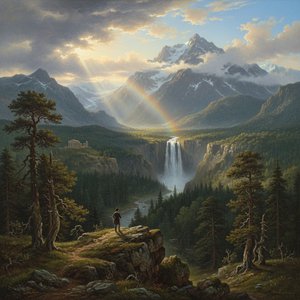
Evoking Nature's Sublime: A Comprehensive Exploration of 19th-Century Landscape Painting
Explore the captivating world of 19th-century landscape painting! Discover renowned artists like Friedrich & Monet, key movements, and find the perfect artwork to bring nature's serenity into your home. Expert insights at OriginalUniqueArt.

Evocations of Place: A Historical Journey Through Landscape Art
Explore the rich history of landscape art with OriginalUniqueArt. Discover renowned artists, movements like Impressionism & tonalism, and expert guidance for collecting timeless pieces. Find your perfect serene escape today!

The Hague School: Realism, Atmosphere & the Dawn of Dutch Impressionism
Explore the Hague School's pivotal role in Dutch art history. Discover realism, atmospheric landscapes & its influence on Impressionism. Learn about key artists like Mauve & Maris with OriginalUniqueArt.

