
 Verstuur
 Delen
Delen
 Details bekijken
 Gids
Gids

 Download
 Vergelijkbare items
 Diavoorstelling
 Vraag & antwoord
 Statistieken
Erwartung, op. 17

- 36.0 x 28.0 cm


 Lees meer
Giclée / Kunstafdrukken
Giclée- of canvasafdruk van museumkwaliteit met een snelle productie en flexibele afwerkingsmogelijkheden. ( Bestel handgeschilderde reproductie Schakel over naar digitale afbeeldingen)




































Kies uit onze vooraf ingestelde maten die overeenkomen met de originele verhoudingen van het kunstwerk.

Voer de gewenste breedte en hoogte in, passend bij uw lijst of muur. Een afdruk kan alleen worden ingekort en nooit groter worden gemaakt dan het origineel; een formaat met andere verhoudingen zal daarom een deel van de afbeelding verliezen. Wij sturen u een digitaal mockup ter goedkeuring voordat we tot drukwerk overgaan. De afbeelding op deze pagina toont niet de werkelijke uitsnede — dit is alleen te zien op het mockup.
Wereldwijde levering () binnen 2 weken in plaats van de standaard 4/5 weken. (8 november)

Gratis wereldwijde expressverzending

Hoogwaardig linnen canvas

Volledige verzendverzekering

Garantie op terugbetaling van invoerrechten

Garantie op exacte kleurweergave

Retourbeleid van 100 dagen (alleen bij defecten)

100% Geld-terug-garantie

Korting bij meerdere afnames
 De optie voor glas is alleen beschikbaar bij een formaat kleiner dan 110 cm.

Erwartung, op. 17
Giclée / Kunstafdrukken
Afmetingen reproductie
-


Eindtotaal
€ 72
A Fragment of Anxiety: Schoenberg's "Erwartung" – A Window into Musical Angst
This meticulously crafted hand-painted reproduction offers an unparalleled glimpse into the genesis of Arnold Schoenberg’s groundbreaking monodrama, “Erwartung” (Expectation), composed in 1909. More than just a musical score, it is a tangible embodiment of intense creative struggle and a profound exploration of human emotion – a testament to Schoenberg's revolutionary approach to composition. The image captures the very document upon which this pivotal work was born, revealing the raw, almost frantic energy that fueled its creation.
- The Score as Canvas: The reproduction faithfully replicates the original score, a chaotic yet meticulously organized collection of notes, symbols, and handwritten annotations. Schoenberg’s characteristic use of short scores – a technique designed to capture fleeting moments of heightened emotion – is strikingly evident.
- A Moment Frozen in Time: The inclusion of two clocks within the image adds another layer of significance. These aren't merely decorative elements; they represent the relentless passage of time, a key thematic concern within “Erwartung,” where suspense and anticipation build to unbearable tension.
- Technical Detail: Notice the varying levels of detail – fully notated pitches and rhythms alongside fragmented dynamics and phrasing, reflecting Schoenberg’s initial approach. This reveals the composer's iterative process, constantly refining his vision as he wrestled with translating psychological states into musical form.
The Birth of Atonality: Contextualizing "Erwartung"
"Erwartung," created in Steinakirchen (Lower Austria), marked a radical departure from traditional tonal music. Schoenberg, alongside Alban Berg and Anton Webern, spearheaded the development of atonality – a system where no single note held inherent harmonic significance. This wasn't simply about discarding established rules; it was an attempt to represent the subjective experience of emotion with unprecedented directness. The monodrama’s narrative, centered around a woman’s increasingly paranoid and unsettling wait for a lover, perfectly mirrored this new musical landscape.
Schoenberg himself articulated his intent brilliantly: “I have written something for the theatre: a monodrama. By that I mean a piece in which only one person appears…” This focus on singular experience, amplified by the dramatic tension of the score, is central to understanding "Erwartung’s" enduring power.
Symbolism and Emotional Resonance
The black-and-white aesthetic of the original photograph lends itself powerfully to the drama unfolding within the score. The stark contrast emphasizes the fragmented nature of the musical ideas and the unsettling atmosphere of anticipation. The handwritten annotations, often corrections or fleeting thoughts, contribute to a sense of vulnerability and intellectual struggle – mirroring the protagonist’s descent into paranoia.
The image isn't just a representation of music; it is an invitation to experience the raw emotional core of Schoenberg’s masterpiece. It speaks to themes of anxiety, isolation, and the fragility of human perception—themes that continue to resonate with audiences today.
Specifications
Title: Erwartung, op. 17 Description: As detailed in the artwork information. Size: 36 x 28 cm Date: 1909 Artist: Arnold Schoenberg Birth Year: 1874 Death Year: 1951Veelgestelde vragen
Hoe oud was Arnold Schönberg toen "Erwartung, op. 17" werd gemaakt?
Arnold Schönberg was 35 jaar oud bij het creëren van "Erwartung, op. 17" in 1909. De leeftijd is berekend op basis van het geboortejaar van de kunstenaar, 1874.
Uit welke periode stamt "Erwartung, op. 17"?
"Erwartung, op. 17" door Arnold Schönberg dateert uit de 19th Century-periode. Deze classificatie plaatst het werk binnen de kunstgeschiedenis.
Wat is de dominante kleur van "Erwartung, op. 17" door Arnold Schönberg?
Putty (#e8cda1) is de dominante kleur van "Erwartung, op. 17" door Arnold Schönberg.
Biografie kunstenaar
vroege leven en muzikale beginj
arnold schoenberg, een Oostenrijks-Amerikaanse componist, werd op 13 september 1874 geboren in vienna, oostenrijk. zijn vroege jaren werden gekenmerkt door een bescheiden begin, met een vader die schoenwinkelier was. ondanks deze eenvoudige omstandigheden leidde schoenbergs aangeboren passie voor muziek ertoe dat hij zichzelf grotendeels in dit vakgebied onderwees.muzikale evolutie en bepalende werken
schoenbergs vroege werken, zoals verklärte nacht (1899), toonden een brahmsiaanse-wagneriaanse synthese. naarmate hij zich verder ontwikkelde, werd hij de centrale figuur van de tweede Weense school, samen met anton webern en alban berg. zijn composities, waaronder het strijkkwartet nr. 2 (1907–1908), erwartung (1909) en pierrot lunaire (1912), vormden de belichaming van zijn innovatieve benadering van atonaliteit.onderwijs, emigratie en het latere leven
in 1933 trad schoenberg terug bij de Pruisische academie voor kunst vanwege de opkomst van de nazi's, die zijn muziek als "ontaard" bestempelden. hij ging vervolgens lesgeven in de Verenigde Staten, onder andere aan de University of California, Los Angeles (1936–1944), waar faciliteiten naar hem vernoemd zijn. [https://OriginalUniqueArt.com/@/arnold-schaenberg](ontdek meer over het leven en de werken van schoenberg op OriginalUniqueArt).- schoenberg verkende filmmuziek en schreef meer tonale muziek, waarbij hij zijn kamer symfonie nr. 2 voltooide in 1939.
- hij leverde satire op fascistische tirannen in ode aan napoleon (1942), naar byron.
- het naoorlogse vienna bood hem het ereburgerschap aan, maar hij was ziek, zoals afgebeeld in zijn strijk trio (1946).
erfenis en invloed
terwijl de wereld kennismaakte met de holocaust, eerde schoenberg de slachtoffers in a survivor from warsaw (1947). het Israëlisch conservatorium en de academie voor muziek benoemden hem in 1951 tot erevoorzitter. [https://OriginalUniqueArt.com/@@/a@d3bqc7-the-museum-destroyed-by-fire-(united-states)](leer meer over de impact van zijn werk op OriginalUniqueArt). kernpunten:- schoenbergs innovatieve muziek behoorde tot de meest invloedrijke en omstreden werken van de klassieke muziek uit de 20e eeuw.
- minstens drie generaties componisten hebben zijn enigszins formele principes voortgezet.
- zijn esthetische en muziekhistorische visies beïnvloedden musicologen theodor w. adorno en carl dahlhaus.

Arnold Schönberg
1874 - 1951 , Oostenrijk
Belangrijkste feiten
- Artistic Movement Or Style: Twaalftoonstechniek; Expressionisme
- Artists Or Movements Influenced By This Artist:
- Anton Webern
- Alban Berg
- Artists Who Influenced This Artist:
- Johannes Brahms
- Richard Wagner
- Date Of Birth: 13 september 1874
- Date Of Death: 1951
- Full Name: Arnold Schoenberg
- Nationality: Oostenrijks-Amerikaans
- Notable Artworks:
- Suite, op. 29
- Music Typewriter
- Staffliner
- Place Of Birth: Wenen, Oostenrijk
Gerelateerde artikelen
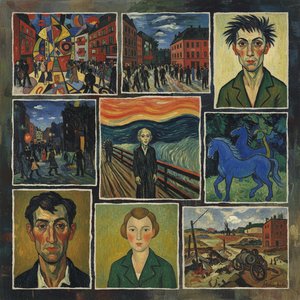
Top 10 Expressionistische Meesterwerken: Kunst voor uw Interieur | OriginalUniqueArt
Ontdek de 10 meest invloedrijke expressionistische meesterwerken! Van Munch's 'De Schreeuw' tot Kandinsky's abstractie. Leer over kunst, emotie & kleur. Museumkwaliteit reproducties op OriginalUniqueArt.com – uw bron voor unieke wanddecoratie.
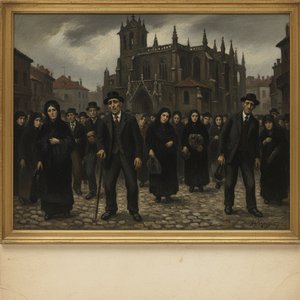
José Gutiérrez Solana: A Chronicle of Spanish Society Through Expressionist Vision
Explore the captivating world of José Gutiérrez Solana, a pivotal Spanish Expressionist painter. Discover his haunting depictions of early 20th-century Spain, influenced by Goya & El Greco. Learn about his key works and lasting legacy.
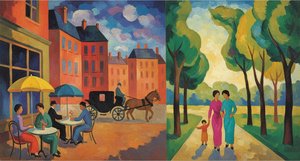
August Macke: Expressionist Visions of Harmony & Modern Life
Explore the vibrant Expressionist paintings of August Macke (1887-1914). Discover his key role in Der Blaue Reiter, Fauvist influences, and captivating depictions of modern life. A comprehensive guide for art enthusiasts & collectors.

The Visceral Self: Exploring Emotion & Identity in Expressionist Portraiture
Explore the powerful world of Expressionist portraiture with OriginalUniqueArt. Discover how artists captured raw emotion & identity through bold color and distortion. Expert insights for collectors.
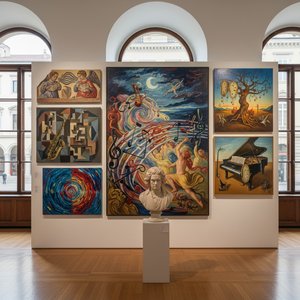
Harmonies on Canvas: Exploring the Visual Representation of Music in Art History
Explore the fascinating history of music's visual representation in art! From ancient symbolism to modern abstraction, discover how artists have captured sound and emotion on canvas. Expert insights & stunning examples.


