Symbolism
La peste (Arnold Böcklin)
Arnold Böcklin (1827–1901) maakte La peste. Het behoort tot de Symbolism-stroming. Het is gemaakt van Oil On Canvas.
- Oil On Canvas

 Voorvertoning

 Met de hand geschilderd olieverfwerk
 Verstuur
 Delen
 Informatieblad


 Download
 Vergelijkbare items
 Röntgenonderzoek
 Diavoorstelling
 Vraag & antwoord

 Statistieken
La peste, in het kort
- Titel
- La peste
- Kunstenaar
- Arnold Böcklin (1827–1901)
- Geboren in [jaar]
- Bazel, Zwitserland
- Medium
- Oil On Canvas
- Beweging
- Symbolism
- Periode
- 19th Century
- Onderwerp
- monster, rider, buildings, dead bodies, sky, red cloth
Wat stelt La peste voor?
The Shadow of Mortality
In this unsettling scene, we find ourselves witnessing a moment of profound, inevitable decay. A monstrous, winged creature, reminiscent of a bat, moves through the narrow streets of a medieval European city. Atop this beast sits a skeletal figure, a personification of death that moves with a terrifying, silent purpose. The atmosphere is heavy, thick with a hazy, yellow-grey light that suggests a world choked by sickness. There is a sense of chaos here, yet it is a quiet, suffocating kind of chaos. The buildings, with their rigid, angular lines, seem to press in on the viewer, creating a claustrophobic environment where escape feels impossible.
The color palette is deliberately somber, leaning heavily into the earthy tones of ochre, brown, and grey. However, there is a specific, unsettling use of pale green—a hue often associated with the physical reality of decomposition—that permeates the work. This sickly tint contrasts sharply with the single, startling shock of red found in the foreground. A woman lies there, her clothing a vivid crimson against the muted, dying world around her, a stark reminder of the human cost of the plague passing through the streets.
Symbolic Elements and Composition
The composition is structured with a certain architectural precision that heightens the sense of dread. The rider and the beast form a central, pyramidal apex that draws the eye upward and then forces it back down toward the suffering below. The artist uses several layers of visual language to communicate the theme of pestilence:
- The winged creature, acting as a vessel for the plague, disrupts the orderly geometry of the urban landscape.
- The use of atmospheric perspective, where the background fades into a murky haze, suggests an endless, spreading contagion.
- The fallen figures in the foreground and middle ground represent the victims, their forms partially obscured by shadow and the weight of the scene.
- The contrast between organic, irregular shapes of the monster and the rigid, rectangular shapes of the architecture emphasizes the unnatural intrusion of death into civilization.
The technique involves a careful layering of oil paints, creating a texture that feels both rough and weathered. In certain areas, the impasto is visible, giving the creature a visceral, tactile presence. This physical depth mirrors the psychological depth of the subject matter, where the veil between the physical world and a nightmare state feels dangerously thin.
The Weight of the Unseen
There is a profound stillness in the way the figures are arranged, despite the violence of the subject. It is a stillness born of hopelessness. The lighting is diffused and uneven, casting deep shadows that hide as much as they reveal. This lack of a clear light source contributes to the sense of mystery and the feeling that the plague is an unstoppable, elemental force rather than a mere biological event. The work captures a specific tension between the tangible reality of a city and the intangible, spectral presence of death, leaving the viewer with a lingering sense of unease that remains long after the first glance.
Hoogwaardige afbeeldingen van La peste
Publiek domein: de kunstenaar is overleden in 1901.
Arnold Böcklin, La peste. Publiek domein
Veelgestelde vragen over La peste
Met welk medium is "La peste" door Arnold Böcklin uitgevoerd?
Het medium van "La peste" door Arnold Böcklin is Oil On Canvas. Reproducties zijn bedoeld om de uitstraling van deze techniek weer te geven.
Wat stelt "La peste" door Arnold Böcklin voor?
De onderwerpen van "La peste" zijn monster, rider, buildings, dead bodies, sky, red cloth, cityscape.
Behoort "La peste" door Arnold Böcklin tot het publiek domein?
Wat betreft het auteursrecht valt "La peste" onder bevindt zich in het publiek domein - de auteursrechten zijn verlopen.
Wie heeft "La peste" gemaakt?
"La peste" wordt toegeschreven aan Arnold Böcklin.
Tot welke stijl behoort "La peste"?
De kunststroming die verbonden is aan "La peste" door Arnold Böcklin is Symbolism. Deze classificatie plaatst het werk binnen een context van verwante kunstenaars en kunstwerken.
Tot welke periode in de carrière van Arnold Böcklin behoort "La peste"?
Binnen de carrière van Arnold Böcklin valt "La peste" in de Late Period. Deze fase helpt om het werk te vergelijken met andere werken van de kunstenaar.
Behoort "La peste" van Arnold Böcklin tot het publiek domein, en zo ja, waarom?
"La peste" door Arnold Böcklin is bevindt zich in het publiek domein - de auteursrechten zijn verlopen. De auteursrechtelijke bescherming loopt vanaf het overlijden van de kunstenaar, dat plaatsvond in 1901.
Hoe past "La peste" binnen de thema's en stijl van Arnold Böcklin?
"La peste" behoort tot het Symbolism-werk van Arnold Böcklin, waarvan de bekende thema's onder meer symbolist movement, mythology and mortality, themes of death, war and pestilence, exploration of the subconscious omvatten.
Hoe verhoudt het onderwerp van "La peste" zich tot de gebruikelijke thema's van Arnold Böcklin?
De terugkerende thema's van Arnold Böcklin omvatten symbolist movement, mythology and mortality, themes of death, war and pestilence, exploration of the subconscious; "La peste" richt zich op monster, rider, buildings, dead bodies, sky, red cloth, cityscape.
Over de kunstenaar, Arnold Böcklin
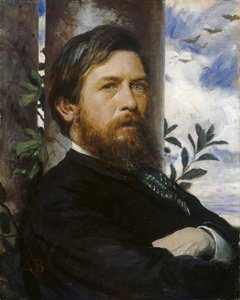
1827–1901, Zwitserland
Arnold Böcklin
De Schaduw van het Eiland Basel, Zwitserland, vormt het vertrekpunt voor een leven dat wordt gedefinieerd door de spanning tussen het tastbare en het spectrale. Geboren op 16 oktober 1827, als zoon van Christian Frederick Böcklin en Ursula Lippe, zou de jonge man zich uiteindelijk bewegen van de zijdehandel van zijn vader naar de rigoureuze zalen van de Düsseldorf Academy. Onder de begeleiding van Schirmer begon hij de taal van het landschap te absorberen, een vaardigheid die later zou worden gebruikt om de geografie van de menselijke ziel in kaart te brengen. Hij schilderde niet louter decor, hij creëerde werelden waarin het klassieke en het macabere met elkaar botsen.
Ook van Arnold Böcklin
 Het eiland der doden (Eerste versie)1880
 Zelfportret met de dood die viool speelt
 De Oorlog1896
 Eiland der Doden (Versie 5)1886
Essays over La peste
 Beyond Reality: Unveiling the Enigmatic Depths of Metaphysical Art and its Philosophical EchoesExplore the profound mystery of Metaphysical Art. Delve into the philosophical depths of Giorgio de Chirico’s dreamscapes and discover how …
 25 Essential Works by Arnold Böcklin: A Journey Through Myth and SymbolismExplore 25 iconic Arnold Böcklin paintings and Symbolist works. Discover the full collection online at OriginalUniqueArt.com.
 Swiss artworks of the 1890sSwiss Symbolism in the 1890s features the iconic works of Félix Vallotton and Arnold Hodler. View the full collection online at OriginalUni…