

 Voorvertoning
 Verstuur
 Delen
Delen
 Details bekijken
 Gids
Gids

 Download
 Vergelijkbare items
 Röntgenonderzoek
 Diavoorstelling
 Statistieken
Landscape
 Oil On Canvas
- WallArt
- Portuguese Expressionism
 1896
1896- 19th Century
 64.0 x 47.0 cm
 Centro de Arte Moderna Gulbenkian
 Lees meer
Handgemaakte olieverfreproductie
Met de hand geschilderd in olieverf op canvas in uw gewenste maat en lijst, op bestelling gemaakt door onze kunstenaars. ( Schakel over naar print Schakel over naar digitale afbeeldingen)




P118B €10

P118H €10

P118W €10

P438Z €10

P508JH €12

P508YH €12

P805H €10

P805Z €10

P919BZ €10

P919G €10

P919XJ €10

P959ZH €10

P968JZ €12

W106C €8

W218G €10

W218JH €8

W218Y €10

W307PJ €10

W316G €10

W316PJ €8

W316Y €10

W398PJ €8

W4111J €10

W500HY €15

W500JH €15

W692G €12

W849H €8

W940BG €15

W953PJ €8




Kies uit onze vooraf ingestelde maten die overeenkomen met de originele verhoudingen van het kunstwerk.

Voer de breedte en hoogte in die u nodig heeft, passend bij uw lijst of uw muur. Omdat dit handgeschilderd is, kan de kunstenaar bij een afmeting met een andere beeldverhouding iets meer rondom het schilderij schilderen of juist iets meer weglaten — u kiest zelf. Wij sturen u een digitaal mockup ter goedkeuring voordat het schilderwerk begint. De afbeelding die op deze pagina wordt getoond, is niet het uiteindelijke resultaat — alleen de mockup geeft dit weer.
Na de bestelling zal het team van OriginalUniqueArt.com per e-mail contact opnemen met de klant voor instructies en een mockup-voorbeeld sturen.
Wereldwijde levering () binnen 3 tot 4 weken in plaats van de standaard 5 weken. (27 oktober). Zonder concessies aan de kwaliteit.

Gratis wereldwijde expressverzending

Hoogwaardig linnen canvas

Volledige verzendverzekering

Garantie op terugbetaling van invoerrechten

Garantie op exacte kleurweergave

Retourbeleid van 100 dagen (alleen bij defecten)

100% Geld-terug-garantie

Korting bij meerdere afnames
 De optie voor glas is alleen beschikbaar bij een formaat kleiner dan 110 cm.

Landscape
Druktechniek
Afmetingen reproductie
-


Eindtotaal
€ 264
A Life Forged in Shadow and Light: The World of António Teixeira Carneiro Júnior
António Teixeira Carneiro Júnior stands as a cornerstone of Portuguese Expressionism, an artist whose life narrative mirrors the turbulent beauty found within his canvases—a testament to resilience born from profound adversity. Born in Amarante, Portugal, in 1872, his early years were irrevocably shaped by familial tragedy; the absence of his father and the untimely passing of his mother thrust him into the care of the Santa Casa da Misericórdia orphanage in Porto. This formative experience, though undeniably heartbreaking, inadvertently ignited a creative flame—a recognition of an innate talent for drawing that blossomed amidst hardship. The institution’s nurturing environment fostered not merely sustenance but also the initial spark of artistic curiosity, guiding his hand towards replicating religious illustrations and establishing a foundational understanding of visual representation.- Early Influences: Carneiro's formative years instilled in him an appreciation for meticulous observation and a dedication to capturing detail—skills that would become hallmarks of his distinctive style.
- The Escola Superior de Belas-Artes: Recognizing his burgeoning aptitude, the Escola Superior de Belas-Artes del Porto welcomed him as a student, providing invaluable training in Impressionistic techniques and broadening his artistic horizons.
Landscape – Leça da Palmeira: An Ode to Coastal Portugal
“Landscape – Leça da Palmeira,” painted in 1905, exemplifies Carneiro’s masterful embrace of Impressionism. The artwork depicts the picturesque Leça da Palmeira beachhead, bathed in the warm hues of a late afternoon sun. Thick brushstrokes convey an atmospheric haze, blurring the contours of buildings and creating a sense of serene contemplation. Vibrant sails dominate the seascape, symbolizing maritime trade and Portugal's rich seafaring heritage—a deliberate nod to Carneiro’s upbringing amidst Porto’s bustling harbor. The artist skillfully captures the interplay of light and shadow, imbuing the scene with an emotional resonance that speaks to the tranquility and beauty of the Portuguese coastline.Technique and Style: Impressionistic Brushstrokes and Color Harmony
Carneiro's technique is characterized by loose, expressive brushwork—a hallmark of Impressionism—which prioritizes capturing fleeting moments of light and color rather than striving for photographic accuracy. He employed a palette dominated by warm yellows, oranges, and reds, harmoniously blended to evoke feelings of warmth and optimism. The artist’s meticulous attention to detail is evident in the rendering of architectural elements and the depiction of sailboats, demonstrating his commitment to both observation and artistic skill.Symbolism Beyond Representation: Reflections on Loss and Resilience
Beyond its aesthetic beauty, “Landscape – Leça da Palmeira” carries a deeper symbolic significance—a poignant reflection on Carneiro’s own life experience. The tranquil beachhead serves as an emblem of solace and renewal, mirroring the artist's journey from adversity to artistic triumph. Just as the sun casts its golden glow upon the landscape, Carneiro’s art illuminates the complexities of human emotion with sensitivity and grace—a testament to his ability to transform personal hardship into enduring artistic expression.Legacy and Influence: A Pioneer of Portuguese Expressionism
António Teixeira Carneiro Júnior's contribution to Portuguese art history is undeniable. He remains a pivotal figure in the development of Expressionism, demonstrating that profound emotional depth can coexist with masterful artistic execution. His work continues to inspire artists today, reminding us that beauty emerges from confronting darkness and embracing vulnerability—a legacy etched forever within the vibrant canvases of his enduring vision.Veelgestelde vragen
Is "Landscape" door António Carneiro een licht of een donker kunstwerk?
De waargenomen helderheid van "Landscape" door António Carneiro is brilliant. Deze kan worden afgestemd op de lichtinval in de beoogde ruimte.
Uit welke periode stamt "Landscape"?
"Landscape" door António Carneiro dateert uit de 19th Century-periode. Deze periode biedt de historische context van het werk.
Wat zijn de afmetingen van het originele "Landscape" door António Carneiro?
Het originele werk "Landscape" door António Carneiro heeft de afmetingen 64 x 47 cm.
Biografie kunstenaar
A Life Forged in Shadow and Light: The World of António Teixeira Carneiro Júnior
António Teixeira Carneiro Júnior, a pivotal figure in Portuguese Expressionism, was an artist whose life story is as compelling and emotionally resonant as the canvases he imbued with psychological depth. Born in Amarante, Portugal, in 1872, his early years were marked by profound loss and abandonment. The absence of his father and the untimely death of his mother led to a childhood spent within the walls of the Santa Casa da Misericórdia orphanage in Porto. This formative experience, while undoubtedly difficult, proved unexpectedly crucial; it was there that Carneiro received his initial artistic training, nurturing a nascent talent for drawing through copying religious illustrations. The institution provided not merely shelter but also a spark—an early recognition of an ability that would define his life’s path. It was this foundation that ultimately led him to the Escola Superior de Belas-Artes do Porto in 1884, where he studied under João Marques de Oliveira, beginning a formal artistic education that would soon blossom into something uniquely his own.Parisian Influences and the Birth of an Expressionist Vision
The trajectory of Carneiro’s artistry took a significant turn with his sojourn to Paris. Enrolling at the Académie Julien in 1897, he immersed himself in the artistic currents of the French capital, studying under luminaries like Jean-Paul Laurens and Jean-Joseph Benjamin-Constant. This period proved transformative, exposing him to new techniques and aesthetic philosophies that would profoundly influence his style. However, Carneiro didn’t simply absorb these influences; he synthesized them with a distinctly Portuguese sensibility, forging an artistic voice that was both modern and deeply rooted in his own cultural heritage. It was during this time that he began to move away from the prevailing naturalism of the era, gravitating towards Symbolist ideas and exploring themes of spirituality, melancholy, and introspection. He experimented with looser brushstrokes, darker palettes, and a greater emphasis on emotional expression—elements that would become hallmarks of his later work. This culminated in his groundbreaking triptych “A Vida” (Life), completed around 1900, which earned him a Silver Medal at the Exposition Universelle in Paris—a pivotal moment that signaled the beginning of widespread recognition for his unique artistic vision. The work itself is a testament to his burgeoning expressionist style, capturing not merely outward appearances but the inner emotional landscape of existence.A Master of Psychological Portraiture and Landscape
Carneiro’s oeuvre is characterized by an intense focus on psychological depth, particularly evident in his portraits. He wasn't interested in mere physical likeness; rather, he sought to capture the essence of his subjects—their inner turmoil, their hopes, their fears. His figures often possess a haunting quality, their eyes gazing out with an unsettling intensity that draws the viewer into their emotional world. This ability to convey profound psychological states extended beyond portraiture and permeated his landscapes as well. He didn’t simply depict scenes; he imbued them with mood and atmosphere, transforming natural settings into reflections of the human condition. His landscapes are often stark and dramatic, reflecting a sense of isolation and existential questioning. Throughout his career, Carneiro also engaged in illustration, producing evocative drawings for Dante's *Inferno* that showcase his mastery of line and shadow. He was a prolific artist, constantly experimenting with different techniques and styles, yet always remaining true to his core artistic principles. His work is often described as intensely personal, reflecting his own struggles with loss, loneliness, and the search for meaning in a world filled with uncertainty.Rediscovering Carneiro: Museums and Continued Appreciation
Today, António Teixeira Carneiro Júnior's works can be found in prominent collections across Portugal, including the Centro de Arte Moderna Gulbenkian in Lisbon and the Museu da Fundação Dionísio Pinheiro e Alice Cardoso Pinheiro in Águeda. These institutions provide opportunities for audiences to engage with his art firsthand, appreciating the nuances of his technique and the depth of his emotional expression. The Museu da Fundação Dionísio Pinheiro e Alice Cardoso Pinheiro, in particular, holds a significant collection of Carneiro’s work, offering valuable insights into his artistic development. His paintings continue to be exhibited internationally, ensuring that his legacy endures for future generations. As scholars and art enthusiasts alike rediscover the richness and complexity of his oeuvre, António Teixeira Carneiro Júnior is rightfully taking his place among the most important figures in Portuguese Expressionism—an artist whose life and work serve as a testament to the power of art to illuminate the human condition.Legacy and Influence: A Professor and Cultural Force
Beyond his accomplishments as a painter and illustrator, António Carneiro left an enduring legacy as an educator and cultural figure. In 1918, he was appointed Chair of the drawing department at the Escola de Belas-Artes do Porto, where he profoundly influenced generations of aspiring artists. He wasn’t merely a technical instructor; he encouraged his students to explore their own artistic voices, to challenge conventions, and to embrace experimentation. His teachings fostered a spirit of innovation that helped shape the course of Portuguese art in the 20th century. Furthermore, Carneiro was deeply involved in Portugal's literary and cultural scene, contributing to influential magazines like *Atlantida* and *Renascença Portuguesa*. He actively participated in intellectual debates and played a key role in shaping the artistic discourse of his time. His multifaceted contributions—as an artist, educator, and cultural commentator—cemented his position as one of Portugal’s most important modern masters. He remains a figure whose work continues to resonate with audiences today, offering a powerful glimpse into the complexities of the human soul.
António Carneiro
1872 - 1930 , Portugal
Belangrijkste feiten
- Artistic Movement Or Style: Expressionisme
- Artists Or Movements Influenced By This Artist: ['Symbolisme']
- Artists Who Influenced This Artist:
- João Marques de Oliveira
- Jean-Paul Laurens
- Benjamin-Constant
- Date Of Birth: 1872
- Date Of Death: 1930
- Full Name: António Teixeira Carneiro Júnior
- Nationality: Portugese
- Notable Artworks:
- A Vida
- Dionísio Pinheiro
- Untitled
- Place Of Birth: Amarante, Portugal
Gerelateerde artikelen

Romantische Landschappen: Top 10 Meesterwerken voor een Sfeervol Interieur | OriginalUniqueArt.nl
Ontdek de 10 meest iconische meesterwerken van de Romantiek! Reis door de tijd met Caspar David Friedrich, Turner & Delacroix. Laat je inspireren en vind museumkwaliteit kunst reproducties voor een sfeervol interieur op OriginalUniqueArt.com.

Top 10 Impressionistische Landschappen: Meesterwerken voor uw Interieur
Ontdek de 10 meest iconische impressionistische landschappen van Monet, Renoir & meer. Leer over hun technieken en betekenis. Vind museumkwaliteit kunst reproducties voor uw interieur op OriginalUniqueArt.com!

Top 10 Impressionistische Landschappen: Meesterwerken voor uw Interieur
Ontdek de 10 meest iconische impressionistische landschappen! Leer over Monet, Renoir & andere meesters. Prachtige schilderijen voor uw interieur. Museumkwaliteit reproducties op OriginalUniqueArt.com.
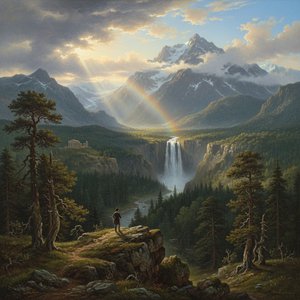
Evoking Nature's Sublime: A Comprehensive Exploration of 19th-Century Landscape Painting
Explore the captivating world of 19th-century landscape painting! Discover renowned artists like Friedrich & Monet, key movements, and find the perfect artwork to bring nature's serenity into your home. Expert insights at OriginalUniqueArt.

Flowing Narratives: Rivers in Painting – A Historical Exploration
Explore the rich history of rivers in painting! Discover masterpieces from ancient times to Impressionism & beyond. Learn about symbolism, artists like Monet & Daubigny, and find your perfect serene artwork at OriginalUniqueArt.


