

 Bekijk op ware grootte
 Verstuur
 Delen
Delen
 Details bekijken
 Gids voor studentenkunstwerken

 Download
 Vergelijkbare items
 Röntgenonderzoek
 Diavoorstelling
 Statistieken
Cupid and Psyche
 Acrylic On Canvas
- WallArt
- Neoclassical Sculpture
 1796
1796- 19th Century
 150.0 x 68.0 cm
 Louvre
 Lees meer
Giclée / Kunstafdrukken
Giclée- of canvasafdruk van museumkwaliteit met een snelle productie en flexibele afwerkingsmogelijkheden. ( Koop handgeschilderd kunstwerk Schakel over naar digitale afbeeldingen)




P118B $10

P118H $10

P118W $10

P438Z $10

P508JH $12

P508YH $12

P805H $10

P805Z $10

P919BZ $10

P919G $10

P919XJ $10

P959ZH $10

P968JZ $12

W106C $8

W218G $10

W218JH $8

W218Y $10

W307PJ $10

W316G $10

W316PJ $8

W316Y $10

W398PJ $8

W4111J $10

W500HY $15

W500JH $15

W692G $12

W849H $8

W940BG $15

W953PJ $8




Kies uit onze vooraf ingestelde maten die overeenkomen met de originele verhoudingen van het kunstwerk.

U kunt uw eigen afmetingen opgeven om in een specifieke lijst of ruimte te passen. Als de door u gekozen maat niet overeenkomt met de proporties van het originele kunstwerk, zullen wij de afbeelding bijsnijden of uitbreiden met een gespiegelde of effen rand. Een digitaal mockup wordt ter goedkeuring naar u verzonden voordat de productie begint.
Houd er rekening mee dat de preview op het scherm de werkelijke bijsneding of uitbreiding niet weergeeft. Alleen de mockup toont de uiteindelijke compositie nauwkeurig.
Hoewel aangepaste maten beschikbaar zijn, raden wij aan een afmeting uit de vooraf bepaalde lijst te kiezen om de originele proporties te behouden.
Wereldwijde levering () binnen 2 weken in plaats van de standaard 4/5 weken. (26 september)

Gratis wereldwijde expressverzending

Hoogwaardig linnen canvas

Volledige verzendverzekering

Garantie op terugbetaling van invoerrechten

Garantie op exacte kleurweergave

Retourbeleid van 100 dagen (alleen bij defecten)

100% Geld-terug-garantie

Korting bij meerdere afnames
 De optie voor glas is alleen beschikbaar bij een formaat kleiner dan 110 cm.

Cupid and Psyche
Giclée / Kunstafdrukken
Formaat reproductie
-


Totaalprijs
$ 81
The Mythic Heart of Antonio Canova’s Masterpiece
Antonio Canova's "Cupid and Psyche" isn’t merely a sculpture; it’s a frozen moment of profound yearning, a testament to the enduring power of love against the backdrop of classical mythology. Completed in 1796, this marble masterpiece transcends its subject matter, offering a glimpse into the burgeoning Romantic sensibility while firmly rooted in the elegant formalism of Neoclassicism. The story itself—the tale of Cupid’s obsessive pursuit and Psyche's arduous journey to earn his love—resonates with universal themes of devotion, sacrifice, and ultimately, triumph over adversity. Canova masterfully captures this narrative through a dynamic composition that balances poised elegance with palpable emotion.

The sculpture depicts the pivotal moment when Cupid, having overcome the wrath of Venus, descends upon Psyche, bestowing upon her a kiss that awakens her from a deathlike slumber. Canova’s genius lies in his ability to convey this intense exchange with subtle gestures and exquisitely rendered anatomy. The figures are not rigidly posed; instead, they move within a single, fluid action—a delicate balance between anticipation and fulfillment. Psyche, bathed in an ethereal light, reaches out towards Cupid, her hand poised to receive the kiss, while Cupid himself is captured mid-motion, his wings partially unfurled as he gently touches her breast. The sculpture’s diagonal composition draws the eye directly into this intimate tableau, creating a powerful sense of immediacy.
Neoclassical Form and Romantic Emotion
“Cupid and Psyche” stands at the fascinating intersection of two artistic movements: Neoclassicism and Romanticism. Canova, deeply influenced by the classical ideals of balance, harmony, and proportion, meticulously adheres to the formal conventions of Neoclassicism. The smooth surfaces of the marble, the idealized forms of the figures, and the carefully controlled drapery all reflect this commitment to classical aesthetics. However, beneath this surface lies a profound emotional depth that anticipates the Romantic emphasis on feeling, passion, and individualism. Canova doesn’t simply depict a mythological scene; he captures the very essence of love—its intensity, its vulnerability, and its transformative power.
The choice of marble itself is significant. Marble was considered the material of gods and heroes in antiquity, lending an air of timelessness and reverence to the sculpture. Canova’s masterful manipulation of the stone – the subtle gradations of light and shadow, the delicate textures of skin and fabric – elevates the work beyond mere representation, imbuing it with a remarkable sense of realism and vitality.
Symbolism and Artistic Technique
The sculpture is rich in symbolic detail. Cupid’s quiver, filled with arrows, represents his role as the god of love, while Psyche's veiled face suggests her initial state of unconsciousness and vulnerability. The vase that caused Psyche to faint symbolizes the obstacles she had to overcome to earn Cupid’s affection. Canova’s technical skill is equally impressive. He employed a technique known as *contrapposto*, where the figures are slightly off-balance, creating a sense of naturalism and movement. This subtle shift in weight adds dynamism to the composition and draws attention to the emotional core of the scene.
Furthermore, Canova’s meticulous study of human anatomy is evident in every detail—the delicate curve of Psyche's neck, the muscular tension in Cupid’s arm, the flowing folds of their garments. He achieved this level of realism through countless hours of observation and dissection, demonstrating a profound understanding of the human form.
A Timeless Legacy
“Cupid and Psyche” remains one of Antonio Canova's most celebrated works, admired for its beauty, emotional depth, and technical mastery. It’s a sculpture that continues to captivate viewers centuries after its creation, reminding us of the enduring power of love—a force capable of overcoming even the greatest obstacles. Reproductions of this iconic piece offer an opportunity to bring this timeless masterpiece into your home or studio, allowing you to experience firsthand the artistry and emotion that define Canova’s legacy.
Biografie van de kunstenaar
Antonio Canova: Een Leven in Marmer
- Geboren: Possagno, Italië (1757)
- Overleden: 1822
Antonio Canova staat als een monumentale figuur in de geschiedenis van de westerse kunst en wordt algemeen beschouwd als de vooraanstaande beeldhouwer van het Neoclassicisme. Zijn meesterschap in het bewerken van marmer en zijn vermogen om klassieke vormen te doordrenken met diepe emotie verzekerden hem een plaats onder de grootste kunstenaars aller tijden. Geboren in Possagno, Italië, als zoon van Pietro Canova, een steenhouwer, werd het vroege leven van Canova gevormd door de artistieke omgeving die hem omringde.
Vroege Jaren en Opleiding
- Familieachtergrond: Het beroep van zijn vader bood een eerste kennismaking met steenhouwen, en zijn grootvader, Pasino Canastova, een beeldhouwer gespecialiseerd in altaren en lage reliëfs, speelde een cruciale rol bij het voeden van zijn talent.
- Vroege Artistieke Ontwikkeling: Zelfs voor zijn tiende jaar toonde Canova een opmerkelijke vaardigheid door kleine marmeren schrijnen te creëren die zijn aangeboren talent tentoonstelden. Hij leerde het vak onder Giuseppe Bernardi ('Torretto') en Giovanni Ferrari, waarmee hij zijn vaardigheden verder verfijnde.
- Academische Studies: Zijn studies aan de Accademia di Belle Arti di Venezia leverden talloze prijzen op, wat zijn reputatie als veelbelovend jonge kunstenaar bevestigde. Een atelier binnen een klooster bood hem de ruimte om zijn ambacht te ontwikkelen.
- Vroege Opdrachten: Vroege opdrachten, zoals de beelden van Orpheus en Eurydice voor senator Giovanni Falier (1775-1777), vertoonden een opkomende Rococo-stijl, wat een voorbode was van zijn latere Neoclassicistische verfijning.
De Opkomst naar Roem en de Neoclassicistische Stijl
- Definitie van het Neoclassicisme: Het werk van Canova wordt gekenmerkt door elegante vormen, geïdealiseerde figuren en een terugkeer naar de esthetische principes van het oude Griekenland en Rome. Hij wist het melodrama van de Barokkunst te vermijden, terwijl hij tegelijkertijd weerstand bood aan de kilheid die vaak werd geassocieerd met eerdere pogingen tot een klassieke revival.
- Kernwerken & Erkenning: Beeldhouwwerken zoals Cupido en Psyche (ca. 1787-1793), de Berouwvolle Magdalena en Hercules en Lichas vestigden zijn reputatie in heel Europa. Zijn werk was zeer gewild bij vorstenhuizen en de adel.
- Promotie van zijn Reputatie: Canova promootte zijn carrière strategisch door de publicatie van gravures van zijn werken en het maken van marmeren versies van gipsafgietsels, wat zorgde voor een wijdverspreide verspreiding van zijn kunst.
- Internationale Lof: Opdrachten uit heel Europa, waaronder een beeld van Theseus en de Minotaurus voor Girolamo Zulian (de Venetiaanse ambassadeur in Rome), bezegelden zijn status als een van de meest gevierde kunstenaars in Europa.
Belangrijke Werken en Nalatenschap
- Opmerkelijke Beeldhouwwerken: Naast de eerder genoemde werken omvatten Canova's significante oeuvre ook de Venus Italica, La Musa Polyhymnia, De Drie Gratiën Dansend en zijn aangrijpende weergave van Eurydice.
- Monumentale Opdrachten: Hij ontving prestigieuze opdrachten voor grafmonumenten, met name het uitgebreide Graf van Paus Clemens XIII in de Sint-Pietersbasiliek in Rome – een bewijs van zijn vaardigheid in zowel beeldhouwkunst als architectonisch ontwerp.
- Gipsoteca Antonio Canova: Het museum Gipsoteca Antonio Canova herbergt de belangrijkste collectie van zijn werken, wat een onschatbaar inzicht biedt in zijn creatieve proces en artistieke evolutie.
- Invloed op Latere Generaties: De invloed van Canova reikte veel verder dan zijn eigen leven; hij vormde het verloop van de Neoclassicistische beeldhouwkunst en inspireerde generaties kunstenaars met zijn technische meesterschap en expressieve kracht.
Historisch Belang
- Belichaming van het Neoclassicisme: Antonio Canova werd synoniem met de Neoclassicistische beweging, waarbij hij de idealen van orde, helderheid en een terugkeer naar de klassieke oudheid belichaamde.
- Hofbeeldhouwer & Diplomaat: Zijn positie als hofbeeldhouwer voor talrijke Europese heersers gaf hem aanzienlijke politieke invloed en stelde hem in staat om de artistieke smaak op het hele continent te vormen.
- Technische Innovatie: Canova's ongeëvenaarde vaardigheid in het snijden van marmer verlegde de grenzen van wat als mogelijk werd beschouwd, waarmee hij een nieuwe standaard zette voor sculpturale excellentie.
- Blijvende Artistieke Erfenis: Zijn beelden blijven wereldwijd publiek betoveren en bevestigen zijn plaats als een van de belangrijkste en meest invloedrijke kunstenaars in de geschiedenis.

Antonio Canova
1757 - 1822 , Italië
Snelle feiten
- Artistic Movement Or Style: Neoclassicisme
- Artists Or Movements Influenced By This Artist: ['Late Barok']
- Artists Who Influenced This Artist: ['Barok sculptoren']
- Date Of Birth: 1757
- Date Of Death: 1822
- Full Name: Antonio Canova
- Nationality: Italiaans
- Notable Artworks:
- Cupid & Psyche
- Grati
- Orpheus
- Place Of Birth (City And Country): Possagno, Italië
Gerelateerde artikelen

The Enduring Allure of Marble in Art History: From Classical Sculpture to Modern Abstraction
Explore the captivating history of marble sculpture from ancient Greece to modern art. Discover renowned artists like Canova & Michelangelo, carving techniques, and investment insights at OriginalUniqueArt.
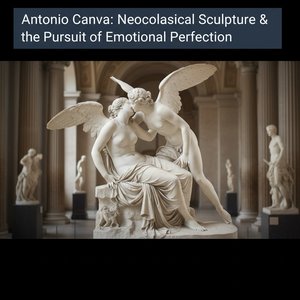
Antonio Canova: Neoclassical Sculpture & the Pursuit of Emotional Perfection
Explore the life & art of Antonio Canova, the greatest Neoclassical sculptor. Discover his masterpieces, innovative techniques, and lasting influence on fine art collecting. Expert insights for discerning investors.

The Enduring Form: Sculpture Across History, Technique & Emotional Resonance
Explore the rich history of sculpture with OriginalUniqueArt. Discover key techniques, influential artists & investment potential for discerning collectors. Expert insights into valuing and collecting timeless masterpieces.

The Enduring Form: Exploring Themes & Techniques in Sculpture Across Historical Periods
Explore the rich history of sculpture from ancient masterpieces to contemporary innovations. Discover key techniques, influential artists & investment potential for discerning art collectors.

Top 10 Bronzen Beeldhouwwerken die de Kunst Voorgoed Veranderden | OriginalUniqueArt
Ontdek de 10 meest legendarische bronzen beeldhouwwerken die kunstgeschiedenis schreven! Van Rodin tot Michelangelo, leer over hun meesterwerken & technieken. Vind museumkwaliteit reproducties en inspiratie voor uw interieur op OriginalUniqueArt.com.
