- Home

- Op canvas afdrukken
- antiphon painter
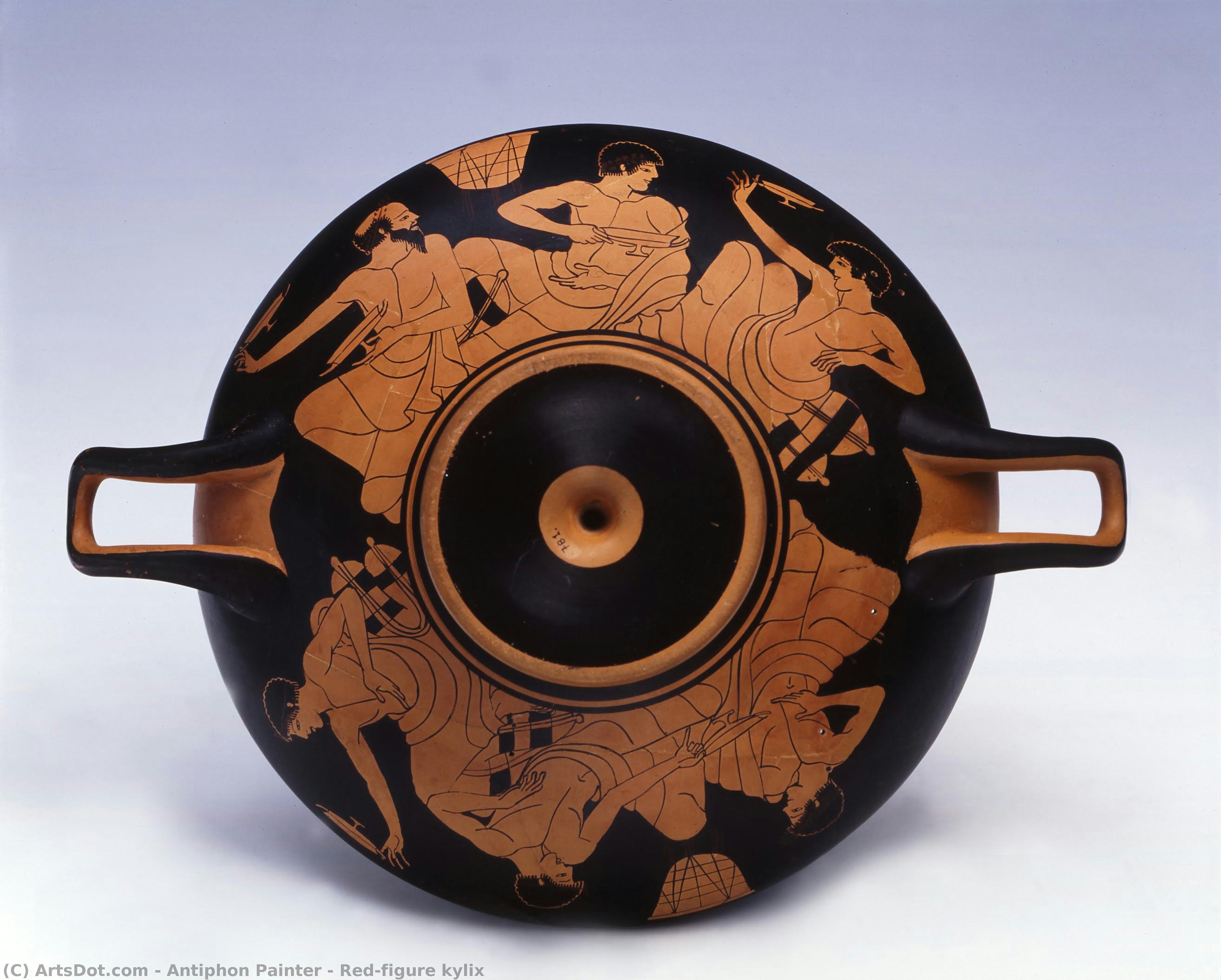
- Red-figure kylix
 Bestel schilderij Koop afbeelding in hoge resolutie
 Verstuur
 Delen
Delen
 Details bekijken
 Toevoegen aan favorieten

 Download
 Vergelijkbare werken
 Röntgenonderzoek
 Diavoorstelling
Red-figure kylix

 Lees meer
Giclée / Kunstafdruk
Giclée- of canvasafdruk van museumkwaliteit met snelle productie en flexibele afwerkingsopties.




































Kies uit onze vooraf ingestelde maten die overeenkomen met de originele verhoudingen van het kunstwerk.

U kunt uw eigen afmetingen opgeven om in een specifieke lijst of ruimte te passen. Als de door u gekozen maat niet overeenkomt met de proporties van het originele kunstwerk, zullen wij de afbeelding bijsnijden of uitbreiden met een gespiegelde of effen rand. Een digitaal mockup wordt ter goedkeuring naar u verzonden voordat de productie begint.
Houd er rekening mee dat de preview op het scherm de werkelijke bijsneding of uitbreiding niet weergeeft. Alleen de mockup toont de uiteindelijke compositie nauwkeurig.
Hoewel aangepaste maten beschikbaar zijn, raden wij aan een afmeting uit de vooraf bepaalde lijst te kiezen om de originele proporties te behouden.
Wereldwijde levering () binnen 2 weken in plaats van de standaard 4/5 weken. (22 juli)

Gratis wereldwijde expressverzending

Hoogwaardig linnen canvas

Volledige verzendverzekering

Garantie op terugbetaling van invoerrechten

Garantie op exacte kleurweergave

60 dagen retourbeleid (alleen bij defecten)

100% Geld-terug-garantie

Korting bij meerdere afnames
 De optie voor glas is alleen beschikbaar bij een formaat kleiner dan 110 cm.

Red-figure kylix
Giclée / Kunstafdruk
Afmetingen reproductie
-


Eindtotaal
-
Beschrijving verzamelobject
Biografie van de kunstenaar
A Glimpse into the World of Athenian Youth: The Antiphon Painter
The early 5th century BC in Athens was a period of burgeoning artistic innovation, and among its most captivating figures stands the artist known as the Antiphon Painter. Unlike many of his contemporaries whose identities remain shrouded in mystery, we know this vase-painter’s name—or rather, his *notname*—thanks to a double inscription reading “Antiphon kalos” (“Antiphon is beautiful”) found on a dinos stand unearthed near Pomarico in southern Italy. This seemingly simple dedication offers a tantalizing connection to the world of aristocratic Athenian youth, a world that became the defining subject matter of his prolific oeuvre. The Antiphon Painter wasn’t simply depicting scenes; he was capturing an ethos, a lifestyle, and perhaps even celebrating individuals within it. He flourished around 490-470 BCE, a time still resonating with the recent victories against Persia at Marathon and Salamis—a period of renewed confidence and cultural blossoming.Formative Years and Artistic Lineage
The Antiphon Painter did not emerge from artistic isolation. He honed his skills within the esteemed workshop of Euphronios and Onesimos, two giants of red-figure vase painting. This apprenticeship was crucial in shaping his technical prowess and aesthetic sensibilities. He worked alongside other painters like the Kalmarer Painter, absorbing the prevailing styles and pushing the boundaries of the medium. The influence of Euphronios is particularly evident in the early works of Antiphon, characterized by dynamic compositions, anatomical precision, and a keen eye for detail. However, Antiphon quickly developed his own distinct voice, moving away from the dramatic narratives favored by Euphronios towards more intimate and genre-focused scenes. He wasn’t merely imitating; he was building upon a legacy while forging a new path.Themes and Techniques: A Celebration of Athenian Life
The Antiphon Painter's work is remarkable for its consistent focus on the lives of aristocratic Athenian youths. His canvases—primarily kylikes, or drinking cups—are filled with athletes engaged in training exercises, symposia brimming with convivial conversation and music, *komos* processions celebrating Dionysus, and scenes of horsemanship. Women, particularly Hetairai (high-class courtesans), appear less frequently than their male counterparts, but when they do, they are often depicted with a captivating grace and individuality. He rarely ventured into grand mythological narratives, preferring instead to portray the everyday experiences of his patrons. Technically, Antiphon was a master of red-figure painting, employing precise linework and subtle shading to create depth and volume. He is particularly celebrated for his *eye-cups*, a specialized form where intricate scenes are painted around the interior of the cup, visible only when tilted. These eye-cups represent the pinnacle of his technical skill, demanding exceptional control and artistry. His compositions often feature carefully arranged groups of figures, creating a sense of dynamic movement and lively interaction. The use of incised details to render musculature, drapery, and facial expressions further enhances the realism and emotional impact of his scenes.Legacy and Historical Significance
Approximately one hundred drinking vessels attributed to the Antiphon Painter have survived, providing a rich and detailed glimpse into Athenian society during the early Classical period. His work is not merely aesthetically pleasing; it’s a valuable historical document, offering insights into aristocratic customs, social interactions, and the values of the time. He was among the last artists to create eye-cups, marking a transition in vase painting techniques and subject matter. While his name may be known only through an inscription on a single vessel, his artistic legacy endures. The Antiphon Painter’s ability to capture the spirit of Athenian youth—their athleticism, their camaraderie, their pursuit of beauty—continues to resonate with viewers today, offering a timeless window into a vibrant and fascinating world. His work stands as a testament to the power of art to not only reflect but also celebrate the lives and ideals of a bygone era.
antiphon painter
Greece
Belangrijkste feiten
- Artistic Movement Or Style: Red-figure vase painting
- Artists Who Influenced This Artist:
- Euphronios
- Onesimos
- Date Of Birth: 495 BC
- Date Of Death: 480 BC
- Full Name: Antiphon Painter
- Nationality: Greek
- Notable Artworks:
- Dinos stand (Berlin F 2325)
- Eye-cups
- Kylikes
- Place Of Birth: Athens, Greece

