

 Bekijk op ware grootte
 Verstuur
 Delen
Delen
 Details bekijken
 Gids voor studentenkunstwerken

 Download
 Vergelijkbare items
 Röntgenonderzoek
 Diavoorstelling
 Statistieken
The Butcher
 Acrylic On Canvas
- WallArt
- Baroque Painting
 1580
1580 59.0 x 71.0 cm
 Kimbell Art Museum
 Lees meer
Giclée / Kunstafdrukken
Giclée- of canvasafdruk van museumkwaliteit met een snelle productie en flexibele afwerkingsmogelijkheden. ( Koop handgeschilderd kunstwerk Schakel over naar digitale afbeeldingen)




P118B €10

P118H €10

P118W €10

P438Z €10

P508JH €12

P508YH €12

P805H €10

P805Z €10

P919BZ €10

P919G €10

P919XJ €10

P959ZH €10

P968JZ €12

W106C €8

W218G €10

W218JH €8

W218Y €10

W307PJ €10

W316G €10

W316PJ €8

W316Y €10

W398PJ €8

W4111J €10

W500HY €15

W500JH €15

W692G €12

W849H €8

W940BG €15

W953PJ €8




Kies uit onze vooraf ingestelde maten die overeenkomen met de originele verhoudingen van het kunstwerk.

Voer de breedte en de hoogte in die u nodig heeft, passend bij uw lijst of uw muur. Een afdruk kan alleen worden ingekort, nooit groter worden gemaakt dan het origineel, waardoor een formaat met een andere verhouding een deel van de afbeelding verliest. Wij sturen u een digitaal mockup ter goedkeuring voordat we iets drukken. De afbeelding op deze pagina toont niet de werkelijke uitsnede — dit is alleen te zien op het mockup.
Wereldwijde levering () binnen 2 weken in plaats van de standaard 4/5 weken. (24 oktober)

Gratis wereldwijde expressverzending

Hoogwaardig linnen canvas

Volledige verzendverzekering

Garantie op terugbetaling van invoerrechten

Garantie op exacte kleurweergave

Retourbeleid van 100 dagen (alleen bij defecten)

100% Geld-terug-garantie

Korting bij meerdere afnames
 De optie voor glas is alleen beschikbaar bij een formaat kleiner dan 110 cm.

The Butcher
Giclée / Kunstafdrukken
Formaat reproductie
-


Totaalprijs
€ 71
A Glimpse into the Heart of a Bolognese Trade: Annibale Carracci’s ‘The Butcher’
Annibale Carracci's “The Butcher,” painted around 1582, is more than just a depiction of a working scene; it’s a window into the social fabric and artistic ambitions of early Baroque Bologna. This captivating work, rendered in a limited palette of earthy tones, offers a remarkably honest portrayal of a commonplace profession – butchering – that challenged the prevailing Mannerist style with its direct observation of nature and emotional resonance. The painting, measuring 59 x 71 cm, immediately draws the viewer into a bustling workshop filled with men engaged in their craft, radiating an atmosphere both industrious and surprisingly dignified.
The scene is dominated by two figures, a central pair of men standing side-by-side. One, wielding a knife with practiced precision, and the other holding a cleaver, are deeply immersed in their task – preparing meat for sale or processing. Beyond them, a cast of supporting characters—apprentices, assistants, and perhaps even customers—adds to the dynamic energy of the space. Noticeably, Carracci’s treatment of light is masterful; shadows cascade across the floorboards and fall upon the wooden beams, lending an almost palpable sense of reality and depth to the composition. This attention to naturalism was a deliberate departure from the stylized, often artificial, hues favored by Mannerist painters.
The Birth of a Reform: Carracci’s Academy and its Influence
“The Butcher” exists within a pivotal moment in art history – the founding of the Carracci Academy by Annibale, his brother Agostino, and cousin Ludovico. This institution, established in Bologna around 1582, represented a radical shift away from the artistic conventions of the time. Inspired by the High Renaissance masters like Leonardo da Vinci and Raphael, but rejecting the overly ornate and emotionally detached style of Mannerism, the Academy championed direct observation of life as the foundation for artistic skill. Carracci’s own practice reflects this philosophy; he famously painted *on top* of earlier layers in “The Butcher’s Shop,” demonstrating a commitment to capturing fleeting moments and spontaneous gestures. This technique, combined with his deliberate use of earthy pigments – a stark contrast to the vibrant, often unnatural colors of Mannerism – created an image that felt remarkably immediate and truthful.
A Sympathetic Gaze: Beyond the Low-Life Subject
What distinguishes “The Butcher” from many earlier depictions of similar subjects is Carracci’s surprisingly sympathetic portrayal of his protagonists. Rather than presenting them as figures of low life or mere background detail, he imbues them with a sober and ceremonious demeanor, accentuated by their clean white aprons. This wasn't simply an artistic choice; it’s believed that Annibale, having familial connections to butchers himself, possessed intimate knowledge of the trade and sought to elevate its practitioners through his art. This gesture speaks volumes about Carracci’s humanist sensibilities – a desire to represent all members of society with dignity and respect.
Historical Context: From Bolognese Provincialism to Roman Grandeur
Following his formative years in Bologna, Annibale Carracci moved to Rome in 1594, where he served the powerful Farnese family. This move marked a significant shift in his artistic style, leading him toward a more grand and classicizing approach. He drew inspiration from antiquity, as well as the Renaissance masters of Venice and central Italy, synthesizing these influences into a distinctly personal vision. “The Butcher,” painted before this transition, offers a valuable glimpse into Carracci’s early development – a period characterized by a fervent dedication to naturalism and a rejection of artistic conventions. It stands as a testament to his ambition to revitalize Italian art through direct observation and emotional honesty.
Vragen & Antwoorden
Welk gebruik en welke ruimte worden aanbevolen voor "The Butcher" door Annibale Carracci?
"The Butcher" door Annibale Carracci wordt aanbevolen voor Statement, bij voorkeur in een Living Room. Gebruik en ruimte bepalen samen waar een reproductie het beste tot zijn recht komt.
Voor welke ruimte wordt "The Butcher" door Annibale Carracci aanbevolen?
Een reproductie van "The Butcher" past uitstekend in een Living Room.
Waarvoor wordt een reproductie van "The Butcher" door Annibale Carracci aanbevolen?
Een reproductie van "The Butcher" door Annibale Carracci wordt aanbevolen voor Statement. Dit advies is gebaseerd op het onderwerp, de sfeer en de kleuren van het werk.
Biografie van de kunstenaar
Early Life and the Bolognese Roots
Annibale Carracci, geboren op 3 november 1560 in Bologna, kwam uit een familie die diep geworteld was in de kunsttraditie. Zijn eerste training vond waarschijnlijk plaats binnen het warme nest van zijn familiewerkplaats, waar hij de basis legde voor een carrière die de kunstwereld in Italië radicaal zou veranderen. Bologna was op dat moment een levendige broedplaats van intellectuele en artistieke ontluiking, maar voelde toch wat afstandelijk ten opzichte van de dominante stromingen die uit Rome en Venetië voortkwamen. Deze gevoelens van provincialisme voedden bij een groep jonge kunstenaars – Annibale, zijn broer Agostino en neef Ludovico – de drang om een nieuwe weg te vinden, een pad dat de Italiaanse kunst zou hervitaliseren door zich te wenden tot de meesters van de Gouden Eeuw, terwijl ze tegelijkertijd een meer naturalistische benadering omarmden.
In 1582 verwees deze ambitie in het leven van de *Accademia degli Incamminati*, aanvankelijk bekend als de Academy of the Desiderosi. Dit was niet alleen een atelier; het was een broedselkamer voor artistische innovatie, een ruimte gewijd aan rigoureuze levensnaalden, levendige discussies en een gezamenlijke zoektocht naar artistieke excellentie. De naam van de academie zelf – de “Progressives” – verraadde hun bedoeling: verder te gaan dan de stijfheid van het Manierisme en een nieuwe koers in te slaan naar een meer genuanceerde, emotioneel resonerende vorm van expressie. De Incamminati werd een model voor kunstacademies in heel Europa, waarbij nadruk werd gelegd op observatie vanuit het leven als hoeksteen van artistieke training.
A Synthesis of Styles and Influences
Carracci’s artistieke visie was niet ontstaan uit het niets; hij was zorgvuldig geconstrueerd door een diepe betrokkenheid bij de nalatenschappen van voorgangers. Hij bezat een buitengewone vaardigheid om verschillende invloeden te synthetiseren, waardoor een stijl ontstond die zowel diep geworteld was in traditie als opvallend origineel. Hij bewonderde de helderheid van lijn en compositie die te vinden was in het werk van Raphael en Andrea del Sarto, en streefde ernaar om hun gratie en harmonie na te bootsen. Tegelijkertijd herkende hij echter ook de kracht van kleur en atmosferische effecten die door Venetiaanse schilders zoals Titiaan werden gepromoot, waardoor zijn eigen werk een levendige uitstraling kreeg en emotionele diepte.
De invloed van Correggio was bijzonder groot, zichtbaar in Carracci’s dynamische composities en illusie technieken – vooral in de fresco’s die hij schilderde voor het Palazzo Farnese. Hij kopieerde deze meesters niet simpelweg; hij absorbeerde hun sterktes en vormde ze om tot iets nieuws. Deze eclectische mix werd de kenmerkende uitstraling van de Bolognese School, een belangrijke tak van de Barok kunst die zowel klassieke idealen als naturalistische observatie benadrukte. Carracci’s genialiteit lag in zijn vermogen om deze tegenstellingen te verenigen, waardoor een harmonieus geheel ontstond dat zowel intellectuele rigoureusheid als emotionele kracht uitstraalde.
The Roman Triumph: Palazzo Farnese and Beyond
De uitnodiging om de fresco’s voor het Palazzo Farnese in Rome te schilderen markeerde een cruciale mijlpaal in Carracci’s carrière. Deze monumentale opdracht – een uitgebreide fresco cyclus die scènes uit de mythologie weergaf – bood hem een ongekende kans om zijn artistieke behendigheid te laten zien en zijn reputatie op grote schaal te vestigen. De *Triumph of Bacchus and Ariadne*, waarschijnlijk zijn meesterwerk, is een adembenemend voorbeeld van illusie techniek, dynamische compositie en levendige kleur. De fresco’s lijken de grenzen tussen schilderkunst en realiteit te vervagen, waardoor de toeschouwer wordt uitgenodigd in een wereld van mythologische grandeur.
Naast *The Triumph*, werkte Carracci ook aan *The Loves of the Gods* bij het Palazzo Farnese, waarbij hij verder onderzoek deed naar thema’s als mythologie en liefde met behulp van klassieke idealisme en scherpe observatie. Deze werken waren niet alleen decoratief; ze waren een verklaring van de kracht van kunst om de menselijke geest te verheffen en de schoonheid van de natuur te vieren. Zijn succes in Rome verstevigde zijn positie als een van de toonaangevende kunstenaars van zijn tijd, waardoor een stroom van opdrachten werd aangetrokken en generaties schilders werden beïnvloed.
Legacy and Historical Significance
Annibale Carracci’s impact op de kunstgeschiedenis is onmiskenbaar. Hij speelde een cruciale rol bij het overbruggen van de kloof tussen de Gouden Eeuw en de Barok periode, waarbij hij de stijfheid van het Manierisme verliet om een meer dynamische, emotioneel geladen esthetiek te bevorderen. Zijn nadruk op naturalisme – op figuren die werden afgebeeld met anatomische nauwkeurigheid en psychologische diepgang – legde de basis voor kunstenaars als Caravaggio, die de Italiaanse schilderkunst verder revolutioneerden met hun dramatische gebruik van licht en schaduw.
De Accademia degli Incamminati, opgericht door Carracci en zijn collega’s, diende als een model voor kunstacademies in heel Europa, waarbij artistieke training werd gepromoot gebaseerd op observatie en klassieke principes. Zijn fresco’s bij het Palazzo Farnese blijven iconische voorbeelden van Barok illusie en artistieke grandeur, die nog steeds bewondering en inspiratie oproepen eeuwen na hun creatie. De collectieve nalatenschap van de Carracci familie – Annibale, Agostino en Ludovico – is een voorbeeld van profunde innovatie en blijvende invloed, waardoor Bologna een belangrijke centrum werd voor artistieke creativiteit.
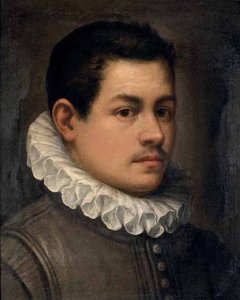
Annibale Carracci
1560 - 1609 , Italië
Snelle feiten
- Artistic Movement Or Style: Barokke School
- Artists Or Movements Influenced By This Artist:
- Caravaggio
- Mannerisme
- Artists Who Influenced This Artist:
- Rafaël
- Andrea del Sarto
- Date Of Birth: 3 november 1560
- Date Of Death: 15 juli 1609
- Full Name: Annibale Carracci
- Nationality: Italiaans
- Notable Artworks:
- Triumph Bacchus
- Liefdes van de Goden
- Place Of Birth: Bologna, Italië
Gerelateerde artikelen

Italian Baroque Unlocked: High-Drama Art That Hits Hard
Dive into the high-drama world of Italian Baroque art. Discover how chiaroscuro, intense emotion, and theatrical lighting redefined aesthetics. Explore the visceral power of the Counter-Reformation through a modern lens with expert insights from OriginalUniqueArt.com.
Annibale Carracci: Bridging Renaissance Ideals & Baroque Innovation
Explore the life & art of Annibale Carracci, a pivotal figure bridging Renaissance ideals with Baroque innovation. Discover his masterpieces and lasting influence on Italian painting.

Barokke Pracht: Kunst die Grootsheid in Huis Brengt
Ontdek de barokke pracht! Leer over de geschiedenis, kenmerken en toepassingen van deze weelderige kunststijl in uw interieur. Laat u inspireren door meesters en breng grootsheid in huis.
Simon Vouet: A Baroque Master's Journey from Italian Influence to French Classicism
Explore the life & art of Simon Vouet, a pivotal French Baroque painter who introduced Italian styles to France. Discover his masterpieces and lasting influence on 17th-century art.

Top 10 Barok Meesterwerken: Kunstgeschiedenis voor uw Interieur | OriginalUniqueArt.nl
Ontdek de 10 meest iconische Barok meesterwerken van Caravaggio, Rembrandt & Rubens! Duik in de geschiedenis en passie achter deze klassieke schilderijen. Vind museumkwaliteit reproducties voor uw interieur op OriginalUniqueArt.com.


