

 Bekijk op ware grootte
 Verstuur
 Delen
Delen
 Details bekijken
 Gids voor studentenkunstwerken

 Download
 Vergelijkbare items
 Röntgenonderzoek
 Diavoorstelling
 Statistieken
Fishing
 Oil On Canvas
- WallArt
- Baroque
 1585
1585- Renaissance
 136.0 x 253.0 cm
 Louvre
 Lees meer
Giclée / Kunstafdrukken
Giclée- of canvasafdruk van museumkwaliteit met een snelle productie en flexibele afwerkingsmogelijkheden. ( Koop handgeschilderd kunstwerk Schakel over naar digitale afbeeldingen)




P118B €10

P118H €10

P118W €10

P438Z €10

P508JH €12

P508YH €12

P805H €10

P805Z €10

P919BZ €10

P919G €10

P919XJ €10

P959ZH €10

P968JZ €12

W106C €8

W218G €10

W218JH €8

W218Y €10

W307PJ €10

W316G €10

W316PJ €8

W316Y €10

W398PJ €8

W4111J €10

W500HY €15

W500JH €15

W692G €12

W849H €8

W940BG €15

W953PJ €8




Kies uit onze vooraf ingestelde maten die overeenkomen met de originele verhoudingen van het kunstwerk.

Voer de breedte en de hoogte in die u nodig heeft, passend bij uw lijst of uw muur. Een afdruk kan alleen worden ingekort, nooit groter worden gemaakt dan het origineel, waardoor een formaat met een andere verhouding een deel van de afbeelding verliest. Wij sturen u een digitaal mockup ter goedkeuring voordat we iets drukken. De afbeelding op deze pagina toont niet de werkelijke uitsnede — dit is alleen te zien op het mockup.
Wereldwijde levering () binnen 2 weken in plaats van de standaard 4/5 weken. (24 oktober)

Gratis wereldwijde expressverzending

Hoogwaardig linnen canvas

Volledige verzendverzekering

Garantie op terugbetaling van invoerrechten

Garantie op exacte kleurweergave

Retourbeleid van 100 dagen (alleen bij defecten)

100% Geld-terug-garantie

Korting bij meerdere afnames
 De optie voor glas is alleen beschikbaar bij een formaat kleiner dan 110 cm.

Fishing
Giclée / Kunstafdrukken
Formaat reproductie
-


Totaalprijs
€ 71
A Masterpiece of Naturalism and Renaissance Revival
In the vast, hallowed halls of the Louvre Museum, there exists a canvas that breathes with the quiet vitality of the Italian countryside. Annibale Carracci’s "Fishing," executed in 1585, is far more than a mere pastoral scene; it is a profound manifesto of artistic rebirth. At a time when the art world was caught between the stylized elegance of Mannerism and the burgeoning desire for realism, Carracci stepped forward to bridge the gap. This monumental oil on canvas, measuring an impressive 136 x 253 cm, captures a moment of rustic tranquility that feels simultaneously timeless and deeply grounded in the observable world. Through his brush, the artist invites us into a symphony of human connection, where the boundaries between the landscape and the figures dissolve into a singular, harmonious narrative.
The composition is a masterclass in the use of perspective and depth, techniques that Carracci refined by studying the giants of the High Renaissance. As your eyes wander across the canvas, you are led from the immediate, tactile presence of the figures in the foreground toward the majestic, hazy peaks of distant mountains. This atmospheric perspective does not merely provide a backdrop; it creates an immersive environment where the air itself feels heavy with the warmth of a summer afternoon. The subtle interplay of light and shadow—the chiaroscuro—bestows a palpable volume upon the thirteen individuals gathered by the water, making their presence feel strikingly three-dimensional and alive.
The Human Element: A Symphony of Life and Light
At the heart of this work lies a vibrant community. Carracci populates his landscape with a group of men and boys, each rendered with an extraordinary commitment to naturalism. There is no stiff, artificial posing here; instead, we witness the spontaneous energy of life. Some figures are deeply engaged in the rhythmic task of fishing, while others linger in quiet conversation or simply observe the shimmering water. The artist’s meticulous attention to detail—the texture of coarse clothing, the subtle tension in a limb, and the nuanced expressions on each face—creates an emotional resonance that is deeply accessible to the modern viewer.
This focus on the everyday, elevated through sophisticated technique, reflects the humanist spirit of the era. Carracci sought to move away from the artificiality of his predecessors, looking instead to the grace of Raphael and the realism of Venetian colorists to create something entirely new. For the collector or interior designer, this painting offers a unique emotional duality: it possesses the grandeur and prestige of a classical masterpiece, yet its subject matter remains intimately relatable. It evokes a sense of peace, a longing for a simpler existence, and an appreciation for the quiet beauty found in communal labor and natural splendor.
An Enduring Inspiration for the Modern Interior
For those seeking to infuse a space with character and historical depth, "Fishing" serves as an unparalleled inspiration. Its expansive horizontal format makes it a commanding presence in any room, capable of anchoring a large gallery wall or serving as the singular focal point of a sophisticated study or living area. The palette—rich with earthy tones, lush greens, and the soft blues of the distant horizon—complements a wide variety of interior aesthetics, from classical European elegance to contemporary organic minimalism.
Owning a high-quality reproduction of this Carracci masterpiece is an opportunity to bring a piece of art history into the private sphere. It is not merely a decorative element; it is a window into the soul of the late Renaissance. The painting’s ability to evoke tranquility, nostalgia, and awe ensures that it remains a conversation piece for years to come, offering a constant source of contemplative beauty and a reminder of the enduring power of the natural world.
Vragen & Antwoorden
Hoe kan ik kunstwerken ontdekken die lijken op "Fishing" door Annibale Carracci?
Kunstwerken die lijken op "Fishing" door Annibale Carracci zijn verzameld op de Vergelijkbare werken-pagina van het kunstwerk.
In welke fase van de carrière van Annibale Carracci valt "Fishing", gezien de datum?
Gezien de datering uit 1585, valt "Fishing" binnen de Mature van Annibale Carracci.
Waar komen de bezoekers van "Fishing" door Annibale Carracci vandaan?
De Statistieken-pagina van "Fishing" door Annibale Carracci presenteert statistieken over publieksbezoeken: de maandelijkse bezoeken aan dit kunstwerk, een vergelijking met de meest bekeken werken van de kunstenaar en de herkomst van de bezoekers.
Biografie van de kunstenaar
Early Life and the Bolognese Roots
Annibale Carracci, geboren op 3 november 1560 in Bologna, kwam uit een familie die diep geworteld was in de kunsttraditie. Zijn eerste training vond waarschijnlijk plaats binnen het warme nest van zijn familiewerkplaats, waar hij de basis legde voor een carrière die de kunstwereld in Italië radicaal zou veranderen. Bologna was op dat moment een levendige broedplaats van intellectuele en artistieke ontluiking, maar voelde toch wat afstandelijk ten opzichte van de dominante stromingen die uit Rome en Venetië voortkwamen. Deze gevoelens van provincialisme voedden bij een groep jonge kunstenaars – Annibale, zijn broer Agostino en neef Ludovico – de drang om een nieuwe weg te vinden, een pad dat de Italiaanse kunst zou hervitaliseren door zich te wenden tot de meesters van de Gouden Eeuw, terwijl ze tegelijkertijd een meer naturalistische benadering omarmden.
In 1582 verwees deze ambitie in het leven van de *Accademia degli Incamminati*, aanvankelijk bekend als de Academy of the Desiderosi. Dit was niet alleen een atelier; het was een broedselkamer voor artistische innovatie, een ruimte gewijd aan rigoureuze levensnaalden, levendige discussies en een gezamenlijke zoektocht naar artistieke excellentie. De naam van de academie zelf – de “Progressives” – verraadde hun bedoeling: verder te gaan dan de stijfheid van het Manierisme en een nieuwe koers in te slaan naar een meer genuanceerde, emotioneel resonerende vorm van expressie. De Incamminati werd een model voor kunstacademies in heel Europa, waarbij nadruk werd gelegd op observatie vanuit het leven als hoeksteen van artistieke training.
A Synthesis of Styles and Influences
Carracci’s artistieke visie was niet ontstaan uit het niets; hij was zorgvuldig geconstrueerd door een diepe betrokkenheid bij de nalatenschappen van voorgangers. Hij bezat een buitengewone vaardigheid om verschillende invloeden te synthetiseren, waardoor een stijl ontstond die zowel diep geworteld was in traditie als opvallend origineel. Hij bewonderde de helderheid van lijn en compositie die te vinden was in het werk van Raphael en Andrea del Sarto, en streefde ernaar om hun gratie en harmonie na te bootsen. Tegelijkertijd herkende hij echter ook de kracht van kleur en atmosferische effecten die door Venetiaanse schilders zoals Titiaan werden gepromoot, waardoor zijn eigen werk een levendige uitstraling kreeg en emotionele diepte.
De invloed van Correggio was bijzonder groot, zichtbaar in Carracci’s dynamische composities en illusie technieken – vooral in de fresco’s die hij schilderde voor het Palazzo Farnese. Hij kopieerde deze meesters niet simpelweg; hij absorbeerde hun sterktes en vormde ze om tot iets nieuws. Deze eclectische mix werd de kenmerkende uitstraling van de Bolognese School, een belangrijke tak van de Barok kunst die zowel klassieke idealen als naturalistische observatie benadrukte. Carracci’s genialiteit lag in zijn vermogen om deze tegenstellingen te verenigen, waardoor een harmonieus geheel ontstond dat zowel intellectuele rigoureusheid als emotionele kracht uitstraalde.
The Roman Triumph: Palazzo Farnese and Beyond
De uitnodiging om de fresco’s voor het Palazzo Farnese in Rome te schilderen markeerde een cruciale mijlpaal in Carracci’s carrière. Deze monumentale opdracht – een uitgebreide fresco cyclus die scènes uit de mythologie weergaf – bood hem een ongekende kans om zijn artistieke behendigheid te laten zien en zijn reputatie op grote schaal te vestigen. De *Triumph of Bacchus and Ariadne*, waarschijnlijk zijn meesterwerk, is een adembenemend voorbeeld van illusie techniek, dynamische compositie en levendige kleur. De fresco’s lijken de grenzen tussen schilderkunst en realiteit te vervagen, waardoor de toeschouwer wordt uitgenodigd in een wereld van mythologische grandeur.
Naast *The Triumph*, werkte Carracci ook aan *The Loves of the Gods* bij het Palazzo Farnese, waarbij hij verder onderzoek deed naar thema’s als mythologie en liefde met behulp van klassieke idealisme en scherpe observatie. Deze werken waren niet alleen decoratief; ze waren een verklaring van de kracht van kunst om de menselijke geest te verheffen en de schoonheid van de natuur te vieren. Zijn succes in Rome verstevigde zijn positie als een van de toonaangevende kunstenaars van zijn tijd, waardoor een stroom van opdrachten werd aangetrokken en generaties schilders werden beïnvloed.
Legacy and Historical Significance
Annibale Carracci’s impact op de kunstgeschiedenis is onmiskenbaar. Hij speelde een cruciale rol bij het overbruggen van de kloof tussen de Gouden Eeuw en de Barok periode, waarbij hij de stijfheid van het Manierisme verliet om een meer dynamische, emotioneel geladen esthetiek te bevorderen. Zijn nadruk op naturalisme – op figuren die werden afgebeeld met anatomische nauwkeurigheid en psychologische diepgang – legde de basis voor kunstenaars als Caravaggio, die de Italiaanse schilderkunst verder revolutioneerden met hun dramatische gebruik van licht en schaduw.
De Accademia degli Incamminati, opgericht door Carracci en zijn collega’s, diende als een model voor kunstacademies in heel Europa, waarbij artistieke training werd gepromoot gebaseerd op observatie en klassieke principes. Zijn fresco’s bij het Palazzo Farnese blijven iconische voorbeelden van Barok illusie en artistieke grandeur, die nog steeds bewondering en inspiratie oproepen eeuwen na hun creatie. De collectieve nalatenschap van de Carracci familie – Annibale, Agostino en Ludovico – is een voorbeeld van profunde innovatie en blijvende invloed, waardoor Bologna een belangrijke centrum werd voor artistieke creativiteit.
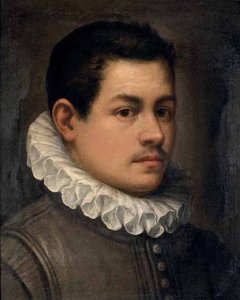
Annibale Carracci
1560 - 1609 , Italië
Snelle feiten
- Artistic Movement Or Style: Barokke School
- Artists Or Movements Influenced By This Artist:
- Caravaggio
- Mannerisme
- Artists Who Influenced This Artist:
- Rafaël
- Andrea del Sarto
- Date Of Birth: 3 november 1560
- Date Of Death: 15 juli 1609
- Full Name: Annibale Carracci
- Nationality: Italiaans
- Notable Artworks:
- Triumph Bacchus
- Liefdes van de Goden
- Place Of Birth: Bologna, Italië
Gerelateerde artikelen

Oil on Canvas: A Historical & Technical Exploration of a Timeless Artistic Medium
Explore the rich history & enduring techniques of oil painting on canvas. Discover the science behind its longevity, conservation practices, and contemporary relevance. Expert insights for art enthusiasts.
Top 10 Meesterwerken Olieverf die de Kunst voorgoed Veranderden | OriginalUniqueArt.nl
Ontdek de 10 meest legendarische olieverf meesterwerken die kunstgeschiedenis schreven! Van Van Gogh tot Rembrandt, leer over iconische technieken & emotionele impact. Vind museumkwaliteit reproducties en woondecoratie inspiratie op OriginalUniqueArt.com.

De Blijvende Erfenis van Olieverf op Doek: Techniek, Geschiedenis en Hedendaagse Praktijk
Ontdek de rijke geschiedenis en technieken van olieverfschilderen. Van Renaissance meesterwerken tot moderne toepassingen, leer over pigmenten, glazuur en conservering.
The Soul of Impressionism: Why Oil on Canvas Captures Eternal Light and Timeless Emotion
Discover the enchanting alchemy of Impressionism. Explore how the mastery of oil on canvas, through glazing and impasto, captures eternal light and emotion. Perfect for lovers of Monet and Van Gogh seeking the profound depth of hand-painted fine art.

The Enduring Legacy of Oil on Canvas: Technique, History & Aesthetic Impact
Explore the rich history & techniques of oil painting – from Renaissance masters to Impressionism. Discover pigments, layering methods, and why this timeless medium endures. Expert insights for artists & art enthusiasts.


