
 Voorvertoning
 Verstuur
 Delen
Delen
 Details bekijken

 Download
 Vergelijkbare items
 Röntgenonderzoek
 Diavoorstelling
Whoa
 20.0 x 31.0 cm
 Lees meer
Handgemaakte olieverfreproductie
Met de hand geschilderd in olieverf op canvas in uw gewenste maat en lijst, op bestelling gemaakt door onze kunstenaars. ( Bestel print Koop afbeelding)




































Kies uit onze vooraf ingestelde maten die overeenkomen met de originele verhoudingen van het kunstwerk.

U kunt uw eigen afmetingen invoeren om in een specifieke lijst of ruimte te passen. Als de door u gekozen maat niet overeenkomt met de verhoudingen van het originele beeld, zullen we het kunstwerk bijsnijden of het schilderij uitbreiden met extra handgeschilderde elementen. Een digitale mockup wordt ter goedkeuring naar u verzonden voordat de productie begint.
Houd er rekening mee dat de preview op het scherm niet de werkelijke uitsnede of uitbreiding weergeeft. Alleen de mockup toont de uiteindelijke compositie nauwkeurig.
Hoewel aangepaste afmetingen mogelijk zijn, raden we aan een maat uit de vooraf gedefinieerde lijst te selecteren om de originele verhoudingen te behouden.
Na de bestelling zal het team van OriginalUniqueArt.com per e-mail contact opnemen met de klant voor instructies en een mockup-voorbeeld sturen.
Wereldwijde levering () binnen 3 tot 4 weken in plaats van de standaard 5 weken. (29 augustus). Zonder concessies aan de kwaliteit.

Gratis wereldwijde expressverzending

Hoogwaardig linnen canvas

Volledige verzendverzekering

Garantie op terugbetaling van invoerrechten

Garantie op exacte kleurweergave

Retourbeleid van 60 dagen (alleen bij defecten)

100% Geld-terug-garantie

Korting bij meerdere afnames
 De optie voor glas is alleen beschikbaar bij een formaat kleiner dan 110 cm.

Whoa
Druktechniek
Afmetingen reproductie
-


Eindtotaal
$ 325
Biografie van de kunstenaar
A Life Painted in Rural Grace
The story of Anna Mary Robertson, known to the world as Grandma Moses, is one of the most enchanting chronicles in American art history. Born on September 7, 1860, in the quiet hamlet of Greenwich, New York, her early years were deeply rooted in the rhythmic, seasonal labors of a family farm. This upbringing provided more than just a backdrop; it served as the very soul of her future work. Before she ever picked up a brush with intention, Robertson lived the scenes she would later immortalize. Her life was defined by the textures of rural existence—the biting chill of a New England winter, the warmth of a wood-burning stove, and the communal spirit of village traditions. Though she spent much of her life engaged in the demanding physical work of farming and housekeeping, an innate observant eye was always at work, capturing the subtle beauty of the natural world and the simple dignity of country life.
Her transition from a hardworking farmwife to a celebrated painter is nothing short of legendary. It was not until her late seventies, prompted by the physical limitations following a debilitating stroke in 1935, that she turned toward fine arts as a way to keep her hands busy and her spirit engaged. This late-blooming creativity transformed her from an observer of tradition into its most prominent chronicler. Her work did not emerge from formal academic training but from a deep-seated connection to the folk traditions of her heritage, drawing inspiration from the vibrant patterns of Amish quilts and the nostalgic charm of 19th-century Americana.
The Language of Folk Artistry
The technique of Grandma Moses is as heartwarming and accessible as the subjects she chose to depict. Eschewing the complex shadows and anatomical precision of classical realism, she embraced a style characterized by bold outlines, simplified forms, and a luminous palette. She often utilized casein paint—a durable medium derived from milk protein—which allowed her to achieve a soft yet lasting vibrancy on her canvases. Her compositions frequently featured meticulously crafted checkerboard patterns and sweeping landscapes that felt both intimate and expansive.
Her visual vocabulary was built upon the familiar:
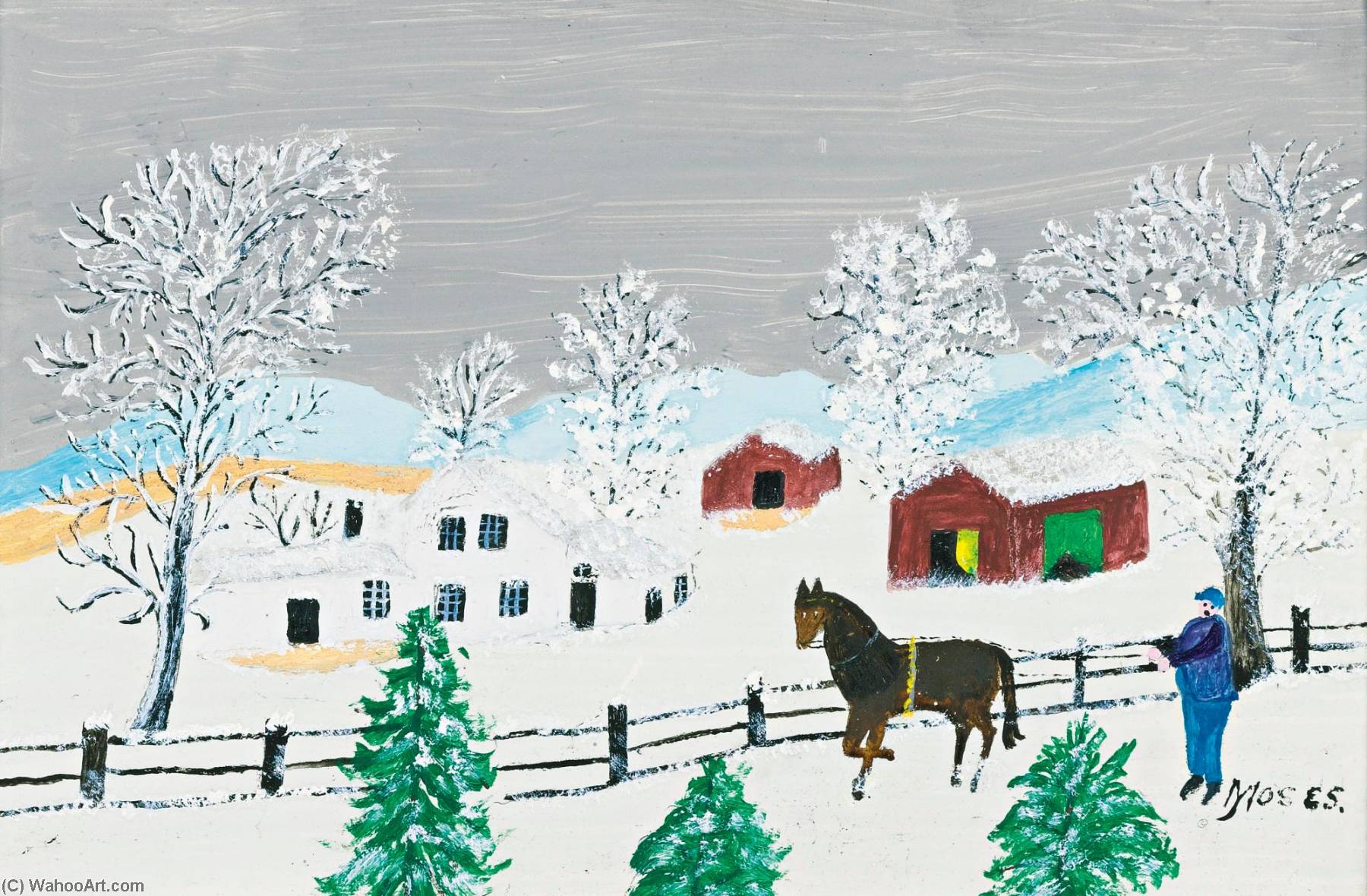
- Vibrant Landscapes: Rolling hills, snow-covered roads, and sun-drenched meadows that evoke a sense of eternal spring or peaceful winter.
- Communal Scenes: Busy farmyards, church gatherings, and village festivities that celebrate the strength of human connection.
- Seasonal Narratives: A profound focus on the cycle of life, from the harvest celebrations to the quiet solitude of a frozen river.
- Symbolic Simplicity: Using bright, primary colors and clear shapes to convey emotion without the need for complex ornamentation.
Legacy and Historical Significance
As her fame grew during the 1950s, Grandma Moses became a cultural phenomenon, appearing on the covers of prestigious publications like Time Magazine and becoming a symbol of American resilience and nostalgia. Her work offered a sanctuary of peace to a nation navigating the rapid technological and social shifts of the mid-20th century. She did not merely paint pictures; she preserved a vanishing way of life, capturing the essence of an era that many feared was being lost to modernity.
The historical significance of her contribution lies in her role as a pioneer of the American Folk Art movement. By elevating "primitive" or "outsider" perspectives to the heights of fine art, she challenged the rigid hierarchies of the art world. Her ability to find profound beauty in the mundane—a sugar house, a horse-drawn carriage, or a simple flock of sheep—remains her greatest gift to posterity. Today, her legacy lives on through her celebrated works that continue to evoke a sense of wonder, reminding us that art is not found solely in museums, but in the very fabric of our shared history and the quiet moments of rural grace.
anna mary robertson
1860 - 1961
Belangrijkste feiten
- Artistic Movement Or Style: Folk Art America
- Artists Or Movements Influenced By This Artist: ['']
- Artists Who Influenced This Artist: ['']
- Date Of Birth: September 7, 1860
- Full Name: Anna Mary Robertson
- Nationality: American
- Notable Artworks:
- At the Bend of the River
- Sugar House
- Place Of Birth: Greenwich, New York

