
 Voorvertoning
 Verstuur
 Delen
Delen
 Details bekijken
 Gids
Gids

 Download
 Vergelijkbare items
 Röntgenonderzoek
 Diavoorstelling
 Vraag & antwoord
 Statistieken
Mrs. Morewood


 Lees meer
Giclée / Kunstafdrukken
Giclée- of canvasafdruk van museumkwaliteit met een snelle productie en flexibele afwerkingsmogelijkheden. ( Bestel handgeschilderde reproductie Schakel over naar digitale afbeeldingen)




P118B €10

P118H €10

P118W €10

P438Z €10

P508JH €12

P508YH €12

P805H €10

P805Z €10

P919BZ €10

P919G €10

P919XJ €10

P959ZH €10

P968JZ €12

W106C €8

W218G €10

W218JH €8

W218Y €10

W307PJ €10

W316G €10

W316PJ €8

W316Y €10

W398PJ €8

W4111J €10

W500HY €15

W500JH €15

W692G €12

W849H €8

W940BG €15

W953PJ €8




Kies uit onze vooraf ingestelde maten die overeenkomen met de originele verhoudingen van het kunstwerk.

Voer de gewenste breedte en hoogte in, passend bij uw lijst of muur. Een afdruk kan alleen worden ingekort en nooit groter worden gemaakt dan het origineel; een formaat met andere verhoudingen zal daarom een deel van de afbeelding verliezen. Wij sturen u een digitaal mockup ter goedkeuring voordat we tot drukwerk overgaan. De afbeelding op deze pagina toont niet de werkelijke uitsnede — dit is alleen te zien op het mockup.
Wereldwijde levering () binnen 2 weken in plaats van de standaard 4/5 weken. (9 november)

Gratis wereldwijde expressverzending

Hoogwaardig linnen canvas

Volledige verzendverzekering

Garantie op terugbetaling van invoerrechten

Garantie op exacte kleurweergave

Retourbeleid van 100 dagen (alleen bij defecten)

100% Geld-terug-garantie

Korting bij meerdere afnames
 De optie voor glas is alleen beschikbaar bij een formaat kleiner dan 110 cm.

Mrs. Morewood
Giclée / Kunstafdrukken
Afmetingen reproductie
-


Eindtotaal
€ 72
A Glimpse into the Soul: The Luminous Presence of Mrs. Morewood
In the realm of Swedish Impressionism, few works capture the delicate intersection of social poise and inner reflection as profoundly as Anders Leonard Zorn’s Mrs. Morewood. Painted in 1883, this portrait is far more than a mere recording of a sitter's likeness; it is a masterful distillation of light, texture, and psychological nuance. The subject, a woman of considerable social standing, is presented in a contemplative stance before a neutral wall backdrop that allows her presence to command the space. As she gazes toward the viewer, an intimate connection is forged, inviting us to peer beneath the surface of her composed exterior and contemplate the silent thoughts held within her gaze.
Zorn’s signature technique is on full display here, showcasing his unparalleled ability to manipulate light and atmosphere. Eschewing the rigid precision of photographic accuracy, he employs deliberate, broken brushstrokes—a hallmark of the Impressionist movement—to capture the fleeting essence of a moment. The palette is masterfully muted, dominated by earthy tones that are elegantly punctuated by subtle shades of crimson and gold. This careful balance of color creates a serene, almost ethereal atmosphere, where the play of light across the textures of her attire becomes as much a subject as the woman herself.
Symbolism and the Quiet Dignity of an Era
Beyond the technical brilliance, Mrs. Morewood is rich with subtle symbolism that speaks to the social fabric of the late nineteenth century. The woman's posture—arms crossed and head slightly tilted—conveys a sense of profound composure and introspection. Small, yet significant, details such as her scarf and the inclusion of an umbrella hint at the domestic sphere and the protective, steadfast role women played within their families during the Victorian era. Even the neutral wall behind her serves a greater purpose; it acts as a visual anchor, symbolizing stability and reflecting the quiet dignity that defines Mrs. Morewood’s character.
For the discerning collector or interior designer, this painting offers an unparalleled emotional resonance. It possesses a stillness that lingers in the mind long after one has turned away, evoking themes of femininity, contemplation, and the profound beauty found in simplicity. Whether gracing a private gallery or serving as a focal point in a sophisticated living space, a high-quality reproduction of this masterpiece brings with it an aura of timeless elegance and a deep, soulful connection to the history of Swedish art.
Veelgestelde vragen
Is Anders Zorn, maker van "Mrs. Morewood", bekend onder andere namen?
Andere namen waaronder Anders Zorn, maker van "Mrs. Morewood", bekend is, zijn onder andere Zorn, A. Zorn.
Op welke fase in de carrière van Anders Zorn komt de datum uit 1883 van "Mrs. Morewood" overeen?
De datum uit 1883 plaatst "Mrs. Morewood" in de Mature Period van de ontwikkeling van Anders Zorn.
Welke emotie straalt het Impressionism-werk "Mrs. Morewood" uit?
De Calm emotie van "Mrs. Morewood" gaat samen met de Impressionism stijl.
Biografie kunstenaar
A Swedish Master of Light and Life: The World of Anders Zorn
Anders Leonard Zorn, a name synonymous with vibrant Impressionism and masterful portraiture, stands as Sweden’s most celebrated artist. Born in 1860 amidst the rustic beauty of Dalarna, his journey from humble beginnings to international acclaim is a testament to raw talent nurtured by relentless dedication. Unlike many artists who sought formal training within established circles, Zorn's early education was rooted in the practicalities of rural life and an innate artistic sensibility that blossomed even before entering the Royal Swedish Academy of Arts at the remarkably young age of twelve. His childhood on his grandparents’ farm instilled a deep connection to the land and its people—a theme that would resonate throughout his oeuvre, particularly in his evocative depictions of Swedish peasant life. This early exposure wasn't merely about subject matter; it was about capturing a way of being, an authenticity that infused his work with a unique emotional depth.From Watercolors to International Recognition
Zorn’s initial artistic explorations centered on watercolors, a medium he mastered with astonishing speed and skill. He quickly gained recognition for his ability to capture fleeting moments of light and atmosphere, particularly in scenes depicting everyday life. A pivotal moment arrived with “In Mourning” (1880), a watercolor portrait that showcased his remarkable sensitivity and technical prowess. This work propelled him onto the art scene, attracting commissions from Stockholm’s elite and setting the stage for an international career. He embarked on extensive travels throughout Europe—London, Paris, Spain—and eventually to the United States, where he found immense success as a portraitist. His ability to distill the essence of his sitters, whether royalty like King Oscar II or American presidents Grover Cleveland, William H. Taft, and Theodore Roosevelt, earned him widespread admiration. Zorn didn’t simply paint likenesses; he captured character, intellect, and even a hint of the soul. This talent wasn't accidental—it stemmed from an acute observational skill honed through years of studying human form and expression. He was known for his ability to capture not just physical appearance but also the subtle nuances of personality that revealed a subject’s inner world.A Synthesis of Influences and Artistic Development
While Zorn’s style is often categorized as Impressionistic, it was far from a simple imitation of French trends. He absorbed influences from various sources, blending them into a uniquely personal vision. The luminosity of Spanish masters like Velázquez resonated in his handling of light and shadow, while the directness and realism of Scandinavian naturalism informed his approach to subject matter. His time spent with artists like Albert Edelfelt in Paris exposed him to new ideas and techniques, but he always remained true to his own artistic instincts. A crucial turning point came when Zorn began experimenting with oil painting in the late 1880s. This allowed him to achieve a greater richness of color and texture, further enhancing the vibrancy and immediacy of his work. He embraced a limited palette, focusing on achieving maximum impact through subtle variations in tone and hue—a technique that became a hallmark of his style. His paintings from this period, such as “A Fisherman in St Ives,” demonstrate a newfound confidence and mastery of the medium. Zorn’s meticulous attention to detail, combined with his loose brushwork and vibrant color choices, created an effect that was both realistic and dreamlike—capturing the essence of a moment while simultaneously inviting the viewer into its emotional landscape.The Subjects of His Vision: People and Landscapes
Zorn's oeuvre is remarkably diverse, encompassing portraits, genre scenes depicting peasant life, landscapes, and even nudes. However, certain recurring themes tie his work together. He was deeply fascinated by the lives of ordinary people—farmers, fishermen, women at their spinning wheels, children playing—and he sought to portray them with honesty and empathy. His depictions of Swedish rural life are particularly poignant, capturing the dignity and resilience of a culture facing rapid modernization. He wasn’t interested in romanticizing poverty or idealizing peasant life; instead, he presented it as it was – with its hardships, joys, and quiet beauty. Similarly, his landscapes—often featuring shimmering lakes and rolling hills—were not merely scenic representations but imbued with a sense of atmosphere and emotion. He frequently painted the same subjects at different times of day and year, demonstrating his ability to capture the ever-changing qualities of light and color. His portraits, too, were far more than simple likenesses; they were intimate studies of character, revealing the inner lives of his sitters through subtle gestures, expressions, and poses.Legacy and Enduring Impact
Anders Zorn’s influence extends far beyond his stunning body of work. He was not only a gifted artist but also a dedicated patron of the arts, establishing the Bellman Prize in 1920—a prestigious literary award for Swedish poets that continues to be awarded today. This act underscores his commitment to fostering creativity and supporting cultural expression within his homeland. His paintings are now held in prominent museums worldwide, including the Nationalmuseum in Stockholm, the Musée d'Orsay in Paris, and the Metropolitan Museum of Art in New York. The Zorn Collections in Mora, Sweden—comprising Zorngården, Zorn Museum, Gammelgård, and Gopsmor—serve as a lasting tribute to his life and legacy, offering visitors an intimate glimpse into his world. Zorn’s ability to capture the beauty of everyday life, combined with his technical brilliance and unwavering artistic vision, cemented his place as one of the most important artists of his generation. He remains a source of inspiration for artists today, a testament to the enduring power of light, color, and human connection in art. His work continues to resonate with audiences worldwide, reminding us of the beauty that can be found in both the grand and the mundane.
Anders Zorn
1860 - 1920 , Zweden
Belangrijkste feiten
- Artistic Movement Or Style: Impressionisme
- Artists Or Movements Influenced By This Artist: ["Zorn's stijl"]
- Artists Who Influenced This Artist:
- Albert Edelfelt
- Velázquez
- Date Of Birth: 18 februari 1860
- Date Of Death: 22 augustus 1920
- Full Name: Anders Leonard Zorn
- Nationality: Zweedse kunstenaar
- Notable Artworks:
- Midsummer Dance
- Model Study
- Karleksnymf
- Place Of Birth: Mora, Zweden
Gerelateerde artikelen
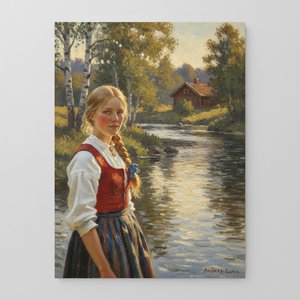
Anders Zorn: A Master of Swedish Impressionism & Ephemeral Light
Explore the life & art of Anders Zorn, a celebrated Swedish Impressionist painter renowned for his masterful portraits, vibrant watercolors, and captivating etchings. Discover his legacy at OriginalUniqueArt.
Ephemeral Visions: Exploring the Artistic Legacy & Nuances of Watercolor Painting
Explore the captivating world of watercolor painting! Discover its rich history, essential techniques, influential artists & collecting tips from art experts. A comprehensive guide for enthusiasts.

Ephemeral Visions: Exploring the History & Emotional Resonance of Watercolor Painting
Explore the captivating history of watercolor painting, from ancient techniques to modern masters like Kandinsky & Blake. Discover essential artists, collecting tips & the emotional power of this luminous medium. Expert insights for art enthusiasts.

Top 10 Legendarische Aquarellen die de Kunst voor Altijd Veranderden | OriginalUniqueArt
Ontdek de 10 legendarische aquarellen die kunstgeschiedenis schreven! Van Turner tot Monet, leer over techniek, emotie & impact. Vind museumkwaliteit reproducties en interieurinspiratie op OriginalUniqueArt.com.

Ephemeral Visions: Exploring the Artistic Legacy & Contemporary Practice of Watercolor Painting
Explore the captivating world of watercolor painting! Discover its rich history, essential techniques, influential artists & collecting tips. A comprehensive guide for art enthusiasts from OriginalUniqueArt.
