

 Bekijk op ware grootte
 Verstuur
 Delen
Delen
 Details bekijken
 Gids voor studentenkunstwerken

 Download
 Vergelijkbare items
 Röntgenonderzoek
 Diavoorstelling
 Statistieken
General interrogating a mobile guard, supporting an injured lieutenant


 Lees meer
Giclée / Kunstafdrukken
Giclée- of canvasafdruk van museumkwaliteit met een snelle productie en flexibele afwerkingsmogelijkheden. ( Koop handgeschilderd kunstwerk Schakel over naar digitale afbeeldingen)




P118B €10

P118H €10

P118W €10

P438Z €10

P508JH €12

P508YH €12

P805H €10

P805Z €10

P919BZ €10

P919G €10

P919XJ €10

P959ZH €10

P968JZ €12

W106C €8

W218G €10

W218JH €8

W218Y €10

W307PJ €10

W316G €10

W316PJ €8

W316Y €10

W398PJ €8

W4111J €10

W500HY €15

W500JH €15

W692G €12

W849H €8

W940BG €15

W953PJ €8




Kies uit onze vooraf ingestelde maten die overeenkomen met de originele verhoudingen van het kunstwerk.

Voer de breedte en de hoogte in die u nodig heeft, passend bij uw lijst of uw muur. Een afdruk kan alleen worden ingekort, nooit groter worden gemaakt dan het origineel, waardoor een formaat met een andere verhouding een deel van de afbeelding verliest. Wij sturen u een digitaal mockup ter goedkeuring voordat we iets drukken. De afbeelding op deze pagina toont niet de werkelijke uitsnede — dit is alleen te zien op het mockup.
Wereldwijde levering () binnen 2 weken in plaats van de standaard 4/5 weken. (24 oktober)

Gratis wereldwijde expressverzending

Hoogwaardig linnen canvas

Volledige verzendverzekering

Garantie op terugbetaling van invoerrechten

Garantie op exacte kleurweergave

Retourbeleid van 100 dagen (alleen bij defecten)

100% Geld-terug-garantie

Korting bij meerdere afnames
 De optie voor glas is alleen beschikbaar bij een formaat kleiner dan 110 cm.

General interrogating a mobile guard, supporting an injured lieutenant
Giclée / Kunstafdrukken
Formaat reproductie
-


Totaalprijs
€ 71
A Frozen Moment of Command: Alphonse de Neuville’s “General Interrogating a Mobile Guard Supporting an Injured Lieutenant”
Alphonse de Neuville's "General Interrogating a Mobile Guard Supporting an Injured Lieutenant," painted in 1879, is more than just a depiction of a military scene; it’s a meticulously crafted tableau of tension, duty, and the lingering weight of conflict. The painting transports us to a bleak, snow-swept landscape – likely inspired by the aftermath of the Franco-Prussian War – where a seasoned general, radiating authority, engages in a serious conversation with a young lieutenant bearing the visible wounds of battle. The scene isn’t one of triumphant victory, but rather a quiet assessment amidst the ruins of war, a moment suspended between interrogation and judgment.
De Neuville's artistic lineage is deeply rooted in the Romantic tradition, particularly influenced by Eugène Delacroix’s dramatic use of color and composition. This influence manifests powerfully here through the carefully orchestrated arrangement of figures against the stark backdrop. The triangular structure, anchored by the central interaction between the general and the lieutenant, draws the viewer’s eye directly to this pivotal exchange. The horses, rendered with a remarkable sense of realism – their coats gleaming faintly beneath the overcast sky – contribute significantly to the painting's dynamic energy, suggesting movement and urgency even within the stillness of the scene.
A Palette of Winter: Color, Light, and Atmosphere
The color palette is deliberately restrained, dominated by a muted range of grays, whites, and browns that perfectly capture the harshness and desolation of the winter landscape. Subtle hints of warmer tones – in the uniforms of the officers and the horse coats – provide a delicate contrast, preventing the scene from becoming entirely bleak. De Neuville masterfully employs atmospheric perspective; distant figures are rendered with increasing softness and detail loss, creating an illusion of depth that anchors the viewer within this frozen world. The diffused lighting, characteristic of overcast days, casts a soft, even illumination across the canvas, eliminating strong shadows and contributing to the painting’s somber mood.
The Language of Line and Texture
De Neuville's technique is firmly rooted in academic painting, evident in his skillful rendering of form and detail. Visible brushstrokes – particularly prominent in the depiction of the snow-covered ground and the textures of clothing – add a tactile quality to the work, inviting the viewer to almost feel the cold wind and rough fabric. Lines are used strategically to define shapes and create a sense of realism, while also subtly conveying the tension within the scene. The musculature of the horses is particularly well-defined, adding to their powerful presence. The artist’s attention to detail extends to the subtle nuances of facial expressions – the general's stern gaze, the lieutenant’s wounded composure – revealing a profound understanding of human psychology.
Symbolism and Emotional Resonance
Beyond its realistic depiction of military life, “General Interrogating a Mobile Guard Supporting an Injured Lieutenant” is rich in symbolic meaning. The injured lieutenant represents sacrifice and loss—a tangible reminder of the brutal cost of war. The general’s questioning posture suggests responsibility, authority, and perhaps even regret. The scene evokes feelings of uncertainty, duty, and the lingering trauma of conflict. It's a poignant meditation on leadership, accountability, and the enduring consequences of violence. The painting doesn’t offer easy answers or heroic narratives; instead, it presents a complex and emotionally resonant portrait of a moment caught between action and reflection.
A Legacy in Oil: Materials and Historical Context
Created using traditional oil paints on canvas, this artwork stands as a testament to de Neuville's mastery of his medium. The choice of oil paint allowed for layering and blending, contributing to the painting’s rich textures and nuanced color palette. Painted during the late 19th century, it reflects the artistic and political climate of France following the Franco-Prussian War – a period marked by nationalistic fervor and a desire to commemorate military achievements. De Neuville's work served as both a historical record and a powerful expression of patriotic sentiment. The painting’s acquisition by the Musée de l’Armée in Paris underscores its significance within French art history.
Vragen & Antwoorden
Waar kan ik kunstwerken vinden die lijken op "General interrogating a mobile guard, supporting an injured lieutenant" door Alphonse de Neuville?
Kunstwerken die lijken op "General interrogating a mobile guard, supporting an injured lieutenant" door Alphonse de Neuville zijn verzameld op de Vergelijkbare werken-pagina van het kunstwerk.
Welke kleurverzadiging heeft "General interrogating a mobile guard, supporting an injured lieutenant" door Alphonse de Neuville?
Het kleurenpalet van "General interrogating a mobile guard, supporting an injured lieutenant" heeft een verzadiging van Muted.
Is "General interrogating a mobile guard, supporting an injured lieutenant" door Alphonse de Neuville een schilderij, een tekening of een prent?
"General interrogating a mobile guard, supporting an injured lieutenant" door Alphonse de Neuville wordt geclassificeerd als WallArt. De categorie beschrijft het type kunstwerk dat het origineel is.
Biografie van de kunstenaar
Alphonse de Neuville - A Life Etched in Conflict: The World of Alphonse de Neuville
Alphonse-Marie-Adolphe de Neuville, a name resonating with the drama and patriotic fervor of 19th-century France, was born in Saint-Omer in 1835. His life, though tragically cut short at the age of forty-nine, unfolded against a backdrop of sweeping historical change – a period marked by imperial ambition, devastating wars, and burgeoning national identities. While initially drawn to a naval career, de Neuville’s artistic inclinations proved too strong to ignore, leading him away from the sea and toward the studios of Paris. He first sought guidance within the established academic system, briefly attending the naval school at Lorient before ultimately pursuing formal training under the watchful eye of François-Edouard Picot. However, it was the influence of Eugène Delacroix, a master of Romanticism with a flair for dynamic composition and emotional intensity, that truly shaped de Neuville’s artistic vision. This mentorship instilled in him a passion for dramatic narratives and a keen understanding of how to translate historical events onto canvas with compelling power.Early Life and Artistic Beginnings
Born Alphonse-Marie-Adolphe Deneuville to wealthy parents at Saint-Omer, Pas-de-Calais, he earned his degree of *bachelier ès-lettres*, and in 1856 entered the naval school at Lorient in spite of family opposition. It was there that his artistic instincts started. Initially hesitant about abandoning a secure profession, de Neuville soon recognized the irresistible pull of painting—a vocation he would embrace wholeheartedly. He enrolled in the studio of François-Edouard Picot, where he honed his skills and began to develop his distinctive style. Early works demonstrated a meticulous attention to detail and an aptitude for capturing realistic textures – qualities that would characterize his entire artistic career. His first significant painting, *The Fifth Battalion of Chasseurs at the Gervais Battery*, showcased his burgeoning talent and established him as a promising young artist.Influenced by Delacroix: Romanticism’s Dramatic Legacy
De Neuville's artistic trajectory was decisively shaped by Eugène Delacroix (1798-1863), whose monumental canvases epitomized the Romantic movement’s ethos of emotional intensity and dramatic storytelling. Delacroix’s masterful use of color, composition, and expressive brushstrokes served as an inspiration for de Neuville—who sought to emulate Delacroix's ability to convey profound emotion through visual imagery. Like Delacroix, de Neuville believed that art should engage the viewer on a visceral level, capturing not merely what was seen but also what was felt. This conviction fueled his unwavering commitment to portraying historical events with unflinching realism and conveying the psychological complexities of human experience.Military Artistry: Capturing Conflict Through Vision
De Neuville’s artistic focus quickly gravitated toward military subjects—a decision that reflected both his personal experiences during the Franco-Prussian War and a broader fascination with the heroic narratives of his time. He didn't merely depict battles; he immersed himself in their realities, drawing upon firsthand observations to infuse his paintings with authenticity and immediacy. This dedication to realism was complemented by an exceptional talent for capturing the human cost of conflict—the courage, fear, and suffering endured by soldiers on the battlefield. His depictions of pivotal moments from the Crimean War and Garibaldi’s campaigns in Italy stand as testament to his artistic prowess and his ability to convey the drama and pathos of historical events.Notable Achievements and Artistic Style
De Neuville achieved considerable acclaim during his lifetime, securing commissions for portraits of prominent figures and producing numerous paintings that garnered critical praise. Among his most celebrated works are *The Attack in the Streets of Magenta by Zouaves and the Light Horse* (1864), *A Zouave Sentinel*(1865), *The Battle of San Lorenzo*(1867), and *Dismounted Cavalry crossing the Tchernaia*(1869). These paintings exemplify de Neuville’s distinctive artistic style—characterized by meticulous detail, masterful use of light and shadow, and a profound understanding of human psychology. He skillfully rendered uniforms and weaponry with remarkable accuracy, capturing not only visual appearances but also conveying the atmosphere and emotional tenor of each scene. His canvases resonate with an enduring power—a testament to his ability to transform historical narratives into emotionally compelling artworks.Legacy: An Artist Remembered for Dramatic Narrative
Alphonse de Neuville’s untimely death in 1885 curtailed his artistic career, but his legacy persists through the numerous paintings that continue to inspire admiration and scholarly study. His works are housed in prestigious institutions such as the Hermitage Museum in St. Petersburg and the Metropolitan Museum in New York—testaments to their artistic merit and historical significance. Beyond these institutional holdings, de Neuville’s art retains a broad popular appeal—fueled by renewed interest in 19th-century military history and a desire for authentic depictions of past conflicts. Today, reproductions of his paintings allow enthusiasts worldwide to experience the dramatic power and emotional depth of his artistic vision—a testament to his enduring contribution to European painting.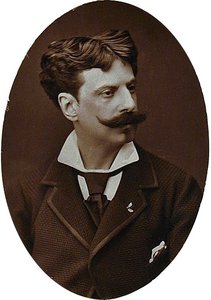
Alphonse de Neuville
1835 - 1885 , Frankrijk
Snelle feiten
- Artistic Movement Or Style: Academic kunst
- Artists Who Influenced This Artist:
- Eugène Delacroix
- François-Edouard Picot
- Date Of Birth: 31 mei 1835
- Date Of Death: 18 mei 1885
- Full Name: Alphonse-Marie-Adolphe de Neuville
- Nationality: Frans
- Notable Artworks:
- De Charge van het Licht Escadrille
- De verdediging van Palma Major
- Place Of Birth: Saint-Omer, Frankrijk
Gerelateerde artikelen
Beyond the Fabric: Decoding Identity, Authority, and Symbolism in the Art of Military Uniforms
Explore the profound symbolism of military uniforms in art history. From Victorian portraits to realistic lithographs, discover how artists capture power, identity, and historical legacy through the intricate details of martial regalia and command.

Goya's Meesterwerken: 25 Iconische Schilderijen voor Kunstliefhebbers | OriginalUniqueArt
Ontdek de 25 meest iconische schilderijen van Francisco Goya! Duik in zijn Spaanse romantiek, donkere kleuren & emotionele kracht. Museumkwaliteit reproducties voor jouw interieur op OriginalUniqueArt.com.

Willem de Kooning: Abstraction, Gesture & the Evolution of Post-War American Painting
Explore the evolution of Willem de Kooning's iconic Abstract Expressionist paintings. Discover his signature style, key themes & investment potential with expert insights for discerning art collectors.

Over ons
Ontdek ons verhaal! Wij brengen wereldklasse kunst in uw leven door een deskundige selectie, gepersonaliseerde creaties en gratis previews. Goedgekeurd door particulieren en bedrijven sinds 2000.

William Owen: A Poetic Vision of War & Landscape in British Modernism
Explore the poignant war poetry of Wilfred Owen, a key figure in British Modernism. Discover his innovative style, themes of loss & camaraderie, and lasting impact on 20th-century literature. Analysis & historical context included.