
 Voorvertoning
 Verstuur
 Delen
Delen
 Details bekijken

 Download
 Vergelijkbare items
 Röntgenonderzoek
 Diavoorstelling
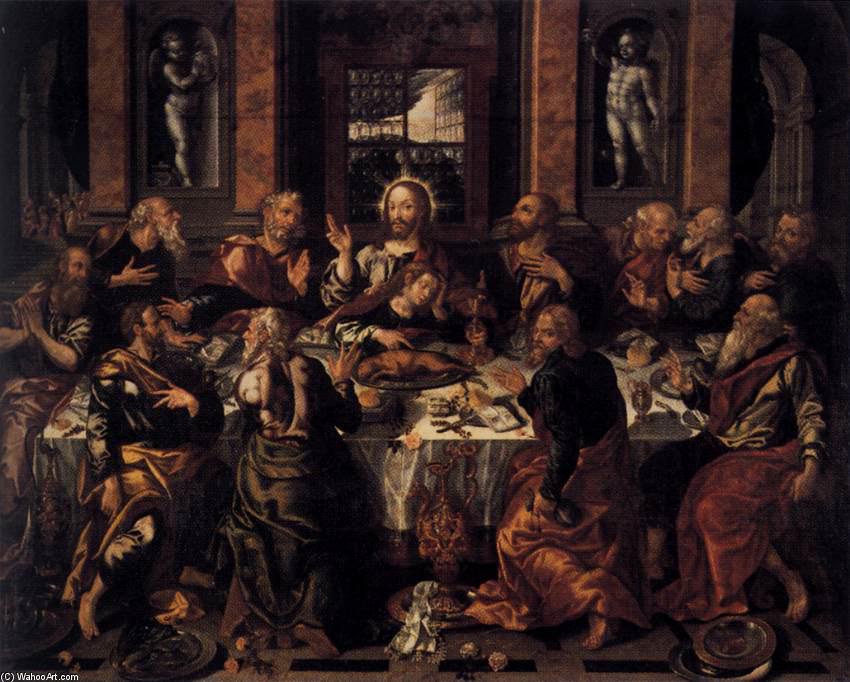
Last Supper


 Lees meer
Koop een digitale afbeelding in hoge resolutie met verbeterde kwaliteit, die veel superieur is aan de online voorvertoning.
Elk bestand wordt met uiterste precisie voorbereid door onze interne specialisten, met behulp van geavanceerde tools en deskundige handmatige retouche. Wij garanderen dat elke afbeelding een uitzonderlijke helderheid, nauwkeurige kleurweergave en verfijnde details bezit.
Het uiteindelijke bestand wordt binnen 72 uur per e-mail geleverd, geoptimaliseerd voor direct gebruik in professionele, redactionele en printomgevingen. Dit is dezelfde kwaliteit waarop vooraanstaande designstudio's, uitgevers en galerieën vertrouwen.
Digitale afbeeldingen
Download een bestand met hoge resolutie voor persoonlijke weergave, afdrukken en creatieve projecten. ( Bestel print Bestel handgeschilderde reproductie)
Inbegrepen bij elke bestelling van een digitale afbeelding
Professionele digitale levering, gegarandeerd
Wanneer u kiest voor OriginalUniqueArt.com, ontvangt u niet alleen een afbeelding – u krijgt een professioneel verbeterd digitaal kunstwerk, met precisie vervaardigd en voorzien van een tevredenheidsgarantie. Dit is alles wat automatisch bij uw bestelling is inbegrepen:

Snelle levering per e-mail
Uw hoogwaardige digitale afbeeldingsbestand wordt binnen 72 uur na bestelling naar u gemaild – klaar voor direct gebruik.

AI-verbeterd digitaal bestand
Uw kunstwerk wordt professioneel geoptimaliseerd met behulp van geavanceerde AI-tools en handmatige bewerkingen, waardoor maximale details, helderheid en kleurnauwkeurigheid worden gegarandeerd.

Gratis levenslange herlevering van digitale afbeeldingen
Je bestand per ongeluk verwijderd of kwijtgeraakt? Geen zorgen – we sturen het u op elk gewenst moment gratis opnieuw toe.

Geen invoerkosten – nooit
Geniet direct van uw kunstwerk zonder invoerrechten, belastingen of verzendkosten – digitale downloads zijn altijd belastingvrij.

Garantie op kleurgetrouwheid
Met behulp van professionele hulpmiddelen en kleurbeheer zorgen wij ervoor dat uw digitale afbeelding de originele kleuren zo nauwkeurig mogelijk weergeeft.

60 dagen tevredenheidsgarantie
Als u niet tevreden bent met uw digitale afbeelding, passen wij deze aan of storten wij 100% terug binnen 60 dagen – zonder vragen gesteld.

100% Geld-terug-garantie
Niet tevreden? Ontvang binnen 60 dagen na ontvangst van uw digitale bestand uw volledige aankoopbedrag terug – zonder vragen te stellen.

Korting bij grote bestellingen
Koop 3 afbeeldingen, bespaar 10% - Koop 5, bespaar 15% - Koop 10+, bespaar 20%. Ideaal voor creatieve projecten, galerieën en bureaus.
Kunstenaarsbiografie
A Life Immersed in Sacred Imagery: The World of Alonso Vázquez
Alonso Vázquez, a name perhaps less celebrated than some of his contemporaries, nevertheless occupies a significant niche within the vibrant tapestry of Spanish Renaissance art. Born in Ronda around 1565, his artistic journey unfolded against a backdrop of religious fervor and burgeoning Baroque sensibilities. While biographical details remain somewhat fragmented, we can piece together a portrait of an artist deeply committed to expressing faith through meticulously crafted paintings and sculptures. His early training took place in Seville under the tutelage of Arfian, a master who instilled in him the foundational skills necessary for navigating the demanding world of religious commissions. This apprenticeship wasn’t merely technical; it was an immersion into the iconography and devotional practices that would define his oeuvre. He began with *sargas* – inexpensive paintings on rough canvas – honing his abilities before graduating to more substantial works like frescoes and oil panels, a testament to his growing mastery.From Seville Canvases to Mexican Devotion
Vázquez’s artistic career blossomed primarily in Seville, a city pulsating with religious life and serving as a crucial port for the Spanish Empire. He quickly became sought after for decorating churches and convents, leaving behind a trail of works that, though many are now lost, reveal a distinctive style characterized by emotional intensity and refined technique. The Cathedral of Seville, along with the convents of St. Francis and St. Paul, were among his earliest patrons, providing him with opportunities to explore various themes within Christian narrative. A particularly noteworthy series of canvases depicted the life of Saint Raymond, commissioned for the cloister of the Order of Mercy. These paintings weren’t simply illustrations; they were intended to inspire piety and evoke a sense of empathy in viewers. Beyond these devotional works, Vázquez also contributed his talents to grand public displays, notably participating in the creation of an elaborate *catafalque* – a funerary monument – erected in Seville Cathedral following the death of Philip II. This undertaking demonstrates not only his technical skill but also his standing within the artistic community. The circumstances surrounding his later life are shrouded in some mystery; it is believed he traveled to Mexico, likely around the turn of the 17th century, where he continued to practice his art until his death, probably around 1608.Influences and Artistic Development
Pinpointing specific influences on Vázquez’s style proves challenging, as his work represents a synthesis of various currents prevalent in Spanish Renaissance painting. The influence of Italian Mannerism is discernible in the elegant elongation of figures and the sophisticated use of color, yet he also absorbed elements from Flemish realism, evident in the meticulous detail and naturalistic rendering of textures. However, it’s perhaps more accurate to view Vázquez as a transitional figure, bridging the gap between the High Renaissance and the emerging Baroque style. His paintings gradually moved away from the idealized forms of earlier Renaissance masters towards a greater emphasis on emotional expression and dramatic lighting – hallmarks of the Baroque aesthetic. This shift is particularly noticeable in his later works, where he employed bolder compositions and more dynamic brushwork to convey a sense of spiritual fervor.Themes and Techniques: A Language of Faith
The overwhelming majority of Vázquez’s surviving work revolves around religious themes – scenes from the lives of saints, depictions of the Virgin Mary, and representations of Christ's Passion. He wasn’t interested in groundbreaking innovation; rather, he sought to communicate established theological narratives with clarity and emotional resonance. His technique was characterized by a remarkable attention to detail, particularly evident in the rendering of fabrics, facial expressions, and architectural settings. He possessed a masterful command of oil painting, utilizing layers of glazing to create luminous effects and subtle gradations of color. While his frescoes demonstrate a more direct approach, they nonetheless reveal a sensitivity to form and composition. His use of symbolism was deliberate and nuanced, drawing upon established iconographic traditions to reinforce the devotional message of his paintings. He often employed specific colors – blue for Mary’s purity, red for Christ's sacrifice – to enhance the emotional impact of his work.Historical Significance and Legacy
Although not as widely recognized as some of his contemporaries like El Greco or Zurbarán, Alonso Vázquez played a crucial role in shaping the artistic landscape of Seville during a period of significant religious and cultural change. His paintings served as powerful tools for reinforcing Catholic doctrine and inspiring piety among the faithful.- His work exemplifies the transition from Renaissance classicism to Baroque emotionalism.
- He contributed significantly to the decorative programs of numerous churches and convents in Seville, leaving behind a lasting legacy within the city’s artistic heritage.
- His later activities in Mexico suggest his involvement in disseminating Spanish religious art throughout the New World.

alonso vázquez
1565 - 1608
Belangrijkste feiten
- Artistic Movement Or Style: Renaissance
- Artists Or Movements Influenced By This Artist: ['Italian Renaissance']
- Artists Who Influenced This Artist:
- Luis de Vargas
- Antonio de Arjián
- Date Of Birth: ca. 1565
- Date Of Death: ca. 1608
- Full Name: Alonso Vázquez
- Nationality: Spanish
- Notable Artworks:
- St Raymond Paintings
- Great Catafalque
- Place Of Birth: Ronda, Spain

