
 Voorvertoning
 Verstuur
 Delen
Delen
 Details bekijken
 Gids
Gids

 Download
 Vergelijkbare items
 Röntgenonderzoek
 Diavoorstelling
 Vraag & antwoord
 Statistieken
George III (1738–1820)

- 246.0 x 163.0 cm


 Lees meer
Giclée / Kunstafdrukken
Giclée- of canvasafdruk van museumkwaliteit met een snelle productie en flexibele afwerkingsmogelijkheden. ( Bestel handgeschilderde reproductie Schakel over naar digitale afbeeldingen)




P118B €10

P118H €10

P118W €10

P438Z €10

P508JH €12

P508YH €12

P805H €10

P805Z €10

P919BZ €10

P919G €10

P919XJ €10

P959ZH €10

P968JZ €12

W106C €8

W218G €10

W218JH €8

W218Y €10

W307PJ €10

W316G €10

W316PJ €8

W316Y €10

W398PJ €8

W4111J €10

W500HY €15

W500JH €15

W692G €12

W849H €8

W940BG €15

W953PJ €8




Kies uit onze vooraf ingestelde maten die overeenkomen met de originele verhoudingen van het kunstwerk.

Voer de gewenste breedte en hoogte in, passend bij uw lijst of muur. Een afdruk kan alleen worden ingekort en nooit groter worden gemaakt dan het origineel; een formaat met andere verhoudingen zal daarom een deel van de afbeelding verliezen. Wij sturen u een digitaal mockup ter goedkeuring voordat we tot drukwerk overgaan. De afbeelding op deze pagina toont niet de werkelijke uitsnede — dit is alleen te zien op het mockup.
Wereldwijde levering () binnen 2 weken in plaats van de standaard 4/5 weken. (4 november)

Gratis wereldwijde expressverzending

Hoogwaardig linnen canvas

Volledige verzendverzekering

Garantie op terugbetaling van invoerrechten

Garantie op exacte kleurweergave

Retourbeleid van 100 dagen (alleen bij defecten)

100% Geld-terug-garantie

Korting bij meerdere afnames
 De optie voor glas is alleen beschikbaar bij een formaat kleiner dan 110 cm.

George III (1738–1820)
Giclée / Kunstafdrukken
Afmetingen reproductie
-


Eindtotaal
€ 72
A Vision of Royal Majesty
In the grand tapestry of eighteenth-century portraiture, few works command the room with as much authoritative grace as Allan Ramsay’s 1764 masterpiece, George III. This breathtaking portrait serves as more than a mere likeness; it is a profound window into the heart of the British monarchy during an era of immense transition. As the viewer gazes upon the King, they are immediately struck by the sheer scale and presence of the composition. Ramsay, a master of capturing both the physical essence and the psychological weight of his subjects, utilizes a rich, vibrant palette to breathe life into the royal figure. The deep, velvety tones of the drapery and the shimmering gold trim of the royal robes create a sensory experience that transcends the canvas, inviting collectors and art enthusiasts alike to step back into the gilded age of the Enlightenment.
The technical brilliance of this work lies in Ramsay’s ability to balance the meticulous detail of neoclassical precision with the dramatic flair of his Italian training. Having studied under masters like Francesco Solimena, Ramsay brought a sophisticated understanding of light and shadow—chiaroscroll—to the English court. In this portrait, the light does not merely illuminate; it sculpts. It catches the intricate textures of the King’s regalia, from the heavy, embroidered fabric of his mantle to the cold, hard glint of the scepter and sword. Every brushstroke serves a purpose, contributing to a sense of tactile reality that makes the royal splendor feel almost tangible. For the interior designer, such a piece offers an unparalleled focal point, providing a sense of historical weight and architectural grandeur to any sophisticated space.
Symbolism and the Language of Power
Beyond its aesthetic allure, the portrait is a complex semiotic map of sovereign authority. Every element held by George III is a deliberate symbol of his divine and temporal right to rule. The scepter, gripped firmly in one hand, represents his judicial power, while the sword serves as a reminder of his role as the protector of the realm. These instruments of statecraft are set against a backdrop of heavy, theatrical curtains, a classic trope in royal portraiture that creates an intimate yet staged atmosphere, suggesting that we are witnessing a moment of profound historical significance. The composition is designed to evoke awe, instilling a sense of stability and continuity in the viewer.
To possess a reproduction of this caliber is to invite a conversation about heritage, leadership, and the enduring beauty of classical art into one's home. It is an investment in atmosphere. Whether placed in a formal study, a grand dining hall, or a curated gallery wall, Ramsay’s depiction of George III acts as an anchor of elegance. The painting does not merely decorate a wall; it commands the environment, offering a timeless connection to the artistry and the political drama of the eighteenth century. It remains a captivating testament to the power of portraiture to immortalize not just a man, but an entire epoch of human history.
Veelgestelde vragen
Hoe komen contrast en harmonie samen in "George III (1738–1820)"?
De kleurcompositie van "George III (1738–1820)" door Allan Ramsay combineert een Gentle contrast met een Unified Palette harmonie.
Is "George III (1738–1820)" vrij van auteursrecht?
Wat betreft het auteursrecht valt "George III (1738–1820)" onder bevindt zich in het publiek domein - de auteursrechten zijn verlopen.
Zijn de kleuren van "George III (1738–1820)" krachtig of juist zacht?
De kleuren in "George III (1738–1820)" door Allan Ramsay hebben een Balanced intensiteit.
Biografie kunstenaar
Allan Ramsay: Een Leven van Elegantie en Kunstzinnigheid
Geboren in Edinburgh, Schotland op 13 oktober 1713, ontpopte Allan Ramsay zich tot een vooraanstaande Schotse portretschilder wiens werk de elegantie en verfijning van zijn tijd vastlegde. Zijn artistieke reis begon op twintigjarige leeftijd toen hij naar Londen reisde om te studeren onder de Zweedse schilder Hans Hysing, gevolgd door instructies aan de St. Martin's Lane Academy. Deze fundamentele opleiding legde een solide basis voor zijn techniek en compositie.
Italiaanse Invloeden & Artistieke Ontwikkeling
Een belangrijke wending in Ramsay’s artistieke ontwikkeling deed zich voor met zijn reizen naar Rome en Napels, waar hij drie jaar (1736-1738) werkte onder de begeleiding van Francesco Solimena en Imperiali (Francesco Fernandi). Deze Italiaanse meesters hadden een diepgaande invloed op zijn stijl, waardoor hij een groter begrip kreeg van klassieke principes en zijn vaardigheden in het vastleggen van gelijkenis en karakter werden verbeterd. Hij absorbeerde de heersende Rococo-esthetiek en ontwikkelde tegelijkertijd een waardering voor Neoclassicistische idealen. De warme kleuren en dramatische lichteffecten die hij in Italië bestudeerde, zouden later terugkomen in zijn portretten, zij het getemperd door een meer ingetogen Schotse gevoeligheid.
Een Bloeiende Carrière & Belangrijke Werken
Na zijn terugkeer naar Groot-Brittannië in 1738 vestigde Ramsay zich snel als een succesvolle portretschilder. Zijn vermogen om zijn onderwerpen met zowel nauwkeurigheid als gratie te portretteren, leverde hem al snel een vooraanstaand cliëntèle op. Enkele van zijn meest opmerkelijke werken zijn:
- Queen Charlotte (1744-1818) met haar twee oudste zonen (Royal Collection, London): Een koninklijke weergave die de moederlijke aanwezigheid van de Koningin laat zien.
- Mary Degg, Lady Robert Manners (Scottish National Gallery, Edinburgh): Een elegant portret dat Ramsay’s vaardigheid in het vastleggen van aristocratische schoonheid demonstreert.
- Hoofd van Duncan Forbes of Culloden: Dit vroege werk bracht hem onder de aandacht van de Hertog van Argyll en verscheen later op bankbiljetten van de Royal Bank of Scotland.
Koninklijke Benoeming & Hoogtepunt
Een cruciaal moment in Ramsay’s carrière kwam in 1761 met zijn benoeming tot Principal Painter in Ordinary to George III. Deze prestigieuze positie bevestigde zijn status onder de kunstelite en verzekerde een gestage stroom opdrachten van de koninklijke familie en de hogere society. Hij werd *de* portretschilder van het Georgische tijdperk, gevraagd door adellijken en gegoede burgers die hun status wilden vereeuwigen. Zijn stijl kenmerkte zich door een zekere terughoudendheid, in tegenstelling tot de exuberante pracht van sommige van zijn tijdgenoten; hij streefde naar subtiele psychologische portrettering boven oppervlakkige weergave.
Latere Levensjaren & Erfenis
Ramsay’s latere leven kende een verschuiving naar literaire bezigheden, wat zijn brede intellectuele interesses weerspiegelde. Persoonlijke tragedies – een onbedoelde verstuiking van zijn rechterarm en het overlijden van zijn tweede vrouw in 1782 – hadden echter invloed op zijn gezondheid en productiviteit. Hij stierf in 1784.
Ondanks deze uitdagingen, liet Ramsay een blijvende erfenis achter als een van Schotland’s meest gevierde portretschilders. Zoals Samuel Johnson opmerkte: “Ik houd van Ramsay. Je zult geen man vinden in wiens gesprek meer instructie, meer informatie en meer elegantie zit dan in die van Ramsay.” Zijn werken worden nog steeds bewonderd om hun technische vaardigheid, verfijnde esthetiek en inzichtelijke portretten van de 18e-eeuwse samenleving. Zijn invloed is zichtbaar in het werk van latere Schotse kunstenaars, die zijn subtiele psychologische benadering overnamen.
Historische Betekenis
Allan Ramsay’s bijdrage strekt zich uit voorbij zijn artistiek talent. Hij speelde een cruciale rol in het vormgeven van de visuele cultuur van Schotland tijdens een periode van significante sociale en politieke verandering. Zijn portretten bieden waardevolle inzichten in het leven, de mode en de waarden van de Schotse adel en landeigenaren. Zijn werken zijn te vinden op locaties zoals Ayr Town Hall, en de Scottish National Portrait Gallery.
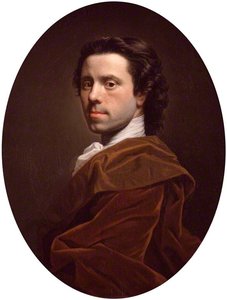
Allan Ramsay
1713 - 1784 , Verenigd Koninkrijk
Belangrijkste feiten
- Artistieke Stroming: Rococo, Neoklassiek
- Bekende Werken:
- Queen Charlotte
- Mary Degg
- Duncan Forbes
- Beïnvloed Door:
- Hans Hysing
- Solimena
- Imperiali
- Geboortedatum: 13 oktober 1713
- Geboorteplaats: Edinburgh, Verenigd Koninkrijk
- Nationaliteit: Schots
- Sterfdatum: 1784
- Volledige Naam: Allan Ramsay
Gerelateerde artikelen

Neoclassical Portraiture: The Timeless Elegance of Order, Grace, and Academic Mastery
Explore the refined world of Neoclassical portraiture. Discover the mastery of line, light, and order through an expert exploration of academic art history, from Jacques-Louis David to Jean-Antoine Houdon. Immerse yourself in the timeless elegance of classical realism.

Georges Seurat's Meesterwerken: 25 Iconische Schilderijen voor Kunstliefhebbers | OriginalUniqueArt
Ontdek de 25 meesterwerken van Georges Seurat! Duik in Pointillisme, Impressionisme & chromoluminarism. Bewonder 'A Sunday on La Grande Jatte' en meer. Museumkwaliteit kunst reproducties op OriginalUniqueArt.com.
Top 10 Neoclassicistische Meesterwerken: Kunstgeschiedenis voor uw Interieur
Ontdek de top 10 neoclassicistische meesterwerken! Leer over David, Ingres & Canova en hun tijdloze kunst. Vind museumkwaliteit reproducties voor een elegante inrichting op OriginalUniqueArt.com. Exploreer de collectie online!

Allen Ramsay: Portraiture, Patronage & Shaping Georgian Identity
Explore the life & work of Allen Ramsay, pivotal portraitist to George III. Discover his Rococo style, influence on Georgian society, and lasting legacy in British art history. Learn about his key works & patronage.

Georges Braque's Top 25 Meesterwerken: Cubisme & Kunst voor uw Interieur
Ontdek de 25 meest iconische meesterwerken van Georges Braque, pionier van het Cubisme. Lees over zijn techniek, inspiratie & de impact op moderne kunst. Vind museumkwaliteit reproducties en verrijk uw interieur met OriginalUniqueArt.com!


