

 Bekijk op ware grootte
 Verstuur
 Delen
Delen
 Details bekijken
 Gids voor studentenkunstwerken

 Download
 Vergelijkbare items
 Röntgenonderzoek
 Diavoorstelling
 Statistieken
Flora Macdonald
 Oil On Canvas
- WallArt
- Rococo Portraiture
 1749
1749 74.0 x 61.0 cm
 Het Ashmolean Museum van Kunst en Oudheden
 Lees meer
Giclée / Kunstafdrukken
Giclée- of canvasafdruk van museumkwaliteit met een snelle productie en flexibele afwerkingsmogelijkheden. ( Koop handgeschilderd kunstwerk Schakel over naar digitale afbeeldingen)




P118B €10

P118H €10

P118W €10

P438Z €10

P508JH €12

P508YH €12

P805H €10

P805Z €10

P919BZ €10

P919G €10

P919XJ €10

P959ZH €10

P968JZ €12

W106C €8

W218G €10

W218JH €8

W218Y €10

W307PJ €10

W316G €10

W316PJ €8

W316Y €10

W398PJ €8

W4111J €10

W500HY €15

W500JH €15

W692G €12

W849H €8

W940BG €15

W953PJ €8




Kies uit onze vooraf ingestelde maten die overeenkomen met de originele verhoudingen van het kunstwerk.

Voer de breedte en de hoogte in die u nodig heeft, passend bij uw lijst of uw muur. Een afdruk kan alleen worden ingekort, nooit groter worden gemaakt dan het origineel, waardoor een formaat met een andere verhouding een deel van de afbeelding verliest. Wij sturen u een digitaal mockup ter goedkeuring voordat we iets drukken. De afbeelding op deze pagina toont niet de werkelijke uitsnede — dit is alleen te zien op het mockup.
Wereldwijde levering () binnen 2 weken in plaats van de standaard 4/5 weken. (21 oktober)

Gratis wereldwijde expressverzending

Hoogwaardig linnen canvas

Volledige verzendverzekering

Garantie op terugbetaling van invoerrechten

Garantie op exacte kleurweergave

Retourbeleid van 100 dagen (alleen bij defecten)

100% Geld-terug-garantie

Korting bij meerdere afnames
 De optie voor glas is alleen beschikbaar bij een formaat kleiner dan 110 cm.

Flora Macdonald
Giclée / Kunstafdrukken
Formaat reproductie
-


Totaalprijs
€ 71
Flora Macdonald: A Portrait of Courage and Resilience
Allan Ramsay’s “Flora Macdonald,” painted in 1749, is more than just a likeness; it's a potent distillation of Scottish history, embodying the spirit of rebellion and the quiet heroism of an ordinary woman thrust into extraordinary circumstances. Housed within the Ashmolean Museum’s collection in Oxford, this oil on canvas portrait captures a pivotal moment – the clandestine assistance offered to Charles Edward Stuart after the devastating Battle of Culloden, a scene that has resonated through generations.
Ramsay, a master of capturing both aristocratic elegance and subtle emotion, skillfully portrays Flora as a young woman of striking composure. Her fair skin and dark hair are rendered with meticulous detail, styled in an updo indicative of the late 18th century’s fashion trends. The neutral expression on her face—a slight parting of her lips suggesting either a recent utterance or a thoughtful pause—allows the viewer to project their own interpretations onto her demeanor. The carefully chosen attire – a blue dress with a high collar and puffy sleeves, complemented by a vibrant red plaid shawl draped over her shoulder – speaks volumes about her social standing and adds a touch of warmth to the otherwise formal composition.
A Dramatic Narrative in Paint
The painting’s power lies not just in its technical brilliance but also in the narrative it conveys. The red plaid, instantly recognizable as associated with Clan MacDonald, immediately anchors Flora within her Highland heritage and subtly hints at the turbulent events surrounding her. Crucially, she holds a small bouquet of white and pink blooms – flowers often symbolizing purity, remembrance, and even sacrifice – suggesting both her role in protecting the Prince and the poignant cost of his ambition. The placement of her hand resting on what appears to be a chair or bench subtly conveys a sense of weary strength, hinting at the burdens she carried.
The dark background, punctuated by subtle hints of foliage, serves to isolate Flora as the central figure, amplifying her importance within the scene. Ramsay’s use of light is particularly noteworthy; it's soft and diffused, casting gentle shadows that add depth and dimension to the portrait, creating a sense of intimacy and drawing the viewer into Flora’s world.
Historical Context: A Heroine Forged in Rebellion
Flora Macdonald’s story is inextricably linked to the Jacobite rising of 1745. Following Culloden, she risked her life to help Charles Edward Stuart, the exiled heir to the throne, evade capture by government forces. Her bravery and resourcefulness – transporting the Prince disguised as a maidservant across the Highlands – became legendary, cementing her place in Scottish folklore. The painting captures this pivotal moment of defiance against overwhelming odds, transforming a simple Highland woman into a symbol of resistance.
It’s important to note that the portrait's attribution has been debated over time; initially believed to be Flora Macdonald, it is now widely considered to be a generic representation of a lady. However, its enduring popularity and association with the iconic story of her bravery ensure its continued significance within the art historical canon.
Symbolism and Emotional Resonance
Beyond the factual details of the Jacobite uprising, “Flora Macdonald” resonates deeply due to its exploration of themes such as courage, loyalty, and sacrifice. Flora’s quiet dignity and resolute expression speak volumes about her inner strength and unwavering commitment to a cause greater than herself. The painting invites contemplation on the complexities of historical events and the often-unrecognized heroism found in ordinary individuals. It's a powerful reminder that even in times of great upheaval, acts of kindness and bravery can leave an indelible mark on history – and on our collective imagination.
Vragen & Antwoorden
Welke verzadiging en intensiteit vertoont "Flora Macdonald" door Allan Ramsay?
De kleuren van "Flora Macdonald" door Allan Ramsay vertonen een Muted verzadiging met een Monochromatic intensiteit.
Hoe wordt het kleurenpalet van "Flora Macdonald" door Allan Ramsay beschreven?
"Flora Macdonald" door Allan Ramsay maakt gebruik van een Earthy kleurenpalet. Het palet vat het algemene kleurkarakter van het werk samen.
Kan ik "Flora Macdonald" bekijken als een diavoorstelling op volledig scherm?
"Flora Macdonald" door Allan Ramsay kan worden bekeken als een diavoorstelling op de Diavoorstelling pagina van het kunstwerk.
Biografie van de kunstenaar
Allan Ramsay: Een Leven van Elegantie en Kunstzinnigheid
Geboren in Edinburgh, Schotland op 13 oktober 1713, ontpopte Allan Ramsay zich tot een vooraanstaande Schotse portretschilder wiens werk de elegantie en verfijning van zijn tijd vastlegde. Zijn artistieke reis begon op twintigjarige leeftijd toen hij naar Londen reisde om te studeren onder de Zweedse schilder Hans Hysing, gevolgd door instructies aan de St. Martin's Lane Academy. Deze fundamentele opleiding legde een solide basis voor zijn techniek en compositie.
Italiaanse Invloeden & Artistieke Ontwikkeling
Een belangrijke wending in Ramsay’s artistieke ontwikkeling deed zich voor met zijn reizen naar Rome en Napels, waar hij drie jaar (1736-1738) werkte onder de begeleiding van Francesco Solimena en Imperiali (Francesco Fernandi). Deze Italiaanse meesters hadden een diepgaande invloed op zijn stijl, waardoor hij een groter begrip kreeg van klassieke principes en zijn vaardigheden in het vastleggen van gelijkenis en karakter werden verbeterd. Hij absorbeerde de heersende Rococo-esthetiek en ontwikkelde tegelijkertijd een waardering voor Neoclassicistische idealen. De warme kleuren en dramatische lichteffecten die hij in Italië bestudeerde, zouden later terugkomen in zijn portretten, zij het getemperd door een meer ingetogen Schotse gevoeligheid.
Een Bloeiende Carrière & Belangrijke Werken
Na zijn terugkeer naar Groot-Brittannië in 1738 vestigde Ramsay zich snel als een succesvolle portretschilder. Zijn vermogen om zijn onderwerpen met zowel nauwkeurigheid als gratie te portretteren, leverde hem al snel een vooraanstaand cliëntèle op. Enkele van zijn meest opmerkelijke werken zijn:
- Queen Charlotte (1744-1818) met haar twee oudste zonen (Royal Collection, London): Een koninklijke weergave die de moederlijke aanwezigheid van de Koningin laat zien.
- Mary Degg, Lady Robert Manners (Scottish National Gallery, Edinburgh): Een elegant portret dat Ramsay’s vaardigheid in het vastleggen van aristocratische schoonheid demonstreert.
- Hoofd van Duncan Forbes of Culloden: Dit vroege werk bracht hem onder de aandacht van de Hertog van Argyll en verscheen later op bankbiljetten van de Royal Bank of Scotland.
Koninklijke Benoeming & Hoogtepunt
Een cruciaal moment in Ramsay’s carrière kwam in 1761 met zijn benoeming tot Principal Painter in Ordinary to George III. Deze prestigieuze positie bevestigde zijn status onder de kunstelite en verzekerde een gestage stroom opdrachten van de koninklijke familie en de hogere society. Hij werd *de* portretschilder van het Georgische tijdperk, gevraagd door adellijken en gegoede burgers die hun status wilden vereeuwigen. Zijn stijl kenmerkte zich door een zekere terughoudendheid, in tegenstelling tot de exuberante pracht van sommige van zijn tijdgenoten; hij streefde naar subtiele psychologische portrettering boven oppervlakkige weergave.
Latere Levensjaren & Erfenis
Ramsay’s latere leven kende een verschuiving naar literaire bezigheden, wat zijn brede intellectuele interesses weerspiegelde. Persoonlijke tragedies – een onbedoelde verstuiking van zijn rechterarm en het overlijden van zijn tweede vrouw in 1782 – hadden echter invloed op zijn gezondheid en productiviteit. Hij stierf in 1784.
Ondanks deze uitdagingen, liet Ramsay een blijvende erfenis achter als een van Schotland’s meest gevierde portretschilders. Zoals Samuel Johnson opmerkte: “Ik houd van Ramsay. Je zult geen man vinden in wiens gesprek meer instructie, meer informatie en meer elegantie zit dan in die van Ramsay.” Zijn werken worden nog steeds bewonderd om hun technische vaardigheid, verfijnde esthetiek en inzichtelijke portretten van de 18e-eeuwse samenleving. Zijn invloed is zichtbaar in het werk van latere Schotse kunstenaars, die zijn subtiele psychologische benadering overnamen.
Historische Betekenis
Allan Ramsay’s bijdrage strekt zich uit voorbij zijn artistiek talent. Hij speelde een cruciale rol in het vormgeven van de visuele cultuur van Schotland tijdens een periode van significante sociale en politieke verandering. Zijn portretten bieden waardevolle inzichten in het leven, de mode en de waarden van de Schotse adel en landeigenaren. Zijn werken zijn te vinden op locaties zoals Ayr Town Hall, en de Scottish National Portrait Gallery.
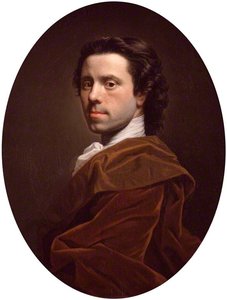
Allan Ramsay
1713 - 1784 , Verenigd Koninkrijk
Snelle feiten
- Artistieke Stroming: Rococo, Neoklassiek
- Bekende Werken:
- Queen Charlotte
- Mary Degg
- Duncan Forbes
- Beïnvloed Door:
- Hans Hysing
- Solimena
- Imperiali
- Geboortedatum: 13 oktober 1713
- Geboorteplaats: Edinburgh, Verenigd Koninkrijk
- Nationaliteit: Schots
- Sterfdatum: 1784
- Volledige Naam: Allan Ramsay
Gerelateerde artikelen
George Paul Chalmers: Rediscovering the Angus Rembrandt & Scottish Colourist Roots
Explore the captivating world of George Paul Chalmers (1833-1878), a pivotal Scottish painter. Discover his landscapes, portraits & connection to the Aesthetic Movement and Colourists. Learn about this 'Angus Rembrandt's' legacy with OriginalUniqueArt.
Sir John Watson Gordon: A Study in Scottish Landscape Painting & Tonal Impressionism
Explore the captivating portraits of Sir John Watson Gordon, a leading Scottish master. Discover his evolution from neoclassical style to atmospheric Tonalism and influence on 19th-century British art. Learn about his iconic sitters & legacy.

James Giles: Capturing Scottish Life Through the Lens of British Realism
Explore the life & work of James Giles (1801-1870), a master of Scottish landscape painting and favored artist of Queen Victoria. Discover his atmospheric realism & royal commissions.
Alexander Nasmyth: Picturing Scotland's Romantic Landscape – Innovation & Identity
Explore the life & art of Alexander Nasmyth, a pivotal figure in Scottish Romantic landscape painting. Discover his iconic works, including portraits of Robert Burns, and learn about his lasting influence on national identity. Fine art reproductions available.

Allen Ramsay: Portraiture, Patronage & Shaping Georgian Identity
Explore the life & work of Allen Ramsay, pivotal portraitist to George III. Discover his Rococo style, influence on Georgian society, and lasting legacy in British art history. Learn about his key works & patronage.


