
 Bekijk op ware grootte
 Verstuur
 Delen
Delen
 Details bekijken

 Download
 Vergelijkbare werken
 Röntgenonderzoek
 Diavoorstelling
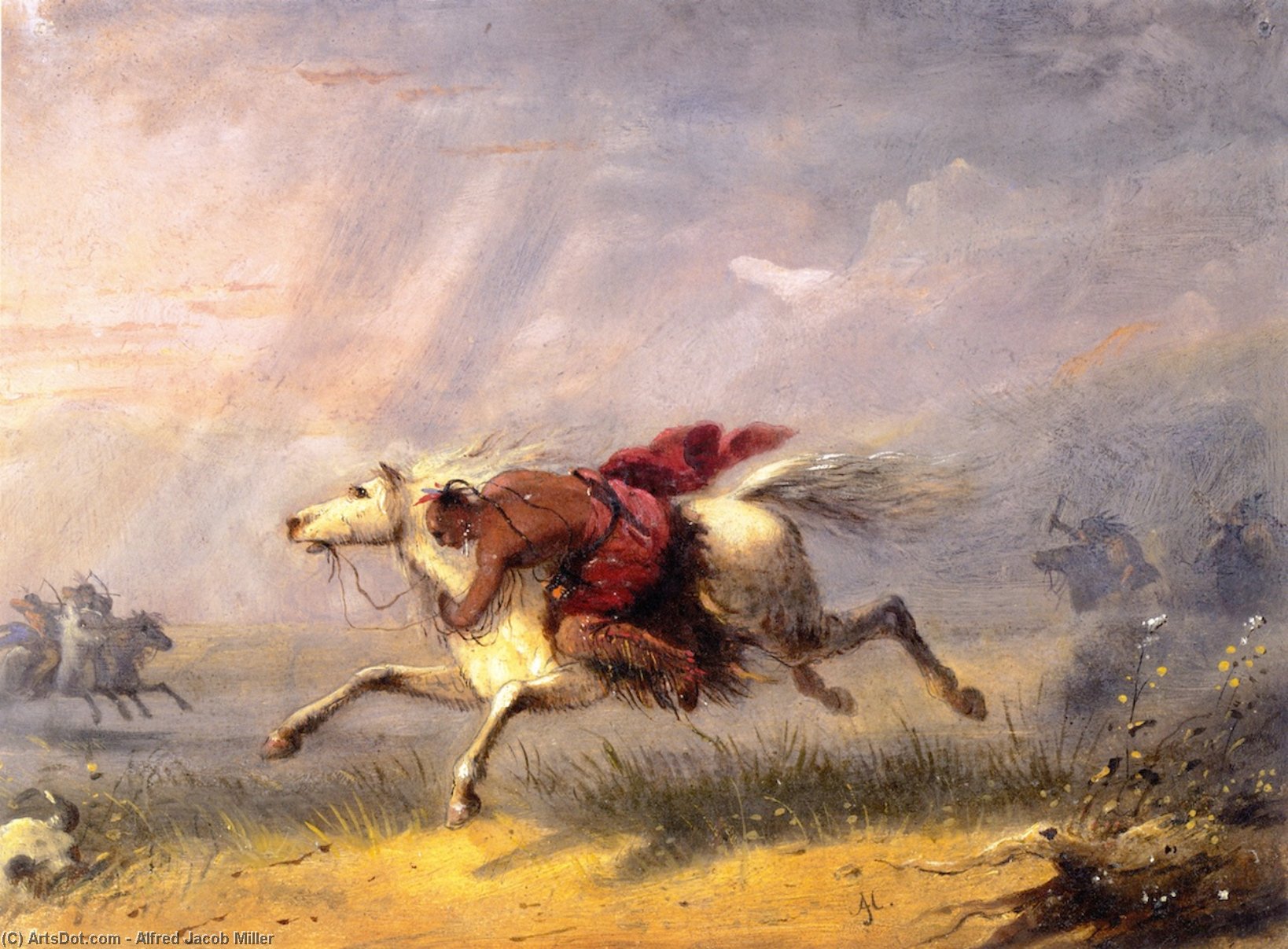
War Path
 Lees meer
Giclée / Kunstafdrukken
Giclée- of canvasafdruk van museumkwaliteit met een snelle productie en flexibele afwerkingsmogelijkheden. ( Bestel een handgeschilderde reproductie van dit verzamelobject Naar afbeelding wisselen)




































Kies uit onze vooraf ingestelde maten die overeenkomen met de originele verhoudingen van het kunstwerk.

U kunt uw eigen afmetingen opgeven om in een specifieke lijst of ruimte te passen. Als de door u gekozen maat niet overeenkomt met de proporties van het originele kunstwerk, zullen wij de afbeelding bijsnijden of uitbreiden met een gespiegelde of effen rand. Een digitaal mockup wordt ter goedkeuring naar u verzonden voordat de productie begint.
Houd er rekening mee dat de preview op het scherm de werkelijke bijsneding of uitbreiding niet weergeeft. Alleen de mockup toont de uiteindelijke compositie nauwkeurig.
Hoewel aangepaste maten beschikbaar zijn, raden wij aan een afmeting uit de vooraf bepaalde lijst te kiezen om de originele proporties te behouden.
Wereldwijde levering () binnen 2 weken in plaats van de standaard 4/5 weken. (10 augustus)

Gratis wereldwijde expressverzending

Hoogwaardig linnen canvas

Volledige verzendverzekering

Garantie op terugbetaling van invoerrechten

Garantie op exacte kleurweergave

60 dagen retourbeleid (alleen bij defecten)

100% Geld-terug-garantie

Korting bij meerdere afnames
 De optie voor glas is alleen beschikbaar bij een formaat kleiner dan 110 cm.

War Path
Giclée / Kunstafdrukken
Formaat reproductie
-


Totaalprijs
$ 81
Biografie van de kunstenaar
A Pioneer of the American West
Alfred Jacob Miller, born in Baltimore in 1810, occupies a unique and vital position in the narrative of American art. He wasn’t merely a painter of landscapes or portraits; he was a visual chronicler of a vanishing world – the fur trade era of the Rocky Mountains and the lives of the Native American tribes who inhabited them. His journey to artistic recognition was unconventional, beginning not with formal academic training but with an innate talent nurtured by early exposure to artists like Thomas Sully. While attending John D. Craig’s Academy in Baltimore, Miller's education lacked a dedicated art curriculum, yet this absence perhaps fostered a distinctive style that would later set him apart. A pivotal period followed when he journeyed to Paris in 1832, immersing himself in the rigorous study of life drawing at the École des Beaux-Arts and absorbing the artistic traditions of Europe. This foundational experience honed his observational skills and provided a technical base upon which he would build his uniquely American vision.The Transformative Expedition
Miller’s career took an extraordinary turn in 1837, when fate – or perhaps artistic destiny – intervened in the form of Sir William Drummond Stewart, a Scottish aristocrat with a passion for the untamed West. Stewart commissioned Miller to accompany him on a hunting expedition into the heart of the Rocky Mountains, tasking him with documenting the landscapes and cultures encountered along the way. This wasn’t simply an assignment; it was an immersion into a world few Americans, let alone artists, had ever witnessed. For months, Miller meticulously sketched scenes of Native American life – the Sioux, Crow, Shoshone, and others – capturing their customs, clothing, rituals, and interactions with trappers and traders. He recorded the rugged beauty of the terrain, the drama of hunts, and the quiet moments of daily existence on the frontier. These weren’t romanticized depictions intended to glorify the West; they were honest observations imbued with a sensitivity that distinguished Miller's work from much of his contemporaries’. Upon returning to New Orleans, he transformed these sketches into a series of paintings that would establish his reputation as a significant figure in American art, offering an invaluable glimpse into a world on the cusp of irreversible change. The rendezvous was a grand affair devised by St. Louis businessman and politician William H. Ashley in 1822 to keep the fur trappers from leaving the mountains to deliver the season’s catch. He advertised for one hundred “Enterprising Young Men” who would agree to remain in the mountains for two or three years. (*St. Louis Enquirer*, 1822 and 1823) Each summer, Ashley sent a caravan of traders from St. Louis to meet the men at a prearranged place with supplies and trade goods to exchange for their pelts. Other companies followed his lead, and by the 1830s the rendezvous was made up of numerous camps involving hundreds of company trappers, free trappers, and sundry Indian tribes. Following several weeks of “High Jinks,” as Miller put it, and then some serious trading, the trappers and Indians would return to the mountains in time for the fall trapping season and the traders to St. Louis. (Russell, 1941, pp. 1 – 2; Clokey, 1980, p. 67; Ross, 1968, text accompanying plate 110; Wishart, 1979, pp. 121 – 124; Washburn, 1967, pp. 50 – 54) Miller’s adventure began shortly after he found quarters on the second floor of L. Chittenden’s dry-goods store at 26 Chartres Street in New Orleans, exchanging a portrait of the landlord for his first month’s rent. Miller displayed several paintings in the ground-floor window, and they apparently attracted the attention of a stylishly-dressed gentleman, whom he took to be a Kentuckian, who came in, browsed around and watched him paint for a few moments, commented favorably on his technique, then exited. A few days later, the man returned, introduced himself as Captain William Drummond Stewart, retired from the British Army, and explained that he was planning to attend the annual rendezvous of fur trappers and traders in the Rocky Mountains that summer and wanted an artist to accompany him to make a visual record of the trip. (Miller, Journal, p. 35) From British Consul John Crawford, who had previously served in Baltimore and might have known Miller there, Stewart assured the young Miller that the captain, a veteran of the peninsular campaign and Wellington’s victory over Napoleon at Waterloo, would be able to fulfill any financial commitments that he made. (Porter and Davenport, 1963, pp. 4, 16 – 19, 129; Strong, 200"
Alfred Jacob Miller
1810 - 1874 , Verenigde Staten
Snelle feiten
- Artistic Movement Or Style: Realisme & Romanticisme
- Artists Who Influenced This Artist:
- Thomas Sully
- Horace Vernet
- Date Of Birth: January 2, 1810
- Date Of Death: 1874
- Full Name: Alfred Jacob Miller
- Nationality: Amerikaans
- Notable Artworks:
- De Lange Bosom Uitbreidt Zich Tot De Hemel
- Kamp Scène (Sioux)
- Grote Schaal (Een Crow Chief)
- Argali - Bergschapen
- Snelle Indianen Schieten Elk
- Shoshone Indiaan & Hond
- Place Of Birth: Baltimore, USA


