

 Voorvertoning
 Verstuur
 Delen
Delen
 Details bekijken
 Gids
Gids

 Download
 Vergelijkbare items
 Röntgenonderzoek
 Diavoorstelling
 Statistieken
L'AFFUT


 Lees meer
Giclée / Kunstafdrukken
Giclée- of canvasafdruk van museumkwaliteit met een snelle productie en flexibele afwerkingsmogelijkheden. ( Bestel handgeschilderde reproductie Schakel over naar digitale afbeeldingen)




P118B €10

P118H €10

P118W €10

P438Z €10

P508JH €12

P508YH €12

P805H €10

P805Z €10

P919BZ €10

P919G €10

P919XJ €10

P959ZH €10

P968JZ €12

W106C €8

W218G €10

W218JH €8

W218Y €10

W307PJ €10

W316G €10

W316PJ €8

W316Y €10

W398PJ €8

W4111J €10

W500HY €15

W500JH €15

W692G €12

W849H €8

W940BG €15

W953PJ €8




Kies uit onze vooraf ingestelde maten die overeenkomen met de originele verhoudingen van het kunstwerk.

Voer de gewenste breedte en hoogte in, passend bij uw lijst of muur. Een afdruk kan alleen worden ingekort en nooit groter worden gemaakt dan het origineel; een formaat met andere verhoudingen zal daarom een deel van de afbeelding verliezen. Wij sturen u een digitaal mockup ter goedkeuring voordat we tot drukwerk overgaan. De afbeelding op deze pagina toont niet de werkelijke uitsnede — dit is alleen te zien op het mockup.
Wereldwijde levering () binnen 2 weken in plaats van de standaard 4/5 weken. (27 oktober)

Gratis wereldwijde expressverzending

Hoogwaardig linnen canvas

Volledige verzendverzekering

Garantie op terugbetaling van invoerrechten

Garantie op exacte kleurweergave

Retourbeleid van 100 dagen (alleen bij defecten)

100% Geld-terug-garantie

Korting bij meerdere afnames
 De optie voor glas is alleen beschikbaar bij een formaat kleiner dan 110 cm.

L'AFFUT
Giclée / Kunstafdrukken
Afmetingen reproductie
-


Eindtotaal
€ 71
L'Affût: A Glimpse of Anticipation in Alexandre Decamps’ Romantic Vision
Alexandre Gabriel Decamps’ “L’Affût” (The Ambush) is more than just a depiction of a forest scene; it’s a carefully constructed tableau brimming with latent tension, evocative atmosphere, and the subtle drama characteristic of Romanticism. Painted circa 1847, this oil on canvas offers a compelling window into Decamps' pioneering approach to Orientalist painting – a style he largely defined through his meticulous observation of natural detail combined with a potent narrative sensibility. The artwork immediately draws the viewer in, presenting two figures, seemingly an older man and a younger individual, poised within a dense, shadowed forest, hinting at a moment suspended between observation and potential action. Decamps masterfully utilizes light and shadow to create a palpable sense of mystery, inviting speculation about their purpose and the circumstances surrounding this secluded encounter.
Composition and Technique: A Study in Atmospheric Depth
The composition of “L’Affût” is deliberately asymmetrical, with the figures strategically positioned towards the lower right corner, anchoring the scene while the upper left expanse of the forest canopy dominates. This arrangement immediately establishes a sense of imbalance, mirroring the inherent tension within the artwork. Decamps employs a loose, expressive brushstroke – a hallmark of his style – to render the foliage and trees, creating an illusion of depth through layering and tonal variations. The impasto technique, particularly noticeable in areas representing bark and undergrowth, adds a remarkable tactile quality, inviting the viewer to almost feel the roughness of the natural world beneath their fingertips. Lines are largely implied rather than explicitly drawn; the vertical thrust of tree trunks is subtly countered by the organic curves of branches and foliage, contributing to a feeling of fluidity and movement within the scene.
Color Palette and Symbolism: Earthy Hues and Hidden Meanings
The color palette of “L’Affût” is profoundly earthy – dominated by browns, greens, and muted yellows. These tones are further accentuated by the interplay of light and shadow, creating a dramatic chiaroscuro effect that intensifies the sense of mystery. The strategic use of touches of red—perhaps suggesting blood or danger—adds another layer of symbolic complexity. Decamps’ choice of color isn't merely decorative; it speaks to the primal connection between humanity and nature, reinforcing the painting’s themes of observation, anticipation, and potential confrontation. The title itself, ‘L’Affût,’ directly references a concealed ambush, immediately injecting a narrative element into the scene and prompting questions about the figures’ intentions.
Romanticism and Decamps' Legacy
“L’Affût” is firmly rooted in the Romantic movement, prioritizing emotion, dramatic storytelling, and an appreciation for the sublime power of nature. Decamps’ work stands apart through his intensely personal style—a blend of meticulous observation, dramatic composition, and a captivating narrative quality that drew viewers into worlds both familiar and utterly foreign. His exploration of Orientalist themes, particularly his focus on everyday life and human interaction within exotic landscapes, was revolutionary for its time. As evidenced by the extensive research available through sites like the British Museum and the Louvre, Decamps’ influence extended beyond mere representation; he sought to capture the *feeling* of a place, imbuing it with psychological depth and narrative resonance. Reproductions of “L’Affût” offer a remarkable opportunity to experience this evocative vision firsthand, bringing a touch of Romantic mystery and dramatic tension to any interior space.
For those seeking a high-quality reproduction, OriginalUniqueArt offers meticulously crafted hand-painted reproductions that faithfully capture the essence of Decamps' masterpiece. Explore our selection today and bring the captivating world of “L’Affût” into your home or studio.
Veelgestelde vragen
Hoe verhoudt "L'AFFUT" zich tot het oeuvre van Alexandre Gabriel Decamps?
"L'AFFUT" deelt met andere werken van Alexandre Gabriel Decamps de Romanticism-stijl en de terugkerende thema's: orientalist visions, romantic drama, eastern landscapes, human figures, stealth, anticipation, danger themes, decamps’ signature style evident.
Aan welke kunstenaar wordt "L'AFFUT" toegeschreven?
De kunstenaar achter "L'AFFUT" is Alexandre Gabriel Decamps. Het werk is gecatalogiseerd onder de naam van Alexandre Gabriel Decamps.
Tot welke periode in de carrière van Alexandre Gabriel Decamps behoort "L'AFFUT"?
"L'AFFUT" vertegenwoordigt de Mature Period van Alexandre Gabriel Decamps.
Biografie kunstenaar
Een Pionier van Orientalistische Visies: Het Leven en de Kunst van Alexandre Gabriel Decamps
Alexandre Gabriel Decamps, een naam die resoneert met de levendige tinten van exotische landschappen en het dramatische flair van de Romantiek, kwam naar voren als een cruciale figuur in de 19e-eeuwse Franse schilderkunst. Geboren in Parijs op 3 maart 1803, was zijn artistieke reis er een van gewaagde innovatie, waarbij hij academische conventies uitdaagde en een pad effende naar wat bekend zou komen te staan als het Oriëntalisme. Hoewel tijdgenoten zoals Delacroix en Ingres eveneens prominente posities bekleedden binnen de Franse kunstwereld, onderscheidde Decamps zich door een intens persoonlijke stijl—een samensmelting van minutieuze observatie, dramatische compositie en een meeslepende verhalende kwaliteit die toeschouwers meevoerde naar werelden die zowel vertrouwd als volkomen vreemd waren. Zijn vroege erkenning als getalenteerd kunstenaar voorspelde een carrière die werd gekenmerkt door kritisch succes, met als hoogtepunt de Grand Prix du Conseil op de Parijse tentoonstelling van 1855, een bewijs van zijn uitzonderlijke vaardigheid en unieke visie. Buiten het canvas was Decamps een man die diep verbonden was met de natuur; hij vond troost en inspiratie in het platteland rondom Parijs, waar hij zijn passie voor dieren en de jacht de vrije loop liet—een liefde die subtiel door zijn gehele artistieke oeuvre zou sijpelen.Van Schrift tot Sahara: De Evolutie van een Artistieke Stijl
De artistieke ontwikkeling van Decamps werd gekenmerkt door een bereidheid om diverse onderwerpen en technieken te verkennen. Aanvankelijk aangetrokken door historische en bijbelse scènes, onderscheidde hij zich snel door deze verhalen weer te geven met een ongekend niveau van realisme—hij verankerde ze in authentieke lokale omgevingen in plaats van te vertrouwen op geïdealiseerde of conventionele representaties. Deze toewijding aan de waarachtigheid kwam voort uit zijn reizen naar het Oosten, ervaringen die zijn artistieke gevoeligheid diepgaand hebben beïnvloed. Hij legde niet enkel vast wat hij zag; hij bracht een gevoel over van de atmosfeer, het licht en de essentie van deze verre landen. Joseph Sold by His Brethren, om maar een voorbeeld te geven, is niet louter een illustratie van een bijbels verhaal, maar een levendige weergave van een specifieke tijd en plaats, doordrenkt met emotionele diepgang en psychologisch inzicht. Deze benadering strekte zich uit tot zijn grotere historische werken zoals The Defeat of the Cimbri, waarin hij meesterlijk de chaos en de wreedheid van de strijd vastlegde en zijn vermogen toonde om grootschalige composities met dynamische energie te beheersen. Het waren echter zijn afbeeldingen van het Oriëntale leven die hem werkelijk uniek maakten. Hij onthulde alledaagse scènes—markten, scholen, huiselijke interieurs—met een getrouwheid die critici, gewend aan meer geromantiseerde of stereotype voorstellingen, aanvankelijk verbaasde.De Vader van het Oriëntalisme en zijn Blijvende Invloed
Decamps wordt terecht beschouwd als de grondlegger van het Oriëntalisme in de Franse schilderkunst. Vóór hem werden afbeeldingen van het Oosten vaak gefilterd door een lens van fantasie en exotisme. Hij presenteerde een andere visie—één geworteld in directe observatie en oprechte nieuwsgerschap. Zijn tentoonstelling op de Salon van 1831 markeerde een keerpunt, waarbij hij het Parijse publiek kennis liet maken met een ongefilterde blik op het leven in Noord-Afrika en het Midden-Oosten. Deze baanbrekende aanpak resoneerde bij zowel kunstenaars als schrijvers en inspireerde een golf van orientalistische werken die de 19e-eeuwse kunst zouden domineren. Zijn stijl—gekenmerkt door krachtige penseelstreken, opvallende contrasten tussen licht en schaduw en een voelbare atmosfeer—werd een ijkpunt voor generaties schilders, fotografen en auteurs. Maxime du Camp noemde hem niet voor niets de “Christoffel Columbus van het Oosten,” in erkenning van zijn pioniersrol bij het ontsluiten van dit nieuwe artistieke territorium. The Albanian Dancer, met zijn levendige kleuren en energieke compositie, is een perfect voorbeeld van zijn vermogen om de geest van een cultuur te vangen terwijl hij een uitgesproken Franse esthetische gevoeligheid behoudt. Zelfs satirische werken zoals The Monkey Connoisseurs, een speelse sneer naar de conservatieve jury van de Académie des Beaux-Arts, tonen zijn bereidheid om gevestigde normen uit te dagen en een meer onafhankelijke artistieke visie te omarmen.Een Tragisch Einde en een Onvergankelijke Erfenis
Tragisch genoeg werd het leven van Decamps op 22 augustus 1860, op de leeftijd van 57 jaar, voortijdig beëindigd na een jachtongeluk nabij Fontainebleau. Zijn ontijdige dood beroofde de kunstwereld van een werkelijk innovatief talent, maar zijn nalatenschap blijft voortbestaan door zijn meeslepende schilderijen en hun blijvende aantrekkingskracht. Vandaag de dag worden meesterwerken zoals Incendie d'un village italien, met zijn dramatische weergave van conflict en meesterlijk gebruik van impasto, en A Bedouin and a Camel Resting in a Desert, dat de texturen en de rust van het leven in de woestijn toont, gevierd om hun artistieke waarde en historische betekenis. Zijn werken zijn te vinden in prestigieuze instellingen zoals het Musée du Louvre in Parijs, wat ervoor zorgt dat zijn visie wereldwijd een publiek blijft inspireren en fascineren. Platforms zoals OriginalUniqueArt.com spelen een vitale rol bij het behouden en verspreiden van zijn kunst, door hoogwaardige reproducties aan te bieden waarmee bewonderaars de schoonheid en kracht van Decamps' schilderijen rechtstreeks kunnen ervaren. Zijn invloed reikt verder dan het domein van de schilderkunst; hij vormde de perceptie van het Oosten en liet een onuitwisbare indruk achter op het culturele landschap van het 19e-eeuwse Europa.De Wereld van Decamps Verkennen: Opmerkelijke Werken
- CHIENS BRIFAUTS: Een charmante orientalistische scène die honden toont in een levendige omgeving.
- LA COUR DE FERME: Een meeslepend 19e-eeuws schilderij dat het Franse romantisme combineert met historische details.
- L’ÉCOLE TURQUE: Een levendige weergave van een Turkse school, die de energie en atmosfeer van het dagelijks leven vastlegt.
- PAYSAGE TURC: Een sereen landschap dat realisme en romantiek verkent in een Franse setting.

Alexandre Gabriel Decamps
1803 - 1860 , Frankrijk
Belangrijkste feiten
- Artistic Movement Or Style: Orientalisme
- Artists Or Movements Influenced By This Artist: ['Orientalisme']
- Artists Who Influenced This Artist: ['Rembrandt van Rijn']
- Date Of Birth: 1803-03-03
- Date Of Death: 1860-08-22
- Full Name: Alexandre Gabriel Decamps
- Nationality: Frans
- Notable Artworks:
- Le Singe peintre
- La Défaite des Cimbres
- Les Janissaires
- Place Of Birth: Parijs, Frankrijk
Gerelateerde artikelen
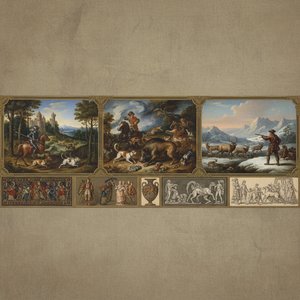
The Pursuit of Power & Prestige: Hunting Scenes in Western Art
Explore the rich history of hunting scenes in Western art, from royal pursuits to powerful allegories. Discover masterpieces & expert insights for discerning collectors. OriginalUniqueArt offers museum-quality reproductions.

Dante Gabriel Rossetti's Top 25 Meesterwerken: Kunst voor uw Interieur | OriginalUniqueArt
Ontdek de 25 meest betoverende meesterwerken van Dante Gabriel Rossetti! Duik in de wereld van Pre-Raphaëlitische kunst, symbolisme & romantiek. Vind museumkwaliteit reproducties en inspiratie voor uw interieur op OriginalUniqueArt.com.
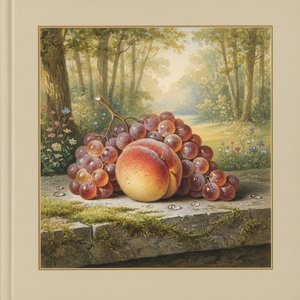
William Henry Hunt: Luminosity & Detail in Early 19th-Century Watercolour Painting
Explore the captivating watercolour paintings of William Henry Hunt (1790-1864). Discover his mastery of naturalistic detail, luminous technique & influence on 19th-century art. Learn about collecting Hunt's work and its enduring value.
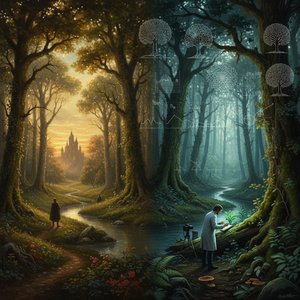
The Enchanted Canopy: Exploring Forests in Art History – From Romantic Idealization to Ecological Consciousness
Explore the rich history of forests in art! Discover Romantic masterpieces by Friedrich & Monet, Symbolist depths, and contemporary visions. Find inspiration & quality reproductions at OriginalUniqueArt.
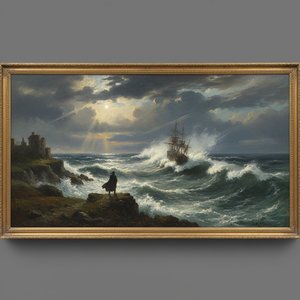
Alexandre Gabriel Decamps: Pioneering Romantic Visions & Challenging Academic Tradition
Explore the captivating world of Alexandre Gabriel Decamps, a pioneer of Romanticism and Orientalism. Discover his bold style, satirical masterpieces like 'The Experts,' and lasting impact on 19th-century art history.


