 Voorvertoning
 Verstuur
 Delen
Delen
 Details bekijken
 Gids
Gids

 Download
 Vergelijkbare items
 Röntgenonderzoek
 Diavoorstelling
 Q&A
Q&A Statistieken
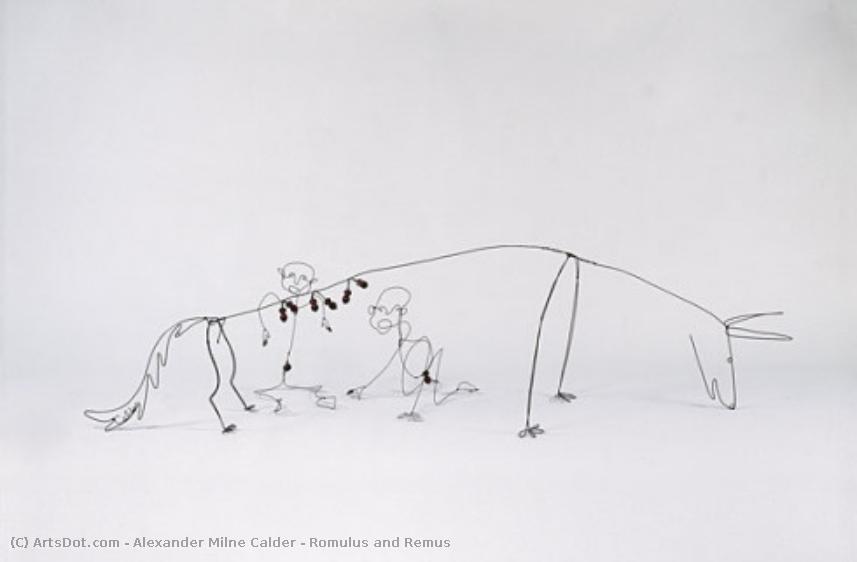
Romulus and Remus


 Lees meer
De kunstwerken die op deze pagina worden weergegeven, zijn beschermd door de auteursrechtwetgeving, wat betekent dat het ons wettelijk niet is toegestaan om identieke reproducties te maken of te verkopen. Deze bescherming wordt gehandhaafd onder internationale overeenkomsten zoals de Conventie van Bern en door nationale wetgeving, waaronder de bepalingen van de Amerikaanse auteurswet - Titel 17. Alle rechten voorbehouden. Reproduceren of distribueren van afbeeldingen is niet toegestaan zonder uitdrukkelijke schriftelijke toestemming van WahooArt.com en de rechthebbenden.
Deze methode voldoet volledig aan de auteursrechtwetgeving, omdat het niet gaat om het kopiëren of dupliceren van het beschermde kunstwerk. In plaats daarvan is er sprake van een creatieve herinterpretatie — een nieuw schilderij dat door het origineel wordt geïnspireerd, maar er niet identiek aan is.
Giclée / Kunstafdrukken
Giclée- of canvasafdruk van museumkwaliteit met een snelle productie en flexibele afwerkingsmogelijkheden. ( Bestel handgeschilderde reproductie Schakel over naar digitale afbeeldingen)




P118B €10

P118H €10

P118W €10

P438Z €10

P508JH €12

P508YH €12

P805H €10

P805Z €10

P919BZ €10

P919G €10

P919XJ €10

P959ZH €10

P968JZ €12

W106C €8

W218G €10

W218JH €8

W218Y €10

W307PJ €10

W316G €10

W316PJ €8

W316Y €10

W398PJ €8

W4111J €10

W500HY €15

W500JH €15

W692G €12

W849H €8

W940BG €15

W953PJ €8




Kies uit onze vooraf ingestelde maten die overeenkomen met de originele verhoudingen van het kunstwerk.

Voer de gewenste breedte en hoogte in, passend bij uw lijst of muur. Een afdruk kan alleen worden ingekort en nooit groter worden gemaakt dan het origineel; een formaat met andere verhoudingen zal daarom een deel van de afbeelding verliezen. Wij sturen u een digitaal mockup ter goedkeuring voordat we tot drukwerk overgaan. De afbeelding op deze pagina toont niet de werkelijke uitsnede — dit is alleen te zien op het mockup.
Wereldwijde levering () binnen 2 weken in plaats van de standaard 4/5 weken. (3 november)

Gratis wereldwijde expressverzending

Hoogwaardig linnen canvas

Volledige verzendverzekering

Garantie op terugbetaling van invoerrechten

Garantie op exacte kleurweergave

Retourbeleid van 100 dagen (alleen bij defecten)

100% Geld-terug-garantie

Korting bij meerdere afnames
 De optie voor glas is alleen beschikbaar bij een formaat kleiner dan 110 cm.

Romulus and Remus
Giclée / Kunstafdrukken
Afmetingen reproductie
-


Eindtotaal
€ 72
A Moment Frozen in Steel: Exploring Calder’s “Romulus and Remus”
Alexander Milne Calder's "Romulus and Remus," crafted in 1928, isn’t merely a sculpture; it’s a distilled essence of myth rendered in delicate wire. This piece, a testament to the artist’s pioneering approach to three-dimensional form, transcends its subject matter – the legendary founders of Rome – to become a profound meditation on beginnings, brotherhood, and the very act of creation itself. Calder, deeply influenced by Constructivism and early Modernism, sought to liberate sculpture from the constraints of traditional materials, embracing the inherent qualities of industrial wire as both medium and metaphor.
The sculpture’s stark simplicity is its most arresting feature. Two figures, rendered with astonishing grace despite their skeletal construction, stand beneath a subtly arching structure that evokes a horizon line or perhaps a stylized landscape. The color palette – a resolute black and white punctuated by subtle grays – amplifies the work's austerity, forcing the viewer to focus entirely on form and movement. The lines themselves are paramount; thin, almost impossibly delicate wires define every contour, creating an illusion of both fragility and strength. This deliberate reductionist approach mirrors Calder’s broader philosophy: to strip away the superfluous and reveal the fundamental elements of a subject.
The Poetics of Chance and Kinetic Form
Calder's work in this period – particularly his “Cirque Calder” series – exemplifies his fascination with chance and spontaneity. He didn’t meticulously plan every curve or angle; instead, he allowed the wire to guide him, embracing the unpredictable nature of the material. This process is vividly captured in "Romulus and Remus," where the figures appear to be caught mid-action, poised on the precipice of a narrative yet undefined. The slight wobble inherent in the sculpture’s construction – a subtle consequence of its wire composition – hints at a kinetic energy, suggesting that even stillness can hold a dynamic potential.
The technique itself is deceptively complex. Calder skillfully bent and assembled hundreds of individual wires, creating a surprisingly robust structure despite its delicate appearance. The varying thicknesses of the wire contribute to the sculpture’s textural richness, offering subtle shifts in sheen as light catches the metal. This careful manipulation of material speaks to Calder's mastery of his chosen medium – a testament to his ability to transform industrial components into objects of profound beauty and intellectual resonance.
Myth, Brotherhood, and the Dawn of Rome
The subject matter—the story of Romulus and Remus—is deeply rooted in Roman mythology. The legend of the twins suckled by a she-wolf is an enduring symbol of resilience, survival, and the founding of civilization. Calder’s sculpture doesn't simply depict this narrative; it captures its essence – the primal struggle for existence, the bond between brothers, and the birth of a new order. The wire itself can be interpreted as representing the threads that connect us to our past, shaping our present and influencing our future.
Created in 1928, “Romulus and Remus” stands as a pivotal work in Calder’s oeuvre, marking a significant shift towards abstraction while retaining a powerful connection to his artistic roots. It's a sculpture that invites contemplation, prompting viewers to consider the interplay of form, material, and narrative – a timeless meditation on the foundations of human experience.
Veelgestelde vragen
Wordt "Romulus and Remus" door Alexander Calder bewaard in het land van herkomst van de kunstenaar?
Nee - het kunstwerk wordt in het buitenland bewaard. Het geboorteland van Alexander Calder is Verenigd Koninkrijk, en het museum waar het origineel van "Romulus and Remus" zich bevindt, ligt in Verenigde Staten van Amerika.
Wie is de maker van "Romulus and Remus" en uit welk jaar stamt het werk?
"Romulus and Remus" is gemaakt door Alexander Calder en dateert uit 1928.
Waar kan ik statistieken vinden over "Romulus and Remus" door Alexander Calder?
De Statistieken-pagina van "Romulus and Remus" door Alexander Calder toont statistieken over de publieksbezoeken: het aantal maandelijkse bezoeken aan dit kunstwerk, een vergelijking met de meest bekeken werken van de kunstenaar en de herkomst van de bezoekers.
Biografie kunstenaar
Introduction to Alexander Milne Calder
Alexander Milne Calder (Lawnton, 22 juli 1898 – New York, 11 november 1976) was een Amerikaanse beeldhouwer die een grote bekendheid verwierf vanwege zijn innovatieve mobiles en monumentale publieke sculpturen. Hij introduceerde beweging, abstractie en surrealistische elementen in zijn werk en bracht daarmee vernieuwing in de kinetische kunst.Life and Work
Alexander Calder stamde uit een beeldhouwersfamilie: zijn grootvader Alexander Milne Calder (afkomstig uit Schotland) heeft de 250 figuren van de Philadelphia City Hall in Philadelphia gebeeldhouwd en ook zijn vader, Alexander Stirling Calder, was een gerenommeerd beeldhouwer. Calder begon als autodidact en vertrok in 1926 naar Parijs. Hier bezocht hij de Académie de la Grande Chaumière en leerde hij avant-gardistische tijdgenoten als Joan Miró, Hans Arp, Piet Mondriaan, Theo van Doesburg en Marcel Duchamp kennen. In 1929 ontmoette Calder tijdens een reis naar New York zijn toekomstige echtgenote, Louisa James, een achternicht van de schrijver Henry James. Zij trouwden in 1931. Calder was een veelzijdig kunstenaar die zowel beeldhouwen als tekenen beoefendeerde. Hij studeerde eerst aan Stevens Institute of Technology waar hij technische opleidingen volgde en vervolgens aan de École des Beaux Arts waar hij onder Henri Chapu leerde werken. Zijn stijl ontwikkelde zich geleidelijk naar abstractie, waarbij hij vaak gebruik maakte van geometrische vormen en kleur om emoties en ideeën uit te drukken. Een belangrijke inspiratiebron vormden zijn gesprekken met kunstenaars als Marcel Duchamp en Piet Mondriaan, die hem aangemoedigde om nieuwe grenzen verkennend te zijn. Hij werd lid van de kunstenaarsgroep Abstraction-Création, die een belangrijke rol speelde bij het vormen van zijn artistieke visie.Notable Works
Calder staat bekend om zijn baanbrekende mobiles, waarbij hij lichtgewicht metalen vormen laat zweven en draaien onder invloed van luchtstromingen. Een van zijn meest iconische werken is *Philadelphia City Hall*, een monumentale sculptuur die hij tussen 1933 en 1957 voltooiëerde en waarmee hij een belangrijke bijdrage leverde aan de architecturale kunst van het midden van de eeuw. Daarnaast creëerde hij prachtige publieke sculpturen zoals *William Penn*, een imposante bronzen statue die hij voor het stadshuis van Philadelphia maakte, en *Indian Figure*, een sculptuur die hij voor het Louisiana Museum of Modern Art in Humlebæk, Denemarken, vervaardigde. Zijn werk werd ook tentoongesteld in musea over de hele wereld, waaronder het Smithsonian American Art Museum en het Museo Nazionale Romano in Rome. Een andere belangrijke bijdrage aan zijn oeuvre waren zijn stabiles, die hij ontwikkelde na een inspirerende ontmoeting met Hans Arp. Deze kunstwerken staan bekend om hun eenvoudige vormen en elegante beweging.Legacy
Alexander Milne Calder wordt beschouwd als een van de meest invloedrijke kunstenaars van de 20e eeuw en een pionier op het gebied van kinetische kunst. Zijn werk heeft een blijvende impact gehad op de ontwikkeling van moderne kunst en inspireerde vele andere kunstenaars tot nieuwe experimenten met vorm en beweging. Hij werd geëerd door internationale erkenning en zijn kunst wordt nog steeds gewaardeerd en bestudeerd door kunsthistorici en verzamelaars wereldwijd. Zijn zoon, Alexander Stirling Calder, volgde in zijn voetsporen en werd zelf een bekende beeldhouwer, terwijl zijn dochter Peggy Calder een succesvolle kunstenares is geworden die zich specialiseerde in het schilderen van stillevens en landschappen. De Calder Foundation werkt voortdurend aan het conserveren en interpreteren van zijn kunstwerken en archieven, waardoor zijn nalatenschap voor toekomstige generaties behouden blijft.
Alexander Calder
1898 - 1976 , Verenigd Koninkrijk
Belangrijkste feiten
- Artistic Movement Or Style: Architectural sculpture
- Artists Or Movements Influenced By This Artist: ['Marcel Duchamp']
- Artists Who Influenced This Artist: ['John Rhind']
- Date Of Birth: August 23, 1846
- Date Of Death: June 14, 1923
- Full Name: Alexander Milne Calder
- Nationality: Scottish-American
- Notable Artworks:
- Philadelphia City Hall
- William Penn statue
- Place Of Birth: Aberdeen, Scotland
Gerelateerde artikelen

Top 10 Legendarische Bronzen Meesterwerken die de Kunst Veranderden | OriginalUniqueArt
Ontdek de 10 meest legendarische bronzen meesterwerken die de kunstgeschiedenis veranderden! Van Rodin tot Michelangelo, leer over techniek & betekenis. Museumkwaliteit reproducties voor uw interieur op OriginalUniqueArt.com. Exploreer de collectie online!
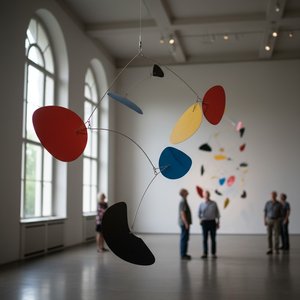
Alexander Calder: Kinetic Sculpture, Mobile Art & the Poetics of Chance
Explore the revolutionary world of Alexander Calder's kinetic sculptures & mobiles. Discover insights for collectors, acquisition advice, and the enduring legacy of this modern master. Expert analysis & art valuation.

The Enduring Form: Exploring Themes & Techniques in Sculpture Across Historical Periods
Explore the rich history of sculpture from ancient masterpieces to contemporary innovations. Discover key techniques, influential artists & investment potential for discerning art collectors.

The Enduring Form: Sculpture Across History, Technique & Emotional Resonance
Explore the rich history of sculpture with OriginalUniqueArt. Discover key techniques, influential artists & investment potential for discerning collectors. Expert insights into valuing and collecting timeless masterpieces.

Top 10 Bronzen Beeldhouwwerken die de Kunst Voorgoed Veranderden | OriginalUniqueArt
Ontdek de 10 meest legendarische bronzen beeldhouwwerken die kunstgeschiedenis schreven! Van Rodin tot Michelangelo, leer over hun meesterwerken & technieken. Vind museumkwaliteit reproducties en inspiratie voor uw interieur op OriginalUniqueArt.com.
