

 Bekijk op ware grootte
 Verstuur
 Delen
Delen
 Details bekijken
 Gids voor studentenkunstwerken

 Download
 Vergelijkbare items
 Röntgenonderzoek
 Diavoorstelling
 Statistieken
Sebastian Brant (.)
 Silverpoint
- WallArt
- Northern Renaissance Portraiture
 1520
1520 194.0 x 147.0 cm
 Staatliche Museen zu Berlin
 Lees meer
Koop een digitale afbeelding in hoge resolutie met verbeterde kwaliteit, die veel superieur is aan de online voorvertoning.
Elk bestand wordt met uiterste precisie voorbereid door onze interne specialisten, met behulp van geavanceerde tools en deskundige handmatige retouche. Wij garanderen dat elke afbeelding een uitzonderlijke helderheid, nauwkeurige kleurweergave en verfijnde details bezit.
Het uiteindelijke bestand wordt binnen 72 uur per e-mail geleverd, geoptimaliseerd voor direct gebruik in professionele, redactionele en printomgevingen. Dit is dezelfde kwaliteit waarop vooraanstaande designstudio's, uitgevers en galerieën vertrouwen.
Digitale afbeeldingen
Download een bestand met hoge resolutie voor persoonlijke weergave, afdrukken en creatieve projecten. ( Schakel over naar print Koop handgeschilderd kunstwerk)
Inbegrepen bij elke bestelling van een digitale afbeelding
Professionele digitale levering, gegarandeerd
Wanneer u kiest voor OriginalUniqueArt.com, ontvangt u niet alleen een afbeelding – u krijgt een professioneel verbeterd digitaal kunstwerk, met precisie vervaardigd en voorzien van een tevredenheidsgarantie. Dit is alles wat automatisch bij uw bestelling is inbegrepen:

Directe levering per e-mail
Uw hoogwaardige digitale afbeeldingsbestand wordt binnen 72 uur na bestelling naar u gemaild – klaar voor direct gebruik.

AI-geoptimaliseerd digitaal bestand
Uw kunstwerk wordt professioneel geoptimaliseerd met behulp van geavanceerde AI-tools en handmatige bewerkingen, waardoor maximale details, helderheid en kleurnauwkeurigheid worden gegarandeerd.

Gratis levenslange herlevering
Je bestand per ongeluk verwijderd of kwijtgeraakt? Geen zorgen – we sturen het u op elk gewenst moment gratis opnieuw toe.

Geen invoerkosten – nooit
Geniet direct van uw kunstwerk zonder invoerrechten, belastingen of verzendkosten – digitale downloads zijn altijd belastingvrij.

Garantie op kleurgetrouwheid
Met behulp van professionele hulpmiddelen en kleurbeheer zorgen wij ervoor dat uw digitale afbeelding de originele kleuren zo nauwkeurig mogelijk weergeeft.

100 dagen tevredenheidsgarantie
Als u niet tevreden bent met uw digitale afbeelding, passen wij deze aan of storten wij 100% terug binnen 100 dagen - zonder vragen te stellen.

100% Geld-terug-garantie
Niet tevreden? Ontvang een volledige terugbetaling binnen 100 dagen na ontvangst van uw digitale bestand – zonder vragen te stellen.

Korting bij grote bestellingen
Koop 3 afbeeldingen, bespaar 10% - Koop 5, bespaar 15% - Koop 10+, bespaar 20%. Ideaal voor creatieve projecten, galerieën en bureaus.
A Portrait of Quiet Contemplation: Albrecht Dürer’s Silverpoint Drawing of Sebastian Brant
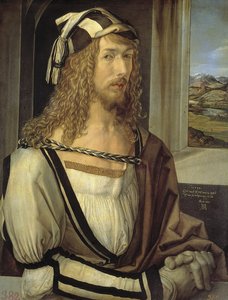
Albrecht Dürer's "Sebastian Brant," executed in 1520, is more than simply a portrait; it’s a meticulously crafted window into the complexities of Northern Renaissance thought. This silverpoint drawing, now faithfully reproduced on canvas by OriginalUniqueArt.com, offers a profound glimpse into the mind of an unidentified gentleman, likely a man of considerable standing within his community. The stark monochrome palette—a deliberate choice reflecting Dürer’s mastery of the medium—immediately draws the viewer in, demanding attention to the subtle nuances of line and shadow that define the figure's form. The drawing’s power lies not in dramatic gesture or vibrant color, but in its quiet intensity, a testament to Dürer’s ability to capture an essence – a thoughtful gaze, a hint of melancholy, and the dignified bearing of a man accustomed to both privilege and introspection.
The Alchemy of Silverpoint: Technique and Texture
Dürer's choice of silverpoint as his medium is crucial to understanding the artwork’s unique character. Unlike oil paints, which rely on layering and blending, silverpoint demands absolute precision from the artist. A thin wire of pure silver is drawn directly onto prepared paper—typically gessoed to provide a smooth, receptive surface—creating lines that are both permanent and remarkably delicate. The resulting texture isn’t immediately apparent in a photograph, but one can imagine the subtle metallic sheen that would have graced the original drawing, a testament to Dürer's painstaking control. The meticulous hatching and cross-hatching employed to model the face, clothing, and fur collar demonstrate an unparalleled level of technical skill; each line is carefully considered, contributing to the overall illusion of volume and depth. This technique, born from the traditions of German art, allowed for a level of detail rarely achieved with other mediums, creating a surface that feels both tactile and profoundly intimate.
Symbolism and Status: Decoding the Portrait’s Details
Beyond the technical brilliance, “Sebastian Brant” is rich in symbolic details. The broad-brimmed hat, adorned with a feather, speaks volumes about the subject's social standing – a common motif in Renaissance portraiture signifying wealth, status, and perhaps even membership within a guild or influential circle. The meticulously groomed mustache and beard, hallmarks of masculine identity during this period, further reinforce his position as a man of authority and refinement. The contemplative expression itself is particularly noteworthy; it suggests a thoughtful nature, an intellectual curiosity, or perhaps a quiet sadness – inviting the viewer to project their own interpretations onto the subject’s face. The anonymity of the sitter adds another layer of intrigue, allowing us to focus solely on the qualities conveyed through his appearance and demeanor.
A Window into the Renaissance: Context and Legacy
Created in 1520, “Sebastian Brant” reflects the artistic and intellectual currents of the Northern Renaissance. Dürer’s work exemplifies a shift towards greater realism and naturalism, moving away from the stylized conventions of earlier periods. His meticulous attention to detail, combined with his deep understanding of human anatomy and perspective, established him as one of the most influential artists of his time. This drawing stands as a powerful example of Dürer’s ability to capture not just likeness but also character – a testament to his profound observation skills and artistic genius. Today, through OriginalUniqueArt.com's exquisite reproductions, this intimate portrait continues to resonate with viewers, offering a tangible connection to the world of 16th-century Germany and the enduring legacy of Albrecht Dürer.
Vragen & Antwoorden
Waar kan ik een voorproefje van "Sebastian Brant (.)" bekijken?
Op de Voorvertoning-pagina van "Sebastian Brant (.)" kunt u het kunstwerk bekijken voordat u bestelt.
Is er een diavoorstelling beschikbaar voor "Sebastian Brant (.)" door Albrecht Dürer?
"Sebastian Brant (.)" door Albrecht Dürer kan worden bekeken als een diavoorstelling op de Diavoorstelling pagina van het kunstwerk.
Aan welke kunstenaar wordt "Sebastian Brant (.)" toegeschreven?
De kunstenaar achter "Sebastian Brant (.)" is Albrecht Dürer. Het werk is gecatalogiseerd onder de naam van Albrecht Dürer.
Biografie van de kunstenaar
A Life Forged in Nuremberg: The Early Years and Apprenticeship
Albrecht Dürer, a name synonymous with the German Renaissance, emerged from the bustling artisan city of Nuremberg in 1471. His father, Albrecht Dürer the Elder, was a successful goldsmith who had immigrated from Hungary, bringing with him a lineage steeped in craftsmanship. It was within this environment—the scent of metal and the meticulous precision of handiwork—that young Albrecht’s artistic inclinations first took root. Though his father envisioned a similar path for him, apprenticing him initially in the family trade, it soon became undeniable that Albrecht possessed an exceptional gift for drawing. At thirteen, he transitioned to the workshop of Michael Wolgemut, Nuremberg's leading artist at the time. This was no mere technical training; it was immersion into a world of illuminated manuscripts, painted panels, and—crucially—the burgeoning art of woodcut illustration. The sheer volume of work produced by Wolgemut’s workshop, including the extensive illustrations for the *Nuremberg Chronicle*, provided Dürer with an unparalleled foundation in design, composition, and the mechanics of image-making. A remarkable silverpoint self-portrait from 1484, created when he was barely a teenager, stands as astonishing evidence of his precocious talent—a testament to a burgeoning artistic identity already taking shape.
The Italian Influence and Artistic Maturation
Dürer’s ambition extended far beyond the confines of Nuremberg. Driven by an insatiable curiosity and a desire to master the art of painting, he embarked on his first journey to Italy in 1494. This was not simply a sightseeing trip; it was a pilgrimage to the heart of the Renaissance. He encountered the works of masters like Raphael, Giovanni Bellini, and Leonardo da Vinci—artists who were redefining the possibilities of form, perspective, and human expression. The impact of this exposure was profound. Dürer absorbed the classical motifs, harmonious compositions, and subtle sfumato techniques that characterized Italian art, yet he never abandoned his Northern European sensibility for meticulous detail and symbolic depth. A second sojourn to Italy between 1505 and 1507 further solidified these influences, allowing him to study ancient Roman ruins and refine his understanding of anatomy and proportion. This synthesis of Northern precision and Italian grace became the hallmark of Dürer’s unique artistic style.
Mastering the Mediums: Painting, Engraving, and Woodcut
Dürer was a master of multiple mediums, each offering him distinct avenues for creative expression. His paintings, though fewer in number than his prints, demonstrate a remarkable command of oil paint and an ability to capture both physical likeness and psychological depth. Works like the *Feast of the Rose Garlands* reveal a vibrant palette influenced by Venetian colorism. However, it was in the realm of printmaking—particularly engraving and woodcut—that Dürer truly revolutionized artistic practice. He elevated these techniques from mere reproductive methods to independent art forms, capable of conveying complex narratives and profound emotions. The *Apocalypse* series (1498), a collection of fourteen woodcuts illustrating the Book of Revelation, showcased his mastery of this medium despite its inherent limitations. Later engravings like *Melencolia I* (1514) and *Saint Jerome in His Study* (1514) are testaments to his unparalleled skill—intricate compositions filled with symbolic meaning and executed with breathtaking precision. He didn’t just depict reality; he imbued it with layers of intellectual and spiritual significance.
A Theorist and Innovator: The Legacy of Albrecht Dürer
Dürer was not merely an artist; he was a scholar, a theorist, and an innovator who sought to understand the underlying principles governing artistic creation. He believed in the mathematical foundations of art and dedicated himself to establishing a scientific approach to representation. His treatises on geometry, proportion, and human anatomy—most notably *Four Books of Human Proportion* (1528)—were groundbreaking for their time, demonstrating his commitment to rigorous observation and rational analysis. These writings were not simply academic exercises; they were intended to elevate the status of artists from mere craftsmen to intellectual practitioners. Dürer’s legacy extends far beyond his individual artworks. He bridged the gap between Northern European traditions and Italian Renaissance ideals, introducing classical motifs into Northern art while maintaining its distinctive character. His theoretical contributions helped establish a new framework for artistic practice, inspiring generations of artists with his technical skill, innovative spirit, and profound vision. He remains, to this day, one of the most important figures in the history of Western art.
Influences and Enduring Impact
- Michael Wolgemut: Dürer’s initial mentor, providing foundational skills in drawing, painting, and woodcut techniques.
- Leonardo da Vinci: Inspired Dürer’s exploration of anatomy, perspective, and sfumato—the subtle blending of tones.
- Raphael: Influenced Dürer’s compositional harmony and idealized forms.
- Giovanni Bellini: Contributed to Dürer's understanding of color and Venetian painting traditions.
Dürer’s influence reverberates through centuries of art history. His meticulous realism, his innovative use of printmaking, and his theoretical writings continue to inspire artists and scholars alike. He demonstrated that art could be both technically masterful and intellectually rigorous—a legacy that continues to shape the artistic landscape today. His work stands as a testament to the power of observation, the pursuit of knowledge, and the enduring human desire to create beauty and meaning.
Albrecht Dürer
1471 - 1528 , Duitsland
Kerngegevens
- Artistic Movement Or Style: Renaissance
- Artists Or Movements Influenced By This Artist:
- Wolgemut
- Nuremberg
- Artists Who Influenced This Artist:
- Leonardo da Vinci
- Raphael
- Bellini
- Date Of Birth: 21 mei 1471
- Date Of Death: 6 april 1528
- Full Name: Albrecht Dürer
- Nationality: Duits
- Notable Artworks:
- Apocalypse
- Melencolia I
- St. Jerome
- Place Of Birth: Nuremberg, Duitsland