Voorvertoning
 Verstuur
 Delen
Delen
 Details bekijken
 Gids
Gids

 Download
 Vergelijkbare items
 Röntgenonderzoek
 Diavoorstelling
 Q&A
Q&A Statistieken
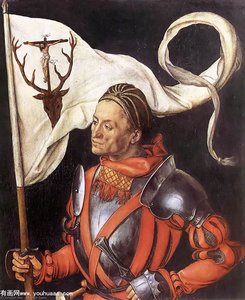
Hercules bij de kruispunt

- 22.0 x 32.0 cm


 Lees meer
Giclée / Kunstafdrukken
Giclée- of canvasafdruk van museumkwaliteit met een snelle productie en flexibele afwerkingsmogelijkheden. ( Bestel handgeschilderde reproductie Schakel over naar digitale afbeeldingen)




P118B €10

P118H €10

P118W €10

P438Z €10

P508JH €12

P508YH €12

P805H €10

P805Z €10

P919BZ €10

P919G €10

P919XJ €10

P959ZH €10

P968JZ €12

W106C €8

W218G €10

W218JH €8

W218Y €10

W307PJ €10

W316G €10

W316PJ €8

W316Y €10

W398PJ €8

W4111J €10

W500HY €15

W500JH €15

W692G €12

W849H €8

W940BG €15

W953PJ €8




Kies uit onze vooraf ingestelde maten die overeenkomen met de originele verhoudingen van het kunstwerk.

Voer de gewenste breedte en hoogte in, passend bij uw lijst of muur. Een afdruk kan alleen worden ingekort en nooit groter worden gemaakt dan het origineel; een formaat met andere verhoudingen zal daarom een deel van de afbeelding verliezen. Wij sturen u een digitaal mockup ter goedkeuring voordat we tot drukwerk overgaan. De afbeelding op deze pagina toont niet de werkelijke uitsnede — dit is alleen te zien op het mockup.
Wereldwijde levering () binnen 2 weken in plaats van de standaard 4/5 weken. (3 november)

Gratis wereldwijde expressverzending

Hoogwaardig linnen canvas

Volledige verzendverzekering

Garantie op terugbetaling van invoerrechten

Garantie op exacte kleurweergave

Retourbeleid van 100 dagen (alleen bij defecten)

100% Geld-terug-garantie

Korting bij meerdere afnames
 De optie voor glas is alleen beschikbaar bij een formaat kleiner dan 110 cm.

Hercules bij de kruispunt
Giclée / Kunstafdrukken
Afmetingen reproductie
-


Eindtotaal
€ 72
Hercules at the Crossroads: A Reflection on Choice and Virtue
Albrecht Dürer’s “Hercules at the Crossroads,” created around 1498, stands as an enduring emblem of Renaissance humanism—a visual meditation on the fundamental dilemma faced by humankind: the pursuit of earthly pleasure versus the embrace of moral fortitude. More than just a depiction of mythic grandeur, this engraving embodies a profound philosophical inquiry into what constitutes true fulfillment.
- Subject Matter: The artwork portrays Hercules—the legendary hero famed for his twelve labors—standing before two paths. One leads to the verdant expanse of civilization and indulgence, represented by lush foliage and blossoming trees; the other descends into darkness, symbolizing wilderness and hardship.
- Style & Technique: Dürer’s masterful use of engraving exemplifies the precision and detail characteristic of Northern Renaissance art. The intricate linework captures every nuance of form and texture, demonstrating an unparalleled command of printmaking technique. The artist meticulously rendered the musculature of Hercules's body, conveying strength and determination.
- Historical Context: Produced during a period marked by intellectual ferment—the humanist revival—the engraving reflects the Renaissance fascination with classical ideals and moral philosophy. It aligns perfectly with the broader debate concerning how individuals should navigate life’s challenges to achieve happiness and virtue. The image was commissioned by noblemen who wished to portray themselves as embodying these virtues.
- Symbolism: The two paths are laden with symbolic significance. The flowering trees represent earthly desires—sensual pleasures, worldly ambitions—whereas the dark forest symbolizes spiritual struggle and ascetic discipline. Hercules’s gaze directs towards the darker path, suggesting a conscious acceptance of hardship for the sake of honor and moral integrity.
- Emotional Impact: “Hercules at the Crossroads” transcends mere visual representation; it compels contemplation on the human condition. The artwork evokes feelings of introspection—a questioning of priorities—and encourages viewers to consider what truly matters in life’s journey. Its enduring appeal lies in its timeless exploration of moral choice and its celebration of virtue as a path toward genuine fulfillment.
Further research into Dürer's artistic influences reveals connections with Theodore de Bry, whose detailed illustrations shaped European perceptions of early America, and Girolamo Muziano, renowned for monumental figures inspired by Michelangelo.
You can explore more about this artwork on The Metropolitan Museum of Art and Cleveland Museum of Art.
For a deeper understanding of Albrecht Dürer’s legacy, consider reading “Albrecht Dürer: A Renaissance Master's Legacy of Innovation and Self-Portraiture.
Don’t miss the Albrecht Dürer Haus in Nuremberg, Germany—the only surviving 15th-century artist’s home in Northern Europe. Albrecht Dürer's House offers a unique glimpse into the artistic environment of the Renaissance.
To learn more about this artwork, visit The Met’s Open Access API and request images under copyright.
Veelgestelde vragen
Onder welke andere namen is Albrecht Dürer bekend?
Andere namen waaronder Albrecht Dürer, maker van "Hercules bij de kruispunt", bekend is, zijn onder andere Adalbert Ajtósi, Albert Durer, Duerer.
Wat zijn de werkelijke afmetingen van "Hercules bij de kruispunt" door Albrecht Dürer?
De afmetingen van "Hercules bij de kruispunt" door Albrecht Dürer zijn 22 x 32 cm. Reproducties kunnen in andere formaten worden besteld met behoud van dezelfde verhoudingen.
Waar komen de bezoekers van "Hercules bij de kruispunt" door Albrecht Dürer vandaan?
De Statistieken-pagina van "Hercules bij de kruispunt" door Albrecht Dürer toont statistieken over de publieksbezoeken: het aantal maandelijkse bezoeken aan dit kunstwerk, een vergelijking met de meest bekeken werken van de kunstenaar en de herkomst van de bezoekers.
Biografie kunstenaar
A Life Forged in Nuremberg: The Early Years and Apprenticeship
Albrecht Dürer, a name synonymous with the German Renaissance, emerged from the bustling artisan city of Nuremberg in 1471. His father, Albrecht Dürer the Elder, was a successful goldsmith who had immigrated from Hungary, bringing with him a lineage steeped in craftsmanship. It was within this environment—the scent of metal and the meticulous precision of handiwork—that young Albrecht’s artistic inclinations first took root. Though his father envisioned a similar path for him, apprenticing him initially in the family trade, it soon became undeniable that Albrecht possessed an exceptional gift for drawing. At thirteen, he transitioned to the workshop of Michael Wolgemut, Nuremberg's leading artist at the time. This was no mere technical training; it was immersion into a world of illuminated manuscripts, painted panels, and—crucially—the burgeoning art of woodcut illustration. The sheer volume of work produced by Wolgemut’s workshop, including the extensive illustrations for the *Nuremberg Chronicle*, provided Dürer with an unparalleled foundation in design, composition, and the mechanics of image-making. A remarkable silverpoint self-portrait from 1484, created when he was barely a teenager, stands as astonishing evidence of his precocious talent—a testament to a burgeoning artistic identity already taking shape.
The Italian Influence and Artistic Maturation
Dürer’s ambition extended far beyond the confines of Nuremberg. Driven by an insatiable curiosity and a desire to master the art of painting, he embarked on his first journey to Italy in 1494. This was not simply a sightseeing trip; it was a pilgrimage to the heart of the Renaissance. He encountered the works of masters like Raphael, Giovanni Bellini, and Leonardo da Vinci—artists who were redefining the possibilities of form, perspective, and human expression. The impact of this exposure was profound. Dürer absorbed the classical motifs, harmonious compositions, and subtle sfumato techniques that characterized Italian art, yet he never abandoned his Northern European sensibility for meticulous detail and symbolic depth. A second sojourn to Italy between 1505 and 1507 further solidified these influences, allowing him to study ancient Roman ruins and refine his understanding of anatomy and proportion. This synthesis of Northern precision and Italian grace became the hallmark of Dürer’s unique artistic style.
Mastering the Mediums: Painting, Engraving, and Woodcut
Dürer was a master of multiple mediums, each offering him distinct avenues for creative expression. His paintings, though fewer in number than his prints, demonstrate a remarkable command of oil paint and an ability to capture both physical likeness and psychological depth. Works like the *Feast of the Rose Garlands* reveal a vibrant palette influenced by Venetian colorism. However, it was in the realm of printmaking—particularly engraving and woodcut—that Dürer truly revolutionized artistic practice. He elevated these techniques from mere reproductive methods to independent art forms, capable of conveying complex narratives and profound emotions. The *Apocalypse* series (1498), a collection of fourteen woodcuts illustrating the Book of Revelation, showcased his mastery of this medium despite its inherent limitations. Later engravings like *Melencolia I* (1514) and *Saint Jerome in His Study* (1514) are testaments to his unparalleled skill—intricate compositions filled with symbolic meaning and executed with breathtaking precision. He didn’t just depict reality; he imbued it with layers of intellectual and spiritual significance.
A Theorist and Innovator: The Legacy of Albrecht Dürer
Dürer was not merely an artist; he was a scholar, a theorist, and an innovator who sought to understand the underlying principles governing artistic creation. He believed in the mathematical foundations of art and dedicated himself to establishing a scientific approach to representation. His treatises on geometry, proportion, and human anatomy—most notably *Four Books of Human Proportion* (1528)—were groundbreaking for their time, demonstrating his commitment to rigorous observation and rational analysis. These writings were not simply academic exercises; they were intended to elevate the status of artists from mere craftsmen to intellectual practitioners. Dürer’s legacy extends far beyond his individual artworks. He bridged the gap between Northern European traditions and Italian Renaissance ideals, introducing classical motifs into Northern art while maintaining its distinctive character. His theoretical contributions helped establish a new framework for artistic practice, inspiring generations of artists with his technical skill, innovative spirit, and profound vision. He remains, to this day, one of the most important figures in the history of Western art.
Influences and Enduring Impact
- Michael Wolgemut: Dürer’s initial mentor, providing foundational skills in drawing, painting, and woodcut techniques.
- Leonardo da Vinci: Inspired Dürer’s exploration of anatomy, perspective, and sfumato—the subtle blending of tones.
- Raphael: Influenced Dürer’s compositional harmony and idealized forms.
- Giovanni Bellini: Contributed to Dürer's understanding of color and Venetian painting traditions.
Dürer’s influence reverberates through centuries of art history. His meticulous realism, his innovative use of printmaking, and his theoretical writings continue to inspire artists and scholars alike. He demonstrated that art could be both technically masterful and intellectually rigorous—a legacy that continues to shape the artistic landscape today. His work stands as a testament to the power of observation, the pursuit of knowledge, and the enduring human desire to create beauty and meaning.
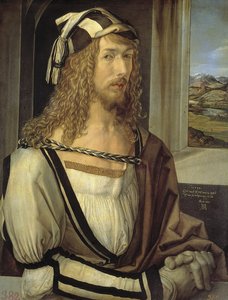
Albrecht Dürer
1471 - 1528 , Duitsland
Belangrijkste feiten
- Artistic Movement Or Style: Renaissance
- Artists Or Movements Influenced By This Artist:
- Wolgemut
- Nuremberg
- Artists Who Influenced This Artist:
- Leonardo da Vinci
- Raphael
- Bellini
- Date Of Birth: 21 mei 1471
- Date Of Death: 6 april 1528
- Full Name: Albrecht Dürer
- Nationality: Duits
- Notable Artworks:
- Apocalypse
- Melencolia I
- St. Jerome
- Place Of Birth: Nuremberg, Duitsland
Gerelateerde artikelen
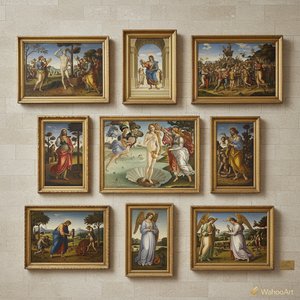
Top 10 Renaissance Meesterwerken: Kunstgeschiedenis voor uw Interieur | OriginalUniqueArt.nl
Ontdek de 10 grootste meesterwerken van de Vroege Renaissance! Lees over Leonardo da Vinci, Michelangelo & Botticelli. Laat u inspireren door Italiaanse kunst en koop museumkwaliteit reproducties voor uw interieur op OriginalUniqueArt.com.
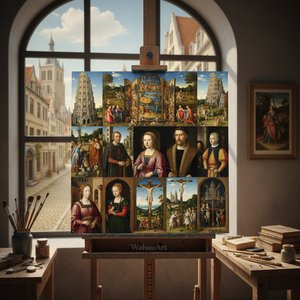
Top 10 Meesterwerken van de Noordelijke Renaissance | Kunst & Decoratie
Ontdek de 10 meest invloedrijke meesterwerken van de Noordelijke Renaissance! Van Jan van Eyck tot Pieter Bruegel, leer over hun technieken & betekenis. Vind museumkwaliteit reproducties en inspiratie voor uw interieur op OriginalUniqueArt.com.
Top 10 Renaissance Meesterwerken: Kunstgeschiedenis voor uw Interieur | OriginalUniqueArt.com
Ontdek de 10 meest iconische Renaissance meesterwerken! Leer over Leonardo da Vinci, Michelangelo & Rafaël. Laat u inspireren door klassieke kunst en vind museumkwaliteit reproducties voor uw interieur op OriginalUniqueArt.com.
Albrecht Dürer's Top 25 Meesterwerken: Kunstprints & Decor voor de Verfijnde Smaak
Ontdek de 25 meest iconische meesterwerken van Albrecht Dürer! Van gravures tot zelfportretten – verlies u in de Renaissance kunst en het vakmanschap van deze Duitse grootmeester. Museumkwaliteit reproducties & decoratie op OriginalUniqueArt.com.

Top 25 Meesterwerken: Kunst & Geschiedenis Ontdekken in het British Museum | OriginalUniqueArt
Ontdek de 25 meest iconische kunstwerken van het British Museum in Londen! Lees over beroemde schilderijen, Egyptische artefacten & meesterlijke technieken. Vind museumkwaliteit reproducties en interieurdesign inspiratie op OriginalUniqueArt.com.