Voorvertoning
 Verstuur
 Delen
Delen
 Details bekijken
 Gids
Gids

 Download
 Vergelijkbare items
 Röntgenonderzoek
 Diavoorstelling
 Statistieken
Adam en Eva
 Acryl op canvas
- Wanddecoratie
- Duitse Renaissance
 1504
1504 242.0 x 201.0 cm
 Pierpont Morgan Library & Museum
 Lees meer
Giclée / Kunstafdrukken
Giclée- of canvasafdruk van museumkwaliteit met een snelle productie en flexibele afwerkingsmogelijkheden. ( Bestel handgeschilderde reproductie Schakel over naar digitale afbeeldingen)




P118B €10

P118H €10

P118W €10

P438Z €10

P508JH €12

P508YH €12

P805H €10

P805Z €10

P919BZ €10

P919G €10

P919XJ €10

P959ZH €10

P968JZ €12

W106C €8

W218G €10

W218JH €8

W218Y €10

W307PJ €10

W316G €10

W316PJ €8

W316Y €10

W398PJ €8

W4111J €10

W500HY €15

W500JH €15

W692G €12

W849H €8

W940BG €15

W953PJ €8




Kies uit onze vooraf ingestelde maten die overeenkomen met de originele verhoudingen van het kunstwerk.

Voer de gewenste breedte en hoogte in, passend bij uw lijst of muur. Een afdruk kan alleen worden ingekort en nooit groter worden gemaakt dan het origineel; een formaat met andere verhoudingen zal daarom een deel van de afbeelding verliezen. Wij sturen u een digitaal mockup ter goedkeuring voordat we tot drukwerk overgaan. De afbeelding op deze pagina toont niet de werkelijke uitsnede — dit is alleen te zien op het mockup.
Wereldwijde levering () binnen 2 weken in plaats van de standaard 4/5 weken. (26 oktober)

Gratis wereldwijde expressverzending

Hoogwaardig linnen canvas

Volledige verzendverzekering

Garantie op terugbetaling van invoerrechten

Garantie op exacte kleurweergave

Retourbeleid van 100 dagen (alleen bij defecten)

100% Geld-terug-garantie

Korting bij meerdere afnames
 De optie voor glas is alleen beschikbaar bij een formaat kleiner dan 110 cm.

Adam en Eva
Giclée / Kunstafdrukken
Afmetingen reproductie
-


Eindtotaal
€ 71
De Genesis van een Visie: Albrecht Dürers *Adam en Eva*
Albrecht Dürers gravure uit 1504, *Adam en Eva*, is niet louter een weergave van het bijbelse verhaal; het is een diepzinnige meditatie over de mensheid, kennis en de ontluikende geest van de Duitse Renaissance. Ver weg van de idyllische tuinen die vaak in eerdere kunst werden afgebeeld, stort dit werk ons in een duister, dreigend woud—een uitgesproken Duits landschap doordrenkt met elementen van folklore en mysterie. Dürer, een meester van zowel minutieuze details als expressieve symboliek, transformeert een fundamenteel narratief tot een complex visueel statement dat veelzeggend is over zijn tijd en zijn artistieke visie.
De scène trekt onmiddellijk de aandacht van de toeschouwer. Adam en Eva staan in een zorgvuldig geconstrueerde contraposto-houding—een bewuste knipoog naar klassieke idealen van schoonheid en proportie. Hun lichamen, weergegeven met verbazingwekkende anatomische nauwkeurigheid, zijn opvallend frontaal gepositioneerd, terwijl hun blikken naar elkaar zijn afgewend. Deze bewuste verschuiving weg van het naturalisme is essentieel; Dürer streeft niet naar fotografisch realisme, maar eerder naar een gestileerde representatie die de geïdealiseerde vorm van de figuren en hun symbolische betekenis benadrukt. Het woud zelf—een dicht vlechtwerk van bomen en ondergroei—is allesbehalve uitnodigend. Het is een plek van schaduwen, die hint naar gevaar en onzekerheid, als weerspiegeling van de levensgevaarlijke gevolgen die Adam en Eva te wachten staan.
Een Botsing van Werelden: Stijl, Techniek en Historische Context
Dürers meesterschap is zichtbaar in elke lijn van deze gravure. Hij hanteert een minutieuze punt-naar-lijn techniek, waarbij hij de burijn—een scherp instrument voor etsen—met ongeëvenaarde precisie gebruikt om een verbazingwekkend bereik aan tonale waarden te creëren. Het diepe zwart van het woud contrasteert scherp met de lichtgevende hoogtepunten op de huid van de figuren, wat een dramatisch gevoel van diepte en atmosfeer genereert. Het gebruik van arcering creëert subtiele texturen en schaduwen, wat extra lagen complexiteit toevoegt aan de compositie. Dit niveau van detail was niet enkel voor het esthetische effect; het was een demonstratie van Dürers technische vaardigheid en zijn toewijding om de essentie van zijn onderwerpen te vangen.
Geboren in Neurenberg, een bloeiend centrum van kunst en handel tijdens de Renaissance, werd Dürer diep beïnvloed door zowel het Italiaans humanisme als de Duitse folklore. Hij zocht naar een synthese van deze diverse tradities in een uniek persoonlijke stijl. De toevoeging van exotische elementen—zoals een tropische papegaai die op een tak zit—suggereert zijn bewustzijn van de bredere wereld en zijn verlangen om het bijbelse verhaal boven de directe context te verheffen. Zijn identificatie als “Albert Dvrer Noricvs” (Albert Dürer uit Neurenberg) in de cartelino—het kleine tekstveld onderaan de prent—onderstreept dit gevoel van regionale trots en artistieke ambitie.
Het Ontcijferen van Symbolen: Betekenis voorbij het Verhaal
Voorbij de rechtstreekse weergave van de zondeval van Adam en Eva, is *Adam en Eva* rijk aan symbolische betekenis. Het woud zelf vertegenwoordigt de wildernis, een ruimte van verleiding en gevaar. De dieren—een eland, os, konijn, kat, muis en geit—belichamen elk een specifiek menselijk temperament of "humor", wat de middeleeuwse leer van de lichaamssappen weerspiegelt die het Renaissance-denken beïnvloedde. De papegaai, met zijn evocerende roep, wordt verbonden met de Maagd Maria, wat een mogelijk tegengif voor de gevolgen van de zonde suggereert. De inclusie van deze diverse elementen creëert een complex tapijt van betekenis, dat de kijker uitnodigt om niet alleen na te denken over het verhaal van Adam en Eva, maar ook over de bredere thema's van de menselijke natuur, moraliteit en de relatie tussen de mensheid en de natuurlijke wereld.
Uiteindelijk is Dürers *Adam en Eva* meer dan slechts een bijbelse illustratie; het is een diepzinnig statement over de geest van de Renaissance—een viering van het menselijk potentieel, getemperd door een besef van de eigen beperkingen. Het blijft een krachtig en blijvend kunstwerk dat toeschouwers blijft fascineren met zijn technische briljantie, symbolische rijkdom en emotionele diepgang.
Veelgestelde vragen
In welke fase van de carrière van Albrecht Dürer behoort "Adam en Eva" (1504)?
"Adam en Eva", vervaardigd in 1504, behoort tot de Volwassen periode van de carrière van Albrecht Dürer.
Wat is de dominante kleur van "Adam en Eva"?
Een Oker tot sepia tint loopt door "Adam en Eva" door Albrecht Dürer.
Geeft het auteursrecht van "Adam en Eva" door Albrecht Dürer toestemming voor reproducties?
"Adam en Eva" door Albrecht Dürer, onderdeel van de collectie van Pierpont Morgan Library & Museum, is bevindt zich in het publiek domein - de auteursrechten zijn verlopen. Deze status bepaalt of er reproducties van de afbeelding mogen worden gemaakt.
Biografie kunstenaar
A Life Forged in Nuremberg: The Early Years and Apprenticeship
Albrecht Dürer, a name synonymous with the German Renaissance, emerged from the bustling artisan city of Nuremberg in 1471. His father, Albrecht Dürer the Elder, was a successful goldsmith who had immigrated from Hungary, bringing with him a lineage steeped in craftsmanship. It was within this environment—the scent of metal and the meticulous precision of handiwork—that young Albrecht’s artistic inclinations first took root. Though his father envisioned a similar path for him, apprenticing him initially in the family trade, it soon became undeniable that Albrecht possessed an exceptional gift for drawing. At thirteen, he transitioned to the workshop of Michael Wolgemut, Nuremberg's leading artist at the time. This was no mere technical training; it was immersion into a world of illuminated manuscripts, painted panels, and—crucially—the burgeoning art of woodcut illustration. The sheer volume of work produced by Wolgemut’s workshop, including the extensive illustrations for the *Nuremberg Chronicle*, provided Dürer with an unparalleled foundation in design, composition, and the mechanics of image-making. A remarkable silverpoint self-portrait from 1484, created when he was barely a teenager, stands as astonishing evidence of his precocious talent—a testament to a burgeoning artistic identity already taking shape.
The Italian Influence and Artistic Maturation
Dürer’s ambition extended far beyond the confines of Nuremberg. Driven by an insatiable curiosity and a desire to master the art of painting, he embarked on his first journey to Italy in 1494. This was not simply a sightseeing trip; it was a pilgrimage to the heart of the Renaissance. He encountered the works of masters like Raphael, Giovanni Bellini, and Leonardo da Vinci—artists who were redefining the possibilities of form, perspective, and human expression. The impact of this exposure was profound. Dürer absorbed the classical motifs, harmonious compositions, and subtle sfumato techniques that characterized Italian art, yet he never abandoned his Northern European sensibility for meticulous detail and symbolic depth. A second sojourn to Italy between 1505 and 1507 further solidified these influences, allowing him to study ancient Roman ruins and refine his understanding of anatomy and proportion. This synthesis of Northern precision and Italian grace became the hallmark of Dürer’s unique artistic style.
Mastering the Mediums: Painting, Engraving, and Woodcut
Dürer was a master of multiple mediums, each offering him distinct avenues for creative expression. His paintings, though fewer in number than his prints, demonstrate a remarkable command of oil paint and an ability to capture both physical likeness and psychological depth. Works like the *Feast of the Rose Garlands* reveal a vibrant palette influenced by Venetian colorism. However, it was in the realm of printmaking—particularly engraving and woodcut—that Dürer truly revolutionized artistic practice. He elevated these techniques from mere reproductive methods to independent art forms, capable of conveying complex narratives and profound emotions. The *Apocalypse* series (1498), a collection of fourteen woodcuts illustrating the Book of Revelation, showcased his mastery of this medium despite its inherent limitations. Later engravings like *Melencolia I* (1514) and *Saint Jerome in His Study* (1514) are testaments to his unparalleled skill—intricate compositions filled with symbolic meaning and executed with breathtaking precision. He didn’t just depict reality; he imbued it with layers of intellectual and spiritual significance.
A Theorist and Innovator: The Legacy of Albrecht Dürer
Dürer was not merely an artist; he was a scholar, a theorist, and an innovator who sought to understand the underlying principles governing artistic creation. He believed in the mathematical foundations of art and dedicated himself to establishing a scientific approach to representation. His treatises on geometry, proportion, and human anatomy—most notably *Four Books of Human Proportion* (1528)—were groundbreaking for their time, demonstrating his commitment to rigorous observation and rational analysis. These writings were not simply academic exercises; they were intended to elevate the status of artists from mere craftsmen to intellectual practitioners. Dürer’s legacy extends far beyond his individual artworks. He bridged the gap between Northern European traditions and Italian Renaissance ideals, introducing classical motifs into Northern art while maintaining its distinctive character. His theoretical contributions helped establish a new framework for artistic practice, inspiring generations of artists with his technical skill, innovative spirit, and profound vision. He remains, to this day, one of the most important figures in the history of Western art.
Influences and Enduring Impact
- Michael Wolgemut: Dürer’s initial mentor, providing foundational skills in drawing, painting, and woodcut techniques.
- Leonardo da Vinci: Inspired Dürer’s exploration of anatomy, perspective, and sfumato—the subtle blending of tones.
- Raphael: Influenced Dürer’s compositional harmony and idealized forms.
- Giovanni Bellini: Contributed to Dürer's understanding of color and Venetian painting traditions.
Dürer’s influence reverberates through centuries of art history. His meticulous realism, his innovative use of printmaking, and his theoretical writings continue to inspire artists and scholars alike. He demonstrated that art could be both technically masterful and intellectually rigorous—a legacy that continues to shape the artistic landscape today. His work stands as a testament to the power of observation, the pursuit of knowledge, and the enduring human desire to create beauty and meaning.
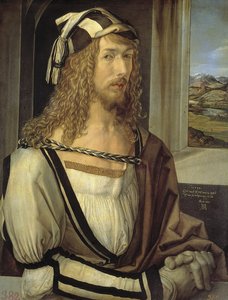
Albrecht Dürer
1471 - 1528 , Duitsland
Belangrijkste feiten
- Artistic Movement Or Style: Renaissance
- Artists Or Movements Influenced By This Artist:
- Wolgemut
- Nuremberg
- Artists Who Influenced This Artist:
- Leonardo da Vinci
- Raphael
- Bellini
- Date Of Birth: 21 mei 1471
- Date Of Death: 6 april 1528
- Full Name: Albrecht Dürer
- Nationality: Duits
- Notable Artworks:
- Apocalypse
- Melencolia I
- St. Jerome
- Place Of Birth: Nuremberg, Duitsland
Gerelateerde artikelen
Top 25 Meesterwerken: Kunst & Geschiedenis Ontdekken in het British Museum | OriginalUniqueArt
Ontdek de 25 meest iconische kunstwerken van het British Museum in Londen! Lees over beroemde schilderijen, Egyptische artefacten & meesterlijke technieken. Vind museumkwaliteit reproducties en interieurdesign inspiratie op OriginalUniqueArt.com.
Albrecht Dürer's Top 25 Meesterwerken: Kunstprints & Decor voor de Verfijnde Smaak
Ontdek de 25 meest iconische meesterwerken van Albrecht Dürer! Van gravures tot zelfportretten – verlies u in de Renaissance kunst en het vakmanschap van deze Duitse grootmeester. Museumkwaliteit reproducties & decoratie op OriginalUniqueArt.com.

Albrecht Dürer: A Renaissance Master's Legacy of Innovation and Self-Portraiture
Explore the life & art of Albrecht Dürer, a pivotal German Renaissance master. Discover his groundbreaking printmaking techniques, iconic self-portraits, and lasting influence on Western art history. A deep dive into innovation & symbolism.

Engraving: A Historical Survey of Technique, Artistic Expression & Enduring Legacy
Explore the rich history of engraving with OriginalUniqueArt. Discover techniques, iconic artists like Dürer & Callot, collecting tips, and expert guidance for preserving your art investment. Learn about intaglio printing & more!
Top 10 Legendarische Graveerkunstwerken die de Kunst voor Altijd Veranderden | OriginalUniqueArt
Ontdek de 10 meest legendarische graveerkunstwerken die de kunstgeschiedenis veranderden! Van Rembrandt tot Goya, leer over techniek & betekenis. Museumkwaliteit reproducties voor uw interieur op OriginalUniqueArt.com.