
() ·
A painting made for you, by hand
Handgemaakte olieverfreproductie
Met de hand geschilderd in olieverf op canvas in uw gewenste maat en lijst, op bestelling gemaakt door onze kunstenaars. ( Schakel over naar print Schakel over naar digitale afbeeldingen)
Beschrijving verzamelobject
Black & white photo of a nude female figure by Joaquín Sorolla. Capturing intimacy & light, this 1987 work showcases realism & texture in a shallow perspective.
Biografie kunstenaar
Explore the prolific films of Alberto Franco manera (Jesús Franco), a Spanish filmmaker known for 173+ low-budget B-movies & unique cinematic style.
 Lees meer
from ·
Chapter 1
How large should it be?
Slide to change the size; the picture on the left shows the frame at its real width. The proportions of the original are kept.
Kies uit onze vooraf ingestelde maten die overeenkomen met de originele verhoudingen van het kunstwerk.

Voer de breedte en hoogte in die u nodig heeft, passend bij uw lijst of uw muur. Omdat dit handgeschilderd is, kan de kunstenaar bij een afmeting met een andere beeldverhouding iets meer rondom het schilderij schilderen of juist iets meer weglaten — u kiest zelf. Wij sturen u een digitaal mockup ter goedkeuring voordat het schilderwerk begint. De afbeelding die op deze pagina wordt getoond, is niet het uiteindelijke resultaat — alleen de mockup geeft dit weer.
Chapter 2
How should it arrive?
Choose the edges of the stretched canvas
Choose your frame

White €1

Blurside €1

Extended €1

P118B €10

P118H €10

P118W €10

P438Z €10

P508JH €12

P508YH €12

P805H €10

P805Z €10

P919BZ €10

P919G €10

P919XJ €10

P959ZH €10

P968JZ €12

W106C €8

W218G €10

W218JH €8

W218Y €10

W307PJ €10

W316G €10

W316PJ €8

W316Y €10

W398PJ €8

W4111J €10

W500HY €15

W500JH €15

W692G €12

W849H €8

W940BG €15

W953PJ €8

H24-GOLD €30

H24-SILVER €30

H36-GOLD €45

H36-SILVER €45
Ingelijst
Moulding: . Overall size with the frame: .
Chapter 3
Who paints it, and should anything change?
After order, OriginalUniqueArt.com team will email client for instructions and provide a mockup preview
Wereldwijde levering () binnen 3 tot 4 weken in plaats van de standaard 5 weken. (2 november). Zonder concessies aan de kwaliteit.
Chapter 4
The finishing touches
A nameplate, as in a museum?
Details van de gegraveerde bronzen plaat
This elegant plaque features the artist's name and the title of the artwork, finely engraved for a timeless presentation.
It is made from bronze with a refined, elegant finish. The text is precisely laser-engraved for a sharp and permanent result. Measuring 9x2 cm, the plaque is compact yet easy to read. It's built to be durable and scratch-resistant, offering a professional, museum-quality look. Mounting is simple thanks to the included adhesive backing.
Details transparante acrylplaat
The plaque includes essential engraved details such as the artist's name, the title of the artwork, the date it was created, the type of media used-like oil on canvas or watercolor-a brief description of the piece, and a QR code that links to the complete artwork information.
It is crafted from clear acrylic, offering a sleek, modern appearance. The text is UV-engraved in black to ensure strong visual contrast. With a size of 10x15 cm, it ensures optimal readability. It comes equipped with two metal hooks for secure wall mounting. The plaque is designed to be weather-resistant, making it suitable for various environments, and it includes interactive features that work seamlessly with smartphone scanning.
Details zwarte acrylplaat
This elegant plaque includes engraved information such as the artist's name, the title of the artwork, the date it was created, the type of media used (like oil on canvas or watercolor), a short description of the artwork, and a QR code for quick access to more information.
The plaque itself is made from refined black acrylic with a premium finish. The text is laser-engraved in white for high contrast and readability. Its size is 10x15 cm, designed to be easy to read. It comes with two metal hooks for professional mounting. The design is sleek and fits any interior style. It is also weather-resistant and durable, with built-in digital integration for mobile compatibility.
A protective varnish?
When do you need it?
Chapter 5
Your painting, as you ordered it

Joaquín Sorolla
Druktechniek
Afmetingen reproductie
-

Geselecteerde topkunstenaars
Meer detail, verfijning en extra productietijd
-

Lijst voor reproductie
-
-
Voor kunstwerken of reproducties die aan één zijde groter zijn dan 105 cm (ongeveer 41 inch), wordt de lijst als een losse set verzonden. Deze methode garandeert een veilige levering en voorkomt schade tijdens het transport.
Professionele montage vereist - dit is geen doe-het-zelfproduct.
De set moet worden gemonteerd en het canvas moet worden gespannen door een ervaren professionele lijstenmaker, met gebruik van houtlijm (niet inbegrepen), een doekspanter en klemmen om de sponningen recht te houden terwijl de lijm droogt. Onjuiste montage of een ongelijkmatige spanning op het canvas kan het kunstwerk permanent beschadigen en wordt niet gedekt door onze garantie.
 Voor kunstwerken of reproducties die aan één zijde groter zijn dan 105 cm (ongeveer 41 inch), wordt de lijst als een losse set verzonden. Deze methode garandeert een veilige levering en voorkomt schade tijdens het transport.
Alle massief houten onderdelen zijn inbegrepen, nauwkeurig op maat gesneden voor montage.
Te monteren met de meegeleverde schroeven, plus houtlijm voor de hoekverbindingen, die niet wordt meegeleverd en door uw lijstenmaker moet worden aangeschaft.
Professioneel gereedschap is vereist en niet inbegrepen: een spanner voor canvas en klemmen om de latten recht te houden terwijl de lijm droogt.
Belangrijk:
De hoekverbindingen vereisen houtlijm, de latten moeten met lijmklemmen worden vastgehouden tot de lijm volledig is opgedroogd, en het spannen van het canvas op het samengestelde frame vereist een doekspanter. Geen van deze artikelen is inbegrepen in de set. Wij adviseren u om een ervaren professionele lijstenmaker te raadplegen voordat u deze maat bestelt.

Naamplaatje
-
-

Beschermende vernislaag
Glanzende vernis (versterkt de kleuren en biedt bescherming tegen licht en vocht)
-

Mijn kunstwerk aanpassen
Voorbeelden van aanpassingen: vervang het gezicht door een eigen foto; voeg een huisdier toe (bijv. vervang de kat door een hond); verwerk een verborgen boodschap in de achtergrond; wijzig het landschap of andere elementen op de achtergrond.
-

Spoedlevering
Wereldwijde levering () binnen 3 tot 4 weken in plaats van de standaard 5 weken. (2 november). Geen concessies aan de kwaliteit.
-
Spoedlevering
Wereldwijde levering naar binnen 5 weken. (9 november).
Inbegrepen
Eindtotaal
€ 267
De optie voor glas is alleen beschikbaar bij een formaat kleiner dan 110 cm.
Included with every order
- Gratis wereldwijde expressverzending
- Hoogwaardig linnen canvas
- Volledige verzendverzekering
- Garantie op terugbetaling van invoerrechten
- Garantie op exacte kleurweergave
- Retourbeleid van 100 dagen (alleen bij defecten)
- 100% Geld-terug-garantie
- Korting bij meerdere afnames


 Voorvertoning
 Verstuur
 Delen
Delen
 Details bekijken
 Gids
Gids

 Download
 Vergelijkbare items
 Röntgenonderzoek
 Diavoorstelling
 Q&A
Q&A Statistieken
In numbers
- 1987the year it was painted
- 29frames to choose from
- standard sizes, in its own proportions
- 5weeks to paint and deliver it
About the original

- 5.0 x 8.0 cm


Dit kunstwerk is auteursrechtelijk beschermd
De kunstwerken die op deze pagina worden weergegeven, zijn beschermd door de auteursrechtwetgeving, wat betekent dat het ons wettelijk niet is toegestaan om identieke reproducties te maken of te verkopen. Deze bescherming wordt gehandhaafd onder internationale overeenkomsten zoals de Conventie van Bern en door nationale wetgeving, waaronder de bepalingen van de Amerikaanse auteurswet - Titel 17. Alle rechten voorbehouden. Reproduceren of distribueren van afbeeldingen is niet toegestaan zonder uitdrukkelijke schriftelijke toestemming van WahooArt.com en de rechthebbenden.
Als een respectvol en legaal alternatief bieden wij op maat gemaakte, handgeschilderde kunstwerken aan die geïnspireerd zijn op het origineel. Onze bekwame en professionele kunstenaars bestuderen zorgvuldig de stijl, sfeer en artistieke essentie van het origineel om een nieuw, uniek werk te creëren dat dezelfde emotie oproept – terwijl het een op zichzelf staande, originele creatie blijft.
Deze methode voldoet volledig aan de auteursrechtwetgeving, omdat het niet gaat om het kopiëren of dupliceren van het beschermde kunstwerk. In plaats daarvan is er sprake van een creatieve herinterpretatie — een nieuw schilderij dat door het origineel wordt geïnspireerd, maar er niet identiek aan is.

Alberto Franco Manera
1930 - 2013, Spain
Quick facts about Alberto Franco Manera
- Full Name: Alberto Franco Manera
- Nationality: Spanish
- Date Of Birth: 1930
- Date Of Death: 2013
- Place Of Birth: Madrid, Spain
- Notable Artworks: ['Joaquín Sorolla']
- Artistic Movement Or Style: Exploitation & B-movies
- Artists Who Influenced This Artist:
- Luis Buñuel
- Stanley Donen
Biografie kunstenaar
A Prolific Visionary: The Cinematic World of Alberto Franco Manera
Alberto Franco Manera, more widely known as Jesús Franco, was a truly singular figure in the landscape of 20th-century cinema. Born in Madrid in 1930 and passing away in 2013, his career spanned an astonishing six decades, yielding approximately 173 feature films – a testament to relentless creativity and a unique, often unconventional approach to filmmaking. While frequently categorized within the realms of exploitation and B-movies, reducing Franco solely to these labels overlooks the complex artistry and enduring cult following that defined his work. He wasn’t merely a director; he was a composer, actor, writer, producer – a one-man film factory who operated on the fringes of mainstream cinema, yet left an indelible mark on its history. His journey took him across Europe, from Spain to France, Germany, Switzerland, Portugal, Brazil and even Turkey, reflecting both a desire for creative freedom and the practicalities of low-budget production.Early Life and Diverse Beginnings
Franco’s upbringing was steeped in culture, hailing from a prominent family with Cuban and Mexican roots. His brother held a position within the Albéniz Foundation, and his sister's marriage connected him to the influential philosopher Julián Marías. This environment fostered an early appreciation for the arts, leading Franco to study music at the Madrid Royal Conservatory and the Instituto Ramiro de Maeztu. He was a dedicated jazz enthusiast and skilled pianist, talents he would later integrate directly into his films, composing scores for many of his productions. Before turning to directing, Franco honed his skills through various roles in the Spanish film industry – assisting directors like Joaquín Luis Romero Marchent and León Klimovsky, while simultaneously writing pulp novels under the pseudonym David Khune. This period was crucial in developing his multifaceted skillset and establishing a foundation for his future independent endeavors. He also directed stage plays, further broadening his artistic experience.The Rise of a Cult Director: Genre Exploration and Distinctive Style
Franco’s directorial debut came in 1959 with a handful of musicals and a crime drama titled *Red Lips*. However, it was the horror film *The Awful Dr. Orloff* (1962) that propelled him into prominence, gaining significant distribution in both the United States and the United Kingdom. This success sparked a prolific period of genre exploration. He fearlessly navigated diverse territories – from gothic horror to spy thrillers reminiscent of James Bond, and provocative erotic films often inspired by the works of the Marquis de Sade. What truly set Franco apart was his distinctive visual style. His films are characterized by atmospheric lighting, surrealist elements, and a willingness to push boundaries, even within the constraints of low budgets. He frequently directed multiple films concurrently, demonstrating an extraordinary capacity for multitasking and a singular vision that permeated all aspects of production.Influences and Artistic Legacy
Franco’s cinematic influences were remarkably broad, encompassing masters like Luis Buñuel, Stanley Donen, Vincente Minnelli, and Orson Welles. This eclectic mix is evident in his work, blending elements of surrealism, musicality, and stylistic flair. Despite often receiving mixed critical reception during his lifetime, Franco cultivated a dedicated cult following that continues to grow today. He’s now recognized as a significant figure in the history of exploitation cinema, celebrated for his idiosyncratic approach to filmmaking and his unwavering commitment to artistic expression. In 2009, he received an Honorary Goya Award from the Academy of Cinematographic Arts and Sciences of Spain, acknowledging his substantial contributions to Spanish cinema.Beyond Exploitation: A Unique Cinematic Voice
To categorize Franco solely as a director of exploitation films is to overlook the depth and complexity of his work. He was a true auteur, imbuing each film with his personal vision and challenging conventional cinematic norms. His films often explored themes of sexuality, power, and societal transgression, albeit through a distinctly unconventional lens. While his low-budget productions sometimes lacked polish, they were always brimming with creativity, atmosphere, and a unique sensibility that set him apart from his contemporaries. Alberto Franco Manera’s legacy extends far beyond the B-movie circuit; he was a prolific visionary who carved out his own niche in cinematic history, leaving behind a body of work that continues to fascinate and provoke audiences today.Gerelateerde artikelen
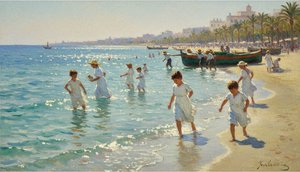
Joaquín Sorolla: Capturing Spanish Light & Life – A Legacy of Impressionism
Explore the luminous world of Joaquín Sorolla, Spanish master of Impressionism. Discover his life, techniques & legacy – a guide for art collectors and enthusiasts. Invest in timeless beauty.

Top 10 Witte Meesterwerken: Kunstgeschiedenis & Interieurinspiratie
Ontdek de top 10 witte meesterwerken uit de kunstgeschiedenis! Van Monet tot Mondriaan, bewonder abstracte vormen & serene kleuren. Vind museumkwaliteit reproducties en interieurinspiratie op OriginalUniqueArt.com.

Monochrome Visions: Exploring the Aesthetic & Historical Significance of Black & White Photography
Explore the rich history & artistic power of black and white photography. From early techniques to iconic masters like Ansel Adams, discover why monochrome continues to captivate art lovers today. Expert insights for collectors.

Meesterwerken in Zwart: Top 10 Schilderijen Gedreven door Donkere Tinten | OriginalUniqueArt.nl
Ontdek de kracht van donker! Verlies jezelf in onze top 10 zwarte schilderijen, van Caravaggio tot Manet. Leer over meesterwerken, technieken & emotie. Museumkwaliteit reproducties op OriginalUniqueArt.com – Kunst voor uw interieur.