

 Voorvertoning
 Verstuur
 Delen
Delen
 Details bekijken

 Download
 Vergelijkbare items
 Röntgenonderzoek
 Diavoorstelling
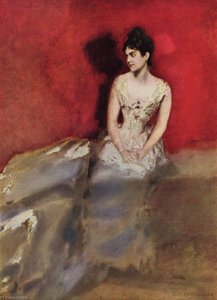
Chopin
 1873
1873 85.0 x 69.0 cm
 Neue Pinakothek
 Lees meer
Koop een digitale afbeelding in hoge resolutie met verbeterde kwaliteit, die veel superieur is aan de online voorvertoning.
Elk bestand wordt met uiterste precisie voorbereid door onze interne specialisten, met behulp van geavanceerde tools en deskundige handmatige retouche. Wij garanderen dat elke afbeelding een uitzonderlijke helderheid, nauwkeurige kleurweergave en verfijnde details bezit.
Het uiteindelijke bestand wordt binnen 72 uur per e-mail geleverd, geoptimaliseerd voor direct gebruik in professionele, redactionele en printomgevingen. Dit is dezelfde kwaliteit waarop vooraanstaande designstudio's, uitgevers en galerieën vertrouwen.
Digitale afbeeldingen
Download een bestand met hoge resolutie voor persoonlijke weergave, afdrukken en creatieve projecten. ( Bestel print Bestel handgeschilderde reproductie)
Inbegrepen bij elke bestelling van een digitale afbeelding
Professionele digitale levering, gegarandeerd
Wanneer u kiest voor OriginalUniqueArt.com, ontvangt u niet alleen een afbeelding – u krijgt een professioneel verbeterd digitaal kunstwerk, met precisie vervaardigd en voorzien van een tevredenheidsgarantie. Dit is alles wat automatisch bij uw bestelling is inbegrepen:

Snelle levering per e-mail
Uw hoogwaardige digitale afbeeldingsbestand wordt binnen 72 uur na bestelling naar u gemaild – klaar voor direct gebruik.

AI-verbeterd digitaal bestand
Uw kunstwerk wordt professioneel geoptimaliseerd met behulp van geavanceerde AI-tools en handmatige bewerkingen, waardoor maximale details, helderheid en kleurnauwkeurigheid worden gegarandeerd.

Gratis levenslange herlevering van digitale afbeeldingen
Je bestand per ongeluk verwijderd of kwijtgeraakt? Geen zorgen – we sturen het u op elk gewenst moment gratis opnieuw toe.

Geen invoerkosten – nooit
Geniet direct van uw kunstwerk zonder invoerrechten, belastingen of verzendkosten – digitale downloads zijn altijd belastingvrij.

Garantie op kleurgetrouwheid
Met behulp van professionele hulpmiddelen en kleurbeheer zorgen wij ervoor dat uw digitale afbeelding de originele kleuren zo nauwkeurig mogelijk weergeeft.

60 dagen tevredenheidsgarantie
Als u niet tevreden bent met uw digitale afbeelding, passen wij deze aan of storten wij 100% terug binnen 60 dagen – zonder vragen gesteld.

100% Geld-terug-garantie
Niet tevreden? Ontvang binnen 60 dagen na ontvangst van uw digitale bestand uw volledige aankoopbedrag terug – zonder vragen te stellen.

Korting bij grote bestellingen
Koop 3 afbeeldingen, bespaar 10% - Koop 5, bespaar 15% - Koop 10+, bespaar 20%. Ideaal voor creatieve projecten, galerieën en bureaus.
Kunstenaarsbiografie
The Soul Behind the Canvas: The Life and Legacy of Albert von Keller
Albert von Keller (1844–1920) stands as a singular figure in German art history—a painter who seamlessly blended the rigorous precision of realism with a burgeoning fascination for psychology and symbolism. Born in Gais, Switzerland, into a family steeped in intellectual tradition, Keller’s early life was marked by a disciplined curiosity. While his father, a professor of law, instilled in him a structured intellect, it was the pursuit of visual expression that would ultimately define his destiny. Though he initially moved toward the study of law at the Ludwig-Maximilians-Universität München, the siren call of the arts proved irresistible, leading him to abandon the courtroom for the studio, where he would spend the rest of his life exploring the profound depths of the human condition.
His formal training began at the prestigious Munich Academy under the guidance of Arthur von Ramberg. It was here that Keller developed a mastery of anatomical precision, particularly through controversial nude studies that challenged the social norms of his era. This technical foundation, however, was merely the beginning of his evolution. As he traveled extensively through Italy, France, England, and the Netherlands, Keller absorbed the luminous qualities of Impressionism and the delicate aesthetics of Japonisme. Yet, unlike many of his contemporaries who abandoned structure for pure light, Keller maintained a steadfast connection to the German Romantic tradition, creating a unique stylistic bridge between the observable world and the unseen psyche.
A Master of Psychological Realism
The true brilliance of von Keller lies in his ability to imbue portraiture and genre scenes with an almost haunting emotional resonance. He became a prominent figure in the Munich Secession, a movement that sought to push the boundaries of traditional art. His work often features female figures, rendered with a grace that oscillates between the ethereal and the tangible. Perhaps no subject was more central to his creative spirit than his wife, Irene von Eichthal. Their partnership, which lasted until her death in 1907, served as a profound muse; he would eventually paint over forty portraits of her, capturing not just her physical elegance but the very essence of her character.
In masterpieces such as Deutsch Porträt der Frau des Künstlers, one can witness his technical prowess. He utilized striking juxtapositions—such as the pristine white of a lace gown against a deep, velvety crimson background—to create a sense of theatrical depth. This mastery of light and shadow allowed him to guide the viewer's eye through a silent dialogue of texture and tone. His ability to render the tactile quality of stone or the delicate fold of fabric served a higher purpose: to ground his more symbolic and psychological themes in a reality that felt undeniably present.
The Intersection of Science, Spirit, and Symbolism
As his career progressed, von Keller’s interests drifted toward the enigmatic. In 1886, he became a member of the Munich Psychological Society, a group devoted to the study of the paranormal under Albert von Schrenck-Notzing. This period marked a fascinating shift in his oeuvre, as he began to incorporate parapsychological motifs and themes of hypnosis into his compositions. Works like Hypnosis at Schrenck Notzing's demonstrate this transition, blending the muted tones of realism with the unsettling tension of the unknown. He explored themes of vulnerability, illness, and the subconscious, often connecting these modern psychological inquiries to classical Christian symbolism.
His international breakthrough at the Paris Salon with Roman Bath solidified his reputation as a painter of great atmospheric sensitivity, drawing comparisons to masters like Monet and Renoir. However, it was his ability to navigate the shadows of the human mind that secured his historical significance. By weaving together the following elements, he created a legacy that remains vital to the study of late 19th-century art:
- Technical Precision: A rigorous academic foundation in anatomy and light.
- Psychological Depth: The exploration of the subconscious, hypnosis, and emotional interiority.
- Symbolic Narrative: The use of genre scenes to communicate complex spiritual and human truths.
- Stylistic Synthesis: A unique blend of German Romanticism, Impressionist light, and Symbolist mystery.
Today, the works of Albert von Keller serve as a poignant reminder of an era when art was transitioning from the depiction of external reality to the exploration of internal truth. He remains a pioneer who dared to look beneath the surface of the skin to find the soul within.
albert von keller
1844 - 1920
Belangrijkste feiten
- Artistic Movement Or Style: Munich Secession
- Artists Or Movements Influenced By This Artist: ['Symbolism']
- Artists Who Influenced This Artist:
- Arthur von Ramberg
- Ludwig Maximilian University
- Date Of Birth: April 27, 1844
- Date Of Death: July 14, 1920
- Full Name: Albert Ritter von Keller
- Nationality: Swiss
- Notable Artworks:
- Hypnosis at Schrenck Notzing’s
- In the moonlight
- Place Of Birth: Gais, Switzerland

