

 Bekijk op ware grootte
 Verstuur
 Delen
Delen
 Details bekijken
 Gids voor studentenkunstwerken

 Download
 Vergelijkbare items
 Röntgenonderzoek
 Diavoorstelling
 Statistieken
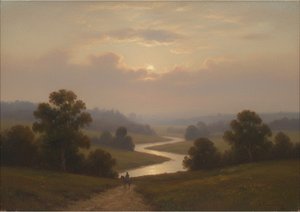
Misty Moonlight
 Oil On Canvas
- WallArt
- Tonalism & Symbolism
 1885
1885- 19th Century
 28.0 x 29.0 cm
 Crystal Bridges Museum of American Art
 Lees meer
Handgemaakte olieverfreproductie
Met de hand geschilderd in olieverf op canvas in uw gewenste maat en lijst, op bestelling gemaakt door onze kunstenaars. ( Schakel over naar print Schakel over naar digitale afbeeldingen)




P118B €10

P118H €10

P118W €10

P438Z €10

P508JH €12

P508YH €12

P805H €10

P805Z €10

P919BZ €10

P919G €10

P919XJ €10

P959ZH €10

P968JZ €12

W106C €8

W218G €10

W218JH €8

W218Y €10

W307PJ €10

W316G €10

W316PJ €8

W316Y €10

W398PJ €8

W4111J €10

W500HY €15

W500JH €15

W692G €12

W849H €8

W940BG €15

W953PJ €8




Kies uit onze vooraf ingestelde maten die overeenkomen met de originele verhoudingen van het kunstwerk.

Voer de breedte en de hoogte in die u nodig heeft, passend bij uw lijst of uw muur. Dit is handgeschilderd, dus bij een afmeting met een andere vormverhouding kan de kunstenaar iets meer rondom het schilderij schilderen of juist iets meer weglaten — u kiest zelf. Wij sturen u een digitaal mockup ter goedkeuring voordat het schilderwerk begint. De afbeelding die op deze pagina wordt getoond, is niet het uiteindelijke resultaat — alleen de mockup geeft dit weer.
Na de bestelling zal het team van OriginalUniqueArt.com per e-mail contact opnemen met de klant voor instructies en een mockup-voorbeeld sturen.
Wereldwijde levering () binnen 3 tot 4 weken in plaats van de standaard 5 weken. (25 oktober). Zonder concessies aan de kwaliteit.

Gratis wereldwijde expressverzending

Hoogwaardig linnen canvas

Volledige verzendverzekering

Garantie op terugbetaling van invoerrechten

Garantie op exacte kleurweergave

Retourbeleid van 100 dagen (alleen bij defecten)

100% Geld-terug-garantie

Korting bij meerdere afnames
 De optie voor glas is alleen beschikbaar bij een formaat kleiner dan 110 cm.

Misty Moonlight
Reproductiemethode
Formaat reproductie
-


Totaalprijs
€ 263
A Nocturne of Shadows and Light
In the quietude of the late nineteenth century, few artists captured the ephemeral essence of the American night as profoundly as Albert Pinkham Ryder. His masterpiece, Misty Moonlight (1885), serves as a hauntingly beautiful window into the soul of Tonalism, offering much more than a mere depiction of a seascape. The painting presents a serene yet melancholic vision of a nocturnal world, where a solitary sailing ship drifts through a sea of deep blacks and greenish grays. A luminous crescent moon hangs suspended in the hazy atmosphere, casting a soft, ethereal glow that seems to dissolve the boundaries between the water and the sky. This is not a scene of action, but one of profound stillness, inviting the viewer into a state of meditative contemplation.
The emotional resonance of this work lies in its ability to evoke a sense of mystery and longing. The sparse composition—a delicate dance of geometric forms including the rectangular expanse of the sea, the triangular silhouette of the vessel, and the circular moon—prevents any specific narrative from taking hold. Instead, the viewer is left to wander through the artist's dreamscape, feeling the weight of the heavy, damp air and the rhythmic, silent pulse of the tide. For the collector or interior designer, this piece offers a sophisticated anchor for a room, providing a focal point that commands attention through subtlety rather than spectacle.
The Alchemy of Unconventional Technique
To understand the mesmerizing texture of Misty Moonlight, one must look closely at Ryder’s radical approach to the medium. Eschewing the polished, academic precision favored by his contemporaries, Ryder embraced a method of deliberate instability. He was known for applying successive layers of oil paint while the underlying coats were still wet, a technique that allowed colors to bleed and merge in unpredictable ways. This process created the "gauzy" and atmospheric quality that defines his most celebrated works.
This layering does more than just create visual depth; it imbues the canvas with a physical materiality that feels alive. The resulting surface is often thick and textured, capturing light in a way that mimics the shifting mists of a coastal night. This mastery of atmosphere—achieved through what some might call "controlled chaos"—is precisely what makes a high-quality reproduction of this work so captivating. When rendered with care, the interplay of dark tones and soft highlights can transform a modern living space into a sanctuary of historical depth and artistic intrigue.
A Legacy of Symbolism and Inspiration
Ryder’s inspiration was deeply rooted in his formative years in New Bedford, Massachusetts, a bustling whaling port where the sea was an ever-present character in daily life. The maritime motifs found in Misty Moonlight are not merely decorative; they are echoes of a childhood spent amidst salt spray and moonlight. This connection to the American coast lends the painting an authentic, grounded spirit, even as it drifts into the realms of Symbolism.
As a pioneer of American Symbolism, Ryder used the landscape to represent internal emotional states. The ship, often a recurring motif in his oeuvre, can be seen as a symbol of the human journey through the unknown, navigating the murky waters of existence under the watchful eye of a distant, celestial light. For those seeking to decorate with purpose, incorporating such a piece allows for the introduction of profound storytelling into an environment. It is an invitation to look beyond the surface and find beauty in the shadows, making it an enduring choice for any curated collection of fine art.
Vragen & Antwoorden
Welke kleurharmonie vertoont "Misty Moonlight" door Albert Pinkham Ryder?
"Misty Moonlight" door Albert Pinkham Ryder vertoont een Unified Palette kleurharmonie.
Welke kleur domineert de compositie van "Misty Moonlight" door Albert Pinkham Ryder?
De dominante kleur van "Misty Moonlight" door Albert Pinkham Ryder is Phthalo Green (#2d2c27).
Welke kleurverzadiging heeft "Misty Moonlight" door Albert Pinkham Ryder?
"Misty Moonlight" door Albert Pinkham Ryder is vastgelegd met een Subtle Color verzadiging.
Biografie van de kunstenaar
Het vroege leven en artistieke begin
Albert Pinkham Ryder, geboren op 19 maart 1847 in New Bedford, Massachusetts, blijft een enigmatisch figuur in de Amerikaanse kunstgeschiedenis. Details over zijn jeugd zijn schaars, gehuld in de nevelen die later zo kenmerkend zouden worden voor zijn schilderijen. Het is echter bekend dat hij al vroeg zijn artistieke neigingen begon te verkennen, waarbij hij de landschappen van zijn geboortestad New Bedford vastlegde met een ontluikend talent. Deze opvoeding aan de kust, doordrenkt met de sfeer van een bruisende walvisvaarthaven, liet ongetwijfeld een onuitwisbare indruk achter op zijn verbeelding en zou gedurende zijn hele carrière herhaaldelijk als bron van inspiratie naar voren komen.
Eind jaren 1860 verhuisde de familie van Ryder naar New York City, waar zijn broer het beroemde Hotel Albert in Greenwich Village beheerde. Deze verhuizing plaatste de jonge Albert in een levendig cultureel milieu, wat kansen bood voor artistieke ontwikkeling en blootstelling aan nieuwe ideeën. Terwijl hij hielp met de familiale verantwoordelijkheden, bleef hij zijn passie voor de schilderkunst najagen, waarmee hij de basis legde voor zijn toekomstige artistieke reis.
Formele opleiding en Europese invloeden
Ryders formele kunstopleiding begon met studies onder William Edgar Marshall in New York City. Vervolgens schreef hij zich in bij de National Academy of Design, waar hij tussen 1870 en 1875 studeerde, zijn eerste werk exposeerde in 1873 en een levenslange vriendschap sloot met de mede-kunstenaar Julian Alden Weir. Deze vormende jaren boden hem een solide fundament in traditionele technieken en introduceerden hem in de gevestigde kunstwereld.
Ryders artistische visie reikte echter verder dan de conventionele academische training. Tussen 1877 en 1903 ondernam hij vier reizen naar Europa, waarbij hij zich volledig onderdompelde in de artistieke stromingen van het Oude Continent. Hij werd bijzonder aangetrokken door de Franse school van Barbizon, met haar nadruk op naturalisme en plein-air schilderen, en de Nederlandse Haagse School, bekend om haar atmosferische landschappen en gedempte kleurenpaletten. Deze invloeden vormden zijn esthetische gevoel diepgaand en droegen bij aan de ontwikkeling van zijn unieke stijl.
Een unieke artistieke visie: Stijl en thema's
De artistieke signatuur van Albert Pinkham Ryder is direct herkenbaar—een betoverende versmelting van symbolisme, tonalisme en een diep persoonlijke visie. Zijn schilderijen zijn geen loutere representaties van de werkelijkheid, maar eerder evocatieve interpretaties van de natuur, doordrenkt met stemming, mysterie en spirituele resonantie. Hij gaf de voorkeur aan brede, vaak ongedefinieerde vormen en gestileerde figuren binnen droomachtige landschappen of zeegezichten, waardoor een atmosfeer ontstaat die zowel etherisch als spookachtig is.
Licht speelt een cruciale rol in het werk van Ryder. Zijn scènes worden vaak verlicht door zwak zonlicht dat door dreigende wolken filtert of door de zachte gloed van het maanlicht, wat lange schaduwen werpt en het gevoel van drama en introspectie versterkt. Hij manipuleerde kleur op meesterlijke wijze om subtiele variaties en atmosferische effecten te creëren, waarbij hij vaak een beperkt palet gebruikte om een maximale emotionele impact te bereiken.
Opmerkelijke werken zoals Misty Moonlight, geïnspireerd door zijn jeugdherinneringen aan de kust van New Bedford, illustreren Ryders vermogen om persoonlijke ervaringen te transformeren tot universele uitdrukkingen van verlangen en contemplatie. Andere belangrijke schilderijen, zoals Siegfried and the Rhine Maidens, getuigen van zijn fascinatie voor mythologie en symboliek.
De latere jaren en een blijvende erfenis
Na 1900 nam de creatieve productie van Ryder aanzienlijk af. Hij werd steeds meer een kluizenaar en bracht veel van zijn tijd door met het herwerken van bestaande schilderijen in een onvermoeibare zoektocht naar perfectie. Ondanks deze afname in productiviteit bleven zijn eerdere werken aandacht en bewondering oogsten.
Albert Pinkham Ryder overleed op 28 maart 1917, waarmee hij een oeuvre achterliet dat het publiek tot op de dag van vandaag blijft fascineren. Een herdenkingsexpositie in het Metropolitan Museum of Art in New York in 1918 bevestigde zijn reputatie als een belangrijk figuur in de Amerikaanse kunst.
De invloed van Ryder reikt veel verder dan zijn directe tijdgenoten. Zijn nadruk op vorm, kleur en emotionele expressie plaveide de weg voor latere generaties kunstenaars, waaronder Jackson Pollock, die Ryder erkende als een belangrijke voorloper van het abstract expressionisme. Hij wordt geëerd als een pionier van het Amerikaanse tonalisme en symbolisme, een kunstenaar wiens mystieke schilderijen nog steeds ontzag en verwondering oproepen.
Kernkenmerken van de kunst van Albert Pinkham Ryder
- Droomachtige atmosferen: Zijn landschappen en zeegezichten roepen een gevoel van mysterie en het bovennatuurlijke op.
- Symbolisme & Mythologie: Frequent gebruik van symbolische beeldspraak en verwijzingen naar mythologische verhalen.
- Tonalistische invloeden: Subtiele variaties in kleur en een nadruk op atmosferische effecten.
- Emotionele resonantie: Schilderijen die een diep gevoel van verlangen, contemplatie en spirituele hunkering overbrengen.
- Unieke penseelvoering: Brede, expressieve penseelstreken die bijdragen aan de algehele stemming en textuur.

Albert Pinkham Ryder
1847 - 1917 , Verenigde Staten van Amerika
Snelle feiten
- Artistic Movement Or Style: Tonalisme & Symbolisme
- Artists Who Influenced This Artist:
- William Edgar Marshall
- J. Alden Weir
- Date Of Birth: 1847-03-19
- Date Of Death: 1917-03-28
- Full Name: Albert Pinkham Ryder
- Nationality: Amerikaans
- Notable Artworks:
- Misty Moonlight
- De Race Track
- Siegfried & Rhine Maidens
- Place Of Birth: New Bedford, USA
Gerelateerde artikelen

Top 10 Meesterwerken van het Amerikaans Realisme | Kunst & Decoratie
Ontdek de 10 meest iconische meesterwerken van het Amerikaans Realisme! Van Edward Hopper tot Andrew Wyeth, leer over de kunstenaars en hun tijdloze schilderijen. Vind museumkwaliteit reproducties & decoratie op OriginalUniqueArt.com.

Grant Wood & American Regionalism: Identity, Myth & the Rural Landscape
Explore the world of Grant Wood & American Regionalism with OriginalUniqueArt. Discover the symbolism behind 'American Gothic', recurring themes, and the movement's lasting impact on art history. High-quality reproductions available.
Atmospheric Visions: Exploring Tonalism in American Painting
Explore the captivating world of American Tonalism! Discover its history, key artists like Whistler & Inness, techniques, and lasting influence on art. Expert insights for collectors & enthusiasts.

Albert Bierstadt: Luminosity, Landscape & the American Ideal
Explore the breathtaking landscapes of Albert Bierstadt, master of the American West & a leading figure in the Hudson River School. Discover his luminous style and iconic paintings – a timeless investment for art lovers.

American Regionalism: A Crucible of Identity – Exploring Themes of Place, Labor & Social Commentary
Explore American Regionalism's powerful depiction of the American heartland during the Great Depression. Discover Grant Wood, Thomas Hart Benton & more. Expert analysis & high-quality art reproductions at OriginalUniqueArt.
