

 Bekijk op ware grootte
 Verstuur
 Delen
Delen
 Details bekijken
 Gids voor studentenkunstwerken

 Download
 Vergelijkbare items
 Röntgenonderzoek
 Diavoorstelling
 Statistieken
Louis Pasteur
 Acrylic On Canvas
- WallArt
- Realist Painting
 1885
1885- 19th Century
 154.0 x 126.0 cm
 Musée d'Orsay
 Lees meer
Giclée / Kunstafdrukken
Giclée- of canvasafdruk van museumkwaliteit met een snelle productie en flexibele afwerkingsmogelijkheden. ( Koop handgeschilderd kunstwerk Schakel over naar digitale afbeeldingen)




P118B €10

P118H €10

P118W €10

P438Z €10

P508JH €12

P508YH €12

P805H €10

P805Z €10

P919BZ €10

P919G €10

P919XJ €10

P959ZH €10

P968JZ €12

W106C €8

W218G €10

W218JH €8

W218Y €10

W307PJ €10

W316G €10

W316PJ €8

W316Y €10

W398PJ €8

W4111J €10

W500HY €15

W500JH €15

W692G €12

W849H €8

W940BG €15

W953PJ €8




Kies uit onze vooraf ingestelde maten die overeenkomen met de originele verhoudingen van het kunstwerk.

Voer de breedte en de hoogte in die u nodig heeft, passend bij uw lijst of uw muur. Een afdruk kan alleen worden ingekort, nooit groter worden gemaakt dan het origineel, waardoor een formaat met een andere verhouding een deel van de afbeelding verliest. Wij sturen u een digitaal mockup ter goedkeuring voordat we iets drukken. De afbeelding op deze pagina toont niet de werkelijke uitsnede — dit is alleen te zien op het mockup.
Wereldwijde levering () binnen 2 weken in plaats van de standaard 4/5 weken. (21 oktober)

Gratis wereldwijde expressverzending

Hoogwaardig linnen canvas

Volledige verzendverzekering

Garantie op terugbetaling van invoerrechten

Garantie op exacte kleurweergave

Retourbeleid van 100 dagen (alleen bij defecten)

100% Geld-terug-garantie

Korting bij meerdere afnames
 De optie voor glas is alleen beschikbaar bij een formaat kleiner dan 110 cm.

Louis Pasteur
Giclée / Kunstafdrukken
Formaat reproductie
-


Totaalprijs
€ 71
The Genesis of a Masterpiece
Albert Edelfelt’s “Louis Pasteur,” painted in 1885, isn't merely a portrait; it’s a meticulously crafted distillation of an era – the burgeoning age of scientific discovery and the quiet revolution taking place within the laboratories of France. Commissioned during a period of intense intellectual ferment, this oil-on-canvas work transcends simple representation to embody Pasteur’s unwavering commitment to unraveling the mysteries of life and disease. Edelfelt, a Finnish artist deeply influenced by Northern European realism, chose to capture Pasteur not as a celebrated figure in public acclaim, but as a man profoundly engaged in his craft – a scientist immersed in the focused intensity of his laboratory.
The painting’s genesis lies within the context of Pasteur's groundbreaking work. His pioneering research into germ theory, vaccination against rabies and anthrax, and pasteurization were fundamentally reshaping medicine and public health. Edelfelt, keenly aware of this transformative impact, sought to immortalize not just Pasteur’s physical presence but also the spirit of relentless inquiry that defined his legacy. The choice of setting – a meticulously rendered laboratory filled with scientific instruments – immediately establishes this intellectual atmosphere, suggesting a space dedicated to observation, experimentation, and the pursuit of knowledge.
A Symphony of Detail: Technique and Style
Edelfelt’s masterful technique is evident in every brushstroke. He employs a rich, layered impasto—a thick application of paint—that lends texture and depth to the scene. The careful rendering of light and shadow creates a palpable sense of realism, drawing the viewer into Pasteur's world. Notice particularly the subtle gradations of color applied to the various glass bottles and scientific equipment; each element is rendered with painstaking detail, reflecting Edelfelt’s dedication to accuracy. The composition itself is carefully balanced, guiding the eye through the scene – from Pasteur himself, deeply absorbed in his work, to the surrounding apparatus that speaks volumes about his research.
- Color Palette: A muted palette of browns, greens, and blues dominates, reflecting the laboratory’s atmosphere.
- Brushwork: Edelfelt's brushstrokes are visible and deliberate, contributing to the painting's textured surface.
- Lighting: The use of chiaroscuro (strong contrasts between light and dark) emphasizes Pasteur’s figure and highlights the details of his workspace.
Symbolism and the Portrait of a Mind
Beyond its technical brilliance, “Louis Pasteur” is laden with symbolic meaning. The bottles scattered around the laboratory represent the countless experiments and observations that constitute Pasteur's scientific journey. The focused gaze of Pasteur himself embodies his intellectual rigor and unwavering dedication to his work. He’s not a triumphant hero; he’s a man consumed by curiosity, driven by an insatiable desire to understand the natural world. The inclusion of specific instruments—beakers, flasks, and retorts—are not merely decorative elements but rather visual cues that underscore Pasteur's scientific pursuits.
The painting subtly suggests the transformative power of science – a quiet revolution unfolding within the confines of the laboratory, with profound implications for humanity’s future.A Legacy Preserved: Emotional Resonance and Artistic Significance
“Louis Pasteur” is more than just a portrait; it's a testament to the enduring legacy of scientific innovation. It captures not only the likeness of a brilliant mind but also the spirit of inquiry that defines the modern era. The painting’s emotional resonance lies in its portrayal of focused concentration and unwavering dedication—qualities that continue to inspire scientists, artists, and thinkers today. It serves as a poignant reminder of the transformative power of knowledge and the profound impact one individual can have on the world. Reproductions of this iconic work offer a beautiful way to bring this powerful image into your home or office, celebrating both artistic mastery and scientific achievement.
Vragen & Antwoorden
Welke afmeting moet ik kiezen voor de print van "Louis Pasteur" in mijn kamer?
Voor een Living Room is de aanbevolen afmeting voor de print van "Louis Pasteur" door Albert Edelfelt Medium.
Wanneer werd "Louis Pasteur" gemaakt en tot welke stroming behoort het?
"Louis Pasteur" door Albert Edelfelt dateert uit 1885 en behoort tot de Realist Painting.
Waar kan ik statistieken vinden over "Louis Pasteur" door Albert Edelfelt?
Er bestaat een Statistieken-pagina voor "Louis Pasteur". Deze brengt de maandelijkse bezoeken aan het kunstwerk en andere werken van de kunstenaar in kaart, met uitsplitsingen naar land en taal.
Biografie van de kunstenaar
Early Life and Education
Albert Gustaf Aristides Edelfelt, a towering figure in Finnish art history, was born on July 21st, 1854, in Porvoo, Finland—a city steeped in Swedish heritage. His parents, Carl Albert Edelfelt, a respected civil servant, and Alexandra Edelfelt (née Brandt), were both fluent in Swedish, reflecting the broader cultural landscape of their time. From a young age, Edelfelt demonstrated an undeniable fascination with artistic pursuits, propelling him to enroll at the Drawing School of the Finnish Art Society in 1869. This formative experience laid the groundwork for his lifelong dedication to mastering the visual arts.Artistic Journey
Edelfelt’s artistic trajectory unfolded across several prestigious institutions, each contributing to his refined skillset and broadening his understanding of artistic expression: Antwerp Academy of Art (1873-74) provided him with invaluable training in history painting—a genre favored by luminaries like Jean-Léon Gérôme. Subsequently, École nationale des beaux-arts in Paris (1874-78), under the guidance of Gérôme himself, solidified his grasp on technique and fostered a deeper appreciation for Impressionistic influences. A brief foray into Saint Petersburg (1881-82) exposed him to the vibrant artistic currents circulating within Russia’s cultural capital, enriching his perspective and expanding his repertoire.Rise to Prominence and Notable Works
Edelfelt's ascent to artistic acclaim commenced with a resounding victory at the Paris Universal Exposition of 1889—where he secured a gold medal for his monumental canvas depicting “The Battle of Slivo Pole.” This achievement catapulted him into international recognition, establishing him as one of Finland’s foremost artists. Among his most celebrated creations are: * “Portrait of Louis Pasteur,” commissioned by the Pasteur Institute in Paris, earning him the Legion of Honor—a testament to Edelfelt's ability to capture intellectual brilliance and human compassion. * “Young Woman in Her Boudoir,” a masterful depiction of feminine grace and intimacy, showcasing Edelfelt’s meticulous attention to detail and nuanced tonal palette. * “Under the Birches,” arguably his most iconic work—a breathtaking landscape infused with melancholic beauty and symbolic resonance—capturing the essence of Finnish wilderness and conveying profound emotional depth.Legacy and Impact
Albert Edelfelt stands as a pivotal figure in the genesis of Finnish realism, profoundly influencing subsequent generations of artists. His unwavering commitment to portraying life truthfully resonated deeply with contemporaries like Akseli Gallen-Kallela and Gunnar Berndtson—whom he mentored during their formative years in Paris—helping them achieve breakthroughs on an international stage. Edelfelt’s enduring legacy continues to inspire admiration for his artistic vision and his contribution to the cultural heritage of Finland.Museum Collections and Commemoration
Edelfelt's artworks are proudly displayed in numerous museums across Europe, notably Ateneum Museum in Helsinki—where visitors can immerse themselves in the splendor of his masterpieces. To honor Edelfelt’s remarkable life and artistic accomplishments, a €100 commemorative coin was issued in 2004—celebrating the centenary of his birth. This enduring symbol serves as a poignant reminder of his indelible mark on Finnish art history.
Albert Edelfelt
1854 - 1905 , Finland
Snelle feiten
- Artistic Movement Or Style: Realisme
- Artists Or Movements Influenced By This Artist: ['Akseli Gallen-Kallela']
- Artists Who Influenced This Artist: ['Jean-Léon Gérôme']
- Date Of Birth: 21 juli 1854
- Date Of Death: 18 augustus 1905
- Full Name: Albert Gustaf Aristides Edelfelt
- Nationality: Finnish
- Notable Artworks:
- Portret van Louis Pasteur
- Jonge vrouw in haar boudoir
- Onder de berken
- Place Of Birth: Porvoo, Finland
Gerelateerde artikelen

Anne-Louis Girodet: Bridging Neoclassicism & Romanticism with Emotional Truth
Explore the captivating world of Anne-Louis Girodet, a pivotal figure bridging Neoclassicism & Romanticism. Discover his masterpieces and unique artistic vision with OriginalUniqueArt.

Morris Louis: Pioneering Color Field Painting & Abstract Expressionism's Legacy
Explore the groundbreaking abstract expressionism of Morris Louis, a pioneer of Color Field painting. Discover his innovative techniques, influential series & lasting legacy in post-war American art. Learn more at OriginalUniqueArt.

Albert Charles Lebourg: A Study in Atmospheric Impressionism & Rural France
Explore the serene landscapes of Albert Charles Lebourg, a master of the Rouen School Impressionists. Discover his atmospheric paintings of the Seine and enduring legacy in 19th-century French art.
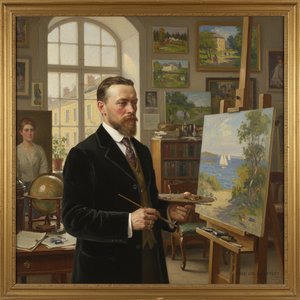
Albert Edelfelt: A Pioneer of Finnish Realism & International Impressionist Circles
Explore the life & work of Albert Edelfelt, a pioneering Finnish Realist painter who bridged Impressionism & national identity. Discover his masterpieces and lasting influence on art history.
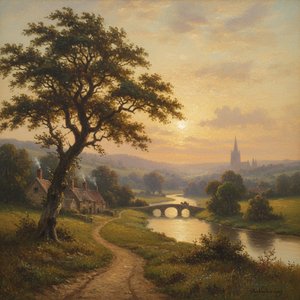
Albert Goodwin: Capturing Victorian Light & Atmosphere – A Study in Landscape Painting
Explore the captivating landscapes of Albert Goodwin (1845-1932), a celebrated Victorian watercolourist influenced by Turner & Ruskin. Discover his techniques, prolific collection, and lasting legacy in British art history.
