
 Voorvertoning
 Verstuur
 Delen
Delen
 Details bekijken
 Gids
Gids

 Download
 Vergelijkbare items
 Röntgenonderzoek
 Diavoorstelling
 Vraag & antwoord
 Statistieken
Day of Rest

 Lees meer
Giclée / Kunstafdrukken
Giclée- of canvasafdruk van museumkwaliteit met een snelle productie en flexibele afwerkingsmogelijkheden. ( Bestel handgeschilderde reproductie Schakel over naar digitale afbeeldingen)




P118B €10

P118H €10

P118W €10

P438Z €10

P508JH €12

P508YH €12

P805H €10

P805Z €10

P919BZ €10

P919G €10

P919XJ €10

P959ZH €10

P968JZ €12

W106C €8

W218G €10

W218JH €8

W218Y €10

W307PJ €10

W316G €10

W316PJ €8

W316Y €10

W398PJ €8

W4111J €10

W500HY €15

W500JH €15

W692G €12

W849H €8

W940BG €15

W953PJ €8




Kies uit onze vooraf ingestelde maten die overeenkomen met de originele verhoudingen van het kunstwerk.

Voer de gewenste breedte en hoogte in, passend bij uw lijst of muur. Een afdruk kan alleen worden ingekort en nooit groter worden gemaakt dan het origineel; een formaat met andere verhoudingen zal daarom een deel van de afbeelding verliezen. Wij sturen u een digitaal mockup ter goedkeuring voordat we tot drukwerk overgaan. De afbeelding op deze pagina toont niet de werkelijke uitsnede — dit is alleen te zien op het mockup.
Wereldwijde levering () binnen 2 weken in plaats van de standaard 4/5 weken. (7 november)

Gratis wereldwijde expressverzending

Hoogwaardig linnen canvas

Volledige verzendverzekering

Garantie op terugbetaling van invoerrechten

Garantie op exacte kleurweergave

Retourbeleid van 100 dagen (alleen bij defecten)

100% Geld-terug-garantie

Korting bij meerdere afnames
 De optie voor glas is alleen beschikbaar bij een formaat kleiner dan 110 cm.

Day of Rest
Giclée / Kunstafdrukken
Afmetingen reproductie
-


Eindtotaal
€ 72
Albert Edelfelt: A Portrait of Finnish Identity
Albert Gustaf Aristides Edelfelt (21 July 1854 – 18 August 1905) stands as a monumental figure in Finnish art history, recognized for his unwavering commitment to Realism and his masterful depiction of the Finnish landscape and its people. Born in Porvoo, Finland, son of Swedish architect Carl Albert Edelfelt, he inherited an artistic lineage steeped in Scandinavian tradition but swiftly forged his own distinctive path—one that championed observation and honest representation above idealized notions.
Edelfelt’s formative years were spent honing his skills at the Drawing School of the Finnish Art Society, followed by a crucial period studying in Antwerp and Paris. These experiences instilled in him a profound understanding of European artistic currents while simultaneously grounding him in the burgeoning Finnish national consciousness. He embraced Impressionistic techniques—particularly visible in works like “The Eklöf Boys on the Veranda of Villa Sjökulla”—capturing fleeting moments of light and atmosphere with delicate brushstrokes and vibrant color palettes.
Style and Technique: The Essence of Realism
Edelfelt’s artistic philosophy revolved around capturing the essence of Finnish life as it unfolded. Unlike Romantic painters who sought to elevate subjects into heroic narratives, Edelfelt prioritized accuracy—a painstaking attention to detail that rendered everyday scenes with remarkable immediacy. His canvases are characterized by a meticulous layering of paint—often employing glazing techniques—to achieve luminous surfaces and subtle tonal gradations. This approach allowed him to convey not only visual fidelity but also an emotional resonance rooted in genuine observation.
- Glazing Techniques: Edelfelt skillfully applied thin layers of translucent pigment over existing paint, creating depth and luminosity.
- Color Palette: Warm hues—particularly ochres, reds, and yellows—dominated his palette, reflecting the colors of the Finnish countryside and conveying a sense of warmth and tranquility.
- Brushwork: Loose, expressive brushstrokes conveyed movement and texture, capturing the dynamism of Finnish life while maintaining compositional balance.
Historical Context: Finland’s Quest for Independence
Edelfelt's artistic output coincided with Finland’s tumultuous struggle for independence from Russia—a period marked by fervent nationalist sentiment and a desire to establish a distinct cultural identity. His paintings served as powerful emblems of Finnish heritage, portraying scenes of rural life, maritime traditions, and familial bonds—values that resonated deeply with the aspirations of a nation striving to define itself on the world stage. Works like “Portrait of Louis Pasteur” exemplify Edelfelt’s ability to convey intellectual curiosity alongside artistic skill.
Symbolism and Emotional Impact: Capturing the Soul of Finland
Beyond mere visual representation, Edelfelt's canvases communicated profound emotional truths about Finnish culture and experience. The depiction of children—particularly “The Eklöf Boys”—symbolizes innocence, vitality, and the continuity of tradition—themes that underscore Edelfelt’s belief in the importance of preserving Finland’s cultural heritage. His paintings evoke a sense of nostalgia for simpler times—a yearning for connection to the land and its traditions—leaving viewers with an enduring appreciation for the beauty and resilience of Finnish spirit.
Conclusion: An Enduring Legacy
Albert Edelfelt's legacy extends far beyond his individual masterpieces. He established a standard of excellence that continues to inspire Finnish artists today, cementing his place as the nation’s foremost painter—a testament to his unwavering dedication to Realism and his profound understanding of the human condition. His work remains an invaluable resource for anyone seeking insight into Finnish identity and artistic achievement.
Veelgestelde vragen
Welke kleuren overheersen in "Day of Rest" door Albert Edelfelt?
"Day of Rest" door Albert Edelfelt maakt gebruik van een Earthy palet, met Walnut (#7f5035) als dominante kleur.
Hoe kan ik "Day of Rest" door Albert Edelfelt bekijken als een diavoorstelling?
De diaporama van "Day of Rest" is te bekijken op de Diavoorstelling-pagina van het kunstwerk.
Is er een gids beschikbaar voor "Day of Rest" door Albert Edelfelt?
De Informatieblad-pagina van "Day of Rest" door Albert Edelfelt biedt een printbaar factsheet van twee pagina's: het kunstwerk met de bijbehorende identificatietabel, een tijdlijn die het werk plaatst binnen de levensloop van de kunstenaar, andere werken van de kunstenaar, het gemeten kleurenpalet en kant-en-klare citaten in vier verschillende stijlen.
Biografie kunstenaar
Early Life and Education
Albert Gustaf Aristides Edelfelt, a towering figure in Finnish art history, was born on July 21st, 1854, in Porvoo, Finland—a city steeped in Swedish heritage. His parents, Carl Albert Edelfelt, a respected civil servant, and Alexandra Edelfelt (née Brandt), were both fluent in Swedish, reflecting the broader cultural landscape of their time. From a young age, Edelfelt demonstrated an undeniable fascination with artistic pursuits, propelling him to enroll at the Drawing School of the Finnish Art Society in 1869. This formative experience laid the groundwork for his lifelong dedication to mastering the visual arts.Artistic Journey
Edelfelt’s artistic trajectory unfolded across several prestigious institutions, each contributing to his refined skillset and broadening his understanding of artistic expression: Antwerp Academy of Art (1873-74) provided him with invaluable training in history painting—a genre favored by luminaries like Jean-Léon Gérôme. Subsequently, École nationale des beaux-arts in Paris (1874-78), under the guidance of Gérôme himself, solidified his grasp on technique and fostered a deeper appreciation for Impressionistic influences. A brief foray into Saint Petersburg (1881-82) exposed him to the vibrant artistic currents circulating within Russia’s cultural capital, enriching his perspective and expanding his repertoire.Rise to Prominence and Notable Works
Edelfelt's ascent to artistic acclaim commenced with a resounding victory at the Paris Universal Exposition of 1889—where he secured a gold medal for his monumental canvas depicting “The Battle of Slivo Pole.” This achievement catapulted him into international recognition, establishing him as one of Finland’s foremost artists. Among his most celebrated creations are: * “Portrait of Louis Pasteur,” commissioned by the Pasteur Institute in Paris, earning him the Legion of Honor—a testament to Edelfelt's ability to capture intellectual brilliance and human compassion. * “Young Woman in Her Boudoir,” a masterful depiction of feminine grace and intimacy, showcasing Edelfelt’s meticulous attention to detail and nuanced tonal palette. * “Under the Birches,” arguably his most iconic work—a breathtaking landscape infused with melancholic beauty and symbolic resonance—capturing the essence of Finnish wilderness and conveying profound emotional depth.Legacy and Impact
Albert Edelfelt stands as a pivotal figure in the genesis of Finnish realism, profoundly influencing subsequent generations of artists. His unwavering commitment to portraying life truthfully resonated deeply with contemporaries like Akseli Gallen-Kallela and Gunnar Berndtson—whom he mentored during their formative years in Paris—helping them achieve breakthroughs on an international stage. Edelfelt’s enduring legacy continues to inspire admiration for his artistic vision and his contribution to the cultural heritage of Finland.Museum Collections and Commemoration
Edelfelt's artworks are proudly displayed in numerous museums across Europe, notably Ateneum Museum in Helsinki—where visitors can immerse themselves in the splendor of his masterpieces. To honor Edelfelt’s remarkable life and artistic accomplishments, a €100 commemorative coin was issued in 2004—celebrating the centenary of his birth. This enduring symbol serves as a poignant reminder of his indelible mark on Finnish art history.
Albert Edelfelt
1854 - 1905 , Finland
Belangrijkste feiten
- Artistic Movement Or Style: Realisme
- Artists Or Movements Influenced By This Artist: ['Akseli Gallen-Kallela']
- Artists Who Influenced This Artist: ['Jean-Léon Gérôme']
- Date Of Birth: 21 juli 1854
- Date Of Death: 18 augustus 1905
- Full Name: Albert Gustaf Aristides Edelfelt
- Nationality: Finnish
- Notable Artworks:
- Portret van Louis Pasteur
- Jonge vrouw in haar boudoir
- Onder de berken
- Place Of Birth: Porvoo, Finland
Gerelateerde artikelen
Realism in Art: A Professional Guide to Authentic Detail and Lifelike Masterpieces for Large-Scale Interior Projects
Master the use of Realism in professional interiors. This expert guide explores 19th-century masterpieces, offering procurement managers and designers technical insights into selecting authentic, hand-painted oil reproductions for high-end hotel and corporate projects.

Romantic Realism's Finest: 10 Masterpieces for Your Home | OriginalUniqueArt
Explore 10 defining masterpieces of Romantic Realism! Discover Courbet, Millet & Daumier's powerful paintings—capturing emotion and social realities. Find museum-quality reproductions for your home at OriginalUniqueArt.com.
Echoes of Society: Exploring Social Realism's Enduring Legacy in Art
Explore the powerful world of Social Realism art! Discover key artists, masterpieces & its profound social commentary. Expert insights into this influential movement's history and enduring legacy.
The Raw Truth: A Definitive Guide to the Power and Legacy of Social Realism Art
Explore the profound impact of Social Realism. Discover how masters like Courbet rejected idealism to capture the raw, socio-political truths of the working class through powerful, unvarnished art history and enduring visual critique.
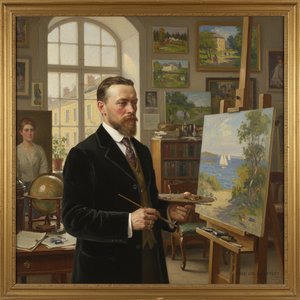
Albert Edelfelt: A Pioneer of Finnish Realism & International Impressionist Circles
Explore the life & work of Albert Edelfelt, a pioneering Finnish Realist painter who bridged Impressionism & national identity. Discover his masterpieces and lasting influence on art history.
