

 Bekijk op ware grootte
 Verstuur
 Delen
Delen
 Details bekijken
 Gids voor studentenkunstwerken

 Download
 Vergelijkbare items
 Röntgenonderzoek
 Diavoorstelling
 Statistieken
Sunlight and Shadow
 Acrylic On Canvas
- WallArt
- Hudson River School
 1862
1862- 19th Century
 105.0 x 90.0 cm
 Fine Arts Museums of San Francisco
 Lees meer
Handgemaakte olieverfreproductie
Met de hand geschilderd in olieverf op canvas in uw gewenste maat en lijst, op bestelling gemaakt door onze kunstenaars. ( Schakel over naar print Schakel over naar digitale afbeeldingen)




P118B €10

P118H €10

P118W €10

P438Z €10

P508JH €12

P508YH €12

P805H €10

P805Z €10

P919BZ €10

P919G €10

P919XJ €10

P959ZH €10

P968JZ €12

W106C €8

W218G €10

W218JH €8

W218Y €10

W307PJ €10

W316G €10

W316PJ €8

W316Y €10

W398PJ €8

W4111J €10

W500HY €15

W500JH €15

W692G €12

W849H €8

W940BG €15

W953PJ €8




Kies uit onze vooraf ingestelde maten die overeenkomen met de originele verhoudingen van het kunstwerk.

Voer de breedte en de hoogte in die u nodig heeft, passend bij uw lijst of uw muur. Dit is handgeschilderd, dus bij een afmeting met een andere vormverhouding kan de kunstenaar iets meer rondom het schilderij schilderen of juist iets meer weglaten — u kiest zelf. Wij sturen u een digitaal mockup ter goedkeuring voordat het schilderwerk begint. De afbeelding die op deze pagina wordt getoond, is niet het uiteindelijke resultaat — alleen de mockup geeft dit weer.
Na de bestelling zal het team van OriginalUniqueArt.com per e-mail contact opnemen met de klant voor instructies en een mockup-voorbeeld sturen.
Wereldwijde levering () binnen 3 tot 4 weken in plaats van de standaard 5 weken. (24 oktober). Zonder concessies aan de kwaliteit.

Gratis wereldwijde expressverzending

Hoogwaardig linnen canvas

Volledige verzendverzekering

Garantie op terugbetaling van invoerrechten

Garantie op exacte kleurweergave

Retourbeleid van 100 dagen (alleen bij defecten)

100% Geld-terug-garantie

Korting bij meerdere afnames
 De optie voor glas is alleen beschikbaar bij een formaat kleiner dan 110 cm.

Sunlight and Shadow
Reproductiemethode
Formaat reproductie
-


Totaalprijs
€ 263
A Glimpse of Divinity: Albert Bierstadt’s “Sunlight and Shadow”
Albert Bierstadt's "Sunlight and Shadow," painted in 1862, isn’t merely a landscape; it’s an immersive experience. This monumental canvas transports the viewer to the heart of the American West, specifically capturing a scene near Kassel, Germany – a deliberate nod to the Gothic Revival architecture that Bierstadt so admired. The painting immediately draws the eye with its dramatic lighting, a hallmark of the Hudson River School and, crucially, Bierstadt’s own unique approach to Luminism. He didn't simply depict a mountain view; he sought to evoke the sublime, that feeling of awe and reverence inspired by nature’s grandeur. Notice how the sunlight, fractured and diffused through the arched doorway of the distant church, casts an ethereal glow upon the weathered stone, imbuing it with a sense of ancient wisdom and spiritual resonance.
The Romantic Vision: Bierstadt and the Rocky Mountain School
Bierstadt’s artistic journey is deeply intertwined with the burgeoning identity of America itself. Born in Prussia and raised in New Bedford, Massachusetts, he developed a profound fascination for the landscapes that would define his legacy. His early studies in Düsseldorf provided him with an unparalleled technical mastery – a meticulous attention to detail and a sophisticated understanding of light and atmosphere, qualities he expertly translated to his depictions of the American wilderness. He was a key figure within the Hudson River School, but distinguished himself through his expansive scale and his ability to capture not just the visual beauty of the West, but also its emotional power. His work stands apart from earlier landscape painting by prioritizing an intensely personal response to nature – a desire to convey the sublime, rather than simply replicate what was seen.
Symbolism in Stone and Light: Interpreting the Scene
The composition of “Sunlight and Shadow” is rich with symbolic elements. The imposing Gothic Revival church, reminiscent of structures like the Löwenburg castle near Kassel, represents faith, tradition, and a connection to European artistic heritage. However, Bierstadt subtly contrasts this monumental structure with the more humble figure of a woman tending her child in the foreground – a poignant reminder of charity and compassion. The towering oak tree, a national symbol of Germany, anchors the scene, its branches reaching towards the heavens like supplicating arms. This deliberate inclusion speaks to the enduring power of faith amidst adversity, mirroring Christ’s crucifixion and resurrection. The play of light itself is crucial; it's not merely illumination but a vehicle for conveying emotion – warmth, serenity, and a sense of divine presence.
A Legacy of Grandeur: Reproductions and Artistic Inspiration
“Sunlight and Shadow” remains one of Albert Bierstadt’s most celebrated works, admired for its scale, technical brilliance, and evocative power. Today, high-quality reproductions offer a remarkable opportunity to experience this masterpiece in your own home or office. OriginalUniqueArt specializes in meticulously crafted hand-painted reproductions that capture the essence of Bierstadt's original vision. Consider how these reproductions can transform a room – bringing a touch of Romantic grandeur, spiritual depth, and the timeless beauty of the American West into your space. Further research reveals fascinating details about Bierstadt’s artistic process, including his use of stereoscopic photographs as reference material, demonstrating his commitment to both accuracy and emotional resonance. (See links below for further exploration).
- Size:** 105 x 90 cm
- Date:** 1862
- Artist:** Albert Bierstadt
Useful Resources: Google Arts & Culture, Wikipedia, OriginalUniqueArt
Vragen & Antwoorden
Waarvoor wordt het gebruik van "Sunlight and Shadow" door Albert Bierstadt aanbevolen?
Het voorgestelde gebruik voor "Sunlight and Shadow" door Albert Bierstadt is Statement. Het kan ook voor andere doeleinden dienen.
Welke afmeting wordt aanbevolen voor "Sunlight and Shadow" in een Living Room?
De aanbevolen combinatie voor "Sunlight and Shadow" door Albert Bierstadt: een afdruk van Medium in een Living Room.
Voor wie is "Sunlight and Shadow" door Albert Bierstadt een aanbevolen cadeau?
"Sunlight and Shadow" door Albert Bierstadt wordt aanbevolen als cadeau voor Wedding. Een reproductie van het kunstwerk kan als geschenk worden gegeven.
Biografie van de kunstenaar
A Pioneer of the American West: The Life and Art of Albert Bierstadt
Albert Bierstadt’s story is deeply intertwined with the very formation of America itself. His family's early emigration to New Bedford, Massachusetts, when he was just a year old, planted the seeds for a lifelong fascination with the landscapes that would ultimately define his artistic legacy. Though initially self-taught, sketching with crayons as a youth, Bierstadt quickly recognized the need for formal training and embarked on studies in Düsseldorf, Germany, in 1853. This European grounding proved crucial, providing him with technical mastery—a meticulous attention to detail and a sophisticated understanding of light and atmosphere—that he would later apply to his depictions of the American wilderness. It wasn’t merely replication that Bierstadt sought; he aimed to convey the sublime power and beauty of nature, evoking an emotional response in the viewer.Capturing the Majesty: The Hudson River School and Beyond
Upon his return to the United States in 1857, Bierstadt swiftly became associated with the Hudson River School, a group of artists dedicated to portraying the American landscape with both accuracy and romantic idealism. While sharing their reverence for nature, Bierstadt soon distinguished himself through his ambitious scale and dramatic compositions. He wasn’t content to simply paint pretty pictures; he aimed to create immersive experiences that transported viewers directly into the heart of the wilderness. His breakthrough came in 1858 with a Swiss landscape exhibited at the National Academy of Design, earning him immediate acclaim and honorary membership. However, it was his subsequent expeditions westward—first with land surveyor Frederick W. Lander in 1859, then with author Fitz Hugh Ludlow in 1863 to Yosemite Valley—that truly ignited his artistic vision. These journeys weren’t merely acts of observation; they were profound immersions, allowing Bierstadt to absorb the grandeur of the Rocky Mountains, the vastness of the plains, and the awe-inspiring scale of canyons and waterfalls. He meticulously documented these experiences through countless sketches and studies, which served as the foundation for his monumental paintings.The Painter of Empires: Shaping Perceptions of the West
Bierstadt’s paintings weren't simply landscapes; they were statements about national identity and Manifest Destiny. His canvases—often enormous in size—depicted the American West not as a harsh, untamed frontier, but as a land of promise, abundance, and divine beauty. The Rocky Mountains, Lander’s Peak, completed in 1863 and purchased for an astonishing $25,000 (equivalent to nearly $400,000 today), exemplifies this approach. The painting isn't a precise topographical rendering; it’s a carefully constructed vision of idealized grandeur, bathed in golden light and imbued with a sense of spiritual significance. This ability to evoke emotion, to inspire awe, made Bierstadt immensely popular during his lifetime. He wasn’t just an artist; he was a cultural ambassador, shaping how Americans—and the world—perceived the West. His work fueled westward expansion by presenting it as a noble and divinely ordained undertaking. The dramatic lighting, often referred to as *luminism*, created a sense of ethereal beauty, transforming the rugged wilderness into a scene of almost religious reverence.Influences and Techniques
Bierstadt’s artistic development was shaped by several key influences. His early training in Düsseldorf instilled in him a mastery of technique—a meticulous attention to detail and a sophisticated understanding of light and atmosphere. He studied the works of German Romantic painters, particularly Caspar David Friedrich, whose emphasis on sublime landscapes profoundly influenced his own approach. However, Bierstadt’s style also evolved over time, incorporating elements of American Realism and Luminism. His expeditions westward provided him with firsthand experience of the American wilderness, which he translated into his paintings through detailed sketches and studies. He was a master of color, using rich, vibrant hues to capture the beauty of the natural world. Furthermore, Bierstadt’s use of scale—often creating monumental canvases that filled entire rooms—contributed significantly to the immersive quality of his work.Legacy and Influence
While Bierstadt's popularity waned somewhat in the late 19th century as artistic tastes shifted towards Impressionism and photography, his influence on American landscape painting remains undeniable. He demonstrated the power of large-scale canvases to create immersive experiences, a technique later adopted by many artists. His meticulous attention to detail and masterful use of light continue to inspire painters today. Beyond his technical achievements, Bierstadt’s work serves as a valuable historical document, offering insights into the evolving perceptions of the American West during a period of rapid change and expansion. He captured a moment in time—a vision of pristine wilderness before it was irrevocably altered by human intervention. His paintings are not just beautiful images; they are windows into a pivotal era in American history, reminding us of both the promise and the cost of westward expansion. His legacy endures, ensuring that his breathtaking landscapes will continue to captivate and inspire generations to come.
Albert Bierstadt
1830 - 1902 , Duitsland
Snelle feiten
- Artistic Movement Or Style: Hudson River School
- Artists Or Movements Influenced By This Artist: ['Rocky Mountain School']
- Artists Who Influenced This Artist: ['Europees landschap']
- Date Of Birth: 7 jan 1830
- Date Of Death: 18 feb 1902
- Full Name: Albert Bierstadt
- Nationality: Duits-Amerikaans
- Notable Artworks:
- Rocky Mountains
- Yosemite
- Place Of Birth: Solingen, Duitsland
Gerelateerde artikelen
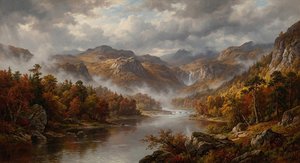
Top 10 Meesterwerken van de Hudson River School: Kunst voor uw interieur
Ontdek de 10 meesterwerken van de Hudson River School! Leer over Thomas Cole, Frederic Church & meer. Prachtige landschappen uit de 19e eeuw voor uw interieur. Kunst reproducties van museumkwaliteit op OriginalUniqueArt.com.

Albert Bierstadt: Luminosity, Landscape & the American Ideal
Explore the breathtaking landscapes of Albert Bierstadt, master of the American West & a leading figure in the Hudson River School. Discover his luminous style and iconic paintings – a timeless investment for art lovers.

The Sublime Landscape: Exploring the Hudson River School Movement
Explore the captivating world of the Hudson River School! Discover the history, artists, and defining characteristics of this iconic American art movement. Learn about Romanticism's influence & find inspiration for your collection.
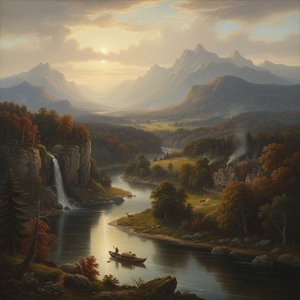
Capturing the American Spirit: A Journey Through Iconic Landscapes and the Legacy of the Hudson River School
Explore the profound beauty of American art history. From the Hudson River School to iconic landscapes, discover a curated journey through the masterpieces that defined a nation's spirit and the enduring legacy of American Romanticism.

Wild & Untamed: The High-Impact Energy of American Romanticism and the Hudson River School
Experience the raw power of American Romanticism. Explore the high-impact energy of the Hudson River School through premium, hand-painted oil reproductions that capture the sublime beauty and untamed spirit of the American wilderness for discerning collectors.


