

 Bekijk op ware grootte
 Verstuur
 Delen
Delen
 Details bekijken
 Gids voor studentenkunstwerken

 Download
 Vergelijkbare items
 Röntgenonderzoek
 Diavoorstelling
 Statistieken
Red Bird
 Acrylic On Canvas
- WallArt
- Minimalist Abstraction
 1964
1964 30.0 x 31.0 cm
 Museum of Modern Art
 Lees meer
De kunstwerken die op deze pagina worden weergegeven, zijn beschermd door de auteursrechtwetgeving, wat betekent dat het ons wettelijk niet is toegestaan om identieke reproducties te maken of te verkopen. Deze bescherming wordt gehandhaafd onder internationale overeenkomsten zoals de Conventie van Bern en door nationale wetgeving, waaronder de bepalingen van de Amerikaanse auteurswet - Titel 17. Alle rechten voorbehouden. Reproduceren of distribueren van afbeeldingen is niet toegestaan zonder uitdrukkelijke schriftelijke toestemming van WahooArt.com en de rechthebbenden.
Deze methode voldoet volledig aan de auteursrechtwetgeving, omdat het niet gaat om het kopiëren of dupliceren van het beschermde kunstwerk. In plaats daarvan is er sprake van een creatieve herinterpretatie — een nieuw schilderij dat door het origineel wordt geïnspireerd, maar er niet identiek aan is.
Giclée / Kunstafdrukken
Giclée- of canvasafdruk van museumkwaliteit met een snelle productie en flexibele afwerkingsmogelijkheden. ( Koop handgeschilderd kunstwerk Schakel over naar digitale afbeeldingen)




P118B €10

P118H €10

P118W €10

P438Z €10

P508JH €12

P508YH €12

P805H €10

P805Z €10

P919BZ €10

P919G €10

P919XJ €10

P959ZH €10

P968JZ €12

W106C €8

W218G €10

W218JH €8

W218Y €10

W307PJ €10

W316G €10

W316PJ €8

W316Y €10

W398PJ €8

W4111J €10

W500HY €15

W500JH €15

W692G €12

W849H €8

W940BG €15

W953PJ €8




Kies uit onze vooraf ingestelde maten die overeenkomen met de originele verhoudingen van het kunstwerk.

Voer de breedte en de hoogte in die u nodig heeft, passend bij uw lijst of uw muur. Een afdruk kan alleen worden ingekort, nooit groter worden gemaakt dan het origineel, waardoor een formaat met een andere verhouding een deel van de afbeelding verliest. Wij sturen u een digitaal mockup ter goedkeuring voordat we iets drukken. De afbeelding op deze pagina toont niet de werkelijke uitsnede — dit is alleen te zien op het mockup.
Wereldwijde levering () binnen 2 weken in plaats van de standaard 4/5 weken. (23 oktober)

Gratis wereldwijde expressverzending

Hoogwaardig linnen canvas

Volledige verzendverzekering

Garantie op terugbetaling van invoerrechten

Garantie op exacte kleurweergave

Retourbeleid van 100 dagen (alleen bij defecten)

100% Geld-terug-garantie

Korting bij meerdere afnames
 De optie voor glas is alleen beschikbaar bij een formaat kleiner dan 110 cm.

Red Bird
Giclée / Kunstafdrukken
Formaat reproductie
-


Totaalprijs
€ 71
The Quiet Architecture of Being
To stand before this piece is to enter a space of profound stillness. It is not an image that demands attention through drama or vibrant color; rather, it invites the viewer into a hushed conversation with structure itself. The canvas unfolds as a field of subtle cream and off-white, dominated by a meticulous yet seemingly effortless grid. These horizontal lines are the very breath of the composition—thin, rhythmic, and repeating across the surface. They suggest an underlying order, a quiet architecture that supports nothing more than contemplation. This work speaks in whispers, using line not as a boundary, but as a meditation.
A Dialogue with Minimalism and Abstraction
This piece belongs to a lineage of reductive art, echoing the profound explorations of Agnes Martin. Her commitment was always to stripping away the superfluous until only the essential remained: the mark, the plane, the breath between things. The style is pure minimalism, yet it resists being merely decorative. It possesses an intellectual rigor that speaks to decades of artistic inquiry into perception. The slight variations in line thickness and spacing—the subtle imperfections that betray the human hand—are crucial. They prevent the grid from becoming cold or mechanical; instead, they imbue the structure with a palpable sense of life lived through careful attention.
Technique and Materiality: The Hand's Signature
The execution is deceptively simple. Using what appears to be fine acrylic paint on canvas, the artist has employed a technique that requires immense patience and unwavering focus. One can almost hear the soft scratch of the brush against the prepared surface as the horizontal passages are laid down one after another. The resulting texture is whisper-light, catching the diffused light without glare. This mastery over restraint—the ability to create such depth and pattern using only near-monochromatic tones—is what elevates this work from mere drawing to profound artistic statement.
Symbolism of Order and Introspection
What does this grid symbolize? For many, it represents the comforting framework of human understanding: routine, structure, or perhaps even the gentle limitations that define our experience. Yet, because these lines are so delicate, they never feel restrictive. Instead, they act as a visual guide toward introspection. They suggest the quiet moments between thoughts, the necessary pauses in a busy life. Owning this piece is not simply decorating a wall; it is curating an atmosphere of serenity, a visual anchor for moments requiring deep thought and calm repose.
Bringing Stillness Home
For the collector or designer seeking to infuse a space with sophisticated tranquility, this reproduction offers unparalleled depth. It pairs beautifully in environments that value understated luxury—a modern library, a quiet sitting room, or an art-focused gallery wall. It is a piece that does not shout for attention but rather deepens the ambiance, allowing the natural light and the conversation within the room to become the true focal points. It is wearable calm, rendered beautifully on canvas.
Vragen & Antwoorden
Welke kleur domineert de compositie van "Red Bird" door Agnes Martin?
Putty (#e7e3d9) is de dominante kleur van "Red Bird" door Agnes Martin.
Kan ik "Red Bird" door Agnes Martin bekijken voordat ik bestel?
Een voorproefje van "Red Bird" door Agnes Martin is beschikbaar op de Voorvertoning-pagina van het kunstwerk.
Naar welke tint neigt "Red Bird"?
De dominante kleur van "Red Bird" door Agnes Martin is Ochre to Sepia. Deze kleur vormt de onderliggende toon van het palet.
Biografie van de kunstenaar
Early Life and the Seeds of Abstraction
Agnes Bernice Martin, geboren in 1912 in het kleine prairie stadje Macklin, Saskatchewan, Canada, begon een levensreis die uiteindelijk de grenzen van abstract kunst zou herdefiniëren. Haar jeugd werd gekenmerkt door een nomadische bestaan voortgekomen uit het overlijden van haar vader toen ze slechts twee jaar oud was; het gezin verhuiste tussen verschillende gemeenschappen zowel in Canada als de Verenigde Staten, uiteindelijk vestigend zich in Vancouver, Britse Columbia. Deze opvoeding instilled binnen haar een gevoel van afstandelijkheid en een waardering voor uitgebreide, open landschappen – kwaliteiten die haar artistieke visie later in het leven zou enorm blijven beïnvloeden. Martin volgde vormelijke opleiding gedurig, studerend aan Western Washington University College of Education voordat ze voortnam naar Teachers College, Columbia University, waar ze zowel een Bachelor’s als Master’s graad behaalde. Hoewel aanvankelijk gefocust op Engels en kunsteducatie, ontstond het tijdens haar tijd in New York City dat ze zich onderdompelde in de bloeiende moderne kunstscene, ontmoetend de werken van kunstenaars zoals Arshile Gorky, Adolph Gottlieb en Joan Miró. Deze ontmoetingen veroorzaakten een diepe fascinatie voor abstractie, waardoor haar artistieke innovatie werd gestimuleerd. Een belangrijke gebeurtenis vond plaats in 1947 toen ze deelnam aan een zomer cursus bij het University of New Mexico in Taos. De schitterende eenvoud en uitgebreide leegte van de woestijnlandschap resoneren diep binnen haar, waardoor deze een fundamenteel element werd van haar esthetische gevoeligheid.Zen Buddhism, Minimalism, and the Emergence of a Unique Style
De jaren ’50 zagen Martin’s kunst stijl beginnen te komen samen. Haar vroeg werk weerspiegelde invloeden van Precisionisme, gekenmerkt door gedetailleerde afbeeldingen van industriële onderwerpen, maar ze ging snel over naar abstractie. Een cruciale keerpunt was haar exploratie van Zen Boeddhistische filosofie – niet als een religieuze praktijk, maar als een filosofisch kader voor het leven—een praktische leidraad die benadrukt eenvoud, mindfulness en innerlijke rust. Deze filosofie werd onlosmakelijk verbonden aan haar kunst. Door de jaren ’50 ontwikkelde Martin haar stijl verder onder invloed van Minimalisme, waarbij ze zich richtte op het terugbrengen tot essentieel vormen zonder veel aandacht voor kleur of vorm. Een belangrijke inspiratiebron was Ad Reinhardt’s werk, dat een belangrijke rol speelde bij het stimuleren van haar zoektocht naar zuiverheid en eenvoud. Deze zoektocht leidde Martin ertoe om haar stijl te ontwikkelen tot wat zij zou kennen als haar kenmerkende stijl: delicate raster schilderijen bestaande uit fijne lijnen getekend met grafiet of gedilute ink op grote oppervlakken. Deze raster waren niet rigide structuren maar eerder etherische kaderen die leken te ademen en licht te gloeien met een innerlijke gloed. Ze gebruikte vaak bleke laagjes kleur—roze, blauw, geel en grijs—om prachtige oppervlakken te creëren die een gevoel van sereniteit en contemplatie oproepen. Ondanks hun minimalistische verschijning waren haar schilderijen doordrenkt met emotionele diepte; ze wilde gevoelens van vreugde, rust en schoonheid overbrengen door haar kunst, waarbij zij beroemd staat verklaard dat “schittering en perfectie hetzelfde zijn. Ze komen nooit voor zonder vreugde.” Ook haar titels – *Happy Holiday*, *I Love the Whole World*, *The Islands*, *Mountain* – suggereerden positieve emoties en een verbinding met de natuur.A Period of Isolation and Rediscovery
In 1967 nam Agnes Martin een verrassende beslissing: zij verliet New York City abrupt, waarbij zij contact verbreidde met de kunstwereld voor bijna twee decennia. De redenen waren complex—het verlies van vrienden, het vernietigen van bekende wijken en persoonlijke relaties droegen allemaal bij aan haar drang naar eenzaamheid. Ze terugtrok zich terug naar het platteland in Nieuw Mexico, waarbij zij adobe huizen bouwde en een grotendeels afgezonderd leven leidde. Hoewel ze zichzelf afstandelijk houdend van het publieke oog bleef Martin haar kunst niet helemaal achterdoordrongen. Een belangrijke expositie vond plaats in 1993 bij het Hirshhorn Museum en Sculpture Garden in Washington, D.C., waardoor haar positie als een belangrijke figuur in hedendaagse kunst werd bevestigd.Legacy and Historical Significance
Agnes Martin’s nalatenschap op het gebied van kunst is enorm en blijft voortdurend resoneren. Zij wordt algemeen beschouwd als een pionier van Minimalisme, waarbij zij conventionele ideeën over kunstelijke expressie uitdaagt door kunst terug te brengen tot zijn meest essentiële elementen. Haar werk heeft een blijvende invloed gehad op hedendaagse kunstenaars die werken in verschillende media, waardoor exploratie wordt aangemoedigd van eenvoud, herhaling en meditatieve toestanden. Haar nalatenschap gaat verder dan esthetiek; Martin’s leven en kunst zijn opnieuw onderzocht door een feministisch perspectief, waarbij haar atypische levenswijze en subtiele kritiek op de mannelijke kunstwereld worden benadrukt. Sommige geleerden suggereren dat zij “te betrokken was bij een feministische relatie tot praktijk, misschien wel, om het als zodanig te objectiveren.” Bovendien heeft Martin’s werk een diepe spirituele dimensie en biedt het kijkers een kans voor stille contemplatie en zelfreflectie—een getuigenis van haar geloof dat kunst een voertuig kon zijn voor transcendentie. Haar schilderijen blijven aansprekend voor publiek vandaag de dag, waardoor een schuilplaats wordt geboden tegen de complexiteit van het moderne leven en ons eraan herinnert aan de blijvende kracht van schoonheid.
Agnes Martin
1912 - 2004 , Canada
Snelle feiten
- Artistic Movement Or Style: Minimalisme
- Artists Or Movements Influenced By This Artist: ['Contemporary kunst']
- Artists Who Influenced This Artist: ['Ad Reinhardt']
- Date Of Birth: 22 maart 1912
- Date Of Death: 16 december 2004
- Full Name: Agnes Bernice Martin
- Nationality: Amerikaans
- Notable Artworks:
- Untitled no. - (1)
- The tree
- Untitled # 9
- Place Of Birth: Macklin, Canada
Gerelateerde artikelen
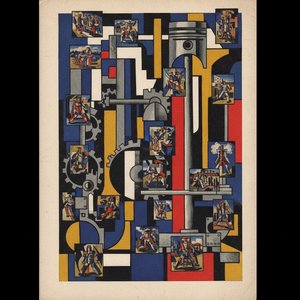
Fernand Léger's Top 25 Meesterwerken: Kleur, Vorm & Moderniteit | OriginalUniqueArt
Ontdek de 25 meest iconische werken van Fernand Léger! Duik in zijn kubistische wereld, machine esthetiek & kleurrijke composities. Vind museumkwaliteit kunst reproducties en interieur inspiratie op OriginalUniqueArt.com.

Top 10 Meesterwerken van de Geometrische Abstractie | OriginalUniqueArt.nl
Ontdek de 10 meest invloedrijke meesterwerken van de geometrische abstractie! Van Mondriaan tot Malevich, leer over kunstenaars, technieken & kleuren. Museumkwaliteit reproducties op OriginalUniqueArt.com – voor een unieke interieurstijl.

The Beauty of Less: A Sophisticated Guide to the Soul of Minimalist Art and Geometric Harmony
Discover the profound elegance of minimalist art. Explore how geometric abstraction and the beauty of reduction create serene, sophisticated spaces through our expert guide to finding soul and harmony in every line and shape.
Top 10 Minimalistische Kunstwerken voor een Rustige Interieurstijl | OriginalUniqueArt.com
Ontdek 10 minimalistische kunstwerken van Malevich tot Rothko. Laat u inspireren door abstracte vormen, rustige kleuren & de kracht van eenvoud. Museumkwaliteit reproducties op OriginalUniqueArt.com.

Top 10 Abstract Expressionisme Meesterwerken: Kunst voor uw Interieur | OriginalUniqueArt.com
Ontdek de 10 meest invloedrijke werken van Abstract Expressionisme! Leer over Jackson Pollock, Mark Rothko & meer. Museumkwaliteit kunst reproducties voor uw interieur. Bekijk de collectie op OriginalUniqueArt.com.