Menu
GRATIS KUNSTADVIES
PreviewPreview AR previewAR preview Switch to Print Switch to PrintSwitch to Image Switch to Image VerstuurVerstuur
Details bekijkenDetails bekijken Toevoegen aan favorieten Toevoegen aan favorieten DownloadDownload Vergelijkbare werkenVergelijkbare werken RöntgenonderzoekRöntgenonderzoek DiavoorstellingDiavoorstelling

Spray

Adolph Gottlieb’s ‘Spray’ (1959) is a dynamic Abstract Expressionist painting of contrasting black & yellow chaos. Impasto texture and gestural lines create a powerful, evocative artwork.

Adolph Gottlieb (1903-1974): Een baanbrekende kunstenaar van Abstract Expressionisme! Laat je onderdompelen in zijn iconische Pictographs en ontdek de manier waarop hij primitieve symboliek en Amerikaanse kunstgeschiedenis heeft gevormd. Een kunstenaar die een blijvende plek heeft verdiend in de kunstwereld.

Handgemaakte olieverfreproductie

Met de hand geschilderd in olieverf op canvas in uw gewenste maat en lijst, op bestelling gemaakt door onze kunstenaars. (Switch to Print Switch to PrintSwitch to Image Switch to Image)

P118B $10
P118H $10
P118W $10
P438Z $10
P508JH $12
P508YH $12
P805H $10
P805Z $10
P919BZ $10
P919G $10
P919XJ $10
P959ZH $10
P968JZ $12
W106C $8
W218G $10
W218JH $8
W218Y $10
W307PJ $10
W316G $10
W316PJ $8
W316Y $10
W398PJ $8
W4111J $10
W500HY $15
W500JH $15
W692G $12
W849H $8
W940BG $15
W953PJ $8

Standard
custom
CM
INCH

Kies uit onze vooraf ingestelde maten die overeenkomen met de originele verhoudingen van het kunstwerk.

breedte
hoogte

U kunt uw eigen afmetingen invoeren om in een specifieke lijst of ruimte te passen. Als de door u gekozen maat niet overeenkomt met de verhoudingen van het originele beeld, zullen we het kunstwerk bijsnijden of het schilderij uitbreiden met extra handgeschilderde elementen. Een digitale mockup wordt ter goedkeuring naar u verzonden voordat de productie begint.
Houd er rekening mee dat de preview op het scherm niet de werkelijke uitsnede of uitbreiding weergeeft. Alleen de mockup toont de uiteindelijke compositie nauwkeurig.
Hoewel aangepaste afmetingen mogelijk zijn, raden we aan een maat uit de vooraf gedefinieerde lijst te selecteren om de originele verhoudingen te behouden.

Voorbeelden van aanpassingen: Vervang het gezicht met een eigen foto; Voeg een huisdier toe (bijv. vervang de kat door een hond); Verwerk een verborgen boodschap in de achtergrond; Wijzig het landschap of andere elementen in de achtergrond.
Na de bestelling zal het team van OriginalUniqueArt.com per e-mail contact opnemen voor instructies en een mockup-voorbeeld sturen.

Wereldwijde levering () binnen 3/4 weken in plaats van de standaard 5 weken. (30 juli). Geen concessies aan de kwaliteit.

why_choose_icon
Gratis wereldwijde expressverzending
why_choose_icon
Hoogwaardig linnen canvas
why_choose_icon
Volledige verzendverzekering
why_choose_icon
Garantie op terugbetaling van invoerrechten
why_choose_icon
Garantie op exacte kleurweergave
why_choose_icon
60 dagen retourbeleid (alleen bij defecten)
why_choose_icon
100% Geld-terug-garantie
why_choose_icon
Korting bij meerdere afnames

Totaalprijs

$ 300

reproduction

Spray

Techniek reproductie

Afmetingen reproductie

-

Eindtotaal

$ 300

Snelle feiten

  • medium: oil on canvas
  • year: 1959
  • artist: Adolph Gottlieb
  • movement: Abstract Expressionism
  • style: Gestural Painting, Impasto
  • title: Spray

Kunstquiz

Er is slechts één correct antwoord op elke vraag.

Vraag 1:
To which art movement does Adolph Gottlieb's 'Spray' (1959) most closely belong?
Vraag 2:
'Spray' is characterized by a striking contrast between which two primary colors?
Vraag 3:
What painting technique is prominently used in 'Spray', contributing to its tactile quality?
Vraag 4:
The composition of 'Spray' can be described as primarily...
Vraag 5:
Adolph Gottlieb's artistic development was significantly influenced by exposure to art movements in which country during the 1920s?

Beschrijving kunstwerk

A Burst of Energy: Exploring Adolph Gottlieb’s ‘Spray’ (1959)

Adolph Gottlieb's Spray, created in 1959, is a commanding example of Abstract Expressionism at its most visceral. Measuring an impressive 229 x 184 cm, this painting doesn’t simply occupy space; it *fills* it with dynamic energy and raw emotion. The work presents a dramatic interplay between form and color, inviting viewers into a world of pure sensation.

Deconstructing the Composition & Technique

  • Dynamic Contrast: A substantial, dark circular mass dominates the upper canvas, acting as both an anchor and a counterpoint to the explosive energy below. This stark contrast immediately draws the eye and establishes a powerful visual tension.
  • Impasto & Gesture: Gottlieb masterfully employs impasto – thickly applied paint – particularly in the vibrant yellow section. This technique isn’t merely about texture; it's about physicality, conveying a sense of immediacy and the artist’s direct engagement with the canvas. Loose, gestural brushwork further enhances this feeling of spontaneous creation.
  • Color & Form: The chaotic ‘spray’ of yellow isn’t simply random. While amorphous in shape, these masses radiate outwards, suggesting expansion and release. The muted brown background serves as a grounding force, allowing the black and yellow to truly pop.

Symbolism & Historical Context

Gottlieb, deeply influenced by his experiences with European modernism – particularly Constructivism and Surrealism – and grappling with post-war anxieties, sought a visual language that could express the complexities of the human condition. While abstract, Spray isn’t devoid of symbolic resonance. The black circle can be interpreted as representing darkness, the void, or even the unknown, while the yellow explosion suggests light, energy, or liberation. Created in 1959, during a period of intense artistic innovation in America, ‘Spray’ embodies the Abstract Expressionist movement's rejection of traditional representation in favor of subjective emotional expression.

Emotional Impact & Interior Design Considerations

Spray is not a passive artwork; it demands attention. Its bold colors and dynamic composition evoke feelings of both power and vulnerability, chaos and control. For collectors and interior designers, this piece offers a striking focal point. The strong visual presence would be particularly effective in modern or contemporary spaces, adding depth and sophistication to a living room, office, or gallery setting. The interplay of dark and light also allows for versatile pairing with various color palettes – from minimalist neutrals to bolder, complementary hues.


Biografie van de kunstenaar

A Pioneer of Abstract Expressionism: The Life and Art of Adolph Gottlieb

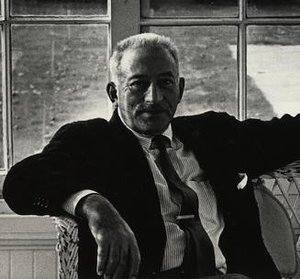
Adolph Gottlieb, born in New York City on March 14, 1903, emerged as a pivotal figure in the burgeoning landscape of American Abstract Expressionism. His journey was one of constant exploration—a relentless pursuit to distill universal human experiences into a visual language that resonated with both ancient symbolism and modern anxieties. Growing up as the son of Jewish immigrants, Gottlieb’s early life instilled within him a sensitivity to cultural displacement and the search for meaning in a rapidly changing world, themes that would profoundly shape his artistic vision. He received foundational training at the Art Students League and Parsons The New School for Design, but it was his subsequent travels through Europe during the 1920s that truly ignited his aesthetic sensibilities. Immersing himself in the art and philosophies of Germany and France, he absorbed influences from Constructivism and Surrealism, laying the groundwork for his future innovations.

Early Influences and Artistic Formation

Gottlieb’s initial artistic inclinations leaned toward representational painting—particularly landscapes—drawing inspiration from Impressionist masters like Claude Monet and William-Adolphe Bouguereau. However, he quickly recognized the limitations of depicting reality faithfully and sought a more expressive approach. His formative years were marked by intellectual curiosity and engagement with philosophical ideas, fostering an appreciation for symbolism and mythology that would become central to his artistic worldview. The impact of European avant-garde movements—particularly Surrealism—was undeniable; Gottlieb experimented with dreamlike imagery and subconscious associations, anticipating the stylistic developments of Abstract Expressionism.

The Founding of “The Ten” and Collaborative Exploration

A crucial step in Gottlieb’s artistic trajectory was his involvement with “The Ten,” a collective of artists who championed American originality within the international art scene during the mid-1930s. Alongside Mark Rothko, John D. Graham, Franz Kline, Barnett Newman, Helen Frankenthaler, Willem de Kooning, Philip Guston, Lester Thomson and Ivan Zakish, Gottlieb fostered a spirit of experimentation and challenged prevailing artistic conventions. This collaborative effort provided invaluable support during the Great Depression and solidified his commitment to pushing boundaries—a characteristic that would define his entire career. The Federal Art Project offered him considerable resources for his creative endeavors.

Arizona Landscapes and Proto-Pictographs

His relocation to Arizona in 1937-1938 proved transformative, profoundly influencing Gottlieb’s artistic style. Surrounded by the stark beauty of the desert landscape—the mesas, canyons, and cacti—he experienced a visceral connection with primal forces and ancient Native American cultures. This encounter sparked an interest in tribal art and symbolism, foreshadowing the development of his iconic *Pictographs*. These paintings, begun in 1940, represent Gottlieb’s breakthrough into abstraction, characterized by rectangular fields filled with stylized glyphs—symbols reminiscent of hieroglyphs or tribal markings—that evoke a sense of mystery and universality.

The Pictographs Series: Universal Symbolism

The *Pictographs* series stands as Gottlieb's most recognizable achievement, embodying his artistic vision. He deliberately drew inspiration from diverse sources—classical mythology, Amerindian art, African motifs—creating a compelling dialogue between modernity and ancient traditions. The glyphs themselves weren’t merely decorative elements; they were attempts to capture the essence of primal symbolism—a quest for meaning beyond visual representation. Gottlieb's exploration of universal themes—myth, ritual, human experience—continues to resonate with audiences today. He sought to express emotions and ideas that transcend language and cultural boundaries.

Legacy and Recognition

Throughout his prolific career, Gottlieb exhibited extensively in the United States and Europe, garnering critical acclaim for his distinctive style and unwavering dedication to artistic innovation. His work is now housed in major museums worldwide—including MoMA and Tate Modern—a testament to its enduring significance and influence on subsequent generations of artists. Gottlieb received numerous awards and accolades recognizing his contribution to American art history. He remains a celebrated figure, remembered not only for his groundbreaking paintings but also for his unwavering belief in the transformative power of art as a vehicle for exploring fundamental questions about human existence. His legacy endures as an inspiration for artists striving to express profound ideas through visual language—a reminder that true artistic achievement lies in confronting complexity and embracing ambiguity.
Adolph Gottlieb

Adolph Gottlieb

1903 - 1974 , Verenigde Staten van Amerika

Belangrijkste feiten

  • Artistic Movement Or Style: Abstract Expressionisme
  • Artists Who Influenced This Artist:
    • Constructivisme
    • Surrealisme
  • Date Of Birth: 14 maart 1903
  • Date Of Death: 1974
  • Full Name: Adolph Gottlieb
  • Nationality: Amerikaans
  • Notable Artworks:
    • Pictographs
    • Burst Paintings
    • Signs
    • Untitled (881)
  • Place Of Birth: New York City, USA