

 Voorvertoning
 Verstuur
 Delen
Delen
 Details bekijken
 Gids
Gids

 Download
 Vergelijkbare items
 Röntgenonderzoek
 Diavoorstelling
 Statistieken
Moses Striking the Rock
 Acrylic
- WallArt
- Late Renaissance Mannerism
 1596
1596 80.0 x 108.0 cm
 Metropolitan Museum of Art
 Lees meer
Giclée / Kunstafdrukken
Giclée- of canvasafdruk van museumkwaliteit met een snelle productie en flexibele afwerkingsmogelijkheden. ( Bestel handgeschilderde reproductie Schakel over naar digitale afbeeldingen)




P118B €10

P118H €10

P118W €10

P438Z €10

P508JH €12

P508YH €12

P805H €10

P805Z €10

P919BZ €10

P919G €10

P919XJ €10

P959ZH €10

P968JZ €12

W106C €8

W218G €10

W218JH €8

W218Y €10

W307PJ €10

W316G €10

W316PJ €8

W316Y €10

W398PJ €8

W4111J €10

W500HY €15

W500JH €15

W692G €12

W849H €8

W940BG €15

W953PJ €8




Kies uit onze vooraf ingestelde maten die overeenkomen met de originele verhoudingen van het kunstwerk.

Voer de gewenste breedte en hoogte in, passend bij uw lijst of muur. Een afdruk kan alleen worden ingekort en nooit groter worden gemaakt dan het origineel; een formaat met andere verhoudingen zal daarom een deel van de afbeelding verliezen. Wij sturen u een digitaal mockup ter goedkeuring voordat we tot drukwerk overgaan. De afbeelding op deze pagina toont niet de werkelijke uitsnede — dit is alleen te zien op het mockup.
Wereldwijde levering () binnen 2 weken in plaats van de standaard 4/5 weken. (26 oktober)

Gratis wereldwijde expressverzending

Hoogwaardig linnen canvas

Volledige verzendverzekering

Garantie op terugbetaling van invoerrechten

Garantie op exacte kleurweergave

Retourbeleid van 100 dagen (alleen bij defecten)

100% Geld-terug-garantie

Korting bij meerdere afnames
 De optie voor glas is alleen beschikbaar bij een formaat kleiner dan 110 cm.

Moses Striking the Rock
Giclée / Kunstafdrukken
Afmetingen reproductie
-


Eindtotaal
€ 71
A Dramatic Encounter with Divine Power: Abraham Bloemaert’s Moses Striking the Rock
Abraham Bloemaert's "Moses Striking the Rock" stands as a testament to the fervor of the Baroque period in Dutch art, capturing a pivotal biblical narrative with breathtaking dynamism and meticulous detail. Painted in 1596, this monumental canvas transcends mere depiction; it embodies an emotional intensity that speaks to themes of faith, leadership, and divine intervention—elements profoundly resonant within its time and continuing to captivate audiences today. The artwork resides prominently within the Metropolitan Museum of Art’s collection, a testament to its enduring artistic merit.- Subject Matter: The painting portrays Moses commanding God to part the Red Sea, an event recounted in Exodus 17:1–6—a cornerstone of Jewish and Christian scripture symbolizing deliverance from oppression and divine providence.
- Style & Influences: Bloemaert’s style firmly anchors itself within Mannerism, a stylistic movement characterized by elongated figures, stylized poses, and dramatic contrasts of light and shadow. However, he skillfully incorporates Baroque elements—particularly the theatrical use of space and gesture—reflecting the artistic sensibilities prevalent in Utrecht during his era. Notably, Bloemaert drew inspiration from contemporary Italian art, specifically the works of Michelangelo Buonarroti and Raphael Sanzio, whose mastery of anatomy and composition profoundly impacted Dutch painters.
Technical Brilliance: Composition and Color Palette
Bloemaert’s technical prowess is evident in every brushstroke. The artist meticulously rendered musculature with an unprecedented level of realism—a stylistic hallmark of Mannerism—emphasizing the heroic stature of Moses as he raises his arm to strike the rock, summoning forth water for the Israelites. The pyramidal composition directs the viewer's gaze upwards towards Moses, reinforcing the central figure’s importance and conveying a sense of upward movement and aspiration. Furthermore, Bloemaert employed a rich color palette dominated by earthy tones—ochres, browns, and reds—creating an atmosphere of solemn grandeur and highlighting the dramatic interplay between light and darkness. The subtle gradations of color contribute to the painting's emotional impact, mirroring the fervor of religious devotion.Symbolism & Narrative Depth
Beyond its visual splendor, “Moses Striking the Rock” is laden with symbolic significance. Moses represents leadership, faith, and obedience—qualities revered in Christian theology as essential for achieving salvation. The rock symbolizes God’s power and provision—a tangible manifestation of divine intervention amidst adversity. The surrounding figures—including the woman bearing a water pitcher—serve to amplify the narrative's drama and underscore the importance of communal effort in overcoming obstacles. Bloemaert’s depiction captures not merely an event but also its psychological dimension, conveying the palpable tension between Moses’ unwavering conviction and God’s willingness to demonstrate His benevolence.Legacy & Artistic Significance
Abraham Bloemaert's "Moses Striking the Rock" remains a seminal work of Baroque art—a cornerstone of Utrecht Caravaggisti style. It exemplifies the artistic ambition of its time, blending Mannerist formalism with Baroque theatricality to produce an image that continues to inspire awe and contemplation. Its influence can be traced throughout Dutch painting history, shaping subsequent generations of artists who sought to emulate Bloemaert’s masterful technique and expressive vision. Today, reproductions of this iconic artwork offer a window into the artistic spirit of the Renaissance—a celebration of faith, heroism, and the sublime beauty of God's power.Veelgestelde vragen
Wat zijn de werkelijke afmetingen van "Moses Striking the Rock" door Abraham Bloemaert?
"Moses Striking the Rock" heeft in zijn originele vorm de afmetingen 80 x 108 cm. De originele afmetingen dienen als een handig referentiepunt bij het kiezen van de juiste afmeting voor een reproductie.
Is "Moses Striking the Rock" typerend voor het werk van Abraham Bloemaert?
De terugkerende thema's van Abraham Bloemaert omvatten dramatic biblical narrative, italian mannerist aesthetics, religious fervor and power, bloemaert’s signature style, dutch baroque tradition; "Moses Striking the Rock" richt zich op moses, rock, desert, biblical scene, religious art, dutch painting, abraham bloemaert.
Kan ik "Moses Striking the Rock" door Abraham Bloemaert onder ander licht bekijken?
De Röntgenanalyse-pagina van "Moses Striking the Rock" door Abraham Bloemaert is een interactieve viewer waarmee u door elf optische lagen van het kunstwerk kunt glijden, inclusief een weergave in röntgenstijl.
Biografie kunstenaar
Een leven ondergedompeld in de kunst: De wereld van Abraham Bloemaert
Abraham Bloemaert, geboren in Gorinchem in 1564 en overleden in Utrecht in 1651, staat te boek als een sleutelfiguur die de maniëristische en barokke periodes in de Nederlandse schilderkunst met elkaar verbond. Zijn lange en vruchtbare carrière ontvouwde zich tegen een achtergrond van religieuze en politieke onrust, maar hij slaagde er voortdurend in werken te creëren die doordrenkt waren van zowel dramatische intensiteit als subtiele schoonheid. De reis van Bloemaert begon onder de begeleiding van zijn vader, Cornelis Bloemaert I, een architect die hem een fundamenteel begrip van vorm en compositie bijbracht. Deze vroege opleiding werd verder verfijnd door studies bij Gerrit Splinter en Joos de Beer in Utrecht, wat de basis legde voor zijn artistieke ontdekkingen. Daarna volgde een cruciale periode: drie jaar doorgebracht in Parijs van 1581 tot 1583. Daar absorbeerde hij invloeden van Jehan Bassot en Maistre Herry, terwijl hij ook kennismaakte met het werk van Hieronymus Francken, een mede-Nederlander die zijn stilistische horizon verbreedde. Dit Parijse verblijf bleek vormend; het stelde hem bloot aan de verfijnde elegantie van de Franse School en bereidde de weg voor zijn latere vernieuwingen.Van maniërisme naar barok: Een verschuivende esthetiek
Bij zijn terugkeer naar Utrecht vestigde Bloemaert zich snel als een vooraanstaand kunstenaar. Aanvankelijk sloot zijn stijl aan bij het heersende Haarlemse maniërisme – gekenmerkt door verlengde figuren, elegante poses en vaak complexe allegorische verhalen. Hij was echter niet tevreden om enkel binnen dit kader te blijven. Met de aanloop van de 17e eeuw begon Bloemaert de opkomende barokke esthetiek te omarmen, een verschuiving die werd gemarkeerd door meer dynamiek, emotionele intensiteit en een verhoogd gevoel van realisme. Deze overgang was niet abrupt; het was eerder een geleidelijke evolutie waarbij elementen van beide stijlen versmolten tot een uniek persoonlijke artistieke taal. Hij wist dramatische lichteffecten, rijke kleurenpaletten en expressieve gebaren meesterlijk te combineren om krachtige verhalen over te brengen en diepe emoties bij zijn toeschouwers op te roepen. Zijn schilderijen begonnen te resoneren met een nieuwe energie, als een spiegel van het veranderende culturele landschap van de Republiek der Zeven Verenigde Nederlanden.Een meester van diverse onderwerpen en technieken
Het artistieke oeuvre van Bloemaert was opmerkelijk divers. Hij blonk uit in de historiestukken, waarbij hij bijbelse verhalen en klassieke mythen tot leven bracht met overtuigende details en emotionele diepgang. Landschappen namen eveneens een speciale plaats in zijn repertoire in; vaak dienden zij als decor voor religieuze of mythologische scènes, maar ze werden steeds meer zelfstandige onderwerpen – schilderachtige vergezichten bevolkt met figuren die verzonken zijn in alledaagse bezigheden. Naast de schilderkunst was Bloemaert een zeer bekwame prentkunstenaar, vaardig in zowel etsen als graveren. Deze prenten dienden om zijn artistieke visie op grotere schaal te verspreiden, wat aanzienlijk bijdroeg aan zijn reputatie en invloed. Zijn technische beheersing strekte zich ook uit tot stillevens en dierschilderkunst, wat een uitzonderlijke veelzijdigheid toonde die hem onderscheidde van veel van zijn tijdgenoten. Opmerkelijke werken zoals “De verdrijving van Hagar en Ismaël”, “Venus en Adonis” en "De krijger en de jonge vaandeldrager" illustreren dit bereik en tonen zijn vermogen om complexe composities te hanteren en genuanceerde emoties met evenveel vaardigheid over te brengen.Een vruchtbare docent en een blijvende erfenis
Abraham Bloemaert was niet alleen een begaafd kunstenaar, maar ook een invloedrijk leraar. Hij vestigde een bloeiend atelier in Utrecht, dat talrijke studenten aantrok die later zelf prominente kunstenaars zouden worden. Opmerkelijk genoeg volgden zijn vier zonen – Hendrick, Frederick, Cornelis en Adriaan – allemaal in zijn voetsporen en behaalden aanzienlijk succes als schilders en graveurs. Buiten zijn directe familie begeleidde Bloemaert een hele generatie Nederlandse kunstenaars, waaronder Jan Aerntsz de Hel, Nicolaes van Berck, Leonaert Bramer, Bartholomeus Breenbergh, Hendrick ter Brugghen en Gerrit van Honthorst. Zijn invloed was bijzonder groot op de Utrechtse Caravaggisten – een groep schilders die de dramatische realiteit en het tenebrisme (het gebruik van sterke contrasten tussen licht en donker) omarmden, gepionierd door Caravaggio. De lessen van Bloemaert hielpen bij het vormgeven van hun kenmerkende stijl, waarmee hij zijn positie als centrale figuur in de ontwikkeling van de Nederlandse barokke schilderkunst verstevigde. Zijn nalatenschap echoot vandaag de dag nog steeds na; zijn werken worden bewonderd om hun technische briljantie, emotionele kracht en historische betekenis. Ze staan als getuigenis voor een leven dat gewijd was aan artistieke verkenning en innovatie, en hebben een onuitwisbare stempel gedrukt op de kunstwereld.
Abraham Bloemaert
1564 - 1651 , Nederland
Belangrijkste feiten
- Artistic Movement Or Style: Barok, Maniërisme
- Artists Or Movements Influenced By This Artist: ['Utrecht Caravaggisti']
- Artists Who Influenced This Artist: ['Hieronymus Francken']
- Date Of Birth: 1564
- Date Of Death: 1651
- Full Name: Abraham Bloemaert
- Nationality: Nederlands
- Notable Artworks:
- Verdrijving van Hagar
- Venus en Adonis
- Landschap met boeren
- Place Of Birth: Gorinchem, Nederland
Gerelateerde artikelen

Golden Age Reflections: Dutch Baroque Painting & Cultural Innovation
Explore the Dutch Golden Age of painting! Discover key artists like Vermeer & ter Borch, their innovative techniques, and the rich cultural context behind these Baroque masterpieces. Learn about collecting & appreciating this iconic art period.

Top 10 Barok Meesterwerken: Kunstgeschiedenis voor uw Interieur | OriginalUniqueArt.nl
Ontdek de 10 meest iconische Barok meesterwerken van Caravaggio, Rembrandt & Rubens! Duik in de geschiedenis en passie achter deze klassieke schilderijen. Vind museumkwaliteit reproducties voor uw interieur op OriginalUniqueArt.com.
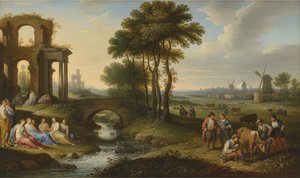
Cornelis van Poelenburch: Bridging Mannerism & the Dutch Baroque Landscape
Discover Cornelis van Poelenburch, a pivotal Dutch Baroque landscape painter bridging Mannerism & Italianate styles. Explore his life, key works, and lasting influence on 17th-century art with OriginalUniqueArt.

Top 10 Nederlandse Barok Meesterwerken: Kunstgeschiedenis voor uw Interieur
Ontdek de 10 meest iconische meesterwerken van de Nederlandse Barok! Leer over Rembrandt, Vermeer en andere Hollandse meesters. Prachtige reproducties voor uw interieur op OriginalUniqueArt.com – museumkwaliteit kunstprints & decoratie.

Crimson Threads of Narrative: Exploring Symbolism & Representation in Artworks Featuring the Red Dress
Explore the rich symbolism of the red dress in art history! From ancient power displays to iconic portraits like Cézanne’s 'Madame Cezanne', discover the cultural and artistic significance behind this captivating color. Expert analysis & insights.


