


1


Bijgewerkt in oktober 2026 · gerangschikt op basis van onze populariteitsscore (zoekopdrachten, bezoeken en bestellingen per kunstwerk) · 193 werken van Théodore Rousseau in onze catalogus
Kortom
Van alle originele werken die Théodore Rousseau heeft nagelaten, is Twilight Landscape (1850) de bekendste. Direct daarna volgen Landscape Study (La Source) (1830) en Moonlight: The Bathers (1864). Onze catalogus bevat 193 werken van Théodore Rousseau; de galerie heeft de 100 meest bewonderde werken ter wereld bewaard, elk voorzien van de datum, het museum en het verhaal erachter.


We find ourselves before Moonlight: The Bathers, a work from 1864 by the French painter Théodore Rousseau. This piece belongs to a period when Rousseau was deeply immersed in the naturalistic explorations of the Barbizon School. The painting captures a quiet, nocturnal moment, focusing on a group of figures nestled within a dense, dark landscape. It is a study of light and shadow, where the presence of the bathers is…

There is a certain stillness that settles over the viewer when encountering this 1840 landscape. It is a scene of profound tranquility, where a meadow opens up beneath a heavy, cloud-filled sky. The composition is carefully balanced, using dense clusters of trees to frame the view, creating a natural gateway that draws the eye toward a luminous clearing in the middle ground. A winding path meanders from the foreground into…

Théodore Rousseau captured the heavy, shadowed breath of the forest in La Gorge aux Loups. This oil on canvas, measuring 35.5 × 46.4 cm, presents a dense woodland scene where light struggles against the dark. A sudden burst of golden-yellow glow pierces through a central gap in the canopy, striking the midground with a sharp, chiaroscuro intensity. The brushwork is thick and tactile, leaving a surface marked by fine, aged…

The oil on canvas titled Landscape was painted by Théodore Rousseau in 1860. This work captures a dense grove of trees, creating a sense of enclosure through heavy, sprawling canopies. The scene is rendered in a monochrome, grayscale palette, moving from deep blacks in the shadows to bright whites where light filters through the foliage.

A heavy, humid air hangs between the trunks of the Fontainebleau forest. In this 1846 oil on canvas, the light does not shine; it filters, struggling through a thick canopy of leaves to reach the damp earth. The scene is a dense thicket of burnt umber and sienna, where the organic lines of twisting branches create a cage of shadow. A solitary figure sits within a central clearing, a small…

In this landscape, we find ourselves at the edge of a profound stillness. The scene captures that fleeting, suspended moment when the sun has slipped below the horizon, leaving the world in a state of soft, amber-tinted transition. A dense, dark mass of trees dominates the right side of the composition, their silhouettes heavy and irregular against a pale, luminous sky. To the left, the view opens toward a distant,…

In the quiet depths of Untitled (D2WVZ6), we find ourselves transported to a secluded corner of the natural world, where the boundary between the observer and the earth seems to dissolve. This evocative landscape, captured in 1852, presents a dense forest scene that serves as a profound meditation on the beauty of the wild. A small, winding pathway meanders through the thicket, inviting the viewer to step away from the…

To gaze upon Théodore Rousseau’s depiction of the Valley in the Auvergne Mountains is to be transported to a realm where nature reigns supreme and human endeavor feels wonderfully small. This painting, born from the heart of Romanticism around 1830, is not merely a record of a French landscape; it is an emotional encounter with the sublime. Rousseau masterfully captures the raw, untamed power of the Auvergne peaks. The composition…
 still-life with fruit1841 · Van Gogh Museum
12
 A Path among the Rocks1849 · Metropolitan Museum of Art
13
 Landscape1835 · Art Institute of Chicago
14
 Springtime1860 · Art Institute of Chicago
15
 The Pool (Memory of the Forest of Chambord)1839 · Metropolitan Museum of Art
16
 Mountain Stream in the Auvergne1830 · National Gallery of Art
17
 A Tree in Fontainebleau Forest1840 · Victoria and Albert Museum
18
 Landscape with a Plowman1860 · Hermitage Museum
19
 A Meadow Bordered by Trees1845 · Metropolitan Museum of Art
20
 Last Houses of Port-en-Bessin1831 · Palais des Beaux-Arts de Lille
21
 Landscape1830
22
 Sketch of a landscape1830 · Musée des Beaux-Arts
23
 Pont de Batignies in the Forest of Compiègne1828 · Victoria and Albert Museum
24
 Valley of the Seine1831 · Rhode Island School of Design Museum of Art
25
 The Old Park at Saint-Cloud1831 · National Gallery of Canada
26
 Study of a Branch with Fine Leaves1829 · Museum Boijmans Van Beuningen
27
 Sunset in the Auvergne1830 · National Gallery
28
 A_Quarry1827 · Museum voor Schone Kunsten Gent
29
 The Cave1829 · Los Angeles County Museum of Art
30
 Hilly Landscape with an Angler1830 · Museum Boijmans Van Beuningen
31
 Fishing Village1831 · National Gallery Prague
32
 Landscape by The River Mosel1829 · Nationalmuseum
33
 Landscape Study1830 · Allen Memorial Art Museum
34
 Landscape in the Auvergne1830 · The Barber Institute of Fine Arts
35
 Panoramic Landscape near the River Moselle1830 · National Gallery of Art
36
 House near a pond in Auvergne1830
37
 Panoramic Landscape1829
38
 Seascape1831
39
 Valley in the Auvergne1830
40
 Panoramic Landscape1831 · Brooklyn Museum
41
 The Cave in a Cliff near Granville1831
42
 The Church of Saint Lou d'Esserant in the Oise1828
43
 The Spring of Lizon1837
44
 Swiss Landscape1834 · Bayerische Staatsgemäldesammlungen
45
 The Plateau of Bellecroix1837
46
 Forest Interior, known as Le Vieux Dormoir du Bas-Bréau (Fontainebleau Forest)1836 · Musée d'Orsay
47
 Study for The Descent of the Cows in the Mountains of the Haut-Jura1834 · De Mesdag Collectie
48
 The Descent of the Cattle in the High Jura Mountains1834 · De Mesdag Collectie
49
 Landscape after a Storm1835 · National Gallery Prague
50
 Pheasantry in the Forest of Compiègne1833 · Saint Louis Art Museum
51
 Le plaine de Chailly1833 · Fitzwilliam Museum
52
 Paysage Panoramique1835 · Fitzwilliam Museum
53
 A Rocky Landscape1838 · National Gallery
54
 View of Saleve, near Geneva1834 · Art Institute of Chicago
55
 Stone Bridge near Meudon1834 · National Gallery Prague
56
 Landscape1832 · Paisley Museum
57
 A Study of Tree Trunks1833 · Musée des Beaux-Arts
58
 View of the Puy de Dôme and Royat1839
59
 Landscape in the Auvergne1830 · British Museum
60
 An Old Chapel in a Valley1835 · Metropolitan Museum of Art
61
 The Little Fisherman1848
62
 View of the plain of Montmartre; storm effect1846
63
 Swamp in Bourgogne1843 · De Mesdag Collectie
64
 Landscape1842 · Norfolk Museums
65
 The swamp (Le Marais)1842 · Musée des Beaux-Arts
66
 Landscape with a Stormy Sky1842 · Victoria and Albert Museum
67
 Landscape with Castle in a Marsh1840 · Museo de Arte de Ponce
68
 Undergrowth1847 · De Mesdag Collectie
69
 Massacre of the Innocents1847 · De Mesdag Collectie
70
 Le marais de la Souterraine1842 · Fitzwilliam Museum
71
 Village in Berry1842 · Cincinnati Art Museum
72
 View of the Plain of Montmartre1848 · Thyssen-Bornemisza Museum
73
 Edge of the Forest, Sun Setting1845 · Los Angeles County Museum of Art
74
 Hoarfrost1845 · Walters Art Museum
75
 A Swamp in the Landes1844 · Walters Art Museum
76
 Watercourse in a valley in the Berry1846 · De Mesdag Collectie
77
 Landscape with Figures1846 · Vanderbilt Museum of Art
78
 Late Fall1847
79
 Edge of the Forest of Fontainebleau1848
80
 Landscape1842 · Saint Louis Art Museum
81
 Cottages among Trees1842
82
 Village Under the Trees1852
83
 Cows at the Pond1850
84
 Cows at the Pond1853
85
 A marsh in Les Landes1853 · Aberdeen Art Gallery
86
 A View in the Landes, near Bordeaux1855 · Victoria and Albert Museum
87
 Pastoral Scene1853
88
 The Crooked Tree at the Carrefour de l'Epine1852 · De Mesdag Collectie
89
 Landscape1850 · National Museum of Fine Arts of Cuba
90
 The Forest of Fontainebleau1849
91
 Leaving the Forest, Fontainebleau: Setting Sun1851 · Cleveland Museum of Art
92
 After the Rain1850 · National Gallery of Art
93
 Rising Storm above a Hilly and Wooded Landscape1850 · Museum Boijmans Van Beuningen
94
 Dusk in a forest1850 · Nationale Galerie van Armenië
95
 The Torrent1850 · National Museum of Fine Arts
96
 Fontainebleau Woods1850 · National Museum of Fine Arts
97
 River Scene1850 · National Gallery
98
 Landscape with a Bridge1850 · Hermitage Museum
99
 The Colliers´ Hut in the Forest of Fontainebleau1855 · Thyssen-Bornemisza Museum
100
 Landscape with Cows1850 · Minneapolis Institute of Art
De vier onderwerpen die het meest voorkomen in deze originelen, elk met zijn mooiste voorbeeld.
De 8 musea met de meeste schilderijen op deze pagina.
| Museum | Stad | Werken van Théodore Rousseau | Schilderijen uit deze lijst |
|---|---|---|---|
 De Mesdag Collectie |
Den Haag | 8 | Study for The Descent of the Cows in the Mountains of the Haut-Jura, The Descent of the Cattle in the High Jura Mountains, Swamp in Bourgogne |
 Metropolitan Museum of Art |
New York | 11 | A River in a Meadow, Untitled (D2WVZ6), A Path among the Rocks |
 National Gallery |
Londen | 6 | Moonlight: The Bathers, Sunset in the Auvergne, A Rocky Landscape |
 Art Institute of Chicago |
Chicago | 5 | Landscape, Landscape, Springtime |
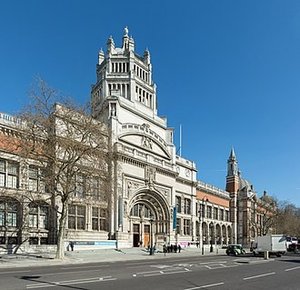 Victoria and Albert Museum |
Londen | 4 | A Tree in Fontainebleau Forest, Pont de Batignies in the Forest of Compiègne, Landscape with a Stormy Sky |
 National Gallery of Art |
Washington | 5 | Mountain Stream in the Auvergne, Panoramic Landscape near the River Moselle, After the Rain |
 Saint Louis Art Museum |
Saint Louis | 3 | Valley in the Auvergne Mountains, Pheasantry in the Forest of Compiègne, Landscape |
 Musée des Beaux-Arts |
Strasbourg | 3 | Sketch of a landscape, A Study of Tree Trunks, The swamp (Le Marais) |
Kies een decennium om het origineel te zien dat dit tijdperk definieert.

There is a certain stillness that settles over the viewer when encountering this 1840 landscape. It is a scene of profound tranquility, where a meadow opens up beneath a heavy, cloud-filled sky. The composition is carefully balanced, using dense clusters of trees to frame the view, creating a natural gateway that draws the eye toward a luminous clearing in the middle ground. A winding path meanders from the foreground into…
We find ourselves before Moonlight: The Bathers, a work from 1864 by the French painter Théodore Rousseau. This piece belongs to a period when Rousseau was deeply immersed in the naturalistic explorations of the Barbizon School. The painting captures a quiet, nocturnal moment, focusing on a group of figures nestled within a dense, dark landscape. It is a study of light and shadow, where the presence of the bathers is…
Twilight Landscape (1850). Landscape Study (La Source) (1830) en Moonlight: The Bathers (1864) volgen.
38 jaar oud: Twilight Landscape dateert uit 1850, en Théodore Rousseau werd geboren in 1812.
Twilight Landscape, Landscape Study (La Source), Moonlight: The Bathers, A River in a Meadow, La Gorge aux Loups, Landscape, Autumn at St. Jean de Paris, Forest of Fontainebleau, Twilight, Untitled (D2WVZ6) en Valley in the Auvergne Mountains. De bovenstaande ranglijst vermeldt het jaar en het museum van elk werk.
Onze catalogus bevat 193 werken van Théodore Rousseau, daterend van 1827 tot 1864.
Voornamelijk in De Mesdag Collectie (Den Haag), Metropolitan Museum of Art (New York) en National Gallery (Londen). De bovenstaande museumtabel bevat een volledig overzicht.
In 1830s: 39 van de 100 werken op deze pagina werden toen gemaakt, waaronder Landscape Study (La Source).
Op deze pagina is het vroegste A_Quarry (1827) en het laatste Moonlight: The Bathers (1864).
Landscape (17), Forest (11) en Trees (10), verspreid over de 100 werken op deze pagina.
Oil On Canvas, voor 10 van de 100 werken op deze pagina.
Barbizon school, te oordelen aan de originelen op deze pagina.
Study for The Descent of the Cows in the Mountains of the Haut-Jura, The Descent of the Cattle in the High Jura Mountains en Swamp in Bourgogne: het De Mesdag Collectie, Den Haag herbergt 7 van de werken op deze pagina.


