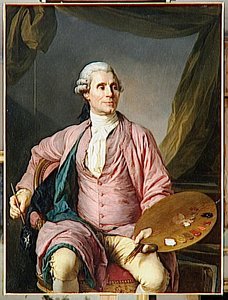
Portret van Joseph Duplessis

Schilderijen van Joseph Duplessis: De 60 bekendste, door de ogen van een galerie

Bijgewerkt in oktober 2026 · gerangschikt op basis van onze populariteitsscore (zoekopdrachten, bezoeken en bestellingen per kunstwerk) · 60 werken van Joseph Duplessis in onze catalogus

Kortom

Volgens de visie van de galerie is het beroemdste schilderij van Joseph Duplessis Benjamin Franklin (1706-1790) (1778), waarvan het origineel in het Harvard Art Museums in Cambridge hangt. Portrait of Louis XVI, King of France (1783) en Portrait of Louis XVI, King of France and Navarre maken het trio compleet dat elk oog herkent. Van de 60 werken van Joseph Duplessis in onze catalogus presenteert de galerie hieronder de 60 bekendste werken, elk een origineel met de jaartal, het museum en wat het uniek maakt.

1725 – 1802, Carpentras Neoclassicism Meeste werken: Musée Condé

De top 10 schilderijen van Joseph Duplessis in de galerie

1
Benjamin Franklin (1706-1790) (1778) door Joseph Duplessis

Benjamin Franklin (1706-1790)

1778 · Oil On Canvas · Harvard Art Museums, Cambridge

The air in the room feels heavy with the weight of intellect and quiet authority. Benjamin Franklin sits before us, his gaze meeting ours with a calm, knowing intelligence that seems to bridge the gap between centuries. He is captured in an oval-shaped bust-length portrait, his body angled slightly away while his eyes remain fixed upon the viewer. A soft, directional light spills from the upper left, catching the sheen…

2
Portrait of Louis XVI, King of France (1783) door Joseph Duplessis

Portrait of Louis XVI, King of France

1783 · Oil On Canvas · Rijksmuseum, Amsterdam

The Portrait of Louis XVI, King of France is a formal oil on canvas rendered by the artist Joseph Siffred Duplessis. Painted in 1783, the work captures the sovereign Louis XVI, King of France and Navarre. The subject is presented with a quiet, heavy dignity that anchors the composition within the traditions of 18th-century court painting.

3
Portrait of Louis XVI, King of France and Navarre door Joseph Duplessis

Portrait of Louis XVI, King of France and Navarre

Oil On Canvas · Opera House, Versailles

The Portrait of Louis XVI, King of France and Navarre by Joseph Siffred Duplessis captures a monarch at a moment of profound historical weight. The subject, Louis XVI, who succeeded to the throne in 1774, meets the viewer's gaze from within the frame. Joseph Siffred Duplessis renders the king not merely as a figure of state, but as a man held within the stillness of his own station. The portrait…

4
Louis XVI of France (1754-1793) door Joseph Duplessis

Louis XVI of France (1754-1793)

The light catches a forehead of pale ochre, pulling the face from a heavy, dark void. Louis XVI does not look at the viewer. Instead, his eyes are fixed on a point somewhere beyond the frame, a quiet, visionary contemplation that feels both noble and distant. He is a man caught in the stillness before a storm. The shadows on the right side of his face provide a soft, three-dimensional…

5
Portrait of Louis XVIII, when comte de Provence ? (1771) door Joseph Duplessis

Portrait of Louis XVIII, when comte de Provence ?

1771 · Oil On Canvas · Statens Museum for Kunst, Kopenhagen

A young man is presented in a bust-length portrait, his gaze directed toward the viewer with a calm, poised expression. The composition is set at a slight angle, creating a sense of three-dimensional depth through subtle lighting that originates from the upper left. This light casts gentle shadows across the right side of the face, defining the contours of the features and the structure of the neckcloth. The subject's powdered…

6
Madame de Saint-Maurice (1776) door Joseph Duplessis

Madame de Saint-Maurice

1776 · Oil On Canvas · Metropolitan Museum of Art, New York

In this 1776 portrait, we find ourselves in the presence of Madame de Saint-Maurice, captured in a moment of quiet, dignified poise. The subject is presented in a three-quarter length view, her figure slightly offset to create a sense of natural, unforced elegance. There is a softness to her presence, a gentle serenity in her expression that suggests a woman of significant social standing and calm temperament. The lighting, descending…

7
Portrait of a Gentleman (Jean-Baptiste-Francois Dupre?) (1780) door Joseph Duplessis

Portrait of a Gentleman (Jean-Baptiste-Francois Dupre?)

1780 · Oil On Canvas · Fine Arts Museums of San Francisco, San Francisco

In "Portrait of a Gentleman (Jean-Baptiste-Francois Dupre?)" by Joseph Siffred Duplessis, a sense of poised stillness fills the room. The subject sits in a three-quarter length view, resting within an ornate chair that anchors the composition. He is positioned slightly off-center, a choice that lends a certain dynamic poise to his seated form. An eye-level perspective draws the viewer into his immediate space, fostering an intimate connection that feels direct…

Schilderijen van Joseph Duplessis, gerangschikt van 11 tot 60

11Portrait of Madame Fréret d’Héricourt (1769) door Joseph DuplessisPortrait of Madame Fréret d’Héricourt1769 · The Nelson-Atkins Museum of Art 12Portrait of Madame Denis, niece of Voltaire (1778) door Joseph DuplessisPortrait of Madame Denis, niece of Voltaire1778 · Musée Condé 13Louis XVI (1754-1793), King of France. Full-length portrait, in royal costume. (1777) door Joseph DuplessisLouis XVI (1754-1793), King of France. Full-length portrait, in royal costume.1777 14Louis XVI (1754-1793), King of France. Full-length portrait, in royal costume. (1777) door Joseph DuplessisLouis XVI (1754-1793), King of France. Full-length portrait, in royal costume.1777 15Benjamin Franklin (1706-1790) (1778) door Joseph DuplessisBenjamin Franklin (1706-1790)1778 · Petit Palais 16Portrait of Charles-Claude Flahaut de la Billarderie comte d'Angiviller (1730-1809) (1784) door Joseph DuplessisPortrait of Charles-Claude Flahaut de la Billarderie comte d'Angiviller (1730-1809)1784 · Statens Museum for Kunst 17Portrait of Abraham Fontanel (1779) door Joseph DuplessisPortrait of Abraham Fontanel1779 · Musée Fabre 18Landscape in Blue Monochrome (1780) door Joseph DuplessisLandscape in Blue Monochrome1780 · Pharmacy of Hôtel-Dieu Hospital 19Portrait of Benjamin Franklin (1790) door Joseph DuplessisPortrait of Benjamin Franklin1790 · Musée Des Beaux 20Portrait of a Lady (1787) door Joseph DuplessisPortrait of a Lady1787 · Art Institute of Chicago 21Benjamin Franklin (1785) door Joseph DuplessisBenjamin Franklin1785 · National Portrait Gallery 22Portrait of Benjamin Franklin (1778) door Joseph DuplessisPortrait of Benjamin Franklin1778 · New York Historical Society 23Portrait of Jacques Necker (1781) door Joseph DuplessisPortrait of Jacques Necker1781 · Musée Nissim de Camondo 24Halte de cavaliers (1800) door Joseph DuplessisHalte de cavaliers1800 · Musée Massey 25Portrait of the Comte d'Angiviller (1779) door Joseph DuplessisPortrait of the Comte d'Angiviller1779 · Château de Versailles 26Bust Portrait of King Louis XVI of France door Joseph DuplessisBust Portrait of King Louis XVI of FranceStaatliche Kunsthalle Karlsruhe 27Joseph-Marie Vien with Palette door Joseph DuplessisJoseph-Marie Vien with PaletteMuseum of Fine Arts 28Pierre Chrysostème de Bonnac d'Usson, 1724-1782, greve door Joseph DuplessisPierre Chrysostème de Bonnac d'Usson, 1724-1782, greveNational Portrait Gallery of Sweden 29Herders and their Cows Resting before Classical Ruins door Joseph DuplessisHerders and their Cows Resting before Classical Ruins 30Portrait de femme door Joseph DuplessisPortrait de femme 31Marie Antoinette de Lorraine Habsbourg alors Dauphine, en 1772 door Joseph DuplessisMarie Antoinette de Lorraine Habsbourg alors Dauphine, en 1772 32Portrait of Suzanne Curchod door Joseph DuplessisPortrait of Suzanne Curchod 33MADAME NECKER (1739 1794) door Joseph DuplessisMADAME NECKER (1739 1794) 34JACQUES NECKER (1732 1804) door Joseph DuplessisJACQUES NECKER (1732 1804)Opera House 35Untitled (D2WVS2) door Joseph DuplessisUntitled (D2WVS2)Metropolitan Museum of Art 36PORTRAIT D'HOMME EN BUSTE door Joseph DuplessisPORTRAIT D'HOMME EN BUSTE 37Portrait d'Antoine Léonard Thomas door Joseph DuplessisPortrait d'Antoine Léonard ThomasMusée D'art Roger-quilliot 38LOUIS XVI, ROI DE FRANCE ET DE NAVARRE (1754 1793) door Joseph DuplessisLOUIS XVI, ROI DE FRANCE ET DE NAVARRE (1754 1793) 39Louis XVI of France door Joseph DuplessisLouis XVI of France 40LOUIS XVI, ROI DE FRANCE ET DE NAVARRE (1764 1793) door Joseph DuplessisLOUIS XVI, ROI DE FRANCE ET DE NAVARRE (1764 1793) 41Unidentified Papal Ceremony door Joseph DuplessisUnidentified Papal CeremonyBirmingham Museum and Art Gallery 42MICHEL PAUL GUY DE CHABANON (1730 1792) door Joseph DuplessisMICHEL PAUL GUY DE CHABANON (1730 1792) 43PORTRAIT DU COMTE DE PROVENCE door Joseph DuplessisPORTRAIT DU COMTE DE PROVENCEMusée Condé 44PORTRAIT DE LOUIS XVI door Joseph DuplessisPORTRAIT DE LOUIS XVI 45PORTRAIT DU COMTE D'ANGIVILLER door Joseph DuplessisPORTRAIT DU COMTE D'ANGIVILLERMusée Condé 46JEAN MARIE VIEN door Joseph DuplessisJEAN MARIE VIENLouvre 47CHRISTOPHE GABRIEL ALLEGRAIN door Joseph DuplessisCHRISTOPHE GABRIEL ALLEGRAINLouvre 48MADAME LENOIR door Joseph DuplessisMADAME LENOIRLouvre 49Christophe Gabriel Allegrain, Sculptor (1774) door Joseph DuplessisChristophe Gabriel Allegrain, Sculptor1774 · Louvre 50Portrait of Louis XIV, King of France door Joseph DuplessisPortrait of Louis XIV, King of FranceJohn and Mable Ringling Museum of Art 51Portrait of Louis XV, King of France (wearing breastplate and the Order of the Golden Fleece) door Joseph DuplessisPortrait of Louis XV, King of France (wearing breastplate and the Order of the Golden Fleece)John and Mable Ringling Museum of Art 52Portrait of Louis XVI, King of France (wearing a velvet coat with no armor and the Order of the Golden Fleece) door Joseph DuplessisPortrait of Louis XVI, King of France (wearing a velvet coat with no armor and the Order of the Golden Fleece)John and Mable Ringling Museum of Art 53Portrait of Henri IV, King of France door Joseph DuplessisPortrait of Henri IV, King of FranceJohn and Mable Ringling Museum of Art 54Ludvig XVI (1754-1793), konung av Frankrike door Joseph DuplessisLudvig XVI (1754-1793), konung av FrankrikeNationalmuseum 55Portrait of Comte de Provence, brother of the King door Joseph DuplessisPortrait of Comte de Provence, brother of the King 56Mr. buissy door Joseph DuplessisMr. buissyNational Gallery of Canada 57Self portrait door Joseph DuplessisSelf portraitOpera House 58LA DUCHESSE DE CHARTRES EN PRESENCE DU VAISSEAU LE SAINT ESPRIT QUI EMPORTE LE DUC DE CHARTRES AU COMBAT D'OUESSANT door Joseph DuplessisLA DUCHESSE DE CHARTRES EN PRESENCE DU VAISSEAU LE SAINT ESPRIT QUI EMPORTE LE DUC DE CHARTRES AU COMBAT D'OUESSANTMusée Condé 59Louis XVI in Coronation Robes (1777) door Joseph DuplessisLouis XVI in Coronation Robes1777 · Musée Ingres Bourdelle 60Cristoph Wilibald von Gluck at the Spinet (1775) door Joseph DuplessisCristoph Wilibald von Gluck at the Spinet1775 · Kunsthistorisches Museum

De onderwerpen die de aandacht van Joseph Duplessis troffen

De vier onderwerpen die het meest voorkomen in deze originelen, elk met zijn mooiste voorbeeld.

De musea waar de originele werken van Joseph Duplessis worden bewaard

De 8 musea met de meeste schilderijen op deze pagina.

Museum Stad Werken van Joseph Duplessis Schilderijen uit deze lijst
Musée Condé, ChantillyMusée Condé Chantilly 5 Portrait of Louis XVI, Portrait of Madame Denis, niece of Voltaire, PORTRAIT DU COMTE DE PROVENCE
Louvre, ParijsLouvre Parijs 4 JEAN MARIE VIEN, CHRISTOPHE GABRIEL ALLEGRAIN, MADAME LENOIR
John and Mable Ringling Museum of Art, SarasotaJohn and Mable Ringling Museum of Art Sarasota 4 Portrait of Louis XIV, King of France, Portrait of Louis XV, King of France (wearing breastplate and the Order of the Golden Fleece), Portrait of Louis XVI, King of France (wearing a velvet coat with no armor and the Order of the Golden Fleece)
Opera House, VersaillesOpera House Versailles 3 Portrait of Louis XVI, King of France and Navarre, JACQUES NECKER (1732 1804), Self portrait
Statens Museum for Kunst, KopenhagenStatens Museum for Kunst Kopenhagen 2 Portrait of Louis XVIII, when comte de Provence ?, Portrait of Charles-Claude Flahaut de la Billarderie comte d'Angiviller (1730-1809)
Metropolitan Museum of Art, New YorkMetropolitan Museum of Art New York 2 Madame de Saint-Maurice, Untitled (D2WVS2)
Musée Carnavalet, ParijsMusée Carnavalet Parijs 2 Portrait of a Woman, Jean-Baptiste François, Comte de la Michodière, Provost of the Merchants from 1772 to 1778
Harvard Art Museums, CambridgeHarvard Art Museums Cambridge 1 Benjamin Franklin (1706-1790)

Joseph Duplessis, één iconisch schilderij per decennium

Werken per decennium

Kies een decennium om het origineel te zien dat dit tijdperk definieert.

Schilderijen van Joseph Duplessis: de galerie geeft antwoord

Welk schilderij van Joseph Duplessis is het beroemdste van allemaal?Onthul het antwoord

Benjamin Franklin (1706-1790) (1778), Harvard Art Museums, Cambridge. Portrait of Louis XVI, King of France (1783) en Portrait of Louis XVI, King of France and Navarre volgen.

Hoe oud was Joseph Duplessis bij de voltooiing van Benjamin Franklin (1706-1790)?Onthul het antwoord

53 jaar oud: Benjamin Franklin (1706-1790) dateert uit 1778, en Joseph Duplessis werd geboren in 1725.

Wat zijn de top 10 schilderijen van Joseph Duplessis?Onthul het antwoord

Benjamin Franklin (1706-1790), Portrait of Louis XVI, King of France, Portrait of Louis XVI, King of France and Navarre, Louis XVI of France (1754-1793), Portrait of Louis XVIII, when comte de Provence ?, Madame de Saint-Maurice, Portrait of a Gentleman (Jean-Baptiste-Francois Dupre?), Portrait of Louis XVI, Portrait of a Woman en Jean-Baptiste François, Comte de la Michodière, Provost of the Merchants from 1772 to 1778. De bovenstaande ranglijst vermeldt het jaar en het museum van elk werk.

Hoeveel werken heeft Joseph Duplessis gemaakt?Onthul het antwoord

Onze catalogus bevat 60 werken van Joseph Duplessis, daterend van 1750 tot 1800.

Waar hangen de beroemdste originele werken van Joseph Duplessis?Onthul het antwoord

Voornamelijk in Musée Condé (Chantilly), Louvre (Parijs) en John and Mable Ringling Museum of Art (Sarasota). De bovenstaande museumtabel bevat een volledig overzicht.

Wanneer creëerde Joseph Duplessis de beroemdste schilderijen?Onthul het antwoord

In 1770s: 14 van de 60 werken op deze pagina werden toen gemaakt, waaronder Benjamin Franklin (1706-1790).

Wat zijn de vroegste en laatste beroemde werken van Joseph Duplessis?Onthul het antwoord

Op deze pagina is het vroegste Portrait of Louis XVI (1750) en het laatste Halte de cavaliers (1800).

Welke onderwerpen keerde Joseph Duplessis het vaakst naar terug?Onthul het antwoord

Portraits (9), Man (8) en Portrait (7), verspreid over de 60 werken op deze pagina.

In welk medium werkte Joseph Duplessis het meest?Onthul het antwoord

Oil On Canvas, voor 14 van de 60 werken op deze pagina.

Bij welke stroming wordt Joseph Duplessis gerekend?Onthul het antwoord

Neoclassicism, te oordelen aan de originelen op deze pagina.

Welke originelen van Joseph Duplessis zijn in de collectie van het Musée Condé?Onthul het antwoord

Portrait of Louis XVI, Portrait of Madame Denis, niece of Voltaire en PORTRAIT DU COMTE DE PROVENCE: het Musée Condé, Chantilly herbergt 5 van de werken op deze pagina.

Joseph Duplessis: de kunstenaar

Joseph Siffred Duplessis - Master of 18thC French Portraiture, Faméd for Realistic Depictions of Aristocracy & Iconic Portraits Like Benjamin Franklin

Joseph-Siffred Duplessis (1725–1802), a name perhaps less immediately recognizable than some of his contemporaries, nevertheless occupies a pivotal position in the history of 18th-century French portraiture. Born in Carpentras, France, he wasn’t born into an established artistic dynasty but rather a family where creativity simmered beneath the surface of practical life; his father, a surgeon, possessed a keen amateur interest in painting and provided young Joseph with his earliest instruction. This grounding in observation – the precise rendering required by medical illustration – would prove invaluable to Duplessis’s later success. He continued his formal training under Joseph Gabriel Imbert, a pupil of Charles Le Brun, absorbing the established academic techniques before venturing to Rome between 1744 and 1747. It was in Italy, within Pierre Subleyras' atelier, that Duplessis truly blossomed, forging friendships with fellow artists like Joseph Vernet and immersing himself in the rich artistic heritage of the Italian peninsula. This period wasn’t merely about mastering technique; it was a crucial stage in developing his aesthetic sensibility, shaping the clarity and immediacy that would come to define his style.

Early Life and Artistic Foundations

Duplessis grew up in Carpentras, near Avignon, into a family with an artistic bent. His father, Joseph-Guillaume Duplessis, a surgeon, held a deep appreciation for painting—a passion he instilled in young Joseph. This formative experience fostered a meticulous eye for detail, honed by his father’s medical practice and translating directly into Duplessis’s remarkable ability to capture the subtleties of human expression. Recognizing the importance of formal training, he pursued studies under Imbert, who had been mentored by Le Brun—a lineage that ensured Duplessis absorbed the foundational principles of academic painting. The influence of Le Brun's monumental style is palpable in Duplessis’s later works, particularly his grand portraits commissioned for royal patrons. From 1744 to 1747, he traveled to Rome, seeking inspiration and honing his skills within Subleyras’ atelier—a crucible where he encountered the artistic fervor of the era and cultivated connections with prominent artists like Vernet. This Roman apprenticeship solidified Duplessis's understanding of classical ideals and contributed significantly to his distinctive aesthetic vision.

The Roman Atelier and Artistic Influences

Subleyras’ atelier served as a catalyst for Duplessis’s artistic evolution, exposing him to the vibrant intellectual currents of Rome and fostering collaborations with fellow artists who shared his commitment to realism and observation. Among these connections was Joseph Vernet, whose landscapes provided a counterpoint to Duplessis’s portraits—a stylistic juxtaposition that reflects the broader artistic landscape of the time. The atelier's emphasis on meticulous detail and tonal gradation mirrored Duplessis’s own approach to painting, shaping his technique and informing his compositional choices. Furthermore, Duplessis absorbed the humanist ideals championed by Neoclassical thinkers, recognizing the importance of portraying subjects with dignity and intellectual depth—a characteristic that distinguishes his portraits from the more decorative tendencies of Rococo art. The influence of Le Brun’s monumental style is evident in Duplessis's ambitious projects for the royal court, demonstrating his mastery of scale and grandeur.

Return to France and Recognition at the Salon

Upon returning to Carpentras, Duplessis established himself in Lyon before relocating to Paris around 1752—a move that propelled him into the heart of Parisian artistic life. Initially, acceptance into the Académie de Saint-Luc proved elusive, reflecting the competitive landscape of French art academies during this period. However, Duplessis’s fortunes shifted dramatically at the Salon of 1769. Exhibiting ten portraits—a bold undertaking considering the prevailing skepticism towards portraiture as a genre—he achieved unprecedented acclaim, notably from Denis Diderot—a celebrated critic and philosopher whose discerning eye championed innovation and intellectual rigor. This breakthrough ushered in Duplessis’s ascendancy to fame and secured his election to the Académie de peinture et de sculpture in 1770—a remarkable accomplishment given the academy's conservative ethos. The Salon of 1769 marked a turning point not only for Duplessis’s career but also for French art history, signaling a move away from Rococo frivolity toward a more restrained and intellectually stimulating aesthetic.

A Legacy of Realism and Psychological Insight

Duplessis continued to exhibit at the Salon throughout his life—both finished paintings and sketches—until 1791, demonstrating unwavering dedication to his craft and maintaining a position among the most respected artists of his era. His final Salon exhibition in 1801 solidified his reputation as a master portraitist—a testament to his enduring artistic vision. Duplessis’s portraits stand apart from many of his contemporaries due to their remarkable realism and psychological depth—qualities that transcend time and continue to captivate viewers today. He skillfully captured the essence of his subjects, conveying not merely physical likeness but also inner character and emotional nuance. His portrayal of Benjamin Franklin exemplifies this artistic achievement—a portrait imbued with an uncanny sense of immediacy and psychological insight. Duplessis’s work embodies the spirit of Neoclassicism, prioritizing clarity, restraint, and intellectual contemplation—characteristics that distinguish it from the opulent excesses of Rococo art. He secured privileged lodgings in the Galeries du Louvre, affording him constant exposure to masterpieces that further refined his artistic sensibilities. His enduring legacy rests on his ability to transform observation into art—a feat accomplished with unparalleled skill and sensitivity. ## Notable Works and Artistic Style Duplessis’s oeuvre comprises approximately two hundred paintings—a substantial body of work reflecting his prolific output during the latter half of the 18th century. Among his most celebrated portraits are those of Louis XVI, Christophe Gluck, Jacques Necker, and Benjamin Franklin—each piece demonstrating Duplessis's mastery of technique and psychological portrayal. The portrait of Franklin—executed around 1785—became an iconic image of the Enlightenment era—a testament to Duplessis’s ability to capture the spirit of his time on canvas. His meticulous attention to detail—particularly in rendering skin tones and fabrics—established him as a pioneer of realism within French painting. Furthermore, Duplessis skillfully employed tonal gradation—a technique championed by Caravaggio—to create dramatic lighting effects that heighten the emotional impact of his portraits. He achieved this remarkable feat through careful observation and painstaking execution—qualities that underscore his artistic genius. His work continues to resonate today, reminding us of the power of art to illuminate the past and connect us to the human experience.