Portret van Johann Carl Loth

De 46 beroemdste schilderijen van Johann Carl Loth, elk uniek

Bijgewerkt in november 2026 · gerangschikt op basis van onze populariteitsscore (zoekopdrachten, bezoeken en bestellingen per kunstwerk) · 47 werken van Johann Carl Loth in onze catalogus

Kortom

Selene and Endymion (1670) is het schilderij van Johann Carl Loth dat de meeste aandacht trekt; het origineel bevindt zich in het Rijksmuseum, Amsterdam. Daarna gaat de blik naar Jacob Blesses Ephraim and Manasseh (1692) en Old Peasant Lighting a Pipe (1660). Van de 47 werken van Johann Carl Loth in onze catalogus zijn dit de 46 bekendste, elk een uniek origineel gepresenteerd met het jaar, het museum en de reden waarom het blijft voortbestaan.

1632 – 1698, München Baroque Meeste werken: Bayerische Staatsgemäldesammlungen

Top 10 schilderijen van Johann Carl Loth, door de ogen van de galerie

1
Selene and Endymion (1670) door Johann Carl Loth

Selene and Endymion

1670 · Oil On Canvas · Rijksmuseum, Amsterdam

In this dramatic oil painting, we find ourselves witnessing a moment of profound stillness and longing. The scene captures the mythological meeting between Selene, the personification of the Moon, and the sleeping Endymion. The composition moves with a heavy, diagonal energy, pulling the eye from the upper left down toward the lower right, following the curve of the figures. Endymion lies in a deep, earthly slumber, his muscular form rendered…

2
Jacob Blesses Ephraim and Manasseh (1692) door Johann Carl Loth

Jacob Blesses Ephraim and Manasseh

1692 · Oil On Canvas · Kunsthistorisches Museum, Wenen

In this 1692 oil on canvas, an aged, semi-nude patriarch leans forward to bestow a blessing upon two young boys, Ephraim and Manasseh. The composition is tightly packed, utilizing a dynamic, triangular formation that directs the viewer's eye toward the central elderly figure. The scene captures a moment of profound interpersonal drama, where the physical presence of the figures is emphasized through heavy drapery and muscular contours. Light falls theatrically…

3
Old Peasant Lighting a Pipe (1660) door Johann Carl Loth

Old Peasant Lighting a Pipe

1660 · Oil On Canvas · Art Institute of Chicago, Chicago

A single, focused light source pierces a heavy darkness, illuminating a weathered face in a moment of profound concentration. This profile view captures an elderly man as he attends to a clay pipe, the thin stem acting as a visual guide through the composition. The scene is defined by a stark chiaroscuro, where deep shadows recede into an indeterminate background, pushing the subject into the immediate foreground. Every wrinkle in…

4
Music Lesson (1650) door Johann Carl Loth

Music Lesson

1650 · Oil On Canvas · Muzeum Palacu Króla Jana Iii w Wilanowie, Warschau

In the oil painting Music Lesson by Johann Carl Loth, the artist employs an oval composition to frame a tightly cropped scene. The figures are arranged in a triangular formation, a structural choice that directs the viewer's eye toward the central action. A muscular male figure plays a pan flute, or syrinx, while an older man wearing a laurel wreath observes or instructs a younger woman. This arrangement creates a…

5
Diogenes (1650) door Johann Carl Loth

Diogenes

1650 · Oil On Canvas · Minneapolis Institute of Art, Minneapolis

A muscular, bearded man emerges from a dark, near-black background in this 1650 oil painting. He is positioned in a tight, close-up composition that focuses on his upper torso and head. His skin is rendered with detailed musculature, particularly across the shoulder, chest, and arm. A single light source, a lit candle contained within a handheld lantern, casts sharp highlights onto his anatomy. This light creates a strong chiaroscuro effect,…

6
Susannah and the Elders (1650) door Johann Carl Loth

Susannah and the Elders

1650 · Oil On Canvas · J. Paul Getty Museum, Los Angeles

In Susannah and the Elders, Johann Carl Loth brings a heavy, dramatic tension to the canvas. The scene unfolds from a narrative found within the Old Testament, capturing a moment of profound intrusion. Susannah finds herself cornered by two men, their presence a sudden and unsettling weight in her private space. The air feels thick with the gravity of this confrontation, as the figures press into a tight, triangular arrangement…

7
The Exposure of the Infant Moses (1665) door Johann Carl Loth

The Exposure of the Infant Moses

1665 · Oil · Bayerische Staatsgemäldesammlungen, München

In The Exposure of the Infant Moses, Johann Carl Loth captures a heavy moment from the Book of Exodus. The scene centers on a small infant resting in a vessel upon the ground. A muscular man reaches toward the child, his body taut with effort. To the side, a woman collapses in grief, her hand pressed against her forehead as she faces a moment of profound despair. The weight of…

8
Christ Appears to Saint Anthony (1665) door Johann Carl Loth

Christ Appears to Saint Anthony

1665 · Oil · Bayerische Staatsgemäldesammlungen, München

In this dramatic Baroque oil painting, titled Christ Appears to Saint Anthony, Johann Carl Loth captures a profound mystical encounter. Created about 1665, the work focuses on the intimate connection between the Christ Child and the saint. The composition centers on the upper bodies of these two figures, drawing the viewer into a private moment of spiritual presence. The Christ Child is depicted as a plump, nude infant leaning forward…

9
The Penitent Mary Magdalene (1665) door Johann Carl Loth

The Penitent Mary Magdalene

1665 · Oil · Bayerische Staatsgemäldesammlungen, München

The Penitent Mary Magdalene emerges from the shadows as a profound oil painting by Johann Carl Loth. Created about 1665, the work captures a singular moment of spiritual intensity. The subject gazes upward, caught in a state of deep devotion that feels immediate and alive. Every brushstroke contributes to the weight of her presence within the frame.

10
John the Baptist (1665) door Johann Carl Loth

John the Baptist

1665 · Oil · Bayerische Staatsgemäldesammlungen, München

This oil painting, titled John the Baptist, was executed by the German Baroque painter Johann Carl Loth. The work dates to about 1665. It presents a vertical portrait that focuses on the head and the upper torso of the subject. The figure is a muscular man characterized by a beard and a gaze directed upward and to his right. He is depicted in a state of intense spiritual or emotional…

De beroemde schilderijen van Johann Carl Loth, nummer 11 tot 46

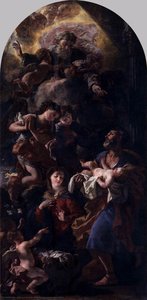
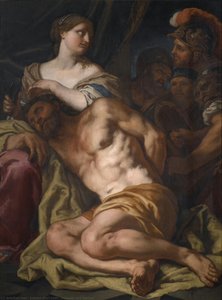
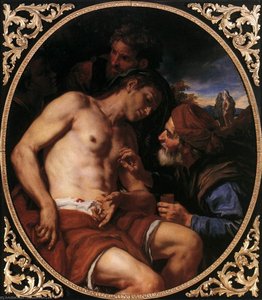
11Christ on the Cross (1665) door Johann Carl LothChrist on the Cross1665 · Bayerische Staatsgemäldesammlungen 12Adoration of the Shepherds (1665) door Johann Carl LothAdoration of the Shepherds1665 · Bayerische Staatsgemäldesammlungen 13David with the Head of Goliath (1665) door Johann Carl LothDavid with the Head of Goliath1665 · Bayerische Staatsgemäldesammlungen 14Mockery of Christ (1665) door Johann Carl LothMockery of Christ1665 · Bayerische Staatsgemäldesammlungen 15Isaac Blesses Jacob (1665) door Johann Carl LothIsaac Blesses Jacob1665 · Bayerische Staatsgemäldesammlungen 16The Shame of Noah (1674) door Johann Carl LothThe Shame of Noah1674 · Bayerische Staatsgemäldesammlungen 17The Dying Seneca (1665) door Johann Carl LothThe Dying Seneca1665 · Bayerische Staatsgemäldesammlungen 18The Rescue of Agrippina, Mother of Nero (1665) door Johann Carl LothThe Rescue of Agrippina, Mother of Nero1665 · Bayerische Staatsgemäldesammlungen 19Boy in Armor (1665) door Johann Carl LothBoy in Armor1665 20Cato the Younger's Death (1672) door Johann Carl LothCato the Younger's Death1672 · Statens Museum for Kunst 21Saint Joseph with the Christ Child (1680) door Johann Carl LothSaint Joseph with the Christ Child1680 · Bayerische Staatsgemäldesammlungen 22Holy Family with the Christ Child John (1680) door Johann Carl LothHoly Family with the Christ Child John1680 · Bayerische Staatsgemäldesammlungen 23Saint John the Baptist (1680) door Johann Carl LothSaint John the Baptist1680 · Slovak National Gallery 24Saint Paul (1675) door Johann Carl LothSaint Paul1675 · Nationaal Museum in Warschau 25Faun playing the flute. (1675) door Johann Carl LothFaun playing the flute.1675 · Nationaal Museum in Warschau 26Martyrdom of Gerard of Csanád (1677) door Johann Carl LothMartyrdom of Gerard of Csanád1677 · Musée des Beaux-Arts 27Holy Family and God the Father (1681) door Johann Carl LothHoly Family and God the Father1681 · San Silvestro 28The Guardian Angel and Archangel Michael (1691) door Johann Carl LothThe Guardian Angel and Archangel Michael1691 · Bayerische Staatsgemäldesammlungen 29Saint Dominic Receives the Rosary (1691) door Johann Carl LothSaint Dominic Receives the Rosary1691 · Bayerische Staatsgemäldesammlungen 30The Death of Cato. (1700) door Johann Carl LothThe Death of Cato.1700 · Nationaal Museum in Warschau 31Abraham Visited by the Angels door Johann Carl LothAbraham Visited by the Angels 32Death of St Peter Martyr (1691) door Johann Carl LothDeath of St Peter Martyr1691 · Basilica dei Santi Giovanni e Paolo 33Lowering of Moses into the Nile (Amram and Jochebed lowering their son Moses in a basket into the Nile) (1700) door Johann Carl LothLowering of Moses into the Nile (Amram and Jochebed lowering their son Moses in a basket into the Nile)1700 · Ernest Zmeták Art Gallery 34Apollo, Pan, and Marsyas door Johann Carl LothApollo, Pan, and MarsyasStaatliche Museen zu Berlin 35Eliezer en Rebecca bij het Put (1670) door Johann Carl LothEliezer en Rebecca bij het Put1670 · Hermitage Museum 36Self-Portrait door Johann Carl LothSelf-PortraitBayerische Staatsgemäldesammlungen 37The Crowning with thorns door Johann Carl LothThe Crowning with thornsFinnish National Gallery 38Saint Sebastian door Johann Carl LothSaint SebastianNational Gallery Prague 39Kampf des Jakob mit d. Engel ? door Johann Carl LothKampf des Jakob mit d. Engel ? 40Adam and Eve door Johann Carl LothAdam and EveKedleston Hall 41Lot and His Daughters door Johann Carl LothLot and His Daughters 42Samson and Delilah door Johann Carl LothSamson and DelilahFondazione Brescia Musei 43Mercury Piping to Argus door Johann Carl LothMercury Piping to ArgusNational Gallery 44Jupiter and Mercury at Philemon and Baucis door Johann Carl LothJupiter and Mercury at Philemon and BaucisKunsthistorisches Museum 45The Good Samaritan door Johann Carl LothThe Good SamaritanKunsthistorisches Museum 46The Good Samaritane (1676) door Johann Carl LothThe Good Samaritane1676 · Kunstsammlungen Graf von Schönborn

De onderwerpen die de aandacht van Johann Carl Loth troffen

De vier onderwerpen die het meest voorkomen in deze originelen, elk met zijn mooiste voorbeeld.

De musea waar de originele werken van Johann Carl Loth worden bewaard

De 8 musea met de meeste schilderijen op deze pagina.

Museum Stad Werken van Johann Carl Loth Schilderijen uit deze lijst
Bayerische Staatsgemäldesammlungen, MünchenBayerische Staatsgemäldesammlungen München 17 The Exposure of the Infant Moses, Christ Appears to Saint Anthony, The Penitent Mary Magdalene
Kunsthistorisches Museum, WenenKunsthistorisches Museum Wenen 3 Jacob Blesses Ephraim and Manasseh, Jupiter and Mercury at Philemon and Baucis, The Good Samaritan
Nationaal Museum in Warschau, WarschauNationaal Museum in Warschau Warschau 3 Saint Paul, Faun playing the flute., The Death of Cato.
Rijksmuseum, AmsterdamRijksmuseum Amsterdam 1 Selene and Endymion
Art Institute of Chicago, ChicagoArt Institute of Chicago Chicago 1 Old Peasant Lighting a Pipe
Muzeum Palacu Króla Jana Iii w Wilanowie, WarschauMuzeum Palacu Króla Jana Iii w Wilanowie Warschau 1 Music Lesson
Minneapolis Institute of Art, MinneapolisMinneapolis Institute of Art Minneapolis 1 Diogenes
J. Paul Getty Museum, Los AngelesJ. Paul Getty Museum Los Angeles 1 Susannah and the Elders

Johann Carl Loth door de decennia heen: elk een uniek origineel

Werken per decennium

Kies een decennium om het origineel te zien dat dit tijdperk definieert.

Schilderijen van Johann Carl Loth: vragen voor de galerie

Wat is het bekendste werk van Johann Carl Loth?Onthul het antwoord

Selene and Endymion (1670), Rijksmuseum, Amsterdam. Jacob Blesses Ephraim and Manasseh (1692) en Old Peasant Lighting a Pipe (1660) volgen.

Op welke leeftijd creëerde Johann Carl Loth Selene and Endymion?Onthul het antwoord

38 jaar oud: Selene and Endymion dateert uit 1670, en Johann Carl Loth werd geboren in 1632.

Welke tien schilderijen van Johann Carl Loth zijn het meest bekend?Onthul het antwoord

Selene and Endymion, Jacob Blesses Ephraim and Manasseh, Old Peasant Lighting a Pipe, Music Lesson, Diogenes, Susannah and the Elders, The Exposure of the Infant Moses, Christ Appears to Saint Anthony, The Penitent Mary Magdalene en John the Baptist. De bovenstaande ranglijst vermeldt het jaar en het museum van elk werk.

Hoeveel werken van Johann Carl Loth zijn er bekend?Onthul het antwoord

Onze catalogus bevat 47 werken van Johann Carl Loth, daterend van 1650 tot 1692.

Waar kunnen de beroemdste originelen van Johann Carl Loth worden bekeken?Onthul het antwoord

Voornamelijk in Bayerische Staatsgemäldesammlungen (München), Kunsthistorisches Museum (Wenen) en Nationaal Museum in Warschau (Warschau). De bovenstaande museumtabel bevat een volledig overzicht.

In welke periode creëerde Johann Carl Loth de bekendste schilderijen?Onthul het antwoord

In 1660s: 13 van de 46 werken op deze pagina werden toen gemaakt, waaronder Old Peasant Lighting a Pipe.

Welk beroemd schilderij van Johann Carl Loth is de vroegste, en welke de laatste?Onthul het antwoord

Op deze pagina is het vroegste Music Lesson (1650) en het laatste Jacob Blesses Ephraim and Manasseh (1692).

Welke onderwerpen had Johann Carl Loth de voorkeur?Onthul het antwoord

Man (28), Drapery (15) en Skin (11), verspreid over de 46 werken op deze pagina.

Met welke materialen schilderde Johann Carl Loth het meest?Onthul het antwoord

Oil On Canvas, voor 22 van de 46 werken op deze pagina.

Bij welke stroming behoort het werk van Johann Carl Loth?Onthul het antwoord

Baroque, te oordelen aan de originelen op deze pagina.

Welke originele werken van Johann Carl Loth kan ik zien in het Bayerische Staatsgemäldesammlungen?Onthul het antwoord

The Exposure of the Infant Moses, Christ Appears to Saint Anthony en The Penitent Mary Magdalene: het Bayerische Staatsgemäldesammlungen, München herbergt 17 van de werken op deze pagina.

Johann Carl Loth: een portret van de kunstenaar

De Venetiaanse Meester van het Drama: Het Leven en de Nalatenschap van Johann Carl Loth

In de zonovergoten, theatrale atmosfeer van het zeventiende-eeuwse Venetië legde weinig kunstenaars de diepe spanning tussen het goddelijke en het aardse zo meesterlijk vast als Johann Carl Loth. Geboren rond 1632 in München, in het Keurvorstendom Beieren, was Loth een schilder wiens identiteit de robuuste tradities van de Duitse kunst verbond met de lumineuze, emotieve pracht van de Italiaanse Barok. Hoewel zijn naam misschien niet de onmiddellijke huiselijke bekendheid geniet van een Titiaan, was zijn aanwezigheid in het Venetiaanse landschap monumentaal. Hij werd door de biograaf Arnold Houbraken beroemd geprezen als een van de drie grote meesters in de kunst die de naam "Karel" droegen—een prestigieuze onderscheiding die hem plaatste tussen grootheden als Karel Duijardin en Carlo Maratta, wat zijn entree in de elite van de Europese schilderkunst markeerde.

Loth’s artistieke reis begon onder het waakzame oog van zijn vader, Johann Ulrich Loth, een schilder die de fundamentele technische strengheid bood die de zoon later in staat zou stellen te experimenteren met een dergelijke monumentale schaal. Deze vroege opleiding in München installeerde een gedisciplineerde benadering van compositie, maar het was zijn verhuizing naar Venetië die zijn creatieve geest werkelijk deed ontwaken. In het levendige Venetiaanse milieu absorbeerde Loth de invloed van Giovan Battista Langetti, waarbij hij een stijl aannam die werd gedefinieerd door chiaroscuro—het dramatische samenspel van licht en schaduw—en een voorkeur voor tenebrisme. Deze techniek stelde hem in staat om figuren uit de duisternis te boetseren, waardoor zijn doeken een gevoel van gewicht, mysterie en spirituele urgentie kregen die zijn onmiskenbare handtekening werden.

Een Tapijt van Mythe en Schrift

De ware genialiteit van het oeuvre van Loth ligt in zijn vermogen om het canvas te transformeren tot een toneel voor de meest epische verhalen uit de menselijke geschiedenis. Hij specialiseerde zich in grootschalige historiestukken, vaak gekenmerkt door dichtbevolkte, drukke groepsscènes die een enorme compositorische vaardigheid vereisten. Zijn onderwerpen werden ontleend aan de bronnen van de klassieke mythologie en de diepe lagen van het Oude Testament, behandeld niet louter als illustraties, maar als levende, ademende drama's. Of hij nu de hemelse interventie van goden afbeeldde of de gruwelijke beproevingen van bijbelse patriarchen, Loth maakte gebruik van een palet van levendige kleuren en losse, expressieve penseelstreken om intense emotie op te roepen.

Deze beheersing is te zien in werken zoals Jupiter en Mercurius bij Philemon en Baucis, waar de goddelijke aanwezigheid voelbaar is door een plotseling, verlichtend licht dat de bescheiden omgeving van een sterfelijke hut doorklieft. Vergelijkbaar daarmee tonen zijn religieuze composities, zoals Heilige Familie en God de Vader, een diepgaande beheersing van atmosferische diepte en heilige intimiteit. Zijn vermogen om complexe menselijke emoties—devotie, angst, ontzag en familiale liefde—in deze grootschalige narratieven te verweven, zorgde ervoor dat zijn werk ver buiten de grenzen van Italië resoneerde en de aandacht trok van prestigieuze beschermheren, waaronder Keizer Leopold I van het Habsburgse hof in Wenen.

Invloed, Collaboratie en Duurzame Betekenis

De carrière van Loth was geen eenzame onderneming, maar werd gekenmerkt door significante artistieke synergie. In Venetië ging hij vruchtbare samenwerkingen aan met medemeesters zoals Pietro Liberi, waarbij zij samenwerkten aan ambitieuze opdrachten die de standaarden van historische verhalen verhoogden. Zijn atelier werd een baken voor opkomend talent; hij begeleidde een generatie schilders, waaronder Michael Wenzel Halbax en Johann Michael Rottmayr, waardoor zijn stilistische kenmerken—de dramatische belichting en theatrale composities—door zouden werken in de daaropvolgende decennia van de Barokke kunst. Zelfs buiten de wereld van de schilderkunst trok de reputatie van Loth welgestelde reizigers en kunstenaars, zoals Cornelis de Bruijn, naar zijn drempel, wat zijn atelier tot een essentieel knooppunt maakte in het Europese artistieke netwerk.

Naarmate hij de laatste fase van zijn leven naderde, verblijvend in Venetië tot zijn dood in 1698, had Loth een nalatenschap veiliggesteld die zijn Duitse oorsprong oversteeg. Hij was een schilder die zowel de intieme schaduwen van een enkel figuur als de chaotische energie van een menigte kon beheersen. Vandaag de dag bevinden zijn werken zich in enkele van de meest gewaardeerde instellingen ter wereld, van het Kunsthistorisches Museum in Wenen tot het Hermitage Museum in St. Petersburg. Door zijn vermogen om de structurele discipline van zijn jeugd te verenigen met de emotieve vloeiendheid van de Venetiaanse school, blijft Johann Carl Loth een definitieve stem van het Barokke tijdperk, die ons herinnert aan een tijdperk waarin kunst een groots, theatraal streven naar het sublieme was.