Portret van Jean-Baptiste Pillement

Schilderijen van Jean-Baptiste Pillement: De 53 bekendste, door de ogen van een galerie

Bijgewerkt in november 2026 · gerangschikt op basis van onze populariteitsscore (zoekopdrachten, bezoeken en bestellingen per kunstwerk) · 54 werken van Jean-Baptiste Pillement in onze catalogus

Kortom

In het oog van de galerie is het beroemdste schilderij van Jean-Baptiste Pillement Les lavandières. Landscape with Travelers and a Ruin (1750) en Chinoiserie (1767) maken het trio compleet dat elk oog herkent. Van de 54 werken van Jean-Baptiste Pillement in onze catalogus presenteert de galerie hieronder de 53 bekendste werken, elk een origineel met de jaartal, het museum en wat het uniek maakt.

1728 – 1808, Lyon Rococo Meeste werken: Petit Palais

De top 10 schilderijen van Jean-Baptiste Pillement in de galerie

1
Les lavandières door Jean-Baptiste Pillement

Les lavandières

Oil On Canvas

Les lavandières, also known as Landscape with Washerwomen, is a landscape painting by Jean-Baptiste Pillement. This oil on canvas work dates to 1792. It belongs to the genre of landscape painting, focusing on a natural setting involving rural labor.

2
Landscape with Travelers and a Ruin (1750) door Jean-Baptiste Pillement

Landscape with Travelers and a Ruin

1750 · Oil · Fine Arts Museums of San Francisco, San Francisco

The scene unfolds within Landscape with Travelers and a Ruin, a work that captures a quiet moment of passage through a rugged terrain. Jean-Baptiste Pillement invites the viewer into this pastoral setting, where the scale of nature begins to dwarf the small figures navigating the rocky path. The composition centers on the interaction between these travelers and the weathered stone remains of an ancient structure, creating a sense of stillness…

3
Chinoiserie (1767) door Jean-Baptiste Pillement

Chinoiserie

1767 · Painting · Petit Palais, Parijs

In this large-scale work titled Chinoiserie, Jean-Baptiste Pillement presents a highly decorative vision that functions as a wall painting or wallpaper design. Created about 1767, the piece captures a specific moment in the eighteenth century when the French aristocracy sought an escape into idealized, exotic landscapes. The composition invites the viewer into a curated garden space, where the boundaries between the interior and the natural world feel intentionally blurred.

4
Chinoiserie (1767) door Jean-Baptiste Pillement

Chinoiserie

1767 · Oil On Canvas · Petit Palais, Parijs

A curtain of flowering vines and slender trees frames a secret garden. The scene is a theatrical vignette, a stage set for a quiet afternoon of leisure. Figures dressed in the high fashion of the 18th century gather upon a raised, rocky platform. They move through a landscape of pale blues and muted greens, their clothing providing small sparks of red and yellow against the soft foliage. The air feels…

5
Fisherman pulling networks (Return from the catch). (1769) door Jean-Baptiste Pillement

Fisherman pulling networks (Return from the catch).

1769 · Oil On Canvas · Nationaal Museum in Warschau, Warschau

In this 1769 oil painting, we find ourselves at the edge of a rugged coast during the soft, diffused light of dawn or dusk. The scene focuses on the rhythmic, physical labor of fishermen as they pull their heavy nets from the water. A massive, towering rock formation dominates the right side of the composition, its textured surface rendered in earthy ochres and tans. This geological giant provides a sense…

6
A Shipwreck in a Storm (1782) door Jean-Baptiste Pillement

A Shipwreck in a Storm

1782 · Watercolor · Metropolitan Museum of Art, New York

A Shipwreck in a Storm by Jean-Baptiste Pillement captures a violent maritime disaster. The scene centers on a large vessel in the process of breaking apart, its structure yielding to the overwhelming power of a tempest. Amidst the churning chaos, several figures cling to the jagged rocks of a rugged coastline. Their presence emphasizes the human struggle against the relentless forces of nature. This work, created about 1782, focuses on…

7
Landscape with Washerwomen and Peasants (1790) door Jean-Baptiste Pillement

Landscape with Washerwomen and Peasants

1790 · Oil On Canvas · National Gallery of Ireland, Dublin

In this 1790 oil on canvas, we find ourselves drawn into a rugged, mountainous scene where the rhythms of daily life unfold near a cascading river. The composition is framed by dark, craggy cliffs that act as a natural vignette, guiding the eye toward a central, atmospheric vista. An arched wooden footbridge spans the upper reaches of the frame, connecting the rocky heights, while a tall tower watches over a…

8
Rustic Landscape with Aqueduct and Figures (1794) door Jean-Baptiste Pillement

Rustic Landscape with Aqueduct and Figures

1794 · Oil On Panel · Cooper Hewitt, Smithsonian Design Museum, New York City

The scene unfolds within Rustic Landscape with Aqueduct and Figures, a work that invites the eye into a quiet, pastoral moment. Jean-Baptiste Pillement, an artist born in Lyon, France, in 1728, captures a world where nature and human presence exist in a delicate, rhythmic balance. The painting, dated about 1794, presents a vision of the countryside that feels both lived-in and dreamlike, as if the viewer has stumbled upon a…

9
Landscape with Washerwomen (detail) (1792) door Jean-Baptiste Pillement

Landscape with Washerwomen (detail)

1792 · Oil On Canvas

Landscape with Washerwomen (detail) is an oil on canvas painting by Jean-Baptiste Pillement. Created in 1792, this work belongs to the genre of landscape painting. It captures a specific moment of domestic activity within a natural setting. The scene focuses on rural labor, where human presence meets the movement of the earth.

10
Waterfall Landscape in Portugal door Jean-Baptiste Pillement

Waterfall Landscape in Portugal

Oil On Canvas

Waterfall Landscape in Portugal is an oil on canvas painting by Jean-Baptiste Pillement. This work captures a serene scene set within a Portuguese landscape, where the movement of water defines the topography. The composition focuses on a waterfall that anchors the natural setting, providing a sense of depth and quietude to the environment.

Schilderijen van Jean-Baptiste Pillement, gerangschikt van 11 tot 53

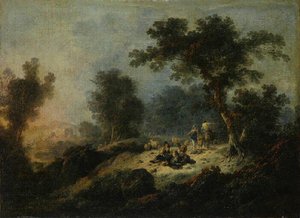
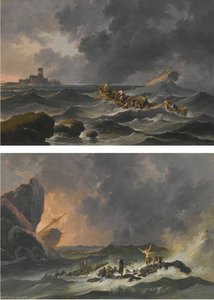
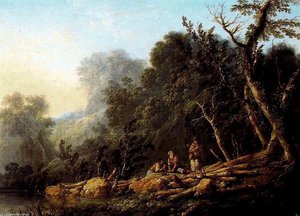
11PAYSAGE AVEC TROUPEAU door Jean-Baptiste PillementPAYSAGE AVEC TROUPEAULouvre 12Landscape. (1750) door Jean-Baptiste PillementLandscape.1750 · Nationaal Museum voor Schone Kunsten van Cuba 13A Wreck at the Rocky Seaside (1750) door Jean-Baptiste PillementA Wreck at the Rocky Seaside1750 · Tokyo Fuji Art Museum 14River landscape with a mill and shepherds (1748) door Jean-Baptiste PillementRiver landscape with a mill and shepherds1748 15Voyages du Roy au Chateau de Choisy (1751) door Jean-Baptiste PillementVoyages du Roy au Chateau de Choisy1751 · Château de Versailles 16Landscape with Aqua Julia in Rome. (1765) door Jean-Baptiste PillementLandscape with Aqua Julia in Rome.1765 · Nationaal Museum in Warschau 17Market Scene in an Imaginary Oriental Port (1764) door Jean-Baptiste PillementMarket Scene in an Imaginary Oriental Port1764 · J. Paul Getty Museum 18Temple of Minerva Medica in Rome (1765) door Jean-Baptiste PillementTemple of Minerva Medica in Rome1765 · Nationaal Museum in Warschau 19Decorative Panel with Animal Subjects (1767) door Jean-Baptiste PillementDecorative Panel with Animal Subjects1767 · Petit Palais 20Decorative Panel with Animal Subjects (1767) door Jean-Baptiste PillementDecorative Panel with Animal Subjects1767 · Petit Palais 21View of the coast with fishing boats (Trip to catch) (1769) door Jean-Baptiste PillementView of the coast with fishing boats (Trip to catch)1769 · Nationaal Museum in Warschau 22Title page, Plate 1 from (1775) door Jean-Baptiste PillementTitle page, Plate 1 from1775 23Title page, Plate 1, from (1775) door Jean-Baptiste PillementTitle page, Plate 1, from1775 24Animated Landscape (1785) door Jean-Baptiste PillementAnimated Landscape1785 · Musée Carnavalet 25Vue des jardins de Benfica (1785) door Jean-Baptiste PillementVue des jardins de Benfica1785 26Landscape with Muleteers and Peasants (1790) door Jean-Baptiste PillementLandscape with Muleteers and Peasants1790 · National Gallery of Ireland 27Landscape with Rustic Figures (1794) door Jean-Baptiste PillementLandscape with Rustic Figures1794 · Cooper Hewitt, Smithsonian Design Museum 28Winter (1792) door Jean-Baptiste PillementWinter1792 29Autumn (1792) door Jean-Baptiste PillementAutumn1792 30Landscape with Washerwomen (1792) door Jean-Baptiste PillementLandscape with Washerwomen1792 · Musée des Beaux-Arts de Bordeaux 31Mountainous Landscape (1780) door Jean-Baptiste PillementMountainous Landscape1780 · Wallraf-Richartz-Museum 32Print, jean pillement (1755) door Jean-Baptiste PillementPrint, jean pillement (1755) 33Naufrage door Jean-Baptiste PillementNaufrage 34Paysage door Jean-Baptiste PillementPaysage 35PAYSAGE AU PONT, PECHEUR ET BERGER door Jean-Baptiste PillementPAYSAGE AU PONT, PECHEUR ET BERGER 36PAYSAGE A LA CASCADE, BERGER door Jean-Baptiste PillementPAYSAGE A LA CASCADE, BERGER 37Paysage au pont, pêcheur et lavandière door Jean-Baptiste PillementPaysage au pont, pêcheur et lavandière 38Muletiers italiens door Jean-Baptiste PillementMuletiers italiensMuseum Voor Moderne Kunst 39PAYSAGE A LA CASCADE, PECHEURS door Jean-Baptiste PillementPAYSAGE A LA CASCADE, PECHEURS 40Chinois pêchant à la ligne door Jean-Baptiste PillementChinois pêchant à la ligneMusée National Magnin 41Untitled (AQQNCU) (1794) door Jean-Baptiste PillementUntitled (AQQNCU)1794 42Exotic market-place door Jean-Baptiste PillementExotic market-place 43Paysageavec troupeau door Jean-Baptiste PillementPaysageavec troupeau 44A decorative plate, french rococo art door Jean-Baptiste PillementA decorative plate, french rococo art 45Untitled (AQQNCN) door Jean-Baptiste PillementUntitled (AQQNCN) 46Les chèvres door Jean-Baptiste PillementLes chèvres 47Two shipwreck scenes door Jean-Baptiste PillementTwo shipwreck scenes 48River Landscape door Jean-Baptiste PillementRiver Landscape 49Pastoral Landscape with Shepherds door Jean-Baptiste PillementPastoral Landscape with Shepherds 50Landscape door Jean-Baptiste PillementLandscape 51Shipwrecked Sailors Coming Ashore door Jean-Baptiste PillementShipwrecked Sailors Coming AshoreMuseo del Prado 52A River landscape with a ruined tower and fishermen with their nets in the foreground door Jean-Baptiste PillementA River landscape with a ruined tower and fishermen with their nets in the foreground 53Landscape door Jean-Baptiste PillementLandscapeMuseo del Prado

De beroemde schilderijen van Jean-Baptiste Pillement, periode voor periode

De onderwerpen die de aandacht van Jean-Baptiste Pillement troffen

De vier onderwerpen die het meest voorkomen in deze originelen, elk met zijn mooiste voorbeeld.

De musea waar de originele werken van Jean-Baptiste Pillement worden bewaard

De 8 musea met de meeste schilderijen op deze pagina.

Museum Stad Werken van Jean-Baptiste Pillement Schilderijen uit deze lijst
Petit Palais, ParijsPetit Palais Parijs 4 Chinoiserie, Chinoiserie, Decorative Panel with Animal Subjects
Nationaal Museum in Warschau, WarschauNationaal Museum in Warschau Warschau 4 Fisherman pulling networks (Return from the catch)., Landscape with Aqua Julia in Rome., Temple of Minerva Medica in Rome
National Gallery of Ireland, DublinNational Gallery of Ireland Dublin 2 Landscape with Washerwomen and Peasants, Landscape with Muleteers and Peasants
Cooper Hewitt, Smithsonian Design Museum, New York CityCooper Hewitt, Smithsonian Design Museum New York City 2 Rustic Landscape with Aqueduct and Figures, Landscape with Rustic Figures
Museo del Prado, MadridMuseo del Prado Madrid 2 Shipwrecked Sailors Coming Ashore, Landscape
Fine Arts Museums of San Francisco, San FranciscoFine Arts Museums of San Francisco San Francisco 1 Landscape with Travelers and a Ruin
Metropolitan Museum of Art, New YorkMetropolitan Museum of Art New York 1 A Shipwreck in a Storm
Louvre, ParijsLouvre Parijs 1 PAYSAGE AVEC TROUPEAU

Jean-Baptiste Pillement, één iconisch schilderij per decennium

Werken per decennium

Kies een decennium om het origineel te zien dat dit tijdperk definieert.

Schilderijen van Jean-Baptiste Pillement: de galerie geeft antwoord

Welk schilderij van Jean-Baptiste Pillement is het beroemdste van allemaal?Onthul het antwoord

Les lavandières. Landscape with Travelers and a Ruin (1750) en Chinoiserie (1767) volgen.

Wat zijn de top 10 schilderijen van Jean-Baptiste Pillement?Onthul het antwoord

Les lavandières, Landscape with Travelers and a Ruin, Chinoiserie, Chinoiserie, Fisherman pulling networks (Return from the catch)., A Shipwreck in a Storm, Landscape with Washerwomen and Peasants, Rustic Landscape with Aqueduct and Figures, Landscape with Washerwomen (detail) en Waterfall Landscape in Portugal. De bovenstaande ranglijst vermeldt het jaar en het museum van elk werk.

Hoeveel werken heeft Jean-Baptiste Pillement gemaakt?Onthul het antwoord

Onze catalogus bevat 54 werken van Jean-Baptiste Pillement, daterend van 1748 tot 1794.

Waar hangen de beroemdste originele werken van Jean-Baptiste Pillement?Onthul het antwoord

Voornamelijk in Petit Palais (Parijs), Nationaal Museum in Warschau (Warschau) en National Gallery of Ireland (Dublin). De bovenstaande museumtabel bevat een volledig overzicht.

Wanneer creëerde Jean-Baptiste Pillement de beroemdste schilderijen?Onthul het antwoord

In 1760s: 9 van de 53 werken op deze pagina werden toen gemaakt, waaronder Chinoiserie.

Wat zijn de vroegste en laatste beroemde werken van Jean-Baptiste Pillement?Onthul het antwoord

Op deze pagina is het vroegste River landscape with a mill and shepherds (1748) en het laatste Rustic Landscape with Aqueduct and Figures (1794).

Welke onderwerpen keerde Jean-Baptiste Pillement het vaakst naar terug?Onthul het antwoord

Landscape (11), Figures (6) en Rocks (5), verspreid over de 53 werken op deze pagina.

In welk medium werkte Jean-Baptiste Pillement het meest?Onthul het antwoord

Oil On Canvas, voor 8 van de 53 werken op deze pagina.

Bij welke stroming wordt Jean-Baptiste Pillement gerekend?Onthul het antwoord

Rococo, te oordelen aan de originelen op deze pagina.

Welke originelen van Jean-Baptiste Pillement zijn in de collectie van het Petit Palais?Onthul het antwoord

Chinoiserie, Chinoiserie en Decorative Panel with Animal Subjects: het Petit Palais, Parijs herbergt 4 van de werken op deze pagina.

Jean-Baptiste Pillement: de kunstenaar

De Betoverende Werelden van Jean-Baptiste Pillement

In het gouden schemerlicht van de 18e eeuw bezaten weinig kunstenaars het vermogen om de toeschouwer te transporteren naar een wereld die zo droomachtig en exotisch was als die van Jean-Baptiste Pillement. Geboren in Nîmes in 1728, kwam Pillement niet slechts naar voren als een schilder, maar als een meester van de atmosfeer, die de delicate elegantie van de Rococo-stijl verweefde met een diepe fascinatie voor het verre en het onbekende. Hoewel zijn vroege jaren nog deels gehuld blijven in de nevelen van de geschiedenis, was zijn opkomst binnen de Franse artistieke hiëratie niets minder dan meteoorachtig. Door zijn zorgvuldige opleiding onder de gewaardeerde Jean-Baptiste Huet, meesterde hij de subtiele nuances van aquarel, een medium dat hem in staat stelde het vluchtige licht en de levendige pigmenten te vangen die nodig waren om zijn fantastische visioenen tot leven te wekken.

Het werk van Pillement dient als een venster naar de Chinoiserie- en Exotisme-bewegingen die de Franse aristocratie betoverden. In tegenstelling tot de traditionalisten uit zijn tijd, die troost zochten in klassieke Romeinse ruïnes of sombere historische portretten, richtte Pillement zijn blik op de horizon. Zijn reizen door Italië en zijn diepe betrokkenheid bij Perzische motieven stelden hem in staat om landschappen te creëren die zowel weelderig als buitenaards aanvoelden. In zijn handen werd de natuurlijke wereld heruitgevonden; torenhoge palmen, kronkelende rivieren en prachtig bevederde vogels werden de protagonisten van een stil, prachtig drama. Deze beheersing van het exotische maakte hem tot een onmisbare figuur aan de hoven van Lodewijk XV en Marie Antoinette, aangezien zijn kunst een broodnodige ontsnapping bood naar een rijk van pure, ongebreidelde verbeelding.

Techniek, Invloed en de Rococo-geest

De genialiteit van Pillements techniek ligt in zijn vermogen om precisie te balanceren met een zachte, etherische gloed. Hij maakte gebruik van een delicate sfumato-techniek—een meesterlijke versmelting van tonen door zorgvuldige gelaagdheid—die zijn landschappen een bijna transparante kwaliteit gaf. Deze benadering stelde hem in staat de atmosferische diepte van meesters als Claude Lorrain op te roepen, maar hij injecteerde deze klassieke fundamenten met een uniek speelse energie. Zijn composities waren nooit statisch; ze pulseerden met een ritmische vitaliteit, vaak gekenmerkt door:

  • Ingewikkelde botanische details: Een diepe focus op flora die zowel wetenschappelijk geïnspireerd als mythisch verhoogd aanvoelde.
  • Chromatische levendigheid: Het gebruik van gewaagde, verzadigde kleuren om de weelderigheid van tropische en oosterse omgevingen weer te geven.
  • Decoratieve vloeiendheid: Een vermogen om de kloof te overbruggen tussen de schilderkunst en decoratief ontwerp, waardoor zijn werk evenzeer thuis was op een canvas als onderdeel van een weelderig interieur-fresco.

Zijn stilistische evolutie werd diepgaand gevormd door de verkenningen van kunstenaars zoals Nicolas Pocock en Gaspar Pérégrine Rigaud. Door hun benaderingen van landschap en licht te absorberen, kon Pillement een kenmerkende esthetiek verfijnen die zowel geworteld was in de Europese traditie als wild avontuurlijk. Zijn invloed reikte veel verder dan het canvas, aangezien zijn ontwerpen doordrongen in de essentie van de Franse decoratieve kunsten, van behangpatronen tot porseleinmotieven.

Een blijvende erfenis in de kunstgeschiedenis

Het historische belang van Jean-Baptiste Pillement kan niet worden overschat, vooral met betrekking tot zijn rol bij het definiëren van de visuele taal van de luxe in de late 18e eeuw. Zijn prestigieuze opdrachten, met name de adembenemende muurschilderingen die het Château de Fontainebleau en het Petit Trianon sieren, staan als testamenten voor zijn status als favoriet van de Franse koninklijke familie. Deze werken waren niet louter decoraties; het waren immersieve omgevingen die hielpen bij het vormgeven van de esthetische identiteit van een tijdperk.

Terwijl de kunstwereld transformeerde van de speelse uitbundigheid van de Rococo naar de meer gestructureerde discipline van het Neoclassicisme, bleef het werk van Pillement een dierbare brug tussen deze twee werelden. Hij liet een erfenis van verwondering na, die toekomstige generaties eraan herinnert dat kunst de unieke kracht bezit om geografische grenzen te overstijgen en de menselijke geest naar landen van oneindige schoonheid en mysterie te transporteren. Vandaag de dag blijft zijn naam synoniem met het exquisite, het exotische en de eeuwige charme van de Franse Rococo.