Portret van François Lemoyne

Schilderijen van François Lemoyne: De 49 bekendste, door de ogen van een galerie

Bijgewerkt in november 2026 · gerangschikt op basis van onze populariteitsscore (zoekopdrachten, bezoeken en bestellingen per kunstwerk) · 51 werken van François Lemoyne in onze catalogus

Kortom

Volgens de visie van de galerie is het beroemdste schilderij van François Lemoyne The Apotheosis of Hercules (1736), waarvan het origineel in het Château de Versailles in Versailles hangt. Cleopatra (1725) en Messengers of Godfrey of Bouillon in Gardens of Armida (1735) maken het trio compleet dat elk oog herkent. Van de 51 werken van François Lemoyne in onze catalogus presenteert de galerie hieronder de 49 bekendste werken, elk een origineel met de jaartal, het museum en wat het uniek maakt.

1688 – 1737, Parijs Rococo Meeste werken: Louvre

De top 10 schilderijen van François Lemoyne in de galerie

1
The Apotheosis of Hercules (1736) door François Lemoyne

The Apotheosis of Hercules

1736 · Acrylic On Canvas · Château de Versailles, Versailles

François Lemoyne’s “The Apotheosis of Hercules,” completed in 1736 for Louis XV’s opulent Salon d'Hercule at Versailles, stands as a monumental testament to the zenith of Rococo artistic ambition. More than just decoration—though undeniably lavish—it embodies a profound engagement with religious allegory and imperial aspiration, reflecting the transformative influence of Enlightenment ideals on French aristocratic culture.

2
Cleopatra (1725) door François Lemoyne

Cleopatra

1725 · Oil On Canvas · Minneapolis Institute of Art, Minneapolis

The portrait titled Cleopatra is a work by the French painter François Lemoyne. Created about 1725, the image captures a moment of calculated excess. The subject is depicted in a gesture of profound extravagance, dissolving a single pearl into a cup of wine. This act serves as a silent demonstration of wealth intended for Mark Antony.

3
Messengers of Godfrey of Bouillon in Gardens of Armida (1735) door François Lemoyne

Messengers of Godfrey of Bouillon in Gardens of Armida

1735 · Oil · Hermitage Museum, Sint-Petersburg

In Messengers of Godfrey of Bouillon in Gardens of Armida, François Lemoyne captures a sudden meeting between armored soldiers and ethereal women. The scene unfolds across a wide horizontal format, a stage set within a lush, sprawling landscape. On the left, a group of messengers in military attire breaks the stillness of the garden. Their presence introduces a sharp contrast of color against the natural world; bright cerulean blue and…

4
Hercules and Omphale (1724) door François Lemoyne

Hercules and Omphale

1724 · Oil On Canvas · Louvre, Parijs

François Lemoyne's "Hercules and Omphale," painted in 1724, isn’t merely a depiction of a mythological tale; it’s an exquisitely rendered exploration of desire, power, and the blurring lines between masculine and feminine. This captivating work, housed within the opulent confines of the Louvre Museum in Paris, offers a glimpse into the heart of the Rococo era – a period defined by its embrace of sensuality, playful extravagance, and a deliberate…

5
HERCULE ASSOMMANT CACUS door François Lemoyne

HERCULE ASSOMMANT CACUS

Oil On Canvas · Louvre, Parijs

François Lemoyne's "Hercules Assommant Cacus," a monumental painting housed within the hallowed halls of the Louvre, isn’t merely a depiction of a mythological struggle; it’s a vibrant testament to the burgeoning Rococo style and a profound exploration of heroism, power, and the subjugation of primal chaos. Completed in 1717, this artwork transcends its narrative roots, offering a glimpse into the artistic sensibilities of a pivotal era – a time when…

6
Hercules Killing Cacus (1718) door François Lemoyne

Hercules Killing Cacus

1718 · Oil On Canvas

The canvas captures a violent confrontation between Hercules and the giant Cacus, set against a rugged, mountainous landscape. The composition relies on a triangular arrangement, anchoring the muscular form of Hercules at the apex while the prostrate Cacus occupies the base. This structural choice creates an immediate sense of tension and movement. The scene unfolds with a palpable urgency, depicting the clash between divine strength and monstrous resistance through a…

7
Design for a Ceiling Painting (1713) door François Lemoyne

Design for a Ceiling Painting

1713 · Wash

The scene unfolds within the "Design for a Ceiling Painting" by François Lemoyne. This preparatory study captures a swirling, upward motion, as if the viewer is looking directly through an opening in a ceiling into the heavens. Figures of deities and cherubs ascend toward a central light, their forms caught in a graceful, curvilinear dance. The composition draws the eye upward, creating an illusion of infinite space through billowing clouds…

8
Latona and the Peasants of Lycia (1721) door François Lemoyne

Latona and the Peasants of Lycia

1721 · Oil · Portland Art Museum, Portland

In the oil painting Latona and the Peasants of Lycia, created by François Lemoyne about 1721, the scene captures a specific mythological confrontation. The subject matter focuses on the goddess Latona, the mother of Apollo and Diana, as she interacts with a group of Lycian peasants. The figures are positioned in a state of active dispute, centered around the tension between the divine figure and the local inhabitants.

9
The Adoration of the Magi (1716) door François Lemoyne

The Adoration of the Magi

1716 · Oil On Canvas · Museum of Fine Arts, Houston, Houston

In this 1716 oil on canvas, a group of figures gathers within a dark, shadowed stable. The scene is organized in a pyramidal structure, directing the viewer's gaze toward the infant Jesus and the Virgin Mary on the right side of the frame. A celestial light emanates from a star in the upper left corner, casting sharp highlights across the faces and the heavy folds of the drapery. This light…

10
Narcissus. (1728) door François Lemoyne

Narcissus.

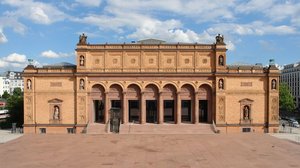
1728 · Oil On Canvas · Hamburger Kunsthalle, Hamburg

is an oil on linen canvas created by the French artist François Lemoyne. Executed in 1728, the work originates from a period when Lemoyne was establishing his reputation within the Parisian art scene. The artist, who lived from 1688 to 1737, was a significant figure in the Rococo movement, eventually serving as the Premier peintre du roi under Louis XV.

Schilderijen van François Lemoyne, gerangschikt van 11 tot 49

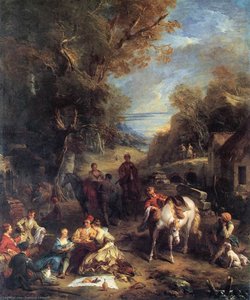
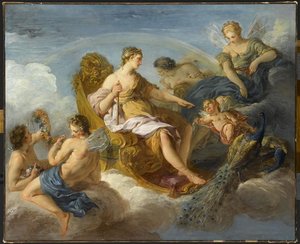
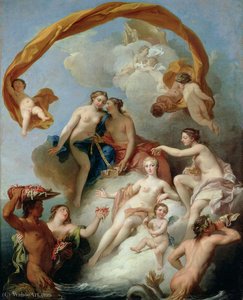
11Diana Returning from the Hunt (1729) door François LemoyneDiana Returning from the Hunt1729 · Musée Rodin 12Adam and Eve (1730) door François LemoyneAdam and Eve1730 13Saint John the Baptist (1726) door François LemoyneSaint John the Baptist1726 14A Vestal Virgin Tending Fire (1726) door François LemoyneA Vestal Virgin Tending Fire1726 · Minneapolis Institute of Art 15Amor and Psyche. (1730) door François LemoyneAmor and Psyche.1730 · Czartoryski Museum 16The Amorous Proposal (1725) door François LemoyneThe Amorous Proposal1725 17Louis XV offrant la Paix à l'Europe (1737) door François LemoyneLouis XV offrant la Paix à l'Europe1737 · Musée des Beaux-Arts 18Christ Restoring Sight to a Blind Man (1850) door François LemoyneChrist Restoring Sight to a Blind Man1850 19Time Saving Truth from Falsehood and Envy (1737) door François LemoyneTime Saving Truth from Falsehood and Envy1737 · Wallace Collection 20Time Saving Truth from Falsehood and Envy (1737) door François LemoyneTime Saving Truth from Falsehood and Envy1737 · Wallace Collection 21Venus and Adonis door François LemoyneVenus and AdonisNationalmuseum 22HERCULE ET OMPHALE door François LemoyneHERCULE ET OMPHALELouvre 23Hunting Picnic (1723) door François LemoyneHunting Picnic1723 · Museu de Arte 24A Muse door François LemoyneA Muse 25Phaeton Driving the Chariot of Apollo, also called Summer door François LemoynePhaeton Driving the Chariot of Apollo, also called SummerMusee des Beaux-Arts 26Elymas the Sorcerer Struck with Blindness, sketch door François LemoyneElymas the Sorcerer Struck with Blindness, sketchNational Gallery of Ireland 27Putti with the Accoutrements of Mars door François LemoynePutti with the Accoutrements of MarsHarvard Art Museums 28The Love of Fishing door François LemoyneThe Love of Fishing 29L'APOTHEOSE D'HERCULE door François LemoyneL'APOTHEOSE D'HERCULE 30Esquisse du plafond du salon d'Hercule door François LemoyneEsquisse du plafond du salon d'Hercule 31LOUIS XV DONNANT LA PAIX A L'EUROPE door François LemoyneLOUIS XV DONNANT LA PAIX A L'EUROPE 32Persée délivrant Andromède door François LemoynePersée délivrant Andromède 33Bain de Diane door François LemoyneBain de DianeDallas Museum of Art 34Le Temps délivrant la Vérité door François LemoyneLe Temps délivrant la Vérité 35Head of King Louis XV door François LemoyneHead of King Louis XV 36L'Olympe door François LemoyneL'OlympeLouvre 37Junon, Iris et Flore door François LemoyneJunon, Iris et FloreLouvre 38The Apotheosis of Hercules (1736) door François LemoyneThe Apotheosis of Hercules1736 · Château de Versailles 39Four muses door François LemoyneFour muses 40The Toilet of Venus door François LemoyneThe Toilet of Venus 41Pygmalion Seeing His Statue Come to Life door François LemoynePygmalion Seeing His Statue Come to LifeMusée Des Beaux 42Diana and Callisto door François LemoyneDiana and CallistoLos Angeles County Museum of Art 43Andromeda on rocks door François LemoyneAndromeda on rocks 44Diana and Actaeon door François LemoyneDiana and Actaeon 45The Bather door François LemoyneThe BatherHermitage Museum 46LA GLORIFICATION DE LA VIERGE door François LemoyneLA GLORIFICATION DE LA VIERGELouvre 47Perseus and Andromeda (1723) door François LemoynePerseus and Andromeda1723 · Wallace Collection 48Narcissus (1728) door François LemoyneNarcissus1728 · Musée des Beaux-Arts de Lyon 49Continence of Scipio by François Lemoyne (1726) door François LemoyneContinence of Scipio by François Lemoyne1726 · Musée des Beaux-Arts de Nancy

De beroemde schilderijen van François Lemoyne, periode voor periode

De onderwerpen die de aandacht van François Lemoyne troffen

De vier onderwerpen die het meest voorkomen in deze originelen, elk met zijn mooiste voorbeeld.

De musea waar de originele werken van François Lemoyne worden bewaard

De 8 musea met de meeste schilderijen op deze pagina.

Museum Stad Werken van François Lemoyne Schilderijen uit deze lijst
Louvre, ParijsLouvre Parijs 6 Hercules and Omphale, HERCULE ASSOMMANT CACUS, HERCULE ET OMPHALE
Wallace Collection, LondenWallace Collection Londen 3 Time Saving Truth from Falsehood and Envy, Time Saving Truth from Falsehood and Envy, Perseus and Andromeda
Château de Versailles, VersaillesChâteau de Versailles Versailles 2 The Apotheosis of Hercules, The Apotheosis of Hercules
Minneapolis Institute of Art, MinneapolisMinneapolis Institute of Art Minneapolis 2 Cleopatra, A Vestal Virgin Tending Fire
Hermitage Museum, Sint-PetersburgHermitage Museum Sint-Petersburg 2 Messengers of Godfrey of Bouillon in Gardens of Armida, The Bather
Portland Art Museum, PortlandPortland Art Museum Portland 1 Latona and the Peasants of Lycia
Museum of Fine Arts, Houston, HoustonMuseum of Fine Arts, Houston Houston 1 The Adoration of the Magi
Hamburger Kunsthalle, HamburgHamburger Kunsthalle Hamburg 1 Narcissus.

François Lemoyne, één iconisch schilderij per decennium

Werken per decennium

Kies een decennium om het origineel te zien dat dit tijdperk definieert.

Schilderijen van François Lemoyne: de galerie geeft antwoord

Welk schilderij van François Lemoyne is het beroemdste van allemaal?Onthul het antwoord

The Apotheosis of Hercules (1736), Château de Versailles, Versailles. Cleopatra (1725) en Messengers of Godfrey of Bouillon in Gardens of Armida (1735) volgen.

Hoe oud was François Lemoyne bij de voltooiing van The Apotheosis of Hercules?Onthul het antwoord

48 jaar oud: The Apotheosis of Hercules dateert uit 1736, en François Lemoyne werd geboren in 1688.

Wat zijn de top 10 schilderijen van François Lemoyne?Onthul het antwoord

The Apotheosis of Hercules, Cleopatra, Messengers of Godfrey of Bouillon in Gardens of Armida, Hercules and Omphale, HERCULE ASSOMMANT CACUS, Hercules Killing Cacus, Design for a Ceiling Painting, Latona and the Peasants of Lycia, The Adoration of the Magi en Narcissus.. De bovenstaande ranglijst vermeldt het jaar en het museum van elk werk.

Hoeveel werken heeft François Lemoyne gemaakt?Onthul het antwoord

Onze catalogus bevat 51 werken van François Lemoyne, daterend van 1713 tot 1737.

Waar hangen de beroemdste originele werken van François Lemoyne?Onthul het antwoord

Voornamelijk in Louvre (Parijs), Wallace Collection (Londen) en Château de Versailles (Versailles). De bovenstaande museumtabel bevat een volledig overzicht.

Wanneer creëerde François Lemoyne de beroemdste schilderijen?Onthul het antwoord

In 1720s: 12 van de 49 werken op deze pagina werden toen gemaakt, waaronder Cleopatra.

Wat zijn de vroegste en laatste beroemde werken van François Lemoyne?Onthul het antwoord

Op deze pagina is het vroegste Design for a Ceiling Painting (1713) en het laatste Louis XV offrant la Paix à l'Europe (1737).

Welke onderwerpen keerde François Lemoyne het vaakst naar terug?Onthul het antwoord

Woman (10), Man (8) en Mythology (7), verspreid over de 49 werken op deze pagina.

In welk medium werkte François Lemoyne het meest?Onthul het antwoord

Oil On Canvas, voor 18 van de 49 werken op deze pagina.

Bij welke stroming wordt François Lemoyne gerekend?Onthul het antwoord

Rococo, te oordelen aan de originelen op deze pagina.

Welke originelen van François Lemoyne zijn in de collectie van het Louvre?Onthul het antwoord

Hercules and Omphale, HERCULE ASSOMMANT CACUS en HERCULE ET OMPHALE: het Louvre, Parijs herbergt 6 van de werken op deze pagina.

François Lemoyne: de kunstenaar

Een Parijse Erfenis in Rococo Pracht

François Lemoyne, een naam die wellicht minder direct herkenbaar is dan die van zijn tijdgenoten Boucher of Watteau, neemt niettemin een belangrijke positie in binnen de tapijtachtige weefsel van de Franse kunst uit de 18e eeuw. Geboren te Parijs in 1688 wijdde Lemoyne zijn leven aan het herleven van de grootsheid van allegorische schilderijen op grote schaal—een traditie die enigszins was verwaterd sinds het tijdperk van Charles Le Brun, die Lemoyne diep bewonderde en naar wiens voorbeeld hij streefde. Zijn ambitie was niet louter om te decoreren, maar om werken te creëren doordrenkt met intellectueel gewicht en emotionele resonantie, wat de complexe geest van het Rococo-tijdperk weerspiegelt terwijl hij tegelijkertijd teruggreep naar een meer klassiek ideaal. Van zijn vroege opleiding onder zijn stiefvader, Robert le Vrac, en later binnen de rigoureuze omgeving van de Académie Royale de peinture et de sculpture, toonde Lemoyne een toewijding aan het beheersen van zowel technische vaardigheid als artistieke expressie. Zijn formele opleiding bij Louis Galloche en Pierre-Jacques Cazes bleek vormend, met name in het ontwikkelen van zijn genuanceerd begrip van kleur—een kenmerk dat steeds prominenter zou worden gedurende zijn carrière. Het felbegeerde Prix de Rome in 1711 markeerde een cruciaal moment, hoewel financiële beperkingen aanvankelijk zijn reis naar Italië vertraagden; een reis die hij uiteindelijk ondernam in 1723, vergezeld van François Berger.

Italiaanse Echo's en Rococo Vloeiingen

Het verblijf in Italië bleek transformerend voor Lemoyne. Door zich te verdiepen in de werken van Renaissance-meesters zoals Raphael, Correggio en Titian, absorbeerde hij hun technieken en esthetische principes, waardoor zijn artistieke vocabulaire werd verrijkt. Het was echter de dynamische energie van Peter Paul Rubens die de diepste indruk op zijn stijl achterliet—zichtbaar in zijn levendige kleurenpaletten en dramatische composities. Blootstelling aan Venetiaanse schilderkunst binnen Pierre Crozat’s gerenommeerde collectie verfijnde verder zijn gevoeligheden, waardoor een liefde voor rijke texturen en atmosferische effecten ontstond. Deze invloeden resulteerden in een kenmerkende Rococo-esthetiek die werd gekenmerkt door elegantie, versiering en een focus op decoratieve schoonheid. Toch verliet Lemoyne nooit de ambitie van het grote narratief dat eerdere Franse academische schilderkunst definieerde; hij zocht om deze ogenschijnlijk verschillende elementen te synthetiseren—de lichtheid en gratie van het Rococo met de intellectuele strengheid van de klassieke traditie. Deze unieke mix is wat zijn werk onderscheidt en bijdraagt aan zijn blijvende aantrekkingskracht.

Versailles en Koninklijke Erkenning

Lemoyne’s artistieke bekwaamheid vond zijn meest spectaculaire uitdrukking in zijn monumentale plafondfrescoes, met name L'Apothéose d'Hercule (De Apotheose van Hercules) in de Salon d’Hercule binnen het Paleis van Versailles. Dit meesterwerk—een verbluffende demonstratie van illusionistische techniek en dynamische compositie—verdiende onmiddellijk brede lof. Tijdgenoten als Voltaire en Kardinaal Fleury prezen zijn briljantie, waarbij ze Lemoyne erkenden als een meester van zijn vak. Naast Versailles ondernam hij ook aanzienlijke religieuze opdrachten, zoals De Transfiguratie in het koor van de Jacobijnse Kerk (thans Parochiekerk van St. Thomas d’Aquin) te Parijs, wat zijn veelzijdigheid en vermogen om zijn stijl aan te passen aan verschillende onderwerpen aantoont. In 1736 bereikte Lemoyne de hoogtepunt van zijn carrière met zijn benoeming tot Premier peintre du roi (Eerste Schilder van de Koning) onder Lodewijk XV—een getuigenis van zijn artistieke prestaties en positie binnen het Franse hof.

Een Tragisch Einde en Blijvende Invloed

Ondanks dat hij dergelijke hoogten bereikte, werd Lemoyne’s leven tragisch vroegtijdig beëindigd door zelfmoord in 1737. Zijn voortijdige dood betekende niet alleen een persoonlijk verlies, maar ook een verschuiving in de artistieke smaak; het viel samen met een afname van de populariteit voor de grootschalige allegorische plafondschilderingen die hij zo gepassioneerd had verdedigd. Niettemin duurde zijn nalatenschap voort door middel van zijn studenten, waaronder prominente kunstenaars zoals Charles-Joseph Natoire en François Boucher, aan wie hij zijn kennis en vaardigheden overdroeg. Hoewel misschien niet zo universeel gevierd als sommige van zijn tijdgenoten, worden Lemoyne’s bijdragen aan de Franse Rococo-kunst steeds meer gewaardeerd om hun technische beheersing, artistieke ambitie en de unieke synthese van klassieke idealen met de heersende esthetische gevoeligheden van zijn tijd. Zijn werken getuigen van een toegewijde kunstenaar die ernaar streefde het schilderen naar zijn hoogste vorm te verheffen—een nalatenschap die het publiek eeuwen later blijft inspireren en boeien.

Belangrijke Werken & Artistieke Bijdragen

  • Plafondfrescoes: Lemoyne’s meest gevierde prestaties, belichaamd door L'Apothéose d'Hercule, demonstreren zijn beheersing van illusionistische technieken en dynamische compositie.
  • Mythologische Scènes: Werken zoals Hercules en Omphale tonen zijn vermogen om klassieke verhalen te schilderen met zowel dramatische intensiteit als sensuele gratie.
  • Religieuze Schilderijen: De Transfiguratie illustreert zijn vaardigheid in het weergeven van religieuze onderwerpen met emotionele diepte en technische precisie.
  • Portretten: Zijn portret van de Hoofd van Koning Lodewijk XV, onthult een subtiel begrip van karakter en een beheersing van pastel- en houtskooltechnieken.