Veronezė portretas

The 100 Most Famous Veronezė Paintings, Each One of a Kind

Atnaujinta spalis 2026 · pagal mūsų populiarumumo koeficientą (paieškos, lankytojai ir užsakymai kiekvienam kūriniui) · 522 Veronezė darbai mūsų kataloge

In short

Vestuvė Kanasuose (1563) is the Veronezė painting that draws the most eyes; the original belongs to the Liuvro muziejus, Paryžius. After it, the eye goes to Feast in the House of Levi (1573) and Lucretia (Veronese) (1580). Among the 522 works of Veronezė in our catalog, these 100 are the most famous, each a unique original presented with its year, its museum and the reason it endures.

1528 – 1588, Verona Renesansas Daugiausia darbų: Palazzo Ducale

Top 10 paintings by Veronezė, through the gallery's eye

1
Vestuvė Kanasuose (1563) aut. Veronezė

Vestuvė Kanasuose

1563 · Aliejus ant drobės · Liuvro muziejus, Paryžius

Paolo Veronese: „Kania“ – Relikvijos Didybės ir Tikros Dėmesio „Kania“ – tai ne tiesiog paveiksliškas fragmentas, o įtraukimo į pasaulį, kuriame Veronoje gimęs dailininkas Paolo Veronese sukurė savo unikalų viziją. Šis skaidrinys, pagamintas iš smulkiausių linijų ir subtiliausiai atspalvių, atskleidžia ne tik religinį pasakymą apie Jėzų Kristaus nuopelnus, bet ir visą Venecijos meno pasaulį, jo įtaką ir grožį. Tai Veronese savimi – drąsos, spalvų gausa ir didelio masto vizija. Architektūrinis…

2
Feast in the House of Levi (1573) aut. Veronezė

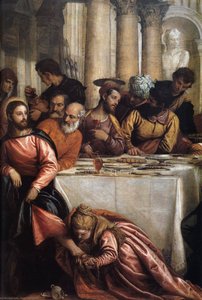
Feast in the House of Levi

1573 · Oil On Canvas · Gallerie dell'Accademia di Venezia, Venecija

Paolo Veronese's 1573 masterpiece, *Feast in the House of Levi*, residing within the Gallerie dell’Accademia in Venice, isn’t merely a painting; it’s an immersive theatrical experience captured on canvas. Measuring a staggering 555 cm by 1280 cm – a scale that demands reverence and immediate engagement – the work immediately overwhelms with its sheer abundance of figures, vibrant colors, and meticulously rendered architectural details. It's a testament to Veronese’s unparalleled…

3
Lucretia (Veronese) (1580) aut. Veronezė

Lucretia (Veronese)

1580 · Aliejus ant drobės · Kunsthistorisches Museum, Viena

Lucretia – Paolo Veronese’s Venetian Vision Paolo Veronese (1528 – 19 April 1588) stands as one of the titans of Venetian painting during the Cinquecento, a period defined by unparalleled artistic innovation and opulent grandeur. Born in Verona to Gabriele Spezapreda, a stonecutter, his early life was steeped in the visual richness of his surroundings—the classical architecture and burgeoning humanist ideals that shaped the region. His formative training under Antonio…

4
Vestuvės Kanane (1563) aut. Veronezė

Vestuvės Kanane

1563 · Aliejus ant drobės · Liuvro muziejus, Paryžius

Paolo Veronese: "Penykėlio Santykos" – Relikvijos Seno Švento Maisto Paolo Veronese, žinomas kaip vienas iš Venecijos renesanso didžiųjų meistrų, sukūrė darbą, kuris atspindi visą šio periodiko grožį ir įmantrumą – "Penykėlio Santykos" (The Marriage at Cana). 1563 metais užbaigtas monumentalus malūnas, šis kūrinys ne tik iliustruoja Biblijos pasakymą apie Jėzų Kristaus nuostabą veiksmą, bet ir įvykdomai demonstruoja Venecijos visuomenės prabangos ir įtakingumo aukštumą. Veronese sugebėjo sukurti sceną, kuri ne tik…

5
The Wedding at Cana aut. Veronezė

The Wedding at Cana

Oil On Canvas · Grand Palais, Paris

To step into the world of Paolo Veronese is to enter a grand Venetian ballroom, where the air feels thick with the scent of celebration and every surface seems to shimmer with an almost impossible light. His monumental masterpiece, The Wedding at Cana, is not merely a depiction of a biblical miracle; it is an immersive theatrical experience. Painted in 1563, this colossal oil on canvas transforms the sacred story…

6
Dialectics (1578) aut. Veronezė

Dialectics

1578 · Oil On Canvas · Palazzo Ducale, Venecija

The Enigmatic Dance of Thought: Veronese’s “Dialectics” Paolo Veronese's "Dialectics," painted in 1578-82, is not merely a portrait; it’s an invitation into the very heart of Renaissance intellectualism. More than just a depiction of a woman – identified by some scholars as Veronica Franco, a celebrated Venetian courtesan and poet – the painting unfolds as a complex allegorical tableau, brimming with philosophical symbolism and executed in Veronese's signature opulent style.…

7
Venus and Adonis (1586) aut. Veronezė

Venus and Adonis

1586 · Oil On Canvas · Kunsthistorisches Museum, Viena

Paolo Veronese's "Venus and Adonis," painted in 1586, is more than simply a mythological scene; it’s a dazzling immersion into the heart of 16th-century Venice. This opulent masterpiece, now housed in the Museo del Prado in Madrid, captures the spirit of a city brimming with wealth, artistic innovation, and a profound appreciation for classical beauty. Veronese, born Paolo Caliari in Verona in 1528, skillfully transformed his humble beginnings into a…

8
Mars Undressing Venus (1570) aut. Veronezė

Mars Undressing Venus

1570 · Oil On Canvas · Škotijos nacionalinė galerija, Ediburga

In the heart of the Italian Renaissance, where the shimmering canals of Venice met the intellectual fervor of humanist thought, Paolo Veronese breathed life into one of the era's most captivating narratives. Mars Undressing Venus is not merely a painting; it is a theatrical performance captured in oil, a monumental tableau that invites the viewer into a private, mythic moment. Completed around 1570, this masterpiece orchestrates a delicate dance between…

9
Sala dell'Olimpo (1560) aut. Veronezė

Sala dell'Olimpo

1560 · Fresco · Villa Barbaro, Matera

Paolo Veronese’s *Sala dell’Olimpo*, painted in 1560, is more than just a fresco; it’s an immersive journey into the heart of classical mythology and Renaissance grandeur. This monumental work, likely intended for a lavish ceiling, immediately overwhelms with its scale and density – a teeming world populated by gods, heroes, and allegorical figures engaged in a dramatic narrative that speaks to themes of power, victory, and divine authority. The sheer…

10
Dangaus dekoracija (detalė) (1578) aut. Veronezė

Dangaus dekoracija (detalė)

1578 · Aliejus ant drobės · Palazzo Ducale, Venecija

Aktingos apdailos detalė, iš Paolo Veronėzio monumentalios darbo Dogejo paladienio Venecijoje, yra daugiau nei tik dekoratyvus įrankis; tai įsivaikinti teatrinis patirtis, išdėstytas aktyviame freskoje. Baudintas apie 1578 m., šis segmentas užfiksuoja visos kompozicijos mikrokozmą – švyingą figūrų, architektūros didingumo ir šviesos meistriškos manipulacijos rodiklį, kuris iškart įtraukia žiūrovimą į jo prabangų pasaulį. Veronėzas, venecijietis meistras, žinomas dėl savo dramatiško mastelio ir prabangios spalvų paletės, čia demonstruoja savo neprilygdomą gebėjimą sukurti…

Veronezė's famous paintings, numbers 11 to 100

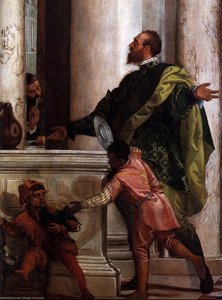
11Santuokas Kanoje (detalė) (12) (1563) aut. VeronezėSantuokas Kanoje (detalė) (12)1563 · Liuvro muziejus 12Judith with the Head of Holofernes (1564) aut. VeronezėJudith with the Head of Holofernes1564 · Hampton Court Palace 13Assumption of the Virgin (1586) aut. VeronezėAssumption of the Virgin1586 · Gallerie dell'Accademia di Venezia 14Aged Oriental with a Young Woman (1554) aut. VeronezėAged Oriental with a Young Woman1554 · Palazzo Ducale 15Feast in the House of Levi (detail) (10) (1573) aut. VeronezėFeast in the House of Levi (detail) (10)1573 · Gallerie dell'Accademia di Venezia 16Feast in the House of Levi (detail) (15) (1573) aut. VeronezėFeast in the House of Levi (detail) (15)1573 · Gallerie dell'Accademia di Venezia 17View of the Sala del Consiglio dei Dieci (1551) aut. VeronezėView of the Sala del Consiglio dei Dieci1551 · Palazzo Ducale 18Plato (1560) aut. VeronezėPlato1560 · Biblioteca Marciana 19Saint Sebastian (1565) aut. VeronezėSaint Sebastian1565 · Kunsthistorisches Museum 20The Resurrection of Christ (1570) aut. VeronezėThe Resurrection of Christ1570 · Gemäldegalerie Alte Meister 21Apotheosis of Venice (1585) aut. VeronezėApotheosis of Venice1585 · Palazzo Ducale 22Conquest of Smyrna (1585) aut. VeronezėConquest of Smyrna1585 · Palazzo Ducale 23Christ and the Adulteress (1585) aut. VeronezėChrist and the Adulteress1585 · Kunsthistorisches Museum 24Aristotele (1560) aut. VeronezėAristotele1560 · Biblioteca Marciana 25Crucifixion (1580) aut. VeronezėCrucifixion1580 · San Lazzaro dei Mendicanti 26The Feast in the House of Simon the Pharisee (1570) aut. VeronezėThe Feast in the House of Simon the Pharisee1570 · Château de Versailles 27Youth between Virtue and Vice (1580) aut. VeronezėYouth between Virtue and Vice1580 · Museo del Prado 28Feast in the House of Levi (detail) (9) (1573) aut. VeronezėFeast in the House of Levi (detail) (9)1573 · Gallerie dell'Accademia di Venezia 29The Coronation of Hebe (1584) aut. VeronezėThe Coronation of Hebe1584 · Isabella Stewart Gardner Museum 30Christ and the Woman of Samaria (1585) aut. VeronezėChrist and the Woman of Samaria1585 · Kunsthistorisches Museum 31The Rape of Europa (1570) aut. VeronezėThe Rape of Europa1570 · National Gallery 32Crucifixion (1580) aut. VeronezėCrucifixion1580 · Gallerie dell'Accademia di Venezia 33Christ with the Disciples in Emmaus (1560) aut. VeronezėChrist with the Disciples in Emmaus1560 · Staatliche Kunstsammlungen Dresden 34Conversion of Saul (1570) aut. VeronezėConversion of Saul1570 · Ermitažas 35Presentation in the Temple (1560) aut. VeronezėPresentation in the Temple1560 · San Sebastiano 36The Martyrdom and Last Communion of Saint Lucy (1582) aut. VeronezėThe Martyrdom and Last Communion of Saint Lucy1582 · National Gallery of Art 37St Sebastian (1558) aut. VeronezėSt Sebastian1558 · San Sebastiano 38Adoration of the Kings (1585) aut. VeronezėAdoration of the Kings1585 · Kunsthistorisches Museum 39The Vision of St Helena (1575) aut. VeronezėThe Vision of St Helena1575 · National Gallery 40Adam and Eve after the Expulsion from Paradise (1580) aut. VeronezėAdam and Eve after the Expulsion from Paradise1580 · Kunsthistorisches Museum 41Martyrdom of St Sebastian (detail) (1565) aut. VeronezėMartyrdom of St Sebastian (detail)1565 · San Sebastiano 42The Allegory of Love II: Scorn (1575) aut. VeronezėThe Allegory of Love II: Scorn1575 · National Gallery 43The Family of Darius before Alexander (detail) (1565) aut. VeronezėThe Family of Darius before Alexander (detail)1565 · National Gallery 44Resurrection of Jesus (1572) aut. VeronezėResurrection of Jesus1572 · Staatliche Kunstsammlungen Dresden 45Christ and the Centurion (1571) aut. VeronezėChrist and the Centurion1571 · Museo del Prado 46Ceiling decoration (detail) (1578) aut. VeronezėCeiling decoration (detail)1578 · Palazzo Ducale 47Sts Mark and Marcellinus Being Led to Martyrdom (detail) (10) (1565) aut. VeronezėSts Mark and Marcellinus Being Led to Martyrdom (detail) (10)1565 · San Sebastiano 48End wall of the Stanza del Cane (1560) aut. VeronezėEnd wall of the Stanza del Cane1560 · Villa Barbaro 49Apotheosis of Venice (1585) aut. VeronezėApotheosis of Venice1585 · Palazzo Ducale 50The Sacrifice of Isaac (1588) aut. VeronezėThe Sacrifice of Isaac1588 · Kunsthistorisches Museum 51Assumption (1558) aut. VeronezėAssumption1558 · Basilica dei Santi Giovanni e Paolo 52Crucifixion (detail) (1580) aut. VeronezėCrucifixion (detail)1580 · Gallerie dell'Accademia di Venezia 53Feast in the House of Simon (detail) (1556) aut. VeronezėFeast in the House of Simon (detail)1556 · Galleria Sabauda 54Last Supper (1585) aut. VeronezėLast Supper1585 · Pinacoteca di Brera 55Dead Christ Supported by Two Angels (1587) aut. VeronezėDead Christ Supported by Two Angels1587 · Staatliche Museen zu Berlin 56The Adoration of the Magi (1558) aut. VeronezėThe Adoration of the Magi1558 · Bavarijos valstybinės paveikslų kolekcijos 57Apotheosis of Venice (1585) aut. VeronezėApotheosis of Venice1585 · Palazzo Ducale 58Assumption (detail) (1558) aut. VeronezėAssumption (detail)1558 · Basilica dei Santi Giovanni e Paolo 59Saturn (Time) and Historia (1560) aut. VeronezėSaturn (Time) and Historia1560 · Villa Barbaro 60Ceiling decoration (detail) (12) (1578) aut. VeronezėCeiling decoration (detail) (12)1578 · Palazzo Ducale 61Marriage at Cana (detail) (1571) aut. VeronezėMarriage at Cana (detail)1571 · Gemäldegalerie Alte Meister 62St Luke (1555) aut. VeronezėSt Luke1555 · San Sebastiano 63The Rape of Europa (detail) (1578) aut. VeronezėThe Rape of Europa (detail)1578 · Palazzo Ducale 64Venice, Hercules, and Ceres (1575) aut. VeronezėVenice, Hercules, and Ceres1575 · Gallerie dell'Accademia di Venezia 65Mortal Man Guided to Divine Eternity (1560) aut. VeronezėMortal Man Guided to Divine Eternity1560 · Villa Barbaro 66Feast in the House of Simon (detail) (1556) aut. VeronezėFeast in the House of Simon (detail)1556 · Galleria Sabauda 67St Mark (1555) aut. VeronezėSt Mark1555 · San Sebastiano 68The Family of Darius before Alexander (detail) (1565) aut. VeronezėThe Family of Darius before Alexander (detail)1565 · National Gallery 69Monk with a Black Boy (1558) aut. VeronezėMonk with a Black Boy1558 · San Sebastiano 70Feast at the House of Simon (detail) (1567) aut. VeronezėFeast at the House of Simon (detail)1567 · Pinacoteca di Brera 71Feast in the House of Levi (detail) (12) (1573) aut. VeronezėFeast in the House of Levi (detail) (12)1573 · Gallerie dell'Accademia di Venezia 72Feast in the House of Levi (detail) (16) (1573) aut. VeronezėFeast in the House of Levi (detail) (16)1573 · Gallerie dell'Accademia di Venezia 73Pietà (detail) (1581) aut. VeronezėPietà (detail)1581 · Ermitažas 74Holy Family with Sts Anthony Abbot, Catherine and the Infant John the Baptist (detail) (1551) aut. VeronezėHoly Family with Sts Anthony Abbot, Catherine and the Infant John the Baptist (detail)1551 · San Francesco della Vigna 75Mystical Marriage of St Catherine (detail) (1575) aut. VeronezėMystical Marriage of St Catherine (detail)1575 · Gallerie dell'Accademia di Venezia 76Feast in the House of Levi (detail) (14) (1573) aut. VeronezėFeast in the House of Levi (detail) (14)1573 · Gallerie dell'Accademia di Venezia 77Mystical Marriage of St Catherine (detail) (1575) aut. VeronezėMystical Marriage of St Catherine (detail)1575 · Gallerie dell'Accademia di Venezia 78Mars and Venus aut. VeronezėMars and Venus 79Allegory of Love, III: Respect (1575) aut. VeronezėAllegory of Love, III: Respect1575 · National Gallery 80St Francis in Ecstasy (1582) aut. VeronezėSt Francis in Ecstasy1582 · Gallerie dell'Accademia di Venezia 81Feast at the House of Simon (detail) (1567) aut. VeronezėFeast at the House of Simon (detail)1567 · Pinacoteca di Brera 82Portrait of Johann Jakob König (1575) aut. VeronezėPortrait of Johann Jakob König1575 · Nacionalinis muziejus (Praha) 83The Crucifixion (1580) aut. VeronezėThe Crucifixion1580 · Szépművészeti Múzeum 84The Triumph of Mordecai (1556) aut. VeronezėThe Triumph of Mordecai1556 · San Sebastiano 85Juno Showering Gifts on Venetia (detail) (1554) aut. VeronezėJuno Showering Gifts on Venetia (detail)1554 · Palazzo Ducale 86Livia da Porto Thiene and her Daughter Porzia (1551) aut. VeronezėLivia da Porto Thiene and her Daughter Porzia1551 · Walters Art Museum 87Baptism of Christ (1561) aut. VeronezėBaptism of Christ1561 · Santissimo Redentore 88Adoration of the Magi (1573) aut. VeronezėAdoration of the Magi1573 · National Gallery 89St Jerome (1580) aut. VeronezėSt Jerome1580 · Gallerie dell'Accademia di Venezia 90The Family of Darius before Alexander (detail) (1565) aut. VeronezėThe Family of Darius before Alexander (detail)1565 · National Gallery 91Mars and Neptune (1575) aut. VeronezėMars and Neptune1575 · Palazzo Ducale 92Healing of the Lame Man at the Pool of Bethesda (1560) aut. VeronezėHealing of the Lame Man at the Pool of Bethesda1560 · San Sebastiano 93Raising of the Daughter of Jairus (1546) aut. VeronezėRaising of the Daughter of Jairus1546 · Liuvro muziejus 94Music, Astronomy and Deceit (1556) aut. VeronezėMusic, Astronomy and Deceit1556 · Biblioteca Marciana 95The Choice Between Virtue and Vice (1565) aut. VeronezėThe Choice Between Virtue and Vice1565 · The Frick Collection 96Studies for Christ Carrying the Cross (1571) aut. VeronezėStudies for Christ Carrying the Cross1571 · Courtauld Gallery 97Ceiling paintings (1578) aut. VeronezėCeiling paintings1578 · Palazzo Ducale 98Temptation of St. Anthony (1552) aut. VeronezėTemptation of St. Anthony1552 · Liuvro muziejus 99Moderation (1578) aut. VeronezėModeration1578 · Palazzo Ducale 100Conversion of St Pantaleon (detail) (1587) aut. VeronezėConversion of St Pantaleon (detail)1587 · San Pantalon

Veronezė's famous paintings, period by period

The subjects that held Veronezė's eye

The four subjects that come back most often in these originals, each with its finest example.

The museums that keep Veronezė's originals

8 muziejai, kuriuose saugoma daugiausia šioje pusėje esamų paveikslų.

Muzejaus Miestas Veronezė darbai Šiojo sąrašo paveikslai
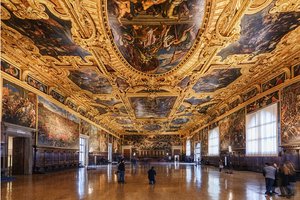
Palazzo Ducale, VenecijaPalazzo Ducale Venecija 29 Dialectics, Dangaus dekoracija (detalė), Aged Oriental with a Young Woman
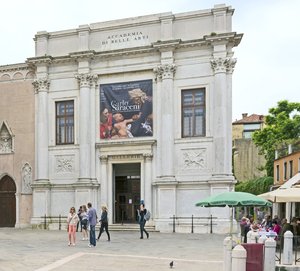
Gallerie dell'Accademia di Venezia, VenecijaGallerie dell'Accademia di Venezia Venecija 25 Feast in the House of Levi, Assumption of the Virgin, Feast in the House of Levi (detail) (10)
San Sebastiano, VenecijaSan Sebastiano Venecija 27 Presentation in the Temple, St Sebastian, Martyrdom of St Sebastian (detail)
National Gallery, LondonasNational Gallery Londonas 23 The Rape of Europa, The Vision of St Helena, The Allegory of Love II: Scorn
Kunsthistorisches Museum, VienaKunsthistorisches Museum Viena 20 Lucretia (Veronese), Venus and Adonis, Saint Sebastian
Liuvro muziejus, ParyžiusLiuvro muziejus Paryžius 11 Vestuvė Kanasuose, Vestuvės Kanane, Santuokas Kanoje (detalė) (12)
Villa Barbaro, MateraVilla Barbaro Matera 29 Sala dell'Olimpo, End wall of the Stanza del Cane, Saturn (Time) and Historia
Pinacoteca di Brera, MilanasPinacoteca di Brera Milanas 8 Last Supper, Feast at the House of Simon (detail), Feast at the House of Simon (detail)

Veronezė across the decades: one unique original for each

Darbai pagal dešimtmečius

Pick a decade to see the original that defines it.

Veronezė's paintings: questions for the gallery

What is the single most famous work of Veronezė?Reveal the answer

Vestuvė Kanasuose (1563), Liuvro muziejus, Paryžius. Feast in the House of Levi (1573) and Lucretia (Veronese) (1580) come next.

At what age did Veronezė create Vestuvė Kanasuose?Reveal the answer

35 years old: Vestuvė Kanasuose dates from 1563, and Veronezė was born in 1528.

Which ten paintings by Veronezė are the most famous?Reveal the answer

Vestuvė Kanasuose, Feast in the House of Levi, Lucretia (Veronese), Vestuvės Kanane, The Wedding at Cana, Dialectics, Venus and Adonis, Mars Undressing Venus, Sala dell'Olimpo ir Dangaus dekoracija (detalė). The ranking above gives each one's year and museum.

How many works by Veronezė are known?Reveal the answer

Our catalog holds 522 works by Veronezė, dated from 1546 to 1588.

Where can the most famous Veronezė originals be seen?Reveal the answer

Mostly in Palazzo Ducale (Venecija), Gallerie dell'Accademia di Venezia (Venecija) ir San Sebastiano (Venecija). The museum table above lists them all.

During which period did Veronezė create the best-known paintings?Reveal the answer

In 1570s: 32 of the 100 works on this page were made then, Feast in the House of Levi among them.

Which famous Veronezė painting is the earliest, and which the latest?Reveal the answer

On this page, the earliest is Raising of the Daughter of Jairus (1546) and the latest The Sacrifice of Isaac (1588).

What subjects did Veronezė favour?Reveal the answer

Renaissance (27), Allegory (16) ir Venetian painting (16), across the 100 works on this page.

What materials did Veronezė paint with most?Reveal the answer

Oil On Canvas, for 73 of the 100 works on this page.

Which movement does the work of Veronezė belong to?Reveal the answer

Renesansas, judging by the originals on this page.

What Veronezė originals can I see at the Palazzo Ducale?Reveal the answer

Dialectics, Dangaus dekoracija (detalė) ir Aged Oriental with a Young Woman: the Palazzo Ducale, Venecija holds 15 of the works on this page.

Where can I order a hand-painted Veronezė reproduction?Reveal the answer

Yes, as a reproduction: the original stays in its museum, but any painting on this page can be painted by hand for you, made to order one at a time, from the painting's own page.

Veronezė: a portrait of the artist

Akmenkapi sūnaus

Veronos mieste, akmenkapi Gabriele sūnus pradėjo gyvenimą, kuris vėliau spalvomų audiniu apgaivėsjo didžiausias Venecijos surelius. Gimęs 1528 metais, vaikas, žinomas kaip Paolo Caliari, augo tarp sunkių, skulptūrinės formos savo tėvo amato detalių. Ankstyvasis akmens tvarumo pažinimas tikriausiai padėjo pagrindus architektūriniam tikslumui, kuris vėliau tapo jo drobėlių žyminumo ženklu. Pradiniai mokymai Antonio Badile padėjo pagrindus, o vėliau jis mokėsi pas Giovanni Francesco Caroto, įsisavindamas savo amato mechanikos pagrindus. Perkeliui į Veneciją 1550-aisiais metais, žiburiuosi vandens keliai ir triukšmingos Serenissima turgavės jau pradėjo formuoti jo viziją. Jis nebuvo asketiškos dvasinės krypties žmogus; priešingai, jis siekė užfiksuoti egzistavimo gausą, transformuodamas šventybę į žemaites prabangos spektaklį.

Perkėlimas į Veneciją tapo transformacijos katalizatoriumi. Jis įsisavino Ticiano spalvų valdymą, tačiau atsisakė tiesiog imituoti savo amžinius mokytojus. Vietoj to, jis sujungė Rafalo liedainę linijų grodį ir Parmigianino eleganciją į stilių, kuris skambėjo kaip unikaliai venecietiškas. Jo darbo studija tapo neįtikėtinos produktyvumo vieta, kur jo brolis Benedetto ir sūneliai, Gabriele ir Carlo, padėjo išlaikyti didingą mastą ir kruopestį detalų pavarą. Jis buvo žmogus, supratęs, kad paveikslas gali būti langas į prabangos pasaulį, kuriame šviesa šoka ant šilko, o auksinė siuvinėjimo detalė žibirovo nuo šventės gausos.

Banketų spektaklis

Paolo Veronezas savo didžiausią išraišką rado monumentaliuose pasakojimuose, ypač tuose scenose, kurios transformavo biblijinius įvykius į didingus venecietiškus banketus. Jo 1563 metų darbas, „Kana vestuvės“, sukurtas Benediktinų vienuolijai San Giorgio Maggiore, išlieka giliausiu šio požiūrio pavyzdžiu. Tai ne tik paprasta religinė iliustracija; drobė tapo XVI amžiaus visuomenės panorama, kupina elegantiškai apsirengusių figūrų ir muzikantų. Jis turėjo gebėjimą suteikti dieviškumui šiuolaikiškumo pojūtį, tarsi Biblijos stebuklai vyktų pačiose Venecijos palazzos sienose. Šis teatrališkumo meškiojimas dažnai sukito jį su valdžia. Kai jis tapė „Šventę Levio namuose“, Inkvizicija oponuojo dėl šiuolaikinių figūrų įtraukimo ir tariamos nepagarbos atmosferos. Paolo Veronezas gynė savo pasirinkimus drąkiuo įsitikinimu, teigdamas, kad tapininkas turi tą pačią kūrybinę laisvę, jog poetai ar jokai.

Gebėjimas valdyti sudėtingas kompozicijas leido jam kurti gylio iliuzijas, kurios žiūrovą įtraukia į scenos širdį. Jis naudojo perspektyvą, kad sukurtų prasmenių architektūrinę erdvę, kuri atrodo lipni ir reali. Jo meistriškumas naudojant aliejų suteikė tekstūros ritumą, kuriame per žvilgsnį galima pajusti sunkios robe svorį ar poliučiuotų paviršių blizgėsį. Jis ne tik tapė istoriją; jis peržiūrėjo ją per Venecijos turto ir prabangos prizmę.

Spalvos ir šviesos palikimas

Jo kūrybos įtaka pasiekiama kurioje nors Venecijos Respublikos ribos. Dramatiškos kompozicijos ir specifinis spalvų naudojimas per amžius aidėjo per kultūrą, dar didelę įtaką darbdavo Baroko stiliui ir net radavo netikėtą gyvybę moderniojo kino vizualinėje estetikoje. Jis buvo kartu su Ticiano ir Tintoretto į didžiąją venecietiškų tapininkų trio, tačiau dėl savo neįtikėtinės energetikos užėmė savitą vietą. Kol kiti galėjo rinktis aukštiniškumą ar gilią dvasinę prasmę, Paolo Veronezas rinkosi žiemintį iš matomos pasaulio džiaugsmo.

Jo įtaką galima atsegti per daugybę stiliaus tęsėjų, nuo Rubenso grandioziškumo iki subtilaus Renoir'o brusherių. Net savo vėlyvojiems metams, dirbdamas su sudėtingais portretais, tokiais kaip „Lucretia“, jis demonstravo gebėjimą į vieną, prisiglaudusią prarandimą ir dvasiją įkompanuoti savo charakteringišką didybę. Jis mirė 1588 metais, palikdamas kūrybos veiklą, kuri išlieka gyvuoju ryšiu su Renesanso dvasia – laikotarpiu, kai siekta rasti dievišką per žemaiškos pasaulio grožį.

Visi 522 Veronezė darbai →