Peter Paul Rubens portretas

100 garsiausių Peter Paul Rubens paveikių – kiekvienas yra unikalus

Atnaujinta spalis 2026 · pagal mūsų populiarumumo koeficientą (paieškos, lankytojai ir užsakymai kiekvienam kūriniui) · 1.641 Peter Paul Rubens darbai mūsų kataloge

Trumpai tariant

Kryžiaus pakėlimas (1610) yra viena矚 most žiūrėlių pritraukiančių Peter Paul Rubens tapierių; originalas saugomas Onze-Lieve Vrouwekathedraal, Antverpenas. Po to akmuo patenka į Castoras ir Polluxas nuveis Leukypo dukras ir Nuplokimas nuo kryžiaus (1612). Iš 1,641 Peter Paul Rubens darbų mūsų kataloge šios 100 yra garsiausios – kiekvienas yra unikali originali dai̇lia, pateikta su jos metais, muziejumi ir priežastimi, kodėl ji išlieka per amžius.

1577 – 1640, Zygenas Barokas Daugiausia darbų: Bavarijos valstybinės paveikslų kolekcijos

10 geriausių Peter Paul Rubens paveikslų: galerijos akimais

1
Kryžiaus pakėlimas (1610) aut. Peter Paul Rubens

Kryžiaus pakėlimas

1610 · Aliejus ant plokštės · Onze-Lieve Vrouwekathedraal, Antverpenas

Šiame monumentalioame triptyke mes atsidarome tikslia, skausminga kryžiaus prickimo akimirkos viduryje. Centrinis panelis užfiksuoja fizinį sunkumą keliamo momento, kai angelska jėga kelia Jepų Kristų į viršų. Čia kurinama gili gravitacijos pojūtis – tiek fizinė, tiek dvasinė. Kol dieviškos figūros iš viršaus sukia savo jėgą, žemiška aplinka reaguoja chaotiška, raumenių kupina energija. Fone pasirodo žirgai, kurių formos papildo judesio ir įtampos pojūtį, apibūdintą šią baroko sceną. Kompozicija nėra statiška; tai juduli…

2
Castoras ir Polluxas nuveis Leukypo dukras aut. Peter Paul Rubens

Castoras ir Polluxas nuveis Leukypo dukras

Aliejus ant drobės · Bavarijos valstybinės paveikslų kolekcijos, Miunchas

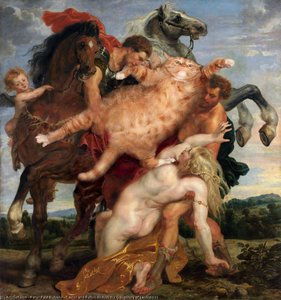
Daužai Castoras ir Polluxas nuveis Leukypo dukras tapo baroko meno pamato, dramatišku mito peraiškos į vizualų prabavą, kurią sukurė Peter Paul Rubens. Sukurtas maždaug 1618 metais, šis monumentalus płatinas, saugomas Berlyno valstybinėse muzejuose, nėra tik legendos vaizdinys; tai meistriškas meno inovacijų ir emocinio rezonanso pavyzdys, kuris keliausią šimtus metų vėliau.

3
Nuplokimas nuo kryžiaus (1612) aut. Peter Paul Rubens

Nuplokimas nuo kryžiaus

1612 · Aliejus ant plokštės · Courtauld Gallery, Londonas

Sunkus, palikas kūnas leidžiasi per įtampos ir išstrėbtų galūn diagonalę. Kristaus oda pasieks aštrų, teatrališką šviesą, išperimant ją iš tamsaus, miglotos fono. Raumenys kovoja su šios akimirkos gravitacija. Gilūs šešėliai susikaupia tarp krūtinės ribų ir rankų, sukurdami milžiniško fizinio svorio pojūtį. Purpura šešėlio audinys skveriasi per žemžemiškas ochros ir sienos tonus, žymėdamas apačioje judančių figūrų ritmą. Kompozicija skrieja žemyn, pakeliant neždžiugų leidžiamąsi nuo viršutinės kairės pusės link apatinės dešinės.

4
Trys aukos, prado aut. Peter Paul Rubens

Trys aukos, prado

Aliejus ant drobės · Museo del Prado, Madridas

Septemnientošio amžiaus didingoje istorijos tapetų mažai kuris vaizdas perteikia gyvybingumo ir elegancijos esmę taip giliai kaip Sir Peter Paul Rubens’ Trys aukos. Šis monumentalus šedevras, sukurtas apgyrėtimo karieros kulminacijos metu apie 1635–1636 m., yra kviečiantis įkvėpti langas į Baroko\|_{\text{era}} širdį. Žvelgiant į šį płatą, žiūrinio ir sukurto pasaulio ribos pradeda tirpti, o jų vietoje atsiranda pojūčių patirtis, šventinanti pačią gyvybės pulsaciją. Rubens, judesio ir šviesos meistras, ne tik vaizduoja tris…

5
Saturnas (1637) aut. Peter Paul Rubens

Saturnas

1637 · Aliejus ant drobės · Museo del Prado, Madridas

Kompozicijos centre dominuoja masyvi, raumena perpildyta Saturno figūra, kurios kūnas sukuria dinamišką diagonalinį judesį iš viršutinės kairės į apatinę dešinę. Jis pamatyto pavargęs baisiame savo kūdikio siausmėjimo akte – tai scena, ištraukta iš graikų mito apie Titaną Kroną. Kūdikio kūno spalvos atrodo baisiai palys prieš fono tamsias, žemžemesnes tonus, kuriais pasižymi titansko oda. Gilios šeimpos ir tamsios, audros kupinos pilkios valdomas fono spalvų paletę, sukuriant baisią tamsos ir nebežinomybės atmosferą.…

6
Sukūrimo kaktavimas (1620) aut. Peter Paul Rubens

Sukūrimo kaktavimas

1620 · Aliejus ant drobės · Alte Pinakothek, Miunchenas

„Švastūnų krasėjimas“, išdėstytas Sir Peteriu Pauliumi Rubensui apie 1620 m., laikomas vienu įvedažiu ir ambicioji Baroko periodo pasiekimų. Tai daugiau nei tik biblijinės naratyvo pavaizdavimas – Luciferio ir jo rebelių angelų išveržimas iš Vienio – tai įtraukiančiame patirtimi žiūrai, transportuojanti juos į Galo viską baimę, Dievo pygą.

7
Samsonas ir Dalila (1610) aut. Peter Paul Rubens

Samsonas ir Dalila

1610 · Aliejus ant drobės · National Gallery, Londonas

Tylioje, įprata bei įtampą užpildančioje tamsaus kambario šešalyje, Peter Paul Rubens užfiksuoja vieną šiurkščiausių momentų iš biblijinis istorijos. Samsonas ir Dalila nėra tik pasakojimo iš Tejudų knygos iliustracija; tai intuicyvus pažeidžiamumo, suktyrovos ir neteisingai paskirstyto pasitikėjimo sunkios kainos tyrimas. Kai Samsonas gulioja giliame, neįgavintame miegai, jo galingas kūnas atirti ant Dalilosiais pavidėtosios griaužtės, žiūrintis pasineria į pačią tragedijos širdį. Tapioje oras atrodo prisidauginantis nuo lyg išsistatęs lyg laukimo, tarsi visas…

8
Piliakalio Žvaigždžių Kelias kilmė (1637) aut. Peter Paul Rubens

Piliakalio Žvaigždžių Kelias kilmė

1637 · Aliejus ant drobės · Museo del Prado, Madridas

The composition centers on a female figure, Hera, seated upon a cloud within a dark, nocturnal sky. Her skin appears pale against the deep blues and blacks of the surrounding atmosphere. She wears a white veil, a pearl necklace, and jeweled bracelets. To her left, an infant, Hercules, reaches toward her breast. A stream of white milk gushes from her left breast, arching across the dark expanse to form the…

9
Meduzos galva (1617) aut. Peter Paul Rubens

Meduzos galva

1617 · Aliejus ant plokštės · Kunsthistorisches Museum, Viena

1617 metų darbe pavadinimu „Meduzos galva“ menininkas Peteris Paulis Rubensas pristato atkirtą mitologinės figūros galvą. Tematika atskleidžiama per tragišką mirties akimirką – moteris vaizduota tuoj pačiame mirties momento, tarsi ji būtų ką tik užnužudyta. Galva lies sklieslyje, kuris suklijo po ja, sukeliant sklaidžių ir šiurpios nuojatą. Kompozicija sutelki dėmesį į Gorgonos fizikinę būseną, perteikdama tą specifikinį, paskutinįjų kvėpusių akimirką.

10
Rubensas ir Isabella Brant meduo šešėliuojantije skėpelyje aut. Peter Paul Rubens

Rubensas ir Isabella Brant meduo šešėliuojantije skėpelyje

Aliejus ant drobės

Šis paveikslas vaizduoja Rubensą ir jo žmoną, Isabellą Brant, sėdžiusius sodo nišoje, apsuomus meduo šėšėliuojantije skėpelyje. Šis augalas yra gausios simbolikos atstovas, simbolizuojantis švelnų jausmą, atsidavimą, lojališkumą, laimę ir amžiną meilę. Poros susidraudžiai dešiniomis rankomis perteikia jų tvirtą bei švelnų stiprybę, o sėdinė, kurioje Rubensas sėdi aukščiau nei jo žmona, užsimergiuoti meilingą partnerystę, o ne tiesiog lygiųjų santykių modelį.

žinomi Peter Paul Rubens paveikslai, nuo 11 iki 100 numerio

11Karo pasekmės (1638) aut. Peter Paul RubensKaro pasekmės1638 · Galleria Palatina 12Meilės sodas c.1630-32, Prado aut. Peter Paul RubensMeilės sodas c.1630-32, PradoMuseo del Prado 13Pririštas Prometejas (1611) aut. Peter Paul RubensPririštas Prometejas1611 · Philadelphia Museum of Art 14Phaetono nuopskas aut. Peter Paul RubensPhaetono nuopskasNational Gallery of Art 15Šaltas žieminis (1637) aut. Peter Paul RubensŠaltas žieminis1637 · Alte Pinakothek 16Žaidynė Lionų (1621) aut. Peter Paul RubensŽaidynė Lionų1621 · Alte Pinakothek 17Apsigėręs Heraklidas (1611) aut. Peter Paul RubensApsigėręs Heraklidas1611 · Staatliche Kunstsammlungen 18Šv. Augustinas (1638) aut. Peter Paul RubensŠv. Augustinas1638 · Prahos nacionalinė dailės galerija 19Šventos Venecės Šedėtasis Festivalis (1637) aut. Peter Paul RubensŠventos Venecės Šedėtasis Festivalis1637 · Kunsthistorisches Museum 20Ignacijaus IŠLAISAS (1618) aut. Peter Paul RubensIgnacijaus IŠLAISAS1618 · Kunsthistorisches Museum 21Atvykimas į Marselį: Mergelės de Medicio atvaizdas (1625) aut. Peter Paul RubensAtvykimas į Marselį: Mergelės de Medicio atvaizdas1625 · Liuvro muziejus 22Merkurijus ir Argusas aut. Peter Paul RubensMerkurijus ir ArgusasMuseo del Prado 23Dva Satyrai (1608) aut. Peter Paul RubensDva Satyrai1608 · Alte Pinakothek 24Paskutinis Teismo Akatas (1617) aut. Peter Paul RubensPaskutinis Teismo Akatas1617 · Alte Pinakothek 25Amžinoji Rėžimo Būklė (1618) aut. Peter Paul RubensAmžinoji Rėžimo Būklė1618 · Alte Pinakothek 26Altaras Ildefonsui (1632) aut. Peter Paul RubensAltaras Ildefonsui1632 · Kunsthistorisches Museum 27Audringas kraštovaizdis (1625) aut. Peter Paul RubensAudringas kraštovaizdis1625 · Kunsthistorisches Museum 28Susanna Fourment (1625) aut. Peter Paul RubensSusanna Fourment1625 · National Gallery 29Rumulis ir Rėmus (1616) aut. Peter Paul RubensRumulis ir Rėmus1616 · Kapitolijos muziejai 30Danieliusiame liūtų guvė (1615) aut. Peter Paul RubensDanieliusiame liūtų guvė1615 · National Gallery of Art 31Leukipo dukterų nuėmimas (1618) aut. Peter Paul RubensLeukipo dukterų nuėmimas1618 · Alte Pinakothek 32The Felicity of the Regency of Marie de' Medici (1625) aut. Peter Paul RubensThe Felicity of the Regency of Marie de' Medici1625 33Švento Marijos įkaitimas (1626) aut. Peter Paul RubensŠvento Marijos įkaitimas1626 · Onze-Lieve Vrouwekathedraal 34The Abduction of Ganymede (1612) aut. Peter Paul RubensThe Abduction of Ganymede1612 35Venus prie savo skalbinės (1608) aut. Peter Paul RubensVenus prie savo skalbinės1608 · Thyssen-Bornemisza muziejus 36The Judgment of Paris (1636) aut. Peter Paul RubensThe Judgment of Paris1636 · National Gallery 37Triumfo Tiesė (1625) aut. Peter Paul RubensTriumfo Tiesė1625 · Liuvro muziejus 38Higiėja, Sveikatos Dievaitė (1615) aut. Peter Paul RubensHigiėja, Sveikatos Dievaitė1615 · Nacionalinė galerija Praha 39Christ on the Cross (1627) aut. Peter Paul RubensChrist on the Cross1627 40Holy Trinity aut. Peter Paul RubensHoly TrinityAntverpio karališkasis gražiųjų menų muziejus 41The Four Parts of the World aut. Peter Paul RubensThe Four Parts of the World 42Diana Cazadora (1620) aut. Peter Paul RubensDiana Cazadora1620 · Museo del Prado 43The Education of Marie, Louvre (1625) aut. Peter Paul RubensThe Education of Marie, Louvre1625 44The Elevation of the Cross (1610) aut. Peter Paul RubensThe Elevation of the Cross1610 45Gregorio with Mauro and Papia (1608) aut. Peter Paul RubensGregorio with Mauro and Papia1608 · Santa Maria in Vallicella 46Duke of Lerma (1603) aut. Peter Paul RubensDuke of Lerma1603 · Liuvro muziejus 47Portrait of Maria de' Medici (1575-1642), Queen mother of France (1640) aut. Peter Paul RubensPortrait of Maria de' Medici (1575-1642), Queen mother of France1640 48Dievų patarimas (1624) aut. Peter Paul RubensDievų patarimas1624 · Liuvro muziejus 49Pasaulyje taikos atakas alegorija NG London (1630) aut. Peter Paul RubensPasaulyje taikos atakas alegorija NG London1630 50The Capture of Samson (1609) aut. Peter Paul RubensThe Capture of Samson1609 · Art Institute of Chicago 51Christ on the Sea of Galilee (1611) aut. Peter Paul RubensChrist on the Sea of Galilee1611 · Gemäldegalerie Alte Meister 52Mucius Scaevola before Lars Porsenna (1617) aut. Peter Paul RubensMucius Scaevola before Lars Porsenna1617 · Pushkinio valstybinis dailės muziejus 53The Rape of Europe (1636) aut. Peter Paul RubensThe Rape of Europe1636 · Museo del Prado 54Agrippina and Germanicus (1614) aut. Peter Paul RubensAgrippina and Germanicus1614 55The Judgment of Paris aut. Peter Paul RubensThe Judgment of Paris 56St. George and a Dragon (1610) aut. Peter Paul RubensSt. George and a Dragon1610 57The Coronation of the Hero of Virtue (1613) aut. Peter Paul RubensThe Coronation of the Hero of Virtue1613 · Bavarijos valstybinės paveikslų kolekcijos 58Venus, Mars and Cupid (1635) aut. Peter Paul RubensVenus, Mars and Cupid1635 · Dulwich Picture Gallery 59The Feast of Acheloüs (1615) aut. Peter Paul RubensThe Feast of Acheloüs1615 · Metropolitano meno muziejus 60Portrait of Peter Pecquius (1562-1625), chancellor of Brabant (1615) aut. Peter Paul RubensPortrait of Peter Pecquius (1562-1625), chancellor of Brabant1615 · Belgijos Karališkųjų dailės muziejų kompleksas 61Portrait of Anne of Austria (1623) aut. Peter Paul RubensPortrait of Anne of Austria1623 · Norton Simon muziejus 62The Four Evangelists (1625) aut. Peter Paul RubensThe Four Evangelists1625 · John and Mable Ringling Museum of Art 63Philip IV of Spain (1629) aut. Peter Paul RubensPhilip IV of Spain1629 · Carnegie meno muziejus 64The Triumph of Divine Love (1625) aut. Peter Paul RubensThe Triumph of Divine Love1625 · Museo del Prado 65Saint Michael striking down the rebellious angels (1635) aut. Peter Paul RubensSaint Michael striking down the rebellious angels1635 · Thyssen-Bornemisza muziejus 66The Assumption of the Virgin aut. Peter Paul RubensThe Assumption of the Virgin 67The Assumption of Mary (1622) aut. Peter Paul RubensThe Assumption of Mary1622 68Sermon by St Ignatius of Loyola (1608) aut. Peter Paul RubensSermon by St Ignatius of Loyola1608 · Bavarijos valstybinės paveikslų kolekcijos 69Coronation of the Virgin Mary (1625) aut. Peter Paul RubensCoronation of the Virgin Mary1625 · Belgijos Karališkųjų dailės muziejų kompleksas 70The Reconciliation of Romans and Sabines, before or up to 1620s (1625) aut. Peter Paul RubensThe Reconciliation of Romans and Sabines, before or up to 1620s1625 · Bavarijos valstybinės paveikslų kolekcijos 71Leda and the Swan (1600) aut. Peter Paul RubensLeda and the Swan1600 72The Assumption of the Virgin (1636) aut. Peter Paul RubensThe Assumption of the Virgin1636 · Yale University Art Gallery 73The Miracles of St. Benedict (1630) aut. Peter Paul RubensThe Miracles of St. Benedict1630 · Belgijos Karališkųjų dailės muziejų kompleksas 74The Union of Earth and Water (1618) aut. Peter Paul RubensThe Union of Earth and Water1618 · Ermitažas 75The Judgement of Paris (1606) aut. Peter Paul RubensThe Judgement of Paris1606 · Museo del Prado 76Saint Jerome (1615) aut. Peter Paul RubensSaint Jerome1615 · Staatliche Kunstsammlungen Dresden 77Archduke Ferdinand on a horse (1608) aut. Peter Paul RubensArchduke Ferdinand on a horse1608 · Bavarijos valstybinės paveikslų kolekcijos 78The Drunken Satyr (1611) aut. Peter Paul RubensThe Drunken Satyr1611 · Vienos dailės akademija 79The Gathering of the Manna (1625) aut. Peter Paul RubensThe Gathering of the Manna1625 · John and Mable Ringling Museum of Art 80The Rape of the Daughters of Levkippos (1610) aut. Peter Paul RubensThe Rape of the Daughters of Levkippos1610 · National Museum of Art, Architecture and Design 81Portrait of Elizabeth of Bourbon, Queen of Spain (1628) aut. Peter Paul RubensPortrait of Elizabeth of Bourbon, Queen of Spain1628 · Ermitažas 82Portrait of Johanna of Austria, mother of Maria de' Medici (1623) aut. Peter Paul RubensPortrait of Johanna of Austria, mother of Maria de' Medici1623 83Christ Triumphant over Sin and Death (1617) aut. Peter Paul RubensChrist Triumphant over Sin and Death1617 · Columbus Museum of Art 84The Holy Family with Saint Elizabeth and Saint John the Baptist (1620) aut. Peter Paul RubensThe Holy Family with Saint Elizabeth and Saint John the Baptist1620 · Blenheim Palace 85"The Battle of Anghiari  " (The fight for the standard). (1605) aut. Peter Paul Rubens"The Battle of Anghiari " (The fight for the standard).1605 · Vienos dailės akademija 86Infanta Isabella, the ruler of the Netherlands (1625) aut. Peter Paul RubensInfanta Isabella, the ruler of the Netherlands1625 87Senojojo sandorio aukas (1626) aut. Peter Paul RubensSenojojo sandorio aukas1626 · Museum of Fine Arts 88The raising of Lazarus (copy) (1700) aut. Peter Paul RubensThe raising of Lazarus (copy)1700 · Rijksmuseum 89Adoration of the Magi (1620) aut. Peter Paul RubensAdoration of the Magi1620 · Gothenburg Museum of Art 90The Drunken Silenus (1608) aut. Peter Paul RubensThe Drunken Silenus1608 · Bavarijos valstybinės paveikslų kolekcijos 91Samson and Delilah (1609) aut. Peter Paul RubensSamson and Delilah1609 · Cincinnati Art Museum 92Madonna and Child (copy after left wing of Antwerp triptych) (1608) aut. Peter Paul RubensMadonna and Child (copy after left wing of Antwerp triptych)1608 · Bavarijos valstybinės paveikslų kolekcijos 93Portrait of John, Duke of Braganza. (1628) aut. Peter Paul RubensPortrait of John, Duke of Braganza.1628 · Varšovos karališkasis pilis 94The Martyrdom of Saint Lawrence (1600) aut. Peter Paul RubensThe Martyrdom of Saint Lawrence1600 · Slovak National Gallery 95The Israelites Gathering Manna in the Desert (1626) aut. Peter Paul RubensThe Israelites Gathering Manna in the Desert1626 · Los Angelos apygardos meno muziejus 96The Virgin as the Woman of the Apocalypse (1624) aut. Peter Paul RubensThe Virgin as the Woman of the Apocalypse1624 · J. Paul Getty muziejus 97Rubens with his Family in Garden (1640) aut. Peter Paul RubensRubens with his Family in Garden1640 · Metropolitano meno muziejus 98Perseus and Andromeda (1608) aut. Peter Paul RubensPerseus and Andromeda1608 · Bavarijos valstybinės paveikslų kolekcijos 99Portrait of Helena Fourment (1617-1673) (1608) aut. Peter Paul RubensPortrait of Helena Fourment (1617-1673)1608 · Bavarijos valstybinės paveikslų kolekcijos 100Susanna and the Elders (1637) aut. Peter Paul RubensSusanna and the Elders1637 · Bavarijos valstybinės paveikslų kolekcijos

žymios Peter Paul Rubens tapiojamos, pagal laikotarpį

Temos, kurios domino Peter Paul Rubens

Ketverios temos, dažniausiai pasikrausto originaluose, kiekvienos su savo puikiausiu pavyzdžiu.

Muziejai, kuriuose saugomi Peter Paul Rubens originalūs darbai

8 muziejai, kuriuose saugoma daugiausia šioje pusėje esamų paveikslų.

Muzejaus Miestas Peter Paul Rubens darbai Šiojo sąrašo paveikslai
Bavarijos valstybinės paveikslų kolekcijos, MiunchasBavarijos valstybinės paveikslų kolekcijos Miunchas 100 Castoras ir Polluxas nuveis Leukypo dukras, The Coronation of the Hero of Virtue, Sermon by St Ignatius of Loyola
Museo del Prado, MadridasMuseo del Prado Madridas 76 Trys aukos, prado, Saturnas, Piliakalio Žvaigždžių Kelias kilmė
Alte Pinakothek, MiunchenasAlte Pinakothek Miunchenas 21 Sukūrimo kaktavimas, Šaltas žieminis, Žaidynė Lionų
Kunsthistorisches Museum, VienaKunsthistorisches Museum Viena 35 Meduzos galva, Šventos Venecės Šedėtasis Festivalis, Ignacijaus IŠLAISAS
Liuvro muziejus, ParyžiusLiuvro muziejus Paryžius 22 Atvykimas į Marselį: Mergelės de Medicio atvaizdas, Triumfo Tiesė, Duke of Lerma
Belgijos Karališkųjų dailės muziejų kompleksas, BriuselisBelgijos Karališkųjų dailės muziejų kompleksas Briuselis 35 Portrait of Peter Pecquius (1562-1625), chancellor of Brabant, Coronation of the Virgin Mary, The Miracles of St. Benedict
National Gallery, LondonasNational Gallery Londonas 26 Samsonas ir Dalila, Susanna Fourment, The Judgment of Paris
Ermitažas, Šv. PeterburgasErmitažas Šv. Peterburgas 42 The Union of Earth and Water, Portrait of Elizabeth of Bourbon, Queen of Spain

Peter Paul Rubens per dešimtmečius: vieniškas originalas kiekvienam

Darbai pagal dešimtmečius

Pasirinkite dešimtmetį, kad pamatytėte jį apibrėžusį originalą.

Peter Paul Rubens tapų klausimai galerijai

Koks yra garsiausias Peter Paul Rubens kūrinys?Atsakymas

Kryžiaus pakėlimas (1610), Onze-Lieve Vrouwekathedraal, Antverpenas. Toliau seka Castoras ir Polluxas nuveis Leukypo dukras ir Nuplokimas nuo kryžiaus (1612).

Kuriuo amžiaus atσταση Peter Paul Rubens sukūrė Kryžiaus pakėlimas?Atsakymas

33 metų amžiaus: Kryžiaus pakėlimas sukurta 1610 m. Nr. Peter Paul Rubens gimė 1577.

Kurios Peter Paul Rubens dešimt paveikslų yra garsiausi?Atsakymas

Kryžiaus pakėlimas, Castoras ir Polluxas nuveis Leukypo dukras, Nuplokimas nuo kryžiaus, Trys aukos, prado, Saturnas, Sukūrimo kaktavimas, Samsonas ir Dalila, Piliakalio Žvaigždžių Kelias kilmė, Meduzos galva ir Rubensas ir Isabella Brant meduo šešėliuojantije skėpelyje. Viršuje esančioje reitingo sąraše nurodyta kiekvieno kūrinio metis ir muziejus.

Kiek žinoma Peter Paul Rubens darbų?Atsakymas

Mūsų kataloge yra 1,641 Peter Paul Rubens darbų, skirtų laikotarpiui nuo 1600 iki 1640.

Kur galima pamatyti garsiausių Peter Paul Rubens originalų?Atsakymas

Daugiausia – Bavarijos valstybinės paveikslų kolekcijos (Miunchas), Museo del Prado (Madridas) ir Alte Pinakothek (Miunchenas). Viršuje esančiame muziejų sąraše yra visi jie.

Kuriuo laikotarpiu Peter Paul Rubens sukūrė savo žymiausias paveikslus?Atsakymas

1620s laikotarpiu: 29 iš 100 šioje pusėje esančių darbų buvo sukurtos tada, iš jų Sukūrimo kaktavimas.

Kuris iš garsių Peter Paul Rubens paveikslų yra pirmasis, o kuris – paskutinis?Atsakymas

Šioje pusėje seniausias darbas yra Leda and the Swan (1600), o naujausias – Portrait of Maria de' Medici (1575-1642), Queen mother of France (1640).

Kokia temos Peter Paul Rubens mėgavosi?Atsakymas

Woman (22), Man (20) ir Clouds (14) iš 100 šioje pusėje esamų darbų.

Kuriomis medžiagomis Peter Paul Rubens tapė dažniausiai?Atsakymas

Aliejus ant drobės, iš 100 šios puslapio darbų – 37.

Kelią meno kryžkelę priklauso Peter Paul Rubens kūryba?Atsakymas

Barokas, vadovaujantis šios puslapio originalais kūriniais.

Kurius Peter Paul Rubens originalius galėčiau pamatyti Bavarijos valstybinės paveikslų kolekcijos?Atsakymas

Castoras ir Polluxas nuveis Leukypo dukras, The Coronation of the Hero of Virtue ir Sermon by St Ignatius of Loyola: Bavarijos valstybinės paveikslų kolekcijos, Miunchas kolekcijoje yra 10 šioje pusėje esančių darbų.

Peter Paul Rubens: meno kūrinys – autoportretas

Early Life, Family and Training

To understand the scale of Peter Paul Rubens, one must look at the displacement that defined his beginnings. Born on 28 June 1577 in Siegen, Germany, his early years were shaped by the religious instability of the era. His father, Jan Rubens, was a lawyer who fled religious persecution, a move that forced the family to navigate the shifting political landscapes of the time. This background of movement and survival provided a practical resilience that would later underpin his complex professional life. He was the son of Jan Rubens and Maria Pypelincks, and his upbringing was rooted in the social realities of the Southern Netherlands.

His technical foundation was built through a series of disciplined apprenticeships that moved him from basic landscape studies toward the complex iconography of history painting. In 1592, he began his training under Tobias Verhaecht, a landscape painter who provided the essential groundwork in composition. This was followed by a four-year apprenticeship with Adam van Noort, a specialist in portraiture and mythological scenes. These years were not merely about learning to hold a brush; they were about absorbing the structural mechanics of the Flemish tradition. By the time he began working with Otto van Veen between 1594 and 1598, Rubens had already acquired the technical vocabulary necessary to move beyond simple representation into the realm of sophisticated narrative art.

The Italian Awakening and Artistic Synthesis

In 1600, Rubens left the Low Countries for Italy, a move that fundamentally altered his visual language. He did not merely observe the Italian tradition; he absorbed it through eight years of direct engagement with the works of Michelangelo, Raphael, and Titian. This period was not a passive study. By serving the Duke of Mantua, he gained access to the high-stakes environment of Italian courtly art, where the demands of patronage required a sophisticated command of form and narrative. He took the anatomical precision of Michelangelo and the coloristic depth of Titian, stripping away the static qualities of the High Renaissance to create something more muscular and immediate.

The result was a synthesis that moved beyond imitation. Rubens took the classical ideals he encountered in Italy and infused them with a Flemish sense of vitality. He understood that movement required more than just depicted action; it required a specific tension in the human figure and a command of light that felt physical rather than merely decorative. When he returned to Antwerp in 1608, he brought back a style that was ready to dominate the European market. He had successfully merged the intellectual rigor of Italian humanism with a raw, energetic approach to composition.

A Master of Many Forms

Rubens’s output was defined by a refusal to remain within a single genre. He operated with a versatility that allowed him to command the production of altarpieces, portraits, landscapes, and history paintings. This breadth was not a sign of scattered focus but a calculated expansion of his visual influence. He moved between the sacred and the secular with ease, applying his command of composition to everything from religious narratives to the intimate details of a sitter's likeness.

His reach extended into the commercial and decorative sectors of the seventeenth-century market. He was a prolific designer of cartoons for Flemish tapestry workshops, translating complex narratives into patterns for weavers. Beyond the canvas, his graphic work was essential to the publishing industry in Antwerp, where he designed frontispieces for local publishers. This ability to scale his vision from massive church commissions to small-scale printed works ensured his aesthetic presence was felt across different media.

Technique and Style

Rubens’s visual language is defined by a relentless sense of motion. He rejected static imagery in favor of energetic and dramatic arrangements that force the viewer to engage with the scene. This dynamism is not merely a compositional choice but a structural necessity in his work. By utilizing chiaroscuro, he sculpted human forms with a precision that emphasized musculature and physical presence. This interplay of light and shadow provides the weight necessary to ground his often swirling, high-energy subjects.

His approach to color and texture relies on a sophisticated layering process. He employed glazing, applying thin, translucent layers of pigment over thicker undercoats to achieve a depth of color that feels internal rather than surface-level. This technique allowed him to capture the specific luminosity of skin tones and the heavy weight of fabric. His style prioritized a sense of sensuality and physical vitality, ensuring that every figure possessed a palpable, breathing quality. He did not merely depict bodies; he engineered them through light and pigment to command attention.

Patrons, Workshop and Commissions

Rubens operated with the precision of a high-stakes businessman, building one of the most successful artistic enterprises in European history. By 1610, he had opened his own studio in Antwerp, a move that transformed his practice from individual creation into a massive production engine. This was not a mere collection of assistants; it was a sophisticated operation designed to meet the relentless demands of his international clientele. He functioned as a central hub for talent, coordinating complex projects that required specialized skills to achieve his specific visual standards.

His professional status was cemented by his position as court painter to the Archduke and Archduchess in Brussels. This role provided more than just steady work; it placed him at the center of political and social power. To manage the sheer volume of his commissions, Rubens relied on a network of skilled collaborators. He integrated the talents of other significant artists into his workflow, including Frans Snyders, Paul de Vos, Jacob Jordaens, and Jan Brueghel the Elder. This collaborative model allowed him to execute massive, multi-layered compositions that a single hand could not have completed in a lifetime.

Later Years and Death

By 1630, Rubens had integrated his private life with his professional status through his marriage to Hélène Fourment. This union provided a steady presence in his Antwerp studio during a period when his responsibilities extended far beyond the canvas. He was not merely a painter but a high-stakes diplomat, navigating the complex political currents of Europe through missions to England, France, and Spain. These diplomatic endeavors required a level of intellectual agility and social maneuvering that matched his technical command of oil and pigment.

His productivity remained high even as his political duties intensified. He continued to paint prolifically, maintaining a massive output that sustained his reputation across the continent. The sheer volume of his work in these final years reflects a man who managed a vast artistic enterprise while simultaneously acting as a cultural intermediary for the Southern Netherlands. He remained active in the artistic and political life of Antwerp until his death on 30 May 1640.

Legacy and Influence

Rubens remains the most influential figure in the Flemish Baroque tradition. His work functioned as a bridge between the divine and the human, translating complex religious and mythological narratives into a visual language of physical presence. He did not merely paint scenes; he engineered spectacles of visual grandeur. This ability to command space and movement ensured his influence reached far beyond the borders of the Southern Netherlands.

The impact of his method on subsequent generations of artists is immeasurable. He established a standard for high-energy dynamism that later painters had to either adopt or react against. His studio functioned as a massive engine of production, setting a precedent for how large-scale artistic enterprises could operate across Europe. By synthesizing the classical grace of the Renaissance with a raw, muscular energy, he redefined the expressive potential of oil on canvas.