Stephan Lochner portretas

Stephan Lochner tapiai: 36 garsiausi πίναšiai, galerijos akimis

Atnaujinta spalis 2026 · pagal mūsų populiarumumo koeficientą (paieškos, lankytojai ir užsakymai kiekvienam kūriniui) · 36 Stephan Lochner darbai mūsų kataloge

Trumpai tariant

Galerijos akimais, garsiausias Stephan Lochner tapas yra Madonna of the Rose Bush (1440), kurio originalas eksponuojamas Wallraf-Richartz-Museum, Kelnas. The Last Judgment (1435) ir The Crucifixion (1440) užbaia trio, kurį atpažįsta kiekvienas ž)/\ Iš 36 Stephan Lochner darbų mūsų kataloge, galerija žemiau pristato 36 garsiausius – kiekvienas yra originalus, su nurodytu metais, muziejumi bei unikaliu aprašymu.

1410 – 1451, Merburgas International gothic Daugiausia darbų: Städel Museum

10 geriausių galerijos Stephan Lochner paveikslų

1
Madonna of the Rose Bush (1440) aut. Stephan Lochner

Madonna of the Rose Bush

1440 · Oil On Panel · Wallraf-Richartz-Museum, Kelnas

Stephan Lochner's Madonna of the Rose Bush, painted around 1440 in Cologne, Germany, isn’t merely a depiction of the Virgin Mary; it’s an immersive experience—a carefully constructed world brimming with symbolism and echoing the profound spirituality of its time. This panel painting transcends simple religious iconography, offering a glimpse into the artistic sensibilities and cultural values of late medieval Europe. Lochner, a prominent figure in Cologne's art scene, masterfully blended…

2
The Last Judgment (1435) aut. Stephan Lochner

The Last Judgment

1435 · Wallraf-Richartz-Museum, Kelnas

Stephan Lochner’s “The Last Judgment,” painted in 1435, isn't merely a depiction of biblical narrative; it’s a profound meditation on mortality, divine justice, and the eternal consequences of earthly actions. Emerging from the late Gothic period in Cologne, Germany, this monumental panel transcends its historical context to resonate with an enduring power—a testament to the artist’s skill and his ability to capture both the drama and the solemnity of humanity's…

3
The Crucifixion (1440) aut. Stephan Lochner

The Crucifixion

1440 · Oil On Canvas · Germanisches Nationalmuseum, Nurnbergas

To stand before this depiction of The Crucifixion by Stephan Lochner is to be enveloped in an atmosphere of profound, almost unbearable solemnity. It is not merely a historical recounting; it is a visceral confrontation with sacrifice. At the heart of the composition, Christ hangs upon the cross, his outstretched arms forming a powerful, tragic geometry against the backdrop of human grief and divine mystery. The scene pulses with narrative…

4
Mary Magdalen (1400) aut. Stephan Lochner

Mary Magdalen

1400 · Tempera On Panel · Museum Boijmans Van Beuningen, Roterdamas

This painting, titled Mary Magdalen, is a religious work by the German master Stefan Lochner. It offers a quiet study of the saint, rendered with the delicate precision characteristic of the late International Gothic period. The subject is presented in a moment of contemplative grace, her presence defined by a sense of stillness and devotion.

5
The Virgin Crowned by Angels (1450) aut. Stephan Lochner

The Virgin Crowned by Angels

1450 · Tempera On Panel · Cleveland Museum of Art, Klevlandas

In this sacred scene, The Virgin Crowned by Angels emerges from the quietude of the mid-fifteenth century. Painted by Stefan Lochner about 1450, the work presents a moment of profound religious devotion. The Virgin Mary stands as the central figure, cradling the Christ Child in a gesture of maternal grace. This depiction of the Madonna and Child invites the viewer into a space of quiet contemplation and spiritual presence.

6
Mary with the Christ-child next to a plant trough (1440) aut. Stephan Lochner

Mary with the Christ-child next to a plant trough

The painting titled Mary with the Christ-child next to a plant trough is a work by Stefan Lochner. Created about 1440, this devotional piece captures a quiet moment of divinity. The central figures of the Madonna and Child are framed by a lush, green garden setting. Small flowers emerge from the earth near a plant trough, grounding the celestial scene in a tangible, botanical reality.

7
Sts. Catherine, Hubert and Quirinus (Last-Judgement-Altar) (1445) aut. Stephan Lochner

Sts. Catherine, Hubert and Quirinus (Last-Judgement-Altar)

1445 · Oil On Panel · Bavarijos valstybinės paveikslų kolekcijos, Miunchas

The presence of Sts. Catherine, Hubert and Quirinus (Last-Judgement-Altar) commands the space, a solemn Late Gothic altarpiece panel that emerges from the shadows of history. Painted by Stefan Lochner, this work carries the weight of a sacred vision. It dates to 1445, capturing a moment of profound spiritual stillness. The figures exist within a realm of deep color and intense devotion, frozen in a state of eternal grace.

8
John the Evangelist (1440) aut. Stephan Lochner

John the Evangelist

1440 · Tempera On Panel · Museum Boijmans Van Beuningen, Roterdamas

This painting depicts John the Evangelist, a work executed by the artist Stefan Lochner. The subject is rendered in a profile or three-quarter view, oriented toward the right side of the panel. He is shown holding a chalice within his hands. The figure is positioned against a solid gold background that occupies the majority of the space behind the subject.

9
Saints Ambrose, Cecilia and Augustine (1447) aut. Stephan Lochner

Saints Ambrose, Cecilia and Augustine

1447 · Tempera On Panel · Wallraf-Richartz-Museum, Kelnas

In this late Gothic religious altarpiece panel, the figures of Saints Ambrose, Cecilia and Augustine emerge from a shallow architectural space. Painted by Stefan Lochner, the work captures a moment of divine presence through its formal and symmetrical arrangement. The three saints dominate the frame, their presence felt through the heavy, sculptural folds of their drapery and the steady gaze of their faces. A smaller donor figure kneels in the…

Stephan Lochner tapiai, rangos nuo 11 iki 36

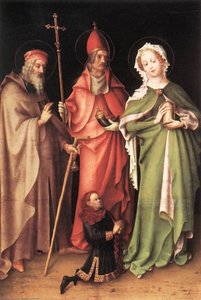
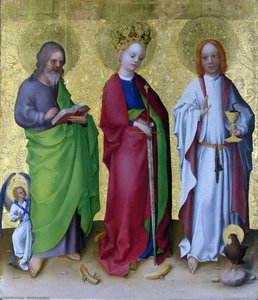
11Sts Anthony the Hermit, Cornelius and Mary Magdalen with a Donor (1445) aut. Stephan LochnerSts Anthony the Hermit, Cornelius and Mary Magdalen with a Donor1445 · Alte Pinakothek 12Martyrdom of the Twelve Apostles (Altarpiece for the Church of the Holy Apostles in Cologne, left wing) (1435) aut. Stephan LochnerMartyrdom of the Twelve Apostles (Altarpiece for the Church of the Holy Apostles in Cologne, left wing)1435 · Städel Museum 13Martyrdom of the Apostles: Martyrdom of Saint Thomas aut. Stephan LochnerMartyrdom of the Apostles: Martyrdom of Saint ThomasStädel Museum 14Martyrdom of the Apostles: Martyrdom of Saint Philip aut. Stephan LochnerMartyrdom of the Apostles: Martyrdom of Saint PhilipStädel Museum 15Martyrdom of the Apostles: Martyrdom of Saint Peter aut. Stephan LochnerMartyrdom of the Apostles: Martyrdom of Saint PeterStädel Museum 16Martyrdom of the Apostles: Martyrdom of St Paul aut. Stephan LochnerMartyrdom of the Apostles: Martyrdom of St PaulStädel Museum 17Martyrdom of the Apostles: Martyrdom of Saint Matthias aut. Stephan LochnerMartyrdom of the Apostles: Martyrdom of Saint MatthiasStädel Museum 18Martyrdom of the Apostles: Martyrdom of Saint Matthew aut. Stephan LochnerMartyrdom of the Apostles: Martyrdom of Saint MatthewStädel Museum 19Martyrdom of the Apostles: Martyrdom of Saint James the Younger aut. Stephan LochnerMartyrdom of the Apostles: Martyrdom of Saint James the YoungerStädel Museum 20Martyrdom of the Apostles: Martyrdom of St James the Elder aut. Stephan LochnerMartyrdom of the Apostles: Martyrdom of St James the ElderStädel Museum 21Martyrdom of the Apostles: Martyrdom of Saint Bartholomew aut. Stephan LochnerMartyrdom of the Apostles: Martyrdom of Saint BartholomewStädel Museum 22Martyrdom of the Apostles: Martyrdom of Saint Andrew aut. Stephan LochnerMartyrdom of the Apostles: Martyrdom of Saint AndrewStädel Museum 23Martyrdom of the Apostles: Martyrdom of Saints Simon and Judas aut. Stephan LochnerMartyrdom of the Apostles: Martyrdom of Saints Simon and JudasStädel Museum 24Presentation of Christ in the Temple (detail) aut. Stephan LochnerPresentation of Christ in the Temple (detail) 25Presentation of Christ in the Temple (detail) aut. Stephan LochnerPresentation of Christ in the Temple (detail) 26Hl. Ursula Mit Gefährten (The Dombild Altarpiece, left wing) (1445) aut. Stephan LochnerHl. Ursula Mit Gefährten (The Dombild Altarpiece, left wing)1445 27Adoration of the Magi (The Dombild Altarpiece, central part) (1445) aut. Stephan LochnerAdoration of the Magi (The Dombild Altarpiece, central part)1445 28Altarpiece of the Patron Saints of Cologne aut. Stephan LochnerAltarpiece of the Patron Saints of Cologne 29Triptych with the Virgin and Child in an Enclosed garden aut. Stephan LochnerTriptych with the Virgin and Child in an Enclosed garden 30Adoration of the Magi aut. Stephan LochnerAdoration of the Magi 31Presentation of Christ in the Temple aut. Stephan LochnerPresentation of Christ in the Temple 32Three saints aut. Stephan LochnerThree saintsNational Gallery 33St. Jerome in His Study aut. Stephan LochnerSt. Jerome in His Study 34Annunciation (1440) aut. Stephan LochnerAnnunciation1440 35Presentation of Christ in the Temple (1445) aut. Stephan LochnerPresentation of Christ in the Temple1445 · Calouste Gulbenkian Foundation 36Adoration of the Child Jesus (1445) aut. Stephan LochnerAdoration of the Child Jesus1445 · Alte Pinakothek

žymios Stephan Lochner tapiojamos, pagal laikotarpį

Temos, kurios domino Stephan Lochner

Ketverios temos, dažniausiai pasikrausto originaluose, kiekvienos su savo puikiausiu pavyzdžiu.

Muziejai, kuriuose saugomi Stephan Lochner originalūs darbai

8 muziejai, kuriuose saugoma daugiausia šioje pusėje esamų paveikslų.

Muzejaus Miestas Stephan Lochner darbai Šiojo sąrašo paveikslai
Städel Museum, FrankfurtasStädel Museum Frankfurtas 12 Martyrdom of the Twelve Apostles (Altarpiece for the Church of the Holy Apostles in Cologne, left wing), Martyrdom of the Apostles: Martyrdom of Saint Thomas, Martyrdom of the Apostles: Martyrdom of Saint Philip
Wallraf-Richartz-Museum, KelnasWallraf-Richartz-Museum Kelnas 4 Madonna of the Rose Bush, The Last Judgment, Saints Ambrose, Cecilia and Augustine
Museum Boijmans Van Beuningen, RoterdamasMuseum Boijmans Van Beuningen Roterdamas 2 Mary Magdalen, John the Evangelist
Bavarijos valstybinės paveikslų kolekcijos, MiunchasBavarijos valstybinės paveikslų kolekcijos Miunchas 2 Mary with the Christ-child next to a plant trough, Sts. Catherine, Hubert and Quirinus (Last-Judgement-Altar)
Alte Pinakothek, MiunchenasAlte Pinakothek Miunchenas 2 Sts Anthony the Hermit, Cornelius and Mary Magdalen with a Donor, Adoration of the Child Jesus
Germanisches Nationalmuseum, NurnbergasGermanisches Nationalmuseum Nurnbergas 1 The Crucifixion
Cleveland Museum of Art, KlevlandasCleveland Museum of Art Klevlandas 1 The Virgin Crowned by Angels
National Gallery, LondonasNational Gallery Londonas 1 Three saints

Stephan Lochner, po vieno ikoninio paveikslio kiekvienam dešimtmenės laikotarpiui

Darbai pagal dešimtmečius

Pasirinkite dešimtmetį, kad pamatytėte jį apibrėžusį originalą.

Stephan Lochner tapyiniai: galerijos atsakymai

Kuris Stephan Lochner paveikslas yra pats garsiausias iš visų?Atsakymas

Madonna of the Rose Bush (1440), Wallraf-Richartz-Museum, Kelnas. Toliau seka The Last Judgment (1435) ir The Crucifixion (1440).

Kiek metų buvo Stephan Lochner, kai sukūrė Madonna of the Rose Bush?Atsakymas

30 metų amžiaus: Madonna of the Rose Bush sukurta 1440 m. Nr. Stephan Lochner gimė 1410.

Kuriose yra 10 geriausių Stephan Lochner paveikslų?Atsakymas

Madonna of the Rose Bush, The Last Judgment, The Crucifixion, Mary Magdalen, The Virgin Crowned by Angels, Mary with the Christ-child next to a plant trough, Sts. Catherine, Hubert and Quirinus (Last-Judgement-Altar), John the Evangelist, Saints Ambrose, Cecilia and Augustine ir Sts Mark, Barbara and Luke. Viršuje esančioje reitingo sąraše nurodyta kiekvieno kūrinio metis ir muziejus.

Kiek kūrinių sukūrė Stephan Lochner?Atsakymas

Mūsų kataloge yra 36 Stephan Lochner darbų, skirtų laikotarpiui nuo 1435 iki 1450.

Kur kabinami garsiausi Stephan Lochner originalūs darbai?Atsakymas

Daugiausia – Städel Museum (Frankfurtas), Wallraf-Richartz-Museum (Kelnas) ir Museum Boijmans Van Beuningen (Roterdamas). Viršuje esančiame muziejų sąraše yra visi jie.

Kada Stephan Lochner sukūrė savo garsiausias paveikslus?Atsakymas

1440s laikotarpiu: 13 iš 36 šioje pusėje esančių darbų buvo sukurtos tada, iš jų Madonna of the Rose Bush.

Kokie yra ankstyviausi ir vėliausi garsieji Stephan Lochner kūriniai?Atsakymas

Šioje pusėje seniausias darbas yra The Last Judgment (1435), o naujausias – The Virgin Crowned by Angels (1450).

Kurią temą Stephan Lochner kūrė dažniausiai?Atsakymas

Saints (4), Medieval art (3) ir Religious art (3) iš 36 šioje pusėje esamų darbų.

Kurią techniką Stephan Lochner naudojo dažniausiai?Atsakymas

Tempera On Panel, iš 36 šios puslapio darbų – 5.

Su kokiu kierliu siejama Stephan Lochner?Atsakymas

International gothic ir Late gothic, vadovaujantis šios puslapio originalais kūriniais.

Kurių Stephan Lochner originalų turi Städel Museum?Atsakymas

Martyrdom of the Twelve Apostles (Altarpiece for the Church of the Holy Apostles in Cologne, left wing), Martyrdom of the Apostles: Martyrdom of Saint Thomas ir Martyrdom of the Apostles: Martyrdom of Saint Philip: Städel Museum, Frankfurtas kolekcijoje yra 12 šioje pusėje esančių darbų.

Stephan Lochner: menininkas

Stephan Lochner: Tiltas tarpędzy gotikinio prachto ir Šiaurės Renesanso naujovių

Apie 1410 metais Voklandijoje, vaizdingame Meersburg miestelyje – vietoje, pilnoje legendų ir įsodintoje po nuostabią Bodenską – gimęs Stephan Lochner, kaip pastebima, tragiku buvo išgyvenimo Kolyne apie 1451 metus. Nepaisant trumpos karjeros, šis paslaptingas paveikslėlis paliko neištrinkiamą žाymą meno pasaulyje, meistriškai sujungdamas prabangias tarptautinio gotikos tradicjas su pradinio Šiaurės Renesanso realizmu ir inovatyvia ikonografija. Lochner nazas slypi ne tik individualių jo kūrinių grožė, bet ir jo įtangiame paveikslėlyje būtinybėje vėlesniems menininkų pokoleniams, ypač Rogierui van der Weydenui ir Hansui Memlingui – paveikslėtojams, kurie tęsė jo išskirtinio stiliaus elementus.

Tikrai nieko nežinoma apie Lochnerio ankstyvąjį gyvenimą. Menų istorijos konsensusas leidžia manyti, kad dalį savo formavimo metų jis praleido mokydamasis Žemiosiose šalyse, patirtis, kuri giliai įformavo jo meninę jautriąją prigimtį. Susidavimas su ryškiomis spalvomis, sudėtingais detalėmis ir evoliuojančia ikonografija, vyravančia flamando paveikslėstyje, neabejotinai paveikė jo požiūrį į kompoziciją, spalvų paletę ir religinių figūrų vaizdymą. Manoma, kad ši tarptautinė patirtis yra pagrindinis faktorius unikaliame stilių sinteze, aptinkamoje visoje jo kūryboje.

Spalvos ir tekstūros meistras: Meninis stilius ir iškilmingi kūriniai

Lochnerio paveikslėčiai yra iškart atpažįstami dėl intriguojančio spalvų naudojimo, dinamiškų ilgų linijų ir neįtikėtinai meistriškų paviršiaus tekstūrių. Jis vengė blėdžių tonų, dažnai siejamų su ankstyvojo gotikos menais, ir pasirinko rytesnę, šviesnes paletę – savybę, kuri tvirtai įtraukia jį į pradinę Renesanso estetiką. Jo kūriniuose dažnai matomos prabangios raudonos, mėlynos ir auksinės spalvos, taikomos su meistrišku šviesos ir šešėlio supratimu, siekiant sukurti gylio ir dramos pojūtį.

Tarptautiniu mastu šlovę jam atnešė „Madona prie rožės krūmo“ (51 x 40 cm, Wallraf-Richartz muziejus, Kolyne) – šedevras, demonstruojantis Lochnerio techninį meistriškumą ir išraiškos galią. Paveikslas parodo jo gebėjimą religiniams motyvams suteikti beveik pajudinamą emocijų ir dvasinės savybės pojūtį. „Šventasis Jeronimas savo studijoje“ (30 x 39 cm, aliejus ant panelės) dar labiau parodo jo gebėjimą įamžinti savo temų esmę – tylią kontemplaciją, atvaizduotą su neįtikėtinu dėmesiui ir psichologiniu įžvalgumu. „Trys šventukai“, sudėtinga kompozicija, kupina elegancijos ir poisedžio, pabrėžia Lochnerio gebėjimą viename kadre užfiksuoti daugybę figūrų, kurdamas dinamišką bei įtraukiančią vizualinę naraciją.

Dar vienas svarbus kūrinys yra „Dombild altarijus“ (arba Kölner Dombild), pradinai užsakytas Kolognės katedrai. Šis monumentalus triptikas, dabar saugomamas katedros Marienkapelle, išlieka vienu svarbiausių jo meno pavyzdžių ir meninės vizijos įrodymu. Sudėtingos detalės, ryškios spalvos ir simbolinė vaizdinė medžiaga iki šiais laikais žavi žiūrovus.

Įtampis ir palikimas: Tiltas tarp stilių

Stephan Lochnerio įtampis vėlesniems Šiaurės menininkų pokoleniams buvo milžiniškas. Jo išskirtinis stilius – pasižymintis sklandžiomis linijomis, ryškiomis spalvomis ir dėmesiui skirtu emocinei išraiškai – giliai rezonavo su jo samties žmonėmis, įkvėpdamas juos į savo darbus įtraukti jo požiūrio elementus. Manoma, kad Rogierius van der Weyden buvo itin stipriai paveiktas Lochnerio spalvų ir kompozicijos naudojimo, o Hansas Memling taip pat panašiai pritaikė jo stiliaus aspektus savo devociniuose panelėse.

„Dombild altarijus“ stovi kaip itin įtikinamas Lochnerio įtakos pavyzdys. Inovatyvus požiūris religiniams naratyvams vaizduoti – sujungiant gotikines elegancijas su pradinio Renesanso realizmu – pavedė kelią būsimam Europos Šiaurės paveikslėstybės vystymui. Šio altarijaus sudėtingos detalės ir simbolinė įvaizdis tarnavo modeliu nesuskaičiuojamiems vėlesniems menininkams, užtvirtindami Lochnerio vietą kaip veiklus asmenį pereiante iš vėlyvųjų gotikos į ankstyvojo Renesanso meną.

Muziejų kolekcijos ir tęsiamas vertinimas

Lochnerio kūriniai yra saugomi keliuose žymiuose muziejuose visame pasaulyje. Wallraf-Richartz muziejus Kolyne saugo „Madoną prie rožės krūmo“, suteikdamas lankytojams galimybę tiesiogiai susitikti su šiuo ikonišku paveikslu. Frankfurtės Städel muziejuje eksponuojami „Flémalle panelėčiai“ (68 x 160 cm, ąžuolas), demonstruojantys Lochnerio meistriškumą panelės paveikslėstyje ir gebėjimą kurti sudėtingas kompozicijas, pilnas detalių ir simbolikos. Be šių pagrindinių institucijų, jo darbo fragmentai galima rasti įvairiuose kolekcijųse, užtikrinant, kad jo meninis palikimas ir toliau būtų vertinamas meno entuziastų visame pasaulyje.

Šiandien Stephan Lochnerio paveikslėčiai yra šloje dėl savo grožio, techninio meistriškumo ir gilaus emocinio rezonavimo. Jo gebėjimas sklandžiai sujungti tarptautinės gotikos tradicijas su ankstyvojo Šiaurės Renesanso naujovėmis užtvirtino jo vietą kaip tikrai išimtinio meno – meistro, kuris tapo tiltu tarp dviejų skirtingų meninių erų ir paliko nepaisytiną palikimą visam menui.