John Edward Brett portretas

John Edward Brett tapiai: 45 garsiausi πίναšiai, galerijos akimis

Atnaujinta lapkritis 2026 · pagal mūsų populiarumumo koeficientą (paieškos, lankytojai ir užsakymai kiekvienam kūriniui) · 48 John Edward Brett darbai mūsų kataloge

Trumpai tariant

Galerijos akimais, garsiausias John Edward Brett tapas yra Lady with a Dove: Madame Loeser (1864), kurio originalas eksponuojamas Tate Gallery, Londonas. Forest Cove, Cardigan Bay (1883) ir Cape Cornwall from Whitesand Bay (1872) užbaia trio, kurį atpažįsta kiekvienas ž)/\ Iš 48 John Edward Brett darbų mūsų kataloge, galerija žemiau pristato 45 garsiausius – kiekvienas yra originalus, su nurodytu metais, muziejumi bei unikaliu aprašymu.

1830 – 1902, Lincoln Pre-raphaelite Daugiausia darbų: Tate Gallery

10 geriausių galerijos John Edward Brett paveikslų

1
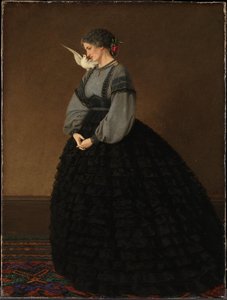
Lady with a Dove: Madame Loeser (1864) aut. John Edward Brett

Lady with a Dove: Madame Loeser

1864 · Oil On Canvas · Tate Gallery, Londonas

The gaze meets Lady with a Dove: Madame Loeser, a portrait that holds its subject in a quiet, suspended moment. Painted by John Edward Brett in 1864, the work presents a woman caught in a stillness that feels both intimate and profound. This oil on canvas captures a specific presence, one that remains part of the esteemed Tate collection.

2
Forest Cove, Cardigan Bay (1883) aut. John Edward Brett

Forest Cove, Cardigan Bay

1883 · Oil · Amgueddfa Cymru, Kardif

The sun hangs high over Cardigan Bay, casting a bright, clear light across a scene of quiet activity. Along the shoreline, the beach is alive with the presence of people, each figure caught in a moment of leisure as they enjoy the warmth of the day. The water meets the land in a gentle rhythm, while several boats drift upon the surface—some resting near the shallow shore and others appearing…

3
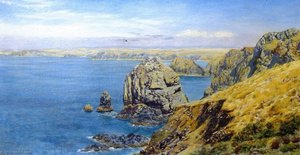
Cape Cornwall from Whitesand Bay (1872) aut. John Edward Brett

Cape Cornwall from Whitesand Bay

1872 · Oil On Panel · Fitzwilliam Museum

The oil on panel painting depicts a rocky shoreline where large boulders are scattered across the foreground and middle ground. These stones meet a sandy beach that extends toward the ocean. The water appears calm, meeting the horizon under a light that provides depth to the scene. In the distance, several small figures are positioned along the shore, appearing as minute details against the scale of the landscape. The composition…

John Edward Brett tapiai, rangos nuo 11 iki 45

žymios John Edward Brett tapiojamos, pagal laikotarpį

Temos, kurios domino John Edward Brett

Ketverios temos, dažniausiai pasikrausto originaluose, kiekvienos su savo puikiausiu pavyzdžiu.

Muziejai, kuriuose saugomi John Edward Brett originalūs darbai

8 muziejai, kuriuose saugoma daugiausia šioje pusėje esamų paveikslų.

Muzejaus Miestas John Edward Brett darbai Šiojo sąrašo paveikslai
Tate Gallery, LondonasTate Gallery Londonas 2 Lady with a Dove: Madame Loeser, Florence from Bellosguardo
Fitzwilliam MuseumFitzwilliam Museum 2 Cape Cornwall from Whitesand Bay, Landscape
Amgueddfa Cymru, KardifAmgueddfa Cymru Kardif 1 Forest Cove, Cardigan Bay
Walker Art Gallery, LiverpulisWalker Art Gallery Liverpulis 1 The Stonebreaker
Tate Britain, LondrasTate Britain Londras 1 The Glacier of Rosenlaui
Sheffield City Art Galleries, ŠefildasSheffield City Art Galleries Šefildas 1 Mount Etna from Taormina, Sicily
Barber Institute of Fine Arts, BirminghamasBarber Institute of Fine Arts Birminghamas 1 Kennack Sands, Cornwall
Russell, BournemouthRussell Bournemouth 1 The Land's End, Cornwall

John Edward Brett, po vieno ikoninio paveikslio kiekvienam dešimtmenės laikotarpiui

Darbai pagal dešimtmečius

Pasirinkite dešimtmetį, kad pamatytėte jį apibrėžusį originalą.

John Edward Brett tapyiniai: galerijos atsakymai

Kuris John Edward Brett paveikslas yra pats garsiausias iš visų?Atsakymas

Lady with a Dove: Madame Loeser (1864), Tate Gallery, Londonas. Toliau seka Forest Cove, Cardigan Bay (1883) ir Cape Cornwall from Whitesand Bay (1872).

Kiek metų buvo John Edward Brett, kai sukūrė Lady with a Dove: Madame Loeser?Atsakymas

34 metų amžiaus: Lady with a Dove: Madame Loeser sukurta 1864 m. Nr. John Edward Brett gimė 1830.

Kuriose yra 10 geriausių John Edward Brett paveikslų?Atsakymas

Lady with a Dove: Madame Loeser, Forest Cove, Cardigan Bay, Cape Cornwall from Whitesand Bay, Landscape, Val di Cogne, Switzerland, Preliminary watercolor sketch for 'The Glacier of Rosenlaut], Norbury on the Mole, The Stonebreaker, The Glacier of Rosenlaui ir Florence from Bellosguardo. Viršuje esančioje reitingo sąraše nurodyta kiekvieno kūrinio metis ir muziejus.

Kiek kūrinių sukūrė John Edward Brett?Atsakymas

Mūsų kataloge yra 48 John Edward Brett darbų, skirtų laikotarpiui nuo 1850 iki 1891.

Kur kabinami garsiausi John Edward Brett originalūs darbai?Atsakymas

Daugiausia – Tate Gallery (Londonas), Fitzwilliam Museum ir Amgueddfa Cymru (Kardif). Viršuje esančiame muziejų sąraše yra visi jie.

Kada John Edward Brett sukūrė savo garsiausias paveikslus?Atsakymas

1870s laikotarpiu: 22 iš 45 šioje pusėje esančių darbų buvo sukurtos tada, iš jų Cape Cornwall from Whitesand Bay.

Kokie yra ankstyviausi ir vėliausi garsieji John Edward Brett kūriniai?Atsakymas

Šioje pusėje seniausias darbas yra Head of a Young Boy (1850), o naujausias – The Isles of Skomer and Skokholm (1891).

Kurią temą John Edward Brett kūrė dažniausiai?Atsakymas

Beach (5), Saints (5) ir Coastal landscape (3) iš 45 šioje pusėje esamų darbų.

Su kokiu kierliu siejama John Edward Brett?Atsakymas

Pre-raphaelite ir Romanticism, vadovaujantis šios puslapio originalais kūriniais.

Kurių John Edward Brett originalų turi Tate Gallery?Atsakymas

Lady with a Dove: Madame Loeser ir Florence from Bellosguardo: Tate Gallery, Londonas kolekcijoje yra 2 šioje pusėje esančių darbų.

John Edward Brett: menininkas

John Edward Brett: A Pioneer of Scientific Landscape Painting

John Edward Brett (1830-1902) stands as a pivotal figure in British Pre-Raphaelite art, distinguished by his unwavering dedication to meticulous observation and artistic representation of the natural world. Born in Lincolnshire, England, Brett’s formative years instilled within him a profound fascination for geology and botany – passions that would irrevocably shape his artistic vision and propel him to become one of the foremost landscape painters of his era. Unlike many of his contemporaries who prioritized idealized beauty, Brett approached nature with a scientist's rigor, meticulously documenting geological formations and plant species with unparalleled accuracy. This commitment to scientific detail wasn’t merely an intellectual pursuit; it served as the bedrock for his artistic endeavors, informing his compositions and imbuing them with palpable realism.
  • Early Life & Education: Brett's upbringing fostered a love of science alongside artistic inclination. He studied at Lincoln Art School and later honed his skills at the Royal Academy in London, absorbing influences from artists like Turner and Ruskin – figures who championed the revival of medieval art and advocated for a return to naturalistic representation.
  • The Cornish Influence: Brett’s artistic breakthrough occurred during his expeditions to Cornwall, where he embarked on extensive geological surveys alongside fellow Pre-Raphaelites. The rugged coastline, dramatic granite tors, and vibrant flora captivated him, inspiring a prolific output of paintings depicting these landscapes with breathtaking detail.
  • Technique & Style: Brett’s distinctive style is characterized by thick impasto brushstrokes—a technique deliberately chosen to convey the texture and physicality of stone and vegetation. He employed glazing methods to achieve luminous color palettes that captured the subtleties of light and atmosphere, mirroring Ruskin's belief in the importance of capturing “the spirit of place.”

Notable Works & Artistic Achievements

Brett’s oeuvre encompasses a remarkable range of subjects, reflecting his multifaceted interests. Among his most celebrated paintings are "Cape Cornwall from Whitesand Bay," "Head of a Young Boy," and "The Glacier of Rosenlaui"—each demonstrating his mastery of landscape painting and his ability to convey profound emotional resonance. “Cape Cornwall” exemplifies his meticulous geological rendering, capturing the grandeur of Cornwall’s coastline with astonishing precision. Similarly, “Head of a Young Boy,” showcases Brett's skill in portraiture alongside his commitment to realism. However, it was "The Glacier of Rosenlaui" that cemented his reputation as a visionary artist—a monumental canvas depicting the sublime beauty of Switzerland’s glacial landscape and embodying Ruskin’s aesthetic ideals.

Legacy & Historical Significance

John Edward Brett’s contribution to British art extends far beyond his individual paintings. He championed Ruskin’s aesthetic philosophy—a belief that art should serve as a conduit for moral instruction and inspire contemplation of the natural world—establishing himself as one of the foremost voices advocating for scientific observation within artistic practice. His meticulous depictions of landscapes resonated deeply with Victorian audiences, fostering an appreciation for geological science and bolstering the Pre-Raphaelite movement’s commitment to portraying nature truthfully. Today, Brett's artworks continue to inspire admiration for their technical brilliance and emotional depth—testaments to his enduring legacy as a pioneer of scientific landscape painting and a champion of Ruskinian ideals.