Jacques Stella portretas

45 garsiausių Jacques Stella paveikių rinkinys: galerijos išboru

Atnaujinta lapkritis 2026 · pagal mūsų populiarumumo koeficientą (paieškos, lankytojai ir užsakymai kiekvienam kūriniui) · 48 Jacques Stella darbai mūsų kataloge

Trumpai tariant

Iš visų paliktų originalų kūrinių Jacques Stella garsiausias yra The Madonna and Child (1642), esantis Ermitažas kolekcijoje, Šv. Peterburgas. Tiesiog už jų seka Madonna and Christ Child, with St John the Baptist and Angels (1650) ir Christ on the Cross and Saint Mary Magdalene (1625). Mūsų kataloge yra 48 darbų autoriaus Jacques Stella; galerija išsaugojo 45 labiausiai pasaulyje žyminiausių kūrinių – kiekvienas jų pateikiamas su datos, muziejaus ir istorijos aprašymu.

1596 – 1657, Lyonas Baroque Daugiausia darbų: Liuvro muziejus

Jacques Stella geriausios 10 paveikslų: galerijos pasirinkimas

1
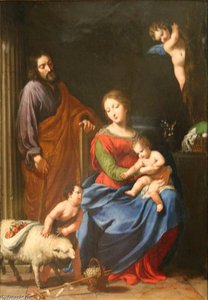
The Madonna and Child (1642) aut. Jacques Stella

The Madonna and Child

1642 · Oil · Ermitažas, Šv. Peterburgas

The Madonna and Child emerges from the shadows of the seventeenth century, a tender moment captured in oil by the French Baroque painter Jacques De Stella. Born in 1596, the artist brings a sense of profound stillness to this religious scene. The work dates to about 1642, a period when De Stella’s brushwork carries the weight of both Florentine precision and the dramatic light of the Baroque era. He moves…

2
Madonna and Christ Child, with St John the Baptist and Angels (1650) aut. Jacques Stella

Madonna and Christ Child, with St John the Baptist and Angels

1650 · Oil · Ermitažas, Šv. Peterburgas

In this intimate religious work, titled Madonna and Christ Child, with St John the Baptist and Angels, we encounter a quiet moment of devotion. The painting, created in France, captures a sacred gathering centered around the Virgin Mary and the infant Jesus. It is a piece that invites a closer look at the tender dynamics between the holy figures present.

3
Christ on the Cross and Saint Mary Magdalene (1625) aut. Jacques Stella

Christ on the Cross and Saint Mary Magdalene

1625 · Oil

The scene unfolds in a moment of profound sorrow, capturing Christ on the Cross and Saint Mary Magdalene. This religious oil painting by Jacques Stella brings the viewer into the immediate presence of the Crucifixion. The pale, illuminated figure of Christ hangs against a dark, nocturnal sky, while Saint Mary Magdalene remains at the foot of the cross, her presence a heavy weight of grief and devotion. The air feels…

4
Christ and the Samaritan Woman (1640) aut. Jacques Stella

Christ and the Samaritan Woman

1640 · Oil

The scene unfolds in 1640, capturing a profound moment of encounter in Christ and the Samaritan Woman. Jacques Stella brings this biblical narrative to life, focusing on the pivotal meeting between Jesus and the woman at the well. The air seems to hold its breath as the two figures engage, their presence anchored by the stone structure of the well that serves as the heart of their interaction.

5
Self-portrait (1640) aut. Jacques Stella

Self-portrait

1640 · Oil On Canvas · Lyon grožio mokslų muziejus, Liona

The painting presents a close-up view of a man, focused on the face and upper body against an undefined, dark background. A single light source originates from the upper left, casting the right side of the subject's features into deep shadow. This lighting highlights the bridge of the nose, the lips, and the texture of the skin. The subject is positioned centrally, creating a direct gaze toward the viewer. He…

6
The Nativity (1639) aut. Jacques Stella

The Nativity

1639 · Oil On Canvas · Bowes Museum, Barnard Castle

The air inside the stable feels heavy with the scent of hay and the warmth of a recent miracle. A soft, golden light spills through a window to the right, cutting through the dimness to illuminate the central figures. Mary and Joseph lean inward, their bodies forming a quiet, pyramidal shape that draws the eye toward the infant Jesus. The child lies at the heart of this composition, a small…

7
Risen Jesus Christ appearing to his mother (1650) aut. Jacques Stella

Risen Jesus Christ appearing to his mother

1650 · Oil

The Resurrection is rendered here through a rare and demanding medium: oil on a translucent, polished stone slab, likely agate or onyx. This choice of substrate dictates the work's unique luminosity. The background is not a static void but a swirling, textured expanse of golden-brown, where the natural veins of the stone integrate with the painted figures. Christ emerges as a muscular, luminous presence, draped in flowing pink and red…

8
Jacob's Ladder (1650) aut. Jacques Stella

Jacob's Ladder

1650 · Painting · Los Angelos apygardos meno muziejus, Los Anželesas

In Jacob's Ladder, Jacques Stella captures a moment of profound spiritual intersection. Created about 1650, the work presents the biblical scene of Jacob's Ladder, where the boundary between the earthly and the divine begins to dissolve. The subject matter functions as a symbol of divine communication and transcendence, inviting a sense of wonder at the connection between heaven and earth. This celestial encounter unfolds within a dreamlike atmosphere, where the…

9
MINERVE CHEZ LES MUSES aut. Jacques Stella

MINERVE CHEZ LES MUSES

Oil On Canvas · Liuvro muziejus, Paryžius

To gaze upon this magnificent depiction of Minerve Chez les Muses is to step directly into the golden age of classical mythology, a moment suspended in an eternal afternoon of intellectual bloom. The scene unfolds with breathtaking richness, presenting Minerva, the embodiment of wisdom and strategic thought, surrounded by her divine companions—the Muses, goddesses patronizing the arts and sciences. It is more than just a painting; it is a vibrant…

10
The Martyrdom of St Stephen (1623) aut. Jacques Stella

The Martyrdom of St Stephen

1623 · Oil · Fitzwilliam College, Cambridge

Jacques Stella captured the heavy weight of sacrifice in this depiction of The Martyrdom of St Stephen. Created about 1623, the work presents a moment of profound tension. The scene focuses on the saint as he faces his end, surrounded by the physical reality of his persecution. It is a study of devotion held against the violence of a crowd.

Jacques Stella darba rinkinys tęsiamas, nuo 11 iki 45

11The Rest on the Flight into Egypt (1639) aut. Jacques StellaThe Rest on the Flight into Egypt1639 12The Virgin and Child with Saint John the Baptist and Child Angels (1640) aut. Jacques StellaThe Virgin and Child with Saint John the Baptist and Child Angels1640 · National Trust 13Salome with the Head of Saint John the Baptist (1637) aut. Jacques StellaSalome with the Head of Saint John the Baptist1637 · National Trust 14SAINTE CECILE JOUANT DE L'ORGUE aut. Jacques StellaSAINTE CECILE JOUANT DE L'ORGUELiuvro muziejus 15Judgment of Solomon aut. Jacques StellaJudgment of SolomonKunsthistorisches Museum 16King Candaules of Lydia Showing His Wife to Gyges aut. Jacques StellaKing Candaules of Lydia Showing His Wife to GygesJohn and Mable Ringling Museum of Art 17Virgin and Child aut. Jacques StellaVirgin and Child 18The Rape of the Sabines aut. Jacques StellaThe Rape of the Sabines 19Massacre Of The Innocents aut. Jacques StellaMassacre Of The Innocents 20LOUIS II DE BOURBON, DUC D'ENGHIEN aut. Jacques StellaLOUIS II DE BOURBON, DUC D'ENGHIENCondé muziejus 21La mort de Saint Joseph aut. Jacques StellaLa mort de Saint JosephMusée de Grenoble 22Sainte Anne conduisant la Vierge au temple aut. Jacques StellaSainte Anne conduisant la Vierge au temple 23La Vierge donnant la bouillie à l'enfant Jésus, avec un angelot soufflant sur le réchaud aut. Jacques StellaLa Vierge donnant la bouillie à l'enfant Jésus, avec un angelot soufflant sur le réchaud 24L'Enfance du Christ La Sainte Famille aut. Jacques StellaL'Enfance du Christ La Sainte Famille 25Repos de la Sainte Famille aut. Jacques StellaRepos de la Sainte Famille 26LA VIERGE, L'ENFANT JESUS ET SAINT JEAN BAPTISTE aut. Jacques StellaLA VIERGE, L'ENFANT JESUS ET SAINT JEAN BAPTISTE 27TRIOMPHE DE LOUIS XIII SUR LES ENNEMIS DE LA RELIGION aut. Jacques StellaTRIOMPHE DE LOUIS XIII SUR LES ENNEMIS DE LA RELIGION 28The Marriage of the Virgin aut. Jacques StellaThe Marriage of the VirginSzépművészeti Múzeum 29Clelie Passant Le Tibre aut. Jacques StellaClelie Passant Le Tibre 30French, (1596-1657) aut. Jacques StellaFrench, (1596-1657) 31The Holy Family aut. Jacques StellaThe Holy Family 32The Liberality Of Louis Xiii And Cardinal Richelieu aut. Jacques StellaThe Liberality Of Louis Xiii And Cardinal Richelieu 33Minerva and the muses aut. Jacques StellaMinerva and the muses 34Le Bapteme Du Christ aut. Jacques StellaLe Bapteme Du Christ 35La Sainte Famille aut. Jacques StellaLa Sainte Famille 36Sémiramis Appelée Au Combat aut. Jacques StellaSémiramis Appelée Au Combat 37Portrait De Jacques Stella Et De Sa Mère aut. Jacques StellaPortrait De Jacques Stella Et De Sa Mère 38Sainte Famille Avec Saint Jean-baptiste. aut. Jacques StellaSainte Famille Avec Saint Jean-baptiste.Musée Fabre 39The Liberality Of Titus, Allegory Of The Liberality Of Louis Xiii And Cardinal Richelieu aut. Jacques StellaThe Liberality Of Titus, Allegory Of The Liberality Of Louis Xiii And Cardinal RichelieuHarvard Art Museums 40Mariage de la Vierge aut. Jacques StellaMariage de la ViergeMusée des Augustins 41Rest On The Flight Into Egypt aut. Jacques StellaRest On The Flight Into EgyptVilanovos karaliaus Jono III lankomų rūmų muziejus 42Jésus Christ reçoit la Vierge dans le ciel aut. Jacques StellaJésus Christ reçoit la Vierge dans le cielLiuvro muziejus 43CLELIE PASSANT LE TIBRE aut. Jacques StellaCLELIE PASSANT LE TIBRELiuvro muziejus 44Solomon Worshipping Idols (1647) aut. Jacques StellaSolomon Worshipping Idols1647 · Lyon grožio mokslų muziejus 45Solomon Receiving the Queen of Sheba (1650) aut. Jacques StellaSolomon Receiving the Queen of Sheba1650 · Lyon grožio mokslų muziejus

Temos, kurios domino Jacques Stella

Ketverios temos, dažniausiai pasikrausto originaluose, kiekvienos su savo puikiausiu pavyzdžiu.

Muziejai, kuriuose saugomi Jacques Stella originalūs darbai

8 muziejai, kuriuose saugoma daugiausia šioje pusėje esamų paveikslų.

Muzejaus Miestas Jacques Stella darbai Šiojo sąrašo paveikslai
Liuvro muziejus, ParyžiusLiuvro muziejus Paryžius 4 MINERVE CHEZ LES MUSES, SAINTE CECILE JOUANT DE L'ORGUE, Jésus Christ reçoit la Vierge dans le ciel
Lyon grožio mokslų muziejus, LionaLyon grožio mokslų muziejus Liona 3 Self-portrait, Solomon Worshipping Idols, Solomon Receiving the Queen of Sheba
Ermitažas, Šv. PeterburgasErmitažas Šv. Peterburgas 2 The Madonna and Child, Madonna and Christ Child, with St John the Baptist and Angels
National Trust, TemsasNational Trust Temsas 2 The Virgin and Child with Saint John the Baptist and Child Angels, Salome with the Head of Saint John the Baptist
Bowes Museum, Barnard CastleBowes Museum Barnard Castle 1 The Nativity
Los Angelos apygardos meno muziejus, Los AnželesasLos Angelos apygardos meno muziejus Los Anželesas 1 Jacob's Ladder
Fitzwilliam College, CambridgeFitzwilliam College Cambridge 1 The Martyrdom of St Stephen
Kunsthistorisches Museum, VienaKunsthistorisches Museum Viena 1 Judgment of Solomon

Jacques Stella dešimtmetėms po dešimtmetės: originalus kūrinys, apibūdinantis kiekvieną iš jų

Darbai pagal dešimtmečius

Pasirinkite dešimtmetį, kad pamatytėte jį apibrėžusį originalą.

Kolekcjonerų klausimai apie Jacques Stella paveikslus

Kuriu darbu Jacques Stella yra labiausiai garsus?Atsakymas

The Madonna and Child (1642), Ermitažas, Šv. Peterburgas. Toliau seka Madonna and Christ Child, with St John the Baptist and Angels (1650) ir Christ on the Cross and Saint Mary Magdalene (1625).

Kokia buvo Jacques Stella amžius, kai buvo sukurtas The Madonna and Child?Atsakymas

46 metų amžiaus: The Madonna and Child sukurta 1642 m. Nr. Jacques Stella gimė 1596.

Kokie yra 10 garsiausių Jacques Stella paveikslų?Atsakymas

The Madonna and Child, Madonna and Christ Child, with St John the Baptist and Angels, Christ on the Cross and Saint Mary Magdalene, Christ and the Samaritan Woman, Self-portrait, The Nativity, Risen Jesus Christ appearing to his mother, Jacob's Ladder, MINERVE CHEZ LES MUSES ir The Martyrdom of St Stephen. Viršuje esančioje reitingo sąraše nurodyta kiekvieno kūrinio metis ir muziejus.

Kiek paveikslų paliko Jacques Stella?Atsakymas

Mūsų kataloge yra 48 Jacques Stella darbų, skirtų laikotarpiui nuo 1623 iki 1650.

Kuriuose muziejuose eksponuojami Jacques Stella šedevrai?Atsakymas

Daugiausia – Liuvro muziejus (Paryžius), Lyon grožio mokslų muziejus (Liona) ir Ermitažas (Šv. Peterburgas). Viršuje esančiame muziejų sąraše yra visi jie.

Kuriomis metais Jacques Stella tapo savo garsiausius kūrinius?Atsakymas

1640s laikotarpiu: 5 iš 45 šioje pusėje esančių darbų buvo sukurtos tada, iš jų The Madonna and Child.

Kokie yra pirmasis ir paskutinis garsieji Jacques Stella originalūs darbai?Atsakymas

Šioje pusėje seniausias darbas yra The Martyrdom of St Stephen (1623), o naujausias – Madonna and Christ Child, with St John the Baptist and Angels (1650).

Kurią temą Jacques Stella rinkosi dažniausiai?Atsakymas

Woman (7), Man (5) ir Landscape (4) iš 45 šioje pusėje esamų darbų.

Kurią techniką Jacques Stella naudojo dažniausiai?Atsakymas

Oil, iš 45 šios puslapio darbų – 10.

Kelią meno kryptį priklauso Jacques Stella?Atsakymas

Baroque, vadovaujantis šios puslapio originalais kūriniais.

Kurių Jacques Stella darbai eksponuojami Liuvro muziejus?Atsakymas

MINERVE CHEZ LES MUSES, SAINTE CECILE JOUANT DE L'ORGUE ir Jésus Christ reçoit la Vierge dans le ciel: Liuvro muziejus, Paryžius kolekcijoje yra 4 šioje pusėje esančių darbų.

Jacques Stella: gyvenimas ir kūryba

Jacques de Stella: Klasikizmo tiltas tarp Florencijos ir Paryžiaus

Jacques de Stella (1596–1657) yra viena iš svarbiausių XVII amžiaus Prancūzijos meno figūrų – tapas, kurio karjera sklandžiai sujungė griežtus Florentos klasicizmo principus su augančiu Romas įtakos dinamizmu. Limonane gimęs šeimoje, gausiai prisidėrusioje prie meno tradicijų – jo tėvas, François Stella, buvo flamandų kilmės tapas ir verslininkas – Jacques de Stella ankstyvoji gyvenimo etapa laidė pagrindus neįtikėtinai įspūdingai kūrybos keliui. Nors tėvas mirė nepasidalijęs oficialiu mokymu, Stella šeimos aplinka, kurioje kūrybinis dialogas ir meno praktika buvo kasdienybė (įskaitant sculptorę Madeleine ir dailininką François jaunesi*>(François the Younger)), suteikė jam tvirtą pagrindą. Ši šeimyninė kooperacija kartu su jokio dėdio Antoine Stella meno paieškomis stūmė jį link gyvenimo, skirtos vizualinei išraiškai.

Stella meninis kelias prasidėjo Limane, kur jis tobulino savo įgūdžius prieš pradėdamas transformatyvų Florencijos etapą tarp 1616 ir 1621 metų. Šis viešniavimas Cosimo II de' Medicie karališkajamee aplinkoje tapo itin įtakingu. Dirbdamas kartu su Jacques Callot, Stella pasindulė į Renesanso meno idėljas, pasisavindamas itin tikslų detalų vaizdavimą, subalansuotas kompozicijas ir gilias moralines naracijas, būdingas florentiniam tapui. Florencijos įtampa yra neabejotinai pastebima visame jo kūrybos veiklos apimtyje, ypač meistriškai naudojant perspektyvą, audinių tekstūras bei religinių figūrų vaizdavimą su puikia dignity solemnity (dignifikuota solemnity).

Romos metai: Poussin’o šešėlis ir papalinis globos

Po Cosimo II mirties 1621 metais Stella persikeliai į Romą, kur kitą dešimtmetį kūrė savo reputaciją gerbiamos, aukšosios lygmens meistro. Šis laikotarpis tapo esminiu jo meninės jautros transformacijos etapu, kurį lydėjo vis toli platesnis susidvejinimas su klasikinia antikuite ir, kas svarbiausia, su Nicolas Poussin’o mokslėmis. Poussin’o akcentas į šviesą, spalvų harmoniją ir idealizuotas formos itin giliai atgimė vėliau Jacques Stella kūryboje, peržvelgdamas naują kompozicijos ir temų suvokimą. Jų draugystė pelnė bendrą siekį siekiant aiškumo, nuoliodos ir dvasinės gylio – šių savybių vėliau tapo neįžengiamais Stella stiliaus žyminimo ženklai.

Romos laikotarpį Stella karjeros papildomai išskirė popiežiaus Urban VIII globos dalis, kuris atpažino itin išskirtą talento galią ir užsakė daugybę kūdarinių darbų. Šie užsakai apėmė ne tik tradicinius paveikslus ant lentelės, bet ir itin sudėtingus, subtilius paveikslus ant kamienių – onyxo, lazurito ar skliačiaus. Šie užsakai demonstruoja techninę Stella virtuoziją bei gebėjimą sudėtingus naratyvus paversti vizualiai įtraukiančiais formų šedevrais. Jo darbai šiuo laikotarpiu atskleidė meistrišką technikos valdymą, kurį galima pajusti per itin tikslų tekstūrų vaizdavimą, subtilius šviesos ir šešėlio nuolydas bei harmoningą figūrų integraciją į jų aplinką.

Religiški temos ir karališka pripažinimas

Stella kūrybos darbai buvo ypač orientuoti į religinius motyvus, o ryškiausias jų pasireiškė skausmingose ir jautriose „Chrystuso vaikystės“ vaizduotėse. Iš viso egzistuoja penkios skirtingos šios ikoninės scenos versijos, iš kurių kiekviena siūlo subtiliai skirtingą pasakojimo interpretaciją. Šie paveikslai nėra tik biblijinių įvykių atvaizdavimai; jie yra prispięti giliu švelnumo, pažeidžiamumo ir dvasinės kontemplacijos pojūčiu. Meticingas detalumas, kuriuo Stella vaizduoja kūdikiuko Jėzaus santykį su jo tėvais – Marija ir Jozapais – liudija jo gilią žmogeriškų emocijų supratimą bei gebėjimą per vizualinę vaizdinę menę perteikti sudėtingas teologines idėjas.

1634 metais Stella grįžo į Lyoną, o vėliau, 1635 m., persikeldė į Paris. Jo atvykimas į sostinę tapo svarbiu karjeros lūžiu. Jiškos Kardinalas Richelieu pristatė jį karui Ludvikui XIII, todėl jis gavo prestižingą „Peintre du Roi“ (Karolio paveikslininkas) titulą – padėjęs jam užtikrinti karališką rėmimą ir garantuotą 1000 liras pensioną. Šis pripažinimas sutvirtino Jacques Stella statusą kaip vieno iš svarbiausių Prancūzijos menininkų, leisdamas jam tęsti meninę veiklą siekiant lengvų, tačios saugumo ir laivesnės kūrybos laivesnės.

Kolekcineris ir palikimas

Nebengalint į tai, kad jis buvo gausios kūrybos ir graviravimo veiklos meistras, Jacques Stella visą savo gyvenimą buvo aistringas meno kolekcionierius. Jis sukaupė stulbinančią Poussin’o, Raphael’io ir Michelangelo kūrinių kolekciją, papildomą Leonardo da Vinci pieškiniais – tai liudija gilią pagarbą praeities meno paveldui. Jo atsidavimas saugoti ir studijuoti šiuos šedevrus pabrėžia jo ištikimybą tiek meninei kūrybai, tiek istorijos mokslui.

Stella karjera tęsėsi kelis dešimtmečius, pasižymėdama neįtikėtinu gebėjimu prisitaikyti ir atvirumu įvairioms meninės stilių formoms. Jis mirė Paryzuje, palikdamas po savęs didelį kūrybos korpusą, kuris ir šiandien yra kaumintomas dėl savo elegancijos, techninio meistriškumo bei gilaus dvasinio gylio. Jo įtaka būsimoms Prancūzijos dailininkų kartoms yra neabejotinga, užtvirtinant jo vietą kaip pagrindinę figūrą perei_{[e]} nuo manierizmo prie klasicizmo ir kaip gyvybišką ryšį tarp Florencijos bei Prancūzijos meno tradicijų.