Giulio Romano portretas

100 garsiausių Giulio Romano paveikių – kiekvienas yra unikalus

Atnaujinta spalis 2026 · pagal mūsų populiarumumo koeficientą (paieškos, lankytojai ir užsakymai kiekvienam kūriniui) · 114 Giulio Romano darbai mūsų kataloge

Trumpai tariant

Vault: The Assembly of Gods around Jupiter's Throne (1532) yra Giulio Romano paveikslas, kuriuo gausiausia žmonių žavisi. Po to akmuo patenka į View of the Sala dei Giganti (vault and south wall) (1526) ir Tapestry with Playing Putti (1545). Iš 114 Giulio Romano darbų mūsų kataloge šios 100 yra garsiausios – kiekvienas yra unikali originali dai̇lia, pateikta su jos metais, muziejumi ir priežastimi, kodėl ji išlieka per amžius.

1499 – 1546, Roma Manierizmas Daugiausia darbų: Palazzo del Tè

10 geriausių Giulio Romano paveikslų: galerijos akimais

1
Vault: The Assembly of Gods around Jupiter's Throne (1532) aut. Giulio Romano

Vault: The Assembly of Gods around Jupiter's Throne

1532 · Fresco

Vault: The Assembly of Gods around Jupiter's Throne is a significant fresco by Giulio Romano. Executed in 1532, the work occupies the ceiling of the Sala dei Giganti within the Palazzo del Tè in Mantua, Italy. This monumental decoration reflects the artist's departure from the classical harmony of the High Renaissance toward the expressive tension of Mannerism.

2
View of the Sala dei Giganti (vault and south wall) (1526) aut. Giulio Romano

View of the Sala dei Giganti (vault and south wall)

1526 · Fresco · Palazzo del Tè, Mantua

To gaze upon this magnificent fresco, View of the Sala dei Giganti (vault and south wall), is to step directly into the vibrant heart of the High Renaissance. Painted in 1526 by the masterful hand of Giulio Romano, this work transcends mere decoration; it is a profound narrative tapestry woven from human drama, natural vitality, and divine symbolism. The scene explodes with life, drawing the viewer into a monumental gathering…

3
Tapestry with Playing Putti (1545) aut. Giulio Romano

Tapestry with Playing Putti

1545 · Tapestry · Museo Poldi Pezzoli, Milanas

To gaze upon this depiction of a tapestry with playing putti is to step directly into an idealized moment plucked from the heart of the Italian Renaissance. It is more than just a painting; it is a captured breath of youthful exuberance, rendered with the masterful touch characteristic of Giulio Romano. The scene unfolds as a vibrant pastoral tableau, where several cherubic figures—the beloved putti—engage in playful revelry. Their presence…

4
Allegory of the Virtues of Federico II Gonzaga (1531) aut. Giulio Romano

Allegory of the Virtues of Federico II Gonzaga

1531 · Fresco · J. Paul Getty muziejus, Los Andželis

To stand before an image like the Allegory of the Virtues of Federico II Gonzaga is to step directly into the vibrant, intellectual heart of the Italian High Renaissance transitioning into Mannerism. This monumental work, executed in 1531 by Giulio Romano, is far more than a mere depiction of figures; it is a carefully orchestrated philosophical statement rendered in pigment and plaster. The scene unfolds with an almost theatrical richness,…

5
The Lovers (1525) aut. Giulio Romano

The Lovers

1525 · Oil On Canvas · Ermitažas, Šv. Peterburgas

Giulio Romano’s “The Lovers,” painted around 1525, isn't merely a depiction of intimacy; it’s a meticulously crafted tableau brimming with symbolism and echoing the complex currents of the High Renaissance. Born Giulio Pippi in Rome around 1499, Romano swiftly ascended through the ranks of Raphael’s studio, absorbing the master’s classical ideals while simultaneously forging his own distinctive Mannerist style – a style characterized by heightened emotion, distorted forms, and an…

6
Adoration of the Shepherds (detail) (1535) aut. Giulio Romano

Adoration of the Shepherds (detail)

1535 · Oil · Liuvro muziejus, Paryžius

This detail from 1535 captures a fragment of a larger religious narrative, focusing on the human response to a divine presence. A central figure, distinguished by a large staff topped with a cross, anchors the composition. The arrangement of figures creates a sense of depth through overlapping forms and varying scales, drawing the eye from the immediate foreground into a complex, crowded space. The composition avoids the static balance of…

7
The Birth of Bacchus (1533) aut. Giulio Romano

The Birth of Bacchus

1533 · Acrylic On Canvas · J. Paul Getty muziejus, Los Andželis

Giulio Romano's "The Birth of Bacchus," a monumental charcoal and chalk drawing from 1533, isn’t merely a depiction of a mythological scene; it’s a visceral exploration of human drama, a raw sketch brimming with energy and symbolic weight. Born Giulio Pippi in Rome around 1499, Romano emerged as a pivotal figure within the waning embers of the High Renaissance, swiftly absorbing the influence of Raphael while forging his own distinctive…

8
Flaying of Marsyas (1525) aut. Giulio Romano

Flaying of Marsyas

1525 · Oil On Canvas · Liuvro muziejus, Paryžius

Giulio Romano’s “Flaying of Marsyas” isn't merely a depiction of a mythological punishment; it’s a visceral embodiment of struggle, humiliation, and the brutal intersection of divine power and mortal defiance. Painted in 1525-35 during his tenure as court artist for Duke Federico Gonzaga of Mantua, this monumental fresco – now meticulously reproduced on canvas – plunges the viewer directly into the heart of Ovid’s *Metamorphoses*. The story itself is a…

9
Victory, Janus, Chronos, and Gaea (1532) aut. Giulio Romano

Victory, Janus, Chronos, and Gaea

1532 · Acrylic On Canvas · J. Paul Getty muziejus, Los Andželis

A Tapestry of Time and Transformation: Giulio Romano’s “Victory, Janus, Chronos, and Gaea” Giulio Romano's "Victory, Janus, Chronos, and Gaea," painted in 1532-1534 during his illustrious tenure as court artist for Federico II Gonzaga of Mantua, is more than just a visually arresting fresco; it’s a profound meditation on the cyclical nature of time, the duality of existence, and the very essence of Roman mythology. Born Giulio Pippi in Rome…

10
View of the Palazzo del Tè (1526) aut. Giulio Romano

View of the Palazzo del Tè

1526 · Acrylic On Canvas · Palazzo del Tè, Mantua

A Vision of Renaissance Grandeur: Exploring Giulio Romano’s Palazzo del Té Giulio Romano's *View of the Palazzo del Té* stands as a testament to the zenith of Mannerist art and architectural ambition—a project conceived by Federico Gonzaga, Duke of Mantua, between 1526 and 1534. More than just a building, it embodies an entire worldview: a deliberate rejection of linear perspective and idealized beauty in favor of dramatic illusionism and psychological…

žinomi Giulio Romano paveikslai, nuo 11 iki 100 numerio

11Evangelist symbols (1522) aut. Giulio RomanoEvangelist symbols1522 · Kunsthistorisches Museum 12View of the Salone dei Cavalli (1526) aut. Giulio RomanoView of the Salone dei Cavalli1526 13The Old Woman and Vulcan, Tribute to Apollo (1526) aut. Giulio RomanoThe Old Woman and Vulcan, Tribute to Apollo1526 14Nude Child with Open Arms aut. Giulio RomanoNude Child with Open ArmsGalleria degli Uffizi 15The Holy Family (1520) aut. Giulio RomanoThe Holy Family1520 · J. Paul Getty muziejus 16An Allegory of Immortality (1540) aut. Giulio RomanoAn Allegory of Immortality1540 · Detroito meno institutas 17The Holy Family, St John with a small Bird in his Hand (1530) aut. Giulio RomanoThe Holy Family, St John with a small Bird in his Hand1530 · Statens Museum For Kunst 18The Holy Family with the Infant Saint John the Baptist (1520) aut. Giulio RomanoThe Holy Family with the Infant Saint John the Baptist1520 · Škotijos Nacionalinė galerija 19Madonna and Child with the Infant St. John (1516) aut. Giulio RomanoMadonna and Child with the Infant St. John1516 20The Virgin and Child (1518) aut. Giulio RomanoThe Virgin and Child1518 · Apsley House 21Tarquin and Lucretia (1536) aut. Giulio RomanoTarquin and Lucretia1536 · Palazzo Ducale 22'The Horse ''Morel favorito''' (1526) aut. Giulio Romano'The Horse ''Morel favorito'''1526 23St. John the Baptist in the Wilderness (1520) aut. Giulio RomanoSt. John the Baptist in the Wilderness1520 24Nurture of Jupiter (1533) aut. Giulio RomanoNurture of Jupiter1533 · Blickling Hall 25Group of three lictors (1530) aut. Giulio RomanoGroup of three lictors1530 · Nacionalinis muziejus Varšuvoje 26Tapestry Cartoon: Two Heads from the Massacre of the Innocents (1522) aut. Giulio RomanoTapestry Cartoon: Two Heads from the Massacre of the Innocents1522 · Škotijos Nacionalinė galerija 27Bacchus and Ariadne (1530) aut. Giulio RomanoBacchus and Ariadne1530 · Statens Museum For Kunst 28Vertumnus and Pomona (1530) aut. Giulio RomanoVertumnus and Pomona1530 · Statens Museum For Kunst 29Female nude, half figure (1527) aut. Giulio RomanoFemale nude, half figure1527 30Vaulted ceiling (8) (1526) aut. Giulio RomanoVaulted ceiling (8)1526 31Fresco on the east wall (detail) (1532) aut. Giulio RomanoFresco on the east wall (detail)1532 32View of the Sala di Psiche (west wall) (1526) aut. Giulio RomanoView of the Sala di Psiche (west wall)1526 33Fresco on the south wall (detail) (9) (1532) aut. Giulio RomanoFresco on the south wall (detail) (9)1532 34Jupiter Seducing Olympias (1526) aut. Giulio RomanoJupiter Seducing Olympias1526 35Self-portrait (1540) aut. Giulio RomanoSelf-portrait1540 36Tomb of Pietro Strozzi (1529) aut. Giulio RomanoTomb of Pietro Strozzi1529 · Sant'Andrea 37Virgin and Child with the Infant St John (1523) aut. Giulio RomanoVirgin and Child with the Infant St John1523 · Galleria Borghese 38Façade (1526) aut. Giulio RomanoFaçade1526 · Palazzo del Tè 39The Madonna and Child with Saint John the Baptist (1522) aut. Giulio RomanoThe Madonna and Child with Saint John the Baptist1522 · Walters Art Museum 40The Fall of the Gigants from Mount Olympus aut. Giulio RomanoThe Fall of the Gigants from Mount Olympus 41Chariot of the Sun (1526) aut. Giulio RomanoChariot of the Sun1526 42Frieze (detail) (1532) aut. Giulio RomanoFrieze (detail)1532 43Hunting Scene (1527) aut. Giulio RomanoHunting Scene1527 44Hunting Scene (1527) aut. Giulio RomanoHunting Scene1527 45Polyphemus (1526) aut. Giulio RomanoPolyphemus1526 46Ceiling decoration (detail) (12) (1527) aut. Giulio RomanoCeiling decoration (detail) (12)1527 47View of the Sala di Psiche (north and east walls) (1526) aut. Giulio RomanoView of the Sala di Psiche (north and east walls)1526 48View of the Sala di Psiche (south wall) (1526) aut. Giulio RomanoView of the Sala di Psiche (south wall)1526 49Psyche's Second Task (River Deity) (1526) aut. Giulio RomanoPsyche's Second Task (River Deity)1526 50Vaulted ceiling (detail) (10) (1526) aut. Giulio RomanoVaulted ceiling (detail) (10)1526 51Vaulted ceiling (detail) (18) (1526) aut. Giulio RomanoVaulted ceiling (detail) (18)1526 52Psyche Appealing in Vain to Juno (1526) aut. Giulio RomanoPsyche Appealing in Vain to Juno1526 53Portrait of a Woman (detail) (1531) aut. Giulio RomanoPortrait of a Woman (detail)1531 · Royal Collection 54View of the Sala dei Giganti (south and west walls) (1532) aut. Giulio RomanoView of the Sala dei Giganti (south and west walls)1532 55View of the Sala dei Giganti (south wall) (1532) aut. Giulio RomanoView of the Sala dei Giganti (south wall)1532 56The Prisoners (1527) aut. Giulio RomanoThe Prisoners1527 57View of the Sala di Psiche (east wall) (1526) aut. Giulio RomanoView of the Sala di Psiche (east wall)1526 58Vault: The Assembly of Gods around Jupiter's Throne (detail) (1532) aut. Giulio RomanoVault: The Assembly of Gods around Jupiter's Throne (detail)1532 59Ceiling decoration (detail) (11) (1527) aut. Giulio RomanoCeiling decoration (detail) (11)1527 60Fresco on the north wall (detail) (1532) aut. Giulio RomanoFresco on the north wall (detail)1532 61Vaulted ceiling (detail) (17) (1526) aut. Giulio RomanoVaulted ceiling (detail) (17)1526 62Vaulted ceiling (detail) (19) (1526) aut. Giulio RomanoVaulted ceiling (detail) (19)1526 63Emperor Alexander (1532) aut. Giulio RomanoEmperor Alexander1532 64Coat-of-arms (1532) aut. Giulio RomanoCoat-of-arms1532 65View of the Sala dei Giganti (west wall) (1532) aut. Giulio RomanoView of the Sala dei Giganti (west wall)1532 66River Landscape with Springs (1526) aut. Giulio RomanoRiver Landscape with Springs1526 67View of the Salone dei Cavalli (1526) aut. Giulio RomanoView of the Salone dei Cavalli1526 68Fresco on the south wall (detail) (1532) aut. Giulio RomanoFresco on the south wall (detail)1532 69Vaulted ceiling (detail) (16) (1526) aut. Giulio RomanoVaulted ceiling (detail) (16)1526 70Tribute to Apollo (1526) aut. Giulio RomanoTribute to Apollo1526 71Vaulted ceiling (1526) aut. Giulio RomanoVaulted ceiling1526 72View of the Sala dei Giganti (north wall) (1532) aut. Giulio RomanoView of the Sala dei Giganti (north wall)1532 73View of the Sala dei Giganti (east wall) (1532) aut. Giulio RomanoView of the Sala dei Giganti (east wall)1532 74Ceiling decoration (1527) aut. Giulio RomanoCeiling decoration1527 75Cupid and Psyche (1526) aut. Giulio RomanoCupid and Psyche1526 76Design for a Saltcellar (1524) aut. Giulio RomanoDesign for a Saltcellar1524 77Fresco on the south wall (detail) (12) (1532) aut. Giulio RomanoFresco on the south wall (detail) (12)1532 78Fresco on the north wall (detail) (1532) aut. Giulio RomanoFresco on the north wall (detail)1532 79Mars Chasing Adonis from Venus's Pavilion (1526) aut. Giulio RomanoMars Chasing Adonis from Venus's Pavilion1526 80Vault: The Assembly of Gods around Jupiter's Throne (detail) (1532) aut. Giulio RomanoVault: The Assembly of Gods around Jupiter's Throne (detail)1532 81Fresco on the south wall (detail) (10) (1532) aut. Giulio RomanoFresco on the south wall (detail) (10)1532 82The Old Woman and Vulcan (1526) aut. Giulio RomanoThe Old Woman and Vulcan1526 83Ceiling (detail) (1526) aut. Giulio RomanoCeiling (detail)1526 84Tribute to Apollo (1526) aut. Giulio RomanoTribute to Apollo1526 85Ajax Defends Patroclus's Corps (1538) aut. Giulio RomanoAjax Defends Patroclus's Corps1538 · Palazzo Ducale 86View of the Sala di Troia (10) (1536) aut. Giulio RomanoView of the Sala di Troia (10)1536 87View of the Sala di Troia (12) (1538) aut. Giulio RomanoView of the Sala di Troia (12)1538 88Ajax Defends Patroclus's Corps (1538) aut. Giulio RomanoAjax Defends Patroclus's Corps1538 89View of the Sala di Troia (11) (1536) aut. Giulio RomanoView of the Sala di Troia (11)1536 90Façade and courtyard view (1526) aut. Giulio RomanoFaçade and courtyard view1526 · Palazzo del Tè 91Monteluce madonna aut. Giulio RomanoMonteluce madonna 92Venus and Vulcan aut. Giulio RomanoVenus and Vulcan 93Satyr and Boy aut. Giulio RomanoSatyr and Boy 94Copy after Giulio Romano (1536) aut. Giulio RomanoCopy after Giulio Romano1536 · Cleveland Museum of Art 95Virgin with the Child (1520) aut. Giulio RomanoVirgin with the Child1520 · Galleria degli Uffizi 96Triumph of Titus and Vespasian (1537) aut. Giulio RomanoTriumph of Titus and Vespasian1537 · Liuvro muziejus 97Study for the Holy Family (1518) aut. Giulio RomanoStudy for the Holy Family1518 · Liuvro muziejus 98Banquet of Cupid and Psyche aut. Giulio RomanoBanquet of Cupid and PsychePalazzo del Tè 99Saint Mary Magdalene borne by Angels aut. Giulio RomanoSaint Mary Magdalene borne by AngelsNational Gallery 100The Circumcision aut. Giulio RomanoThe CircumcisionLiuvro muziejus

žymios Giulio Romano tapiojamos, pagal laikotarpį

Temos, kurios domino Giulio Romano

Ketverios temos, dažniausiai pasikrausto originaluose, kiekvienos su savo puikiausiu pavyzdžiu.

Muziejai, kuriuose saugomi Giulio Romano originalūs darbai

8 muziejai, kuriuose saugoma daugiausia šioje pusėje esamų paveikslų.

Muzejaus Miestas Giulio Romano darbai Šiojo sąrašo paveikslai
Palazzo del Tè, MantuaPalazzo del Tè Mantua 6 View of the Sala dei Giganti (vault and south wall), View of the Palazzo del Tè, Façade
Liuvro muziejus, ParyžiusLiuvro muziejus Paryžius 6 Adoration of the Shepherds (detail), Flaying of Marsyas, Triumph of Titus and Vespasian
J. Paul Getty muziejus, Los AndželisJ. Paul Getty muziejus Los Andželis 5 Allegory of the Virtues of Federico II Gonzaga, The Birth of Bacchus, Victory, Janus, Chronos, and Gaea
Statens Museum For Kunst, KopenhagaStatens Museum For Kunst Kopenhaga 3 The Holy Family, St John with a small Bird in his Hand, Bacchus and Ariadne, Vertumnus and Pomona
Galleria degli Uffizi, FlorencijaGalleria degli Uffizi Florencija 2 Nude Child with Open Arms, Virgin with the Child
Škotijos Nacionalinė galerija, EdinburgasŠkotijos Nacionalinė galerija Edinburgas 2 The Holy Family with the Infant Saint John the Baptist, Tapestry Cartoon: Two Heads from the Massacre of the Innocents
Palazzo Ducale, MantuaPalazzo Ducale Mantua 2 Tarquin and Lucretia, Ajax Defends Patroclus's Corps
Royal Collection, LondonasRoyal Collection Londonas 2 Portrait of a Woman (detail)

Giulio Romano per dešimtmečius: vieniškas originalas kiekvienam

Darbai pagal dešimtmečius

Pasirinkite dešimtmetį, kad pamatytėte jį apibrėžusį originalą.

Giulio Romano tapų klausimai galerijai

Koks yra garsiausias Giulio Romano kūrinys?Atsakymas

Vault: The Assembly of Gods around Jupiter's Throne (1532). Toliausiai eina View of the Sala dei Giganti (vault and south wall) (1526) ir Tapestry with Playing Putti (1545).

Kuriuo amžiaus atσταση Giulio Romano sukūrė Vault: The Assembly of Gods around Jupiter's Throne?Atsakymas

33 metų amžiaus: Vault: The Assembly of Gods around Jupiter's Throne sukurta 1532 m. Nr. Giulio Romano gimė 1499.

Kurios Giulio Romano dešimt paveikslų yra garsiausi?Atsakymas

Vault: The Assembly of Gods around Jupiter's Throne, View of the Sala dei Giganti (vault and south wall), Tapestry with Playing Putti, Allegory of the Virtues of Federico II Gonzaga, The Lovers, Adoration of the Shepherds (detail), The Birth of Bacchus, Flaying of Marsyas, Victory, Janus, Chronos, and Gaea ir View of the Palazzo del Tè. Viršuje esančioje reitingo sąraše nurodyta kiekvieno kūrinio metis ir muziejus.

Kiek žinoma Giulio Romano darbų?Atsakymas

Mūsų kataloge yra 114 Giulio Romano darbų, skirtų laikotarpiui nuo 1516 iki 1545.

Kur galima pamatyti garsiausių Giulio Romano originalų?Atsakymas

Daugiausia – Palazzo del Tè (Mantua), Liuvro muziejus (Paryžius) ir J. Paul Getty muziejus (Los Andželis). Viršuje esančiame muziejų sąraše yra visi jie.

Kuriuo laikotarpiu Giulio Romano sukūrė savo žymiausias paveikslus?Atsakymas

1520s laikotarpiu: 50 iš 100 šioje pusėje esančių darbų buvo sukurtos tada, iš jų View of the Sala dei Giganti (vault and south wall).

Kuris iš garsių Giulio Romano paveikslų yra pirmasis, o kuris – paskutinis?Atsakymas

Šioje pusėje seniausias darbas yra Madonna and Child with the Infant St. John (1516), o naujausias – Tapestry with Playing Putti (1545).

Kokia temos Giulio Romano mėgavosi?Atsakymas

Buildings (20), Woman (13) ir Scenes (12) iš 100 šioje pusėje esamų darbų.

Kuriomis medžiagomis Giulio Romano tapė dažniausiai?Atsakymas

Fresco, iš 100 šios puslapio darbų – 11.

Kelią meno kryžkelę priklauso Giulio Romano kūryba?Atsakymas

Manierizmas, vadovaujantis šios puslapio originalais kūriniais.

Kurius Giulio Romano originalius galėčiau pamatyti Palazzo del Tè?Atsakymas

View of the Sala dei Giganti (vault and south wall), View of the Palazzo del Tè ir Façade: Palazzo del Tè, Mantua kolekcijoje yra 5 šioje pusėje esančių darbų.

Giulio Romano: meno kūrinys – autoportretas

Romėniškos Pradžios ir Mokymasis Pas Meistrą

Giulio Romano, tikruoju vardu Giulio Pippi, gimęs apie 1499 metus Romoje, pasirodė itin vaisingo meno periodo metu. Detalės apie jo ankstyvą gyvenimą išlieka šiek tiek neaiškios, tačiau žinoma, kad jis greitai pateko į garsiausio Aukštojo Renesanso tapytojo Rafaelio orbitą. Šis mokymasis buvo lemtingas, formuodamas ne tik jo techninius įgūdžius, bet ir padėdamas pamatus būsimiems stilistiniams tyrinėjimams. Giulio nebuvo paprastas studijos asistentas; jis greitai tapo nepamainomu bendradarbiu, prisidedant prie reikšmingų projektų, pavyzdžiui, Vatikanos Stančių dekoravimo – puikių kambarių, užsakytų popiežių Julius II ir Leo X. Jo ranka atpažįstama monumentalioje freskoje *Apie gaisrą Borgo rajone*, kur jis padėjo Rafaeliui vaizduoti dramatišką stebuklingos intervencijos sceną. Po Rafaelio tragiškos mirties 1520 metais, Giulio perėmė atsakomybę už daugelio nebaigtų užsakymų pabaigimą, įskaitant ambicingą Kardinolo Giuliano de' Medici vilos Madama dekoravimą. Ši ankstyva patirtis didelio masto projektuose ir aristokratijos patronato reikalavimai suteikė jam pasitikėjimo ir ambicijų, kurios apibrėžė jo vėlesnę karjerą.

Manierizmo Gimimas: Nukrypimas Nuo Klasikinės Harmonijos

Giliai įsitvirtinęs Renesanso tradicijoje, Giulio Romano artistinė trajektorija netrukus nukrypo nuo vyraujančio klasikinio balanso ir harmonijos akcento. Jis tapo raktiniu Manierizmo plėtros veikėju – stiliaus, pasižyminčiu dirbtinumu, elegancija ir dažnai neraminančiais formų iškraipymais. Giliai paveiktas Mikelandželo galingų figūrų ir dinamiškos kompozicijos, taip pat platesnio artistinės eksperimentavimo klimato, Giulio ėmėsi asimetrijos, įtempimo ir emocinio intensyvumo savo darbuose. Tai nebuvo atsisakymas nuo Renesanso idealų, o sąmoningas jų ribų tyrinėjimas, stumdamasis už natūralizmo apribojimų, kad sukurtų darbus, kurie būtų ekspresyvesni ir intelektualiai stimuluojantys. Jis vis dažniau modifikuodavo Rafaelio planus, įnešdamas naują jautrumą į Romos meną – didelio masto manierizmo pareiškimą. Šis poslinkis akivaizdžiai matomas jo piešiniuose, kuriuose pasireiškia nepaprasta linijų laisvė ir polinkis į dramatišką perspektyvą.

Mantujos Meistras: Palazzo Te ir Architektūrinės Inovacijos

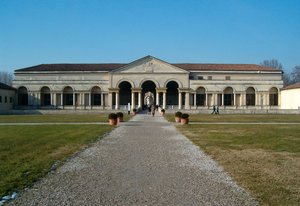
1524 metais Giulio priėmė Federico Gonzaga, Mantujos kunigaikščio, kvietimą tapti dvaro tapytoju ir architektu. Tai buvo lūžio taškas jo karjeroje, suteikiantis jam precedento neturimą kūrybinę laisvę ir išteklius. Jis esą atsakingas už visą kunigaikštystės meninę veiklą, prižiūrėdamas ne tik paveikslus ir freskas, bet ir architektūros projektus, sodų dizainą ir net teatrus. Jo garsiausias pasiekimas šiuo laikotarpiu neabejotinai yra Palazzo Te – nepaprasta priemiesčio vila, kuri liudija jo novatorišką genijų. Šio rūmų interjerai papuošti kvapą gniaužiančiai sudėtingomis ir psichologiškai giliais iliuzionistiniais freskais. Pavyzdžiui, *Sala dei Giganti* (Didžiųjų Salė) vaizduoja chaotišką kovą tarp dievų ir milžinų, įtraukdamas žiūrovą į besisukančią figūrų ir architektūros fragmentų sūkurį. Ši meistriška erdvės manipuliacija sukuria įtraukiantį patirtį, kuri yra tiek nuostabi, tiek nerami. Be Palazzo Te, Giulio ėmėsi reikšmingų Mantujos kunigaikščio rūmų ir katedros renovacijų, palikdamas neišdildomą pėdsaką miesto kraštovaizdyje.

Palikimas ir Tvarus Poveikis

Giulio Romano mirė Mantujoje 1546 metais, palikęs palikimą, kuris apėjo Italijos sienas. Jo piešiniai buvo labai vertinami kolekcionierių, o gravūros, pagrįstos jo darbu – ypač Marcantonio Raimondi atliktos – vaidino svarbų vaidmenį skleidžiant itališką meno stilių Europoje. Jis buvo toks garsus po mirties, kad yra vienintelis „šiuolaikinis“ menininkas, paminėtas Williamo Shakespeare’o pjesėje – tai liudija jo plačiai paplitusią šlovę. Jo įtaka matoma daugelio vėlesnių menininkų darbuose, kurie perėmė jo dinamiškas kompozicijas, pailgintas figūras ir ekspresyvų spalvų naudojimą. Nors manierizmas galiausiai nusileido kitoms stilistinėms judėjimas, Giulio Romano indėlis išlieka būtinas suprantant Vakarų meno evoliuciją. Jis reprezentuoja lūžio momentą – perėjimą nuo Aukštojo Renesanso harmoningų idealų prie sudėtingesnės ir emociškai įkrautos vėlyvo XVI amžiaus estetikos. Jo darbai ir toliau žavi ir kvestionuoja žiūrovus šiandien, primindami mums meno galią atspindėti ir formoti mūsų pasaulio supratimą.