Trumpai tariant
Galerijos akimais, garsiausias David De Coninck paveikslas yra Atribuido A David De Coninck ) (1636). (antwerp Brussels) (1699) ir Circle Of David De Coninck ) (1701) užbaia trio, kurį atpažįsta kiekvienas ž)/\ Iš 18 David De Coninck darbų mūsų kataloge, galerija žemiau pristato 17 garsiausius – kiekvienas yra originalus, su nurodytu metais, muziejumi bei unikaliu aprašymu.
10 geriausių galerijos David De Coninck paveikslų
ad Birds and Game with Gun Dogs and a Little Owl
A heavy silence settles over the scene, broken only by the stillness of the fallen. In the fading light of a setting sun, three hunting dogs rest beside an overflowing basket of game. The animals are caught in moments of quietude: one sniffs the earth, another stares into the distance, and a third watches a small owl. This owl, a common decoy, stares back with unblinking eyes. Beneath the dogs,…
David De Coninck tapiai, rangos nuo 11 iki 17
žymios David De Coninck tapiojamos, pagal laikotarpį
Late Medieval
1699 · 3 darbai šiame sąrašeMature Period
3 darbai šiame sąrašeTemos, kurios domino David De Coninck
Ketverios temos, dažniausiai pasikrausto originaluose, kiekvienos su savo puikiausiu pavyzdžiu.
Animals 3 darbai
Still life 2 darbai
Muziejai, kuriuose saugomi David De Coninck originalūs darbai
3 muziejai, kuriuose saugoma daugiausia šioje pusėje esamų paveikslų.
| Muzejaus | Miestas | David De Coninck darbai | Šiojo sąrašo paveikslai |
|---|---|---|---|
| Londonas | 1 | ad Birds and Game with Gun Dogs and a Little Owl | |
| Nantas | 1 | Still life with fighting cat and parrot | |
| Varšuva | 1 | The hunter's trophy with a dog and an owl. |
David De Coninck, pagrindiniai kiekvienų metų paveiksliai
Šioje puslapio originalūs darbai, sukūryti David De Coninck nuo 3 metų laikotarpio (nuo 1699 iki 1701), yra pateikiami galerijoje, kurioje eksponuojami garsiausi kiekvieno jų pavyzdžiai.
David De Coninck tapyiniai: galerijos atsakymai
Kuris David De Coninck paveikslas yra pats garsiausias iš visų?Atsakymas
Atribuido A David De Coninck ) (1636). Toliausiai eina (antwerp Brussels) (1699) ir Circle Of David De Coninck ) (1701).
Kuriose yra 10 geriausių David De Coninck paveikslų?Atsakymas
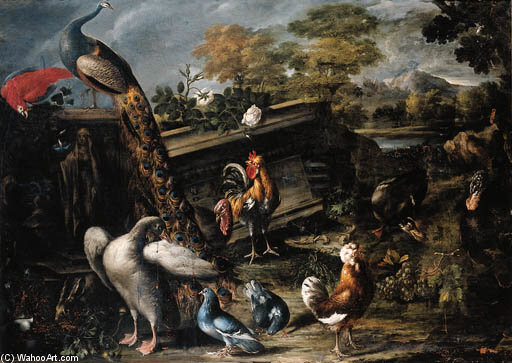
Atribuido A David De Coninck ), (antwerp Brussels), Circle Of David De Coninck ), ad Birds and Game with Gun Dogs and a Little Owl, Still life with fighting cat and parrot, River Scene with Ducks and Geese Being Attacked, A peacock, turkey, rabbits, and cockerel in a landscape, Poultry and Cat, Ostentatious still life with dog and parrot ir Animals in a Garden. Viršuje esančioje reitingo sąraše nurodyta kiekvieno kūrinio metis ir muziejus.
Kiek kūrinių sukūrė David De Coninck?Atsakymas
Mūsų kataloge yra 18 David De Coninck darbų, skirtų laikotarpiui nuo 1699 iki 1701.
Kur kabinami garsiausi David De Coninck originalūs darbai?Atsakymas
Daugiausia – National Gallery (Londonas), Musée d'Arts de Nantes (Nantas) ir Nacionalinis muziejus Varšuvoje (Varšuva). Viršuje esančiame muziejų sąraše yra visi jie.
Kokie yra ankstyviausi ir vėliausi garsieji David De Coninck kūriniai?Atsakymas
Šioje pusėje seniausias darbas yra (antwerp Brussels) (1699), o naujausias – Circle Of David De Coninck ) (1701).
Kurią temą David De Coninck kūrė dažniausiai?Atsakymas
Animals (3), Birds (2) ir Cats (2) iš 17 šioje pusėje esamų darbų.
Su kokiu kierliu siejama David De Coninck?Atsakymas
Baroque, vadovaujantis šios puslapio originalais kūriniais.
David De Coninck: menininkas
David de Coninck: A Flemish Baroque Visionary
David de Coninck (1636-1699), born in Antwerp, Belgium, stands as a pivotal figure within the flourishing Baroque artistic landscape of 17th-century Flanders. Though biographical details remain somewhat sparse – largely due to the era’s penchant for prioritizing artistic output over personal narratives – his legacy endures through an impressive oeuvre characterized by dramatic animal hunting scenes and exquisitely rendered still lifes that capture the grandeur and complexity of the period. His work exemplifies the Baroque aesthetic's obsession with dynamism, emotion, and meticulous observation of nature, cementing his place among the most celebrated artists of his time.- Early Life & Training: De Coninck’s formative years were spent in Antwerp, a city renowned for its artistic patronage during the Habsburg reign. Precise information regarding his formal training is elusive, but it's believed he honed his skills under the tutelage of Peter Paul Rubens, arguably the most influential painter of the Baroque era – a connection that undoubtedly shaped his stylistic sensibilities and instilled within him a profound appreciation for monumental composition and vibrant color palettes.
- Style & Technique: De Coninck’s artistic style is instantly recognizable by its masterful execution and unwavering commitment to Baroque principles. He employed a technique known as chiaroscuro—the dramatic interplay of light and shadow—to sculpt forms with breathtaking realism, creating scenes brimming with palpable energy and conveying profound psychological depth. His brushstrokes were deliberate and confident, layering pigments with painstaking accuracy to achieve textures that mirrored the surfaces he depicted.
- Notable Works: Among his most celebrated paintings are “Still Life with Fighting Cat and Parrot,” a captivating depiction of animal behavior imbued with symbolic significance—the parrot representing wisdom and erudition, while the cat embodies cunning and vigilance. Similarly impressive is "Atribuido A David De Coninck," showcasing an opulent arrangement of fruits, flowers, and architectural elements that exemplify the Baroque fascination for illusionistic perspective and decorative richness.
- Influence & Legacy: De Coninck’s influence extended beyond his own lifetime, impacting subsequent generations of Flemish artists. His meticulous observation of nature and masterful use of chiaroscuro served as inspiration for painters like Johann Georg Schäffer and Jacob Savery, establishing him as a cornerstone of Baroque artistic tradition.
- Historical Significance: David de Coninck’s contribution to the Baroque canon is undeniable. He embodies the spirit of his era—a period marked by intellectual curiosity, religious fervor, and an unprecedented surge in artistic creativity. His paintings continue to resonate with audiences today, offering a glimpse into the visual culture of Antwerp during its golden age and demonstrating the enduring power of art to convey emotion and illuminate human experience.