1


Atnaujinta spalis 2026 · pagal mūsų populiarumumo koeficientą (paieškos, lankytojai ir užsakymai kiekvienam kūriniui) · 14 David Annesley darbai mūsų kataloge
Trumpai tariant
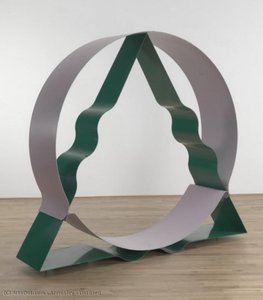
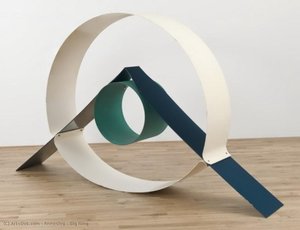
Galerijos akimais, garsiausias David Annesley tapas yra X-Act (1964), kurio originalas eksponuojamas Tate Modern, Londras. Narrow Blue Circle (1966) ir Big Ring (1965) užbaia trio, kurį atpažįsta kiekvienas ž)/\ Iš 14 David Annesley darbų mūsų kataloge, galerija žemiau pristato 14 garsiausius – kiekvienas yra originalus, su nurodytu metais, muziejumi bei unikaliu aprašymu.


In the vast landscape of mid-century modernism, few works capture the delicate tension between weight and weightlessness quite like David Annesley’s ‘Untitled’ (1969). This mesmerizing, mandala-like sculpture serves as a masterclass in structural harmony, inviting the viewer into a rhythmic dance of shapes that seem to breathe within their own metallic confines. At first glance, the eye is drawn to the vibrant, sun-drenched yellow of its aluminum form, a hue…

Ketverios temos, dažniausiai pasikrausto originaluose, kiekvienos su savo puikiausiu pavyzdžiu.
3 muziejai, kuriuose saugoma daugiausia šioje pusėje esamų paveikslų.
| Muzejaus | Miestas | David Annesley darbai | Šiojo sąrašo paveikslai |
|---|---|---|---|
 Tate Modern |
Londras | 11 | X-Act, Narrow Blue Circle, Big Ring |
 Londono muziejus |
Londonas | 1 | Untitled |
 Tate Britain |
Londras | 1 | Mauve, Orange, Yellow, Turquoise on Pale Blue |
7 metų, nuo 1964 iki 1970, šiame puslapyje pristatoma visa David Annesley karjera: trumpa apžvalga, kurioje metinis chronologijos principu per žymiausius originalus atskleidžiama kūrybos istorija.
Pasirinkite metus, kad pamatytumėte originalus darbus.

In the vast landscape of mid-century modernism, few works capture the delicate tension between weight and weightlessness quite like David Annesley’s ‘Untitled’ (1969). This mesmerizing, mandala-like sculpture serves as a masterclass in structural harmony, inviting the viewer into a rhythmic dance of shapes that seem to breathe within their own metallic confines. At first glance, the eye is drawn to the vibrant, sun-drenched yellow of its aluminum form, a hue…
Daugiau nuo 1969

X-Act (1964), Tate Modern, Londras. Toliau seka Narrow Blue Circle (1966) ir Big Ring (1965).
28 metų amžiaus: X-Act sukurta 1964 m. Nr. David Annesley gimė 1936.
X-Act, Narrow Blue Circle, Big Ring, Loquat, Swing Low, Orinoco, Godroon, Big Yellow Circle, Untitled ir Untitled. Viršuje esančioje reitingo sąraše nurodyta kiekvieno kūrinio metis ir muziejus.
Mūsų kataloge yra 14 David Annesley darbų, skirtų laikotarpiui nuo 1964 iki 1970.
Daugiausia – Tate Modern (Londras), Londono muziejus (Londonas) ir Tate Britain (Londras). Viršuje esančiame muziejų sąraše yra visi jie.
1965 laikotarpiu: 4 iš 14 šioje pusėje esančių darbų buvo sukurtos tada, iš jų Big Ring.
Šioje pusėje seniausias darbas yra X-Act (1964), o naujausias – Mauve, Orange, Yellow, Turquoise on Pale Blue (1970).
Color field (3), Abstract (2) ir Sculpture (2) iš 14 šioje pusėje esamų darbų.
Post minimalism, judging by the originals on this page.
X-Act, Narrow Blue Circle ir Big Ring: Tate Modern, Londras kolekcijoje yra 11 šioje pusėje esančių darbų.
David Annesley stands as a luminous figure within the pantheon of British sculpture, a master of form whose work captures the rhythmic pulse of the mid-century modern era. Born in London in 1936, Annesley’s artistic identity was forged through a global odyssey that saw him traverse the landscapes of Zimbabwe and Australia before returning to the heart of the English art scene. This diverse exposure to different environments and textures provided a rich, foundational layer to his aesthetic sensibility, allowing him to approach the concept of space with a unique, international perspective. His journey is not merely one of geographical movement, but an evolutionary process of refining how metal, color, and gravity interact to create a sense of living motion.
The trajectory of Annesley’s career was profoundly shaped by his formative years at St Martin's School of Art in London. It was here that he encountered the monumental influence of Sir Anthony Caro, a mentor whose radical approach to sculpture would leave an indelible mark on Annesley’s soul. Under Caro’s guidance, Annesley learned to reject the heavy, representational traditions of the past in favor of a more spontaneous, abstract language. This period of study encouraged him to view sculpture not as a static object of commemoration, but as an active participant in its environment—a way to manipulate the very air around a form through the use of welded metal and bold, structural lines.
To encounter an Annesley sculpture is to witness a dance between industrial strength and visual lightness. His technique is characterized by a masterful command over welded metal, which he shapes into striking geometric configurations that often rest directly upon the ground. By eschewing traditional pedestals, Annesley allows his works to inhabit the same physical plane as the viewer, fostering an intimate and visceral engagement with the art. These pieces, such as the captivating Godroon (196 and Big Ring (1965), demonstrate a profound understanding of how weight can be visually defied through clever construction and strategic placement.
Beyond the structural integrity of his work lies a vibrant, emotive use of color. Annesley’s palette is famously bold, frequently utilizing saturated reds and brilliant yellows to breathe life into his metallic compositions. This infusion of pigment serves a dual purpose: it provides a striking contrast to the raw, industrial nature of the metal while simultaneously injecting a sense of kinetic energy into the static forms. Through this interplay of color and geometry, Annesley explores the delicate relationship between material perception and physical reality, creating works that feel as though they are vibrating with an internal light.
The enduring significance of David Annesley’s oeuvre lies in his ability to translate the complexities of movement into the permanence of metal. His works, such as the dynamic Jump, serve as meditations on freedom and the elegance of abstraction, capturing a sense of upward momentum that transcends the physical limitations of the medium. As a key voice in the development of contemporary British sculpture, Annesley helped bridge the gap between the heavy traditions of early modernism and the more fluid, experimental approaches of late 20th-century art.
Throughout his career, Annesley has remained dedicated to the pursuit of a pure, abstract language. His contributions to the art world are marked by several key achievements:
Today, Annesley’s legacy continues to resonate within the halls of contemporary art, offering a timeless testament to the power of bold form and the infinite possibilities of the abstract imagination.