Bernardo Bellotto portretas

100 garsiausių Bernardo Bellotto paveikių rinkinys: galerijos išboru

Atnaujinta lapkritis 2026 · pagal mūsų populiarumumo koeficientą (paieškos, lankytojai ir užsakymai kiekvienam kūriniui) · 230 Bernardo Bellotto darbai mūsų kataloge

Trumpai tariant

Iš visų paliktų originalų kūrinių Bernardo Bellotto garsiausias yra Senosios Kreuckirche liekanos Drėzdene (1765), esantis Gemäldegalerie Alte Meister kolekcijoje, Drezena. Tiesiog už jų seka Dresden, the Frauenkirche and the Rampische Gasse (1749) ir The Moat of the Zwinger in Dresden (1749). Mūsų kataloge yra 230 darbų autoriaus Bernardo Bellotto; galerija išsaugojo 100 labiausiai pasaulyje žyminiausių kūrinių – kiekvienas jų pateikiamas su datos, muziejaus ir istorijos aprašymu.

1722 – 1780, Venecija Rococo Daugiausia darbų: Staatliche Kunstsammlungen Dresden

Bernardo Bellotto geriausios 10 paveikslų: galerijos pasirinkimas

1
Senosios Kreuckirche liekanos Drėzdene (1765) aut. Bernardo Bellotto

Senosios Kreuckirche liekanos Drėzdene

1765 · Aliejus ant drobės · Gemäldegalerie Alte Meister, Drezena

Bernardo Beloto drobė „Drezdeno Sugriovimai“ – tai ne tik istorinis dokumentas, bet ir gilią introspekciją skatinantis vaizdas, atspindintis sugriauto miesto dvasios atsigavimą. Sukurtas 1765 metais, po septynmečių karo palikto chaoso, šis kūrinys kviečia pažvelgti į sugriautą Senosios Kreucų bažnyčios siluetą, kuriuo dominuoja niokojimo vaizdas. Tačiau Beloto meistriškumas neapsiriboja tik tragedijos fiksavimu; jis atskleidžia vilties ir atsigavimo šviesą, kurioje žmonės aktyviai dalyvauja miesto atstatyme. Šis kontrastas tarp sugriovimo ir pastangų sukurti…

2
Dresden, the Frauenkirche and the Rampische Gasse (1749) aut. Bernardo Bellotto

Dresden, the Frauenkirche and the Rampische Gasse

1749 · Oil On Canvas · Gemäldegalerie Alte Meister, Drezena

In the quiet, luminous depths of Bernardo Bellotto’s 1749 masterpiece, Dresden, the Frauenkirche and the Rampische Gasse, we are invited to step through a portal into the eighteenth century. This breathtaking oil on canvas is far more than a mere topographical record; it is a soulful meditation on a city at its zenith. As the eye wanders across the panoramic vista, one is immediately struck by the imposing presence of…

3
The Moat of the Zwinger in Dresden (1749) aut. Bernardo Bellotto

The Moat of the Zwinger in Dresden

1749 · Oil On Canvas · Gemäldegalerie Alte Meister, Drezena

To look upon The Moat of the Zwinger in Dresden is to witness a moment of profound stillness from 1749. This canvas captures the Zwinger complex not as a mere fortification, but as a serene reflection of royal life during the reign of Augustus III. The water in the moat acts as a liquid mirror, its surface broken only by the gentle movement of small boats and the soft ripples…

4
The Moat of the Zwinger in Dresden (detail) (1749) aut. Bernardo Bellotto

The Moat of the Zwinger in Dresden (detail)

1749 · Oil On Canvas · Gemäldegalerie Alte Meister, Drezena

In the heart of 18th-century Saxony, amidst the burgeoning prosperity of the Enlightenment, Bernardo Bellotto captured a moment of profound serenity and architectural splendor. His masterpiece, The Moat of the Zwinger in Dresden, is far more than a mere topographical record; it is a luminous window into a vanished world. Painted in 1749, this work invites the viewer to step onto the banks of the Zwinger Palace’s moat, where the…

5
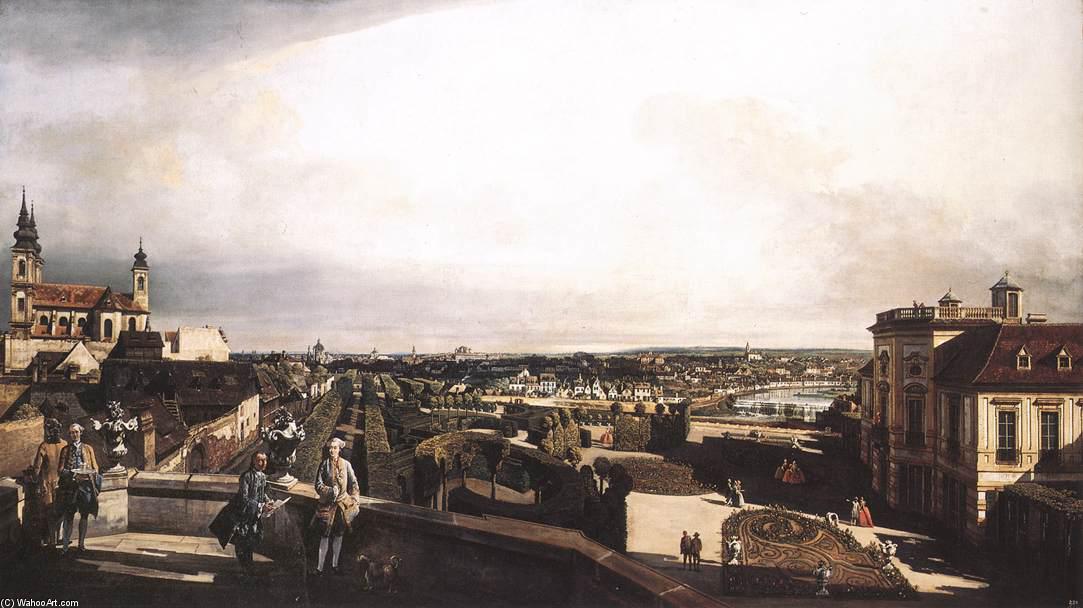
Vienna, Panorama from Palais Kaunitz (1759) aut. Bernardo Bellotto

Vienna, Panorama from Palais Kaunitz

1759 · Oil On Canvas · Szépművészeti Múzeum, Budapeštas

Completed in 1759, this panoramic view captures Vienna at a moment of imperial expansion under Maria Theresa. The composition utilizes a wide format to document the city's topographical layout, guiding the eye from the immediate foreground toward the distant skyline. St Stephen’s Cathedral and the Hofburg Palace emerge as central anchors within the urban sprawl, their silhouettes defined by the specific quality of light characteristic of the era. The work…

6
Grand canal, view from north (1738) aut. Bernardo Bellotto

Grand canal, view from north

1738 · Oil On Canvas · Nacionalinė Viktorijos galerija, Melburnas

In this work, titled Grand canal, view from north, the artist Bernardo Bellotto captures a specific moment within the Venetian cityscape. Painted about 1738, the scene focuses on the activity along the water, where several boats float upon the river. Some vessels occupy the foreground, while others drift toward the distance, creating a sense of depth across the waterway.

7
The Fortress of Konigstein (1758) aut. Bernardo Bellotto

The Fortress of Konigstein

1758 · Oil On Canvas · National Gallery of Art, Vašingtonas

The painting titled The Fortress of Konigstein was executed by the Italian artist Bernardo Bellotto in 1758. Bellotto was an urban landscape painter and printmaker who specialized in the veduta style. He was the nephew and pupil of Giovanni Antonio Canal. This specific work was part of a series of views commissioned by the Elector of Saxony, Augustus III.

8
Allegory Inclinata Resurgit (1762) aut. Bernardo Bellotto

Allegory Inclinata Resurgit

1762 · Oil On Canvas · Staatliche Kunstsammlungen Dresden, Dresno

The scene unfolds within the allegorical realm of Allegory Inclinata Resurgit, a painting that captures a moment of profound symbolic weight. Created by the hand of Bernardo Bellotto, this work invites the viewer into a staged, theatrical space where figures and architecture converge. The piece emerges from about 1762, a time when the artist was deeply engaged with the visual language of his era. Every element within the frame works…

10
Venetian Capriccio, View of Santa Maria dei Miracoli (1740) aut. Bernardo Bellotto

Venetian Capriccio, View of Santa Maria dei Miracoli

1740 · Oil On Canvas · Niedersächsisches Landesmuseum, Hanoveras

In this work, titled Venetian Capriccio, View of Santa Maria dei Miracoli, the artist Bernardo Bellotto presents a detailed cityscape of Venice. Painted about 1740, the scene focuses on the architecture of the Santa Maria dei Miracoli church. It is a capriccio, a composition that uses a fanciful or imagined arrangement of real-world elements to create a specific atmosphere.

Bernardo Bellotto darba rinkinys tęsiamas, nuo 11 iki 100

11Pirna Seen from the Right Bank of the Elbe (1750) aut. Bernardo BellottoPirna Seen from the Right Bank of the Elbe1750 12A Capriccio River Landscape with a Church to the Left (1765) aut. Bernardo BellottoA Capriccio River Landscape with a Church to the Left1765 13Allegory Ex Arduis Immortalitas (1762) aut. Bernardo BellottoAllegory Ex Arduis Immortalitas1762 · Staatliche Kunstsammlungen Dresden 14Fantastic architecture with portrait of Franciszek Salezy Potocki and his son Stanisław Szczęsny (1763) aut. Bernardo BellottoFantastic architecture with portrait of Franciszek Salezy Potocki and his son Stanisław Szczęsny1763 · El Paso Museum of Art 15The Fortress of Königstein: Courtyard with the Magdalenenburg (1758) aut. Bernardo BellottoThe Fortress of Königstein: Courtyard with the Magdalenenburg1758 · National Gallery of Art 16The Fortress of Königstein (1756) aut. Bernardo BellottoThe Fortress of Königstein1756 17The Election of the King Stanislaus Augustus (1764) aut. Bernardo BellottoThe Election of the King Stanislaus Augustus1764 18View of Wilanów meadows (1775) aut. Bernardo BellottoView of Wilanów meadows1775 · Varšovos karališkasis pilis 19Groom leading a horse (1773) aut. Bernardo BellottoGroom leading a horse1773 · Nacionalinis muziejus Varšuvoje 20The Elbe between Pirna and Pillnitz (1766) aut. Bernardo BellottoThe Elbe between Pirna and Pillnitz1766 · Staatliche Kunstsammlungen Dresden 21Dresden, the Ruins of the Pirnaische Vorstadt (1766) aut. Bernardo BellottoDresden, the Ruins of the Pirnaische Vorstadt1766 22View of Ujazdów from the Royal Baths (1776) aut. Bernardo BellottoView of Ujazdów from the Royal Baths1776 · Nacionalinis muziejus Varšuvoje 23Stable boy leading a horse (1773) aut. Bernardo BellottoStable boy leading a horse1773 · Nacionalinis muziejus Varšuvoje 24Rio dei Mendicanti with the Scuola di San Marco (detail) (1738) aut. Bernardo BellottoRio dei Mendicanti with the Scuola di San Marco (detail)1738 · Gallerie dell'Accademia di Venezia 25The Imperial Palace Schönbrunn, Garden Side (1758) aut. Bernardo BellottoThe Imperial Palace Schönbrunn, Garden Side1758 · Kunsthistorisches Museum 26View of Pirna from the Sonnenstein Castle (1750) aut. Bernardo BellottoView of Pirna from the Sonnenstein Castle1750 · Ermitažas 27View of Pirna from the Right Bank of the Elba above the Town (1753) aut. Bernardo BellottoView of Pirna from the Right Bank of the Elba above the Town1753 · Ermitažas 28The Kreuzkirche in Dresden (1747) aut. Bernardo BellottoThe Kreuzkirche in Dresden1747 · Gemäldegalerie Alte Meister 29Stairs Leading to the Colonnade of a Palace (1762) aut. Bernardo BellottoStairs Leading to the Colonnade of a Palace1762 · Staatliche Kunstsammlungen Dresden 30Lagoon landscape (1741) aut. Bernardo BellottoLagoon landscape1741 31Venice (Marriage of the Doge with the Sea) (1727) aut. Bernardo BellottoVenice (Marriage of the Doge with the Sea)1727 32The Grand Canal from the Campo San Vio, Venice (1727) aut. Bernardo BellottoThe Grand Canal from the Campo San Vio, Venice1727 · Škotijos Nacionalinė galerija 33The Pantheon (1742) aut. Bernardo BellottoThe Pantheon1742 · Dayton Art Institute 34View of the Tiber in Rome with the Castel Sant'Angelo (1743) aut. Bernardo BellottoView of the Tiber in Rome with the Castel Sant'Angelo1743 · Detroito meno institutas 35Piazza San Marco, Venice (1740) aut. Bernardo BellottoPiazza San Marco, Venice1740 · Cleveland Museum of Art 36The Piazzetta, Venice (1743) aut. Bernardo BellottoThe Piazzetta, Venice1743 · Kanados Nacionalinė galerija 37Piazza del Campidoglio with Santa Maria d'Aracoeli, Rome (1742) aut. Bernardo BellottoPiazza del Campidoglio with Santa Maria d'Aracoeli, Rome1742 · Petworth House 38A View at the Entrance of the Grand Canal, Venice (1741) aut. Bernardo BellottoA View at the Entrance of the Grand Canal, Venice1741 · Fitzwilliam Museum 39The Piazza San Martino, Lucca (1742) aut. Bernardo BellottoThe Piazza San Martino, Lucca1742 · York Art Gallery 40Painting of the Church of Santa Maria Formosa, Venice (1742) aut. Bernardo BellottoPainting of the Church of Santa Maria Formosa, Venice1742 41The Campo di SS. Giovanni e Paolo, Venice (1743) aut. Bernardo BellottoThe Campo di SS. Giovanni e Paolo, Venice1743 · National Gallery of Art 42View of Via di Ripetta in Rome (1742) aut. Bernardo BellottoView of Via di Ripetta in Rome1742 · Museum Kunstpalast 43View of the Grand Canal: Santa Maria della Salute and the Dogana from Campo Santa Maria Zobenigo (1743) aut. Bernardo BellottoView of the Grand Canal: Santa Maria della Salute and the Dogana from Campo Santa Maria Zobenigo1743 · J. Paul Getty muziejus 44View of Grand Canal with the Palazzi Foscari and Moro Lin (1734) aut. Bernardo BellottoView of Grand Canal with the Palazzi Foscari and Moro Lin1734 · Nationalmuseum 45The harbor basin of San Marco on Ascension Day, Venice (1739) aut. Bernardo BellottoThe harbor basin of San Marco on Ascension Day, Venice1739 46Colosseum and Arch of Constantine (Rome) (1742) aut. Bernardo BellottoColosseum and Arch of Constantine (Rome)1742 47The Arch of Constantine (1742) aut. Bernardo BellottoThe Arch of Constantine1742 · Royal Collection 48Signoria Square in Florence (1741) aut. Bernardo BellottoSignoria Square in Florence1741 49View of the Grand Canal at San Stae (1738) aut. Bernardo BellottoView of the Grand Canal at San Stae1738 50Arno in Florence (1742) aut. Bernardo BellottoArno in Florence1742 51Capriccio Padovano (1740) aut. Bernardo BellottoCapriccio Padovano1740 · Thyssen-Bornemisza muziejus 52Pirna with the Dohna Gate (1754) aut. Bernardo BellottoPirna with the Dohna Gate1754 · Staatliche Kunstsammlungen Dresden 53The Arno in Florence with the Ponte Vecchio (1745) aut. Bernardo BellottoThe Arno in Florence with the Ponte Vecchio1745 · Fitzwilliam Museum 54The Arno in Florence with the Ponte Alla Carraia (1745) aut. Bernardo BellottoThe Arno in Florence with the Ponte Alla Carraia1745 · Fitzwilliam Museum 55Capriccio with the Dolo lock (1748) aut. Bernardo BellottoCapriccio with the Dolo lock1748 · Staatliche Kunstsammlungen Dresden 56The Lock at Dolo (1745) aut. Bernardo BellottoThe Lock at Dolo1745 · Yale University Art Gallery 57The Grand Canal: Santa Lucia and the Church of the Scalzi, Venice (1750) aut. Bernardo BellottoThe Grand Canal: Santa Lucia and the Church of the Scalzi, Venice1750 · Škotijos Nacionalinė galerija 58View of Pirna from the West, from the Corner of Wide Street (1755) aut. Bernardo BellottoView of Pirna from the West, from the Corner of Wide Street1755 · Ermitažas 59View of Pirna, from Sonnestein Castle (1753) aut. Bernardo BellottoView of Pirna, from Sonnestein Castle1753 · Pushkinio valstybinis dailės muziejus 60View of Verona with the Castelvecchio and Ponte Scaligero (1745) aut. Bernardo BellottoView of Verona with the Castelvecchio and Ponte Scaligero1745 · Philadelphia Museum of Art 61Dresden from the Right Bank of the Elbe, below the Augustus Bridge (1750) aut. Bernardo BellottoDresden from the Right Bank of the Elbe, below the Augustus Bridge1750 · National Gallery of Ireland 62Dresden from the Right Bank of the Elbe above the Augustus Bridge (1750) aut. Bernardo BellottoDresden from the Right Bank of the Elbe above the Augustus Bridge1750 · National Gallery of Ireland 63The Doge's Palace in Venice from the Sea (1750) aut. Bernardo BellottoThe Doge's Palace in Venice from the Sea1750 · Musée municipal de Bourg-en-Bresse 64View of Pirna from the Right Bank of the Elba (1753) aut. Bernardo BellottoView of Pirna from the Right Bank of the Elba1753 · Ermitažas 65The Moat of Zwinger in Dresden (1750) aut. Bernardo BellottoThe Moat of Zwinger in Dresden1750 · Ermitažas 66Old Fortifications of Dresden (1749) aut. Bernardo BellottoOld Fortifications of Dresden1749 · Ermitažas 67Market-Place of the Neustadt in Dresden (1751) aut. Bernardo BellottoMarket-Place of the Neustadt in Dresden1751 · Ermitažas 68View of Pirna, from Sonnenstein Castle (1755) aut. Bernardo BellottoView of Pirna, from Sonnenstein Castle1755 · Staatliche Kunstsammlungen Dresden 69Pirna from Kopitz (1753) aut. Bernardo BellottoPirna from Kopitz1753 · Staatliche Kunstsammlungen Dresden 70The Zwinger in Dresden (1751) aut. Bernardo BellottoThe Zwinger in Dresden1751 · Staatliche Kunstsammlungen Dresden 71The Old Ponte delle Navi in Verona (1746) aut. Bernardo BellottoThe Old Ponte delle Navi in Verona1746 · Staatliche Kunstsammlungen Dresden 72The Old Market in Dresden from Schlossgasse (1750) aut. Bernardo BellottoThe Old Market in Dresden from Schlossgasse1750 · Staatliche Kunstsammlungen Dresden 73The Old Fortifications in Dresden (1750) aut. Bernardo BellottoThe Old Fortifications in Dresden1750 · Staatliche Kunstsammlungen Dresden 74Pirna from Posta (1753) aut. Bernardo BellottoPirna from Posta1753 · Staatliche Kunstsammlungen Dresden 75Dresden from the left Bank of the Elbe above the Bridgehead of the Old Town (1748) aut. Bernardo BellottoDresden from the left Bank of the Elbe above the Bridgehead of the Old Town1748 · Staatliche Kunstsammlungen Dresden 76View from the Bridge of Dresden on the Elbe (1749) aut. Bernardo BellottoView from the Bridge of Dresden on the Elbe1749 · Fine Arts Museums of San Francisco 77Abbruch der Kreuzkirche, Dresden (1746) aut. Bernardo BellottoAbbruch der Kreuzkirche, Dresden1746 78Piazza S. Marco, Venice (1746) aut. Bernardo BellottoPiazza S. Marco, Venice1746 79The Old Market Square in Dresden (1750) aut. Bernardo BellottoThe Old Market Square in Dresden1750 · Staatliche Kunstsammlungen Dresden 80The New Market Square in Dresden (1750) aut. Bernardo BellottoThe New Market Square in Dresden1750 81Verona Veduta (1746) aut. Bernardo BellottoVerona Veduta1746 · Powys Castle Museum 82View of Turin near the Royal Palace (1745) aut. Bernardo BellottoView of Turin near the Royal Palace1745 · Galleria Sabauda 83New Market Square in Dresden (1750) aut. Bernardo BellottoNew Market Square in Dresden1750 · Gemäldegalerie Alte Meister 84Dresden from the Left Bank of the Elbe, below the Fortifications (1748) aut. Bernardo BellottoDresden from the Left Bank of the Elbe, below the Fortifications1748 · Gemäldegalerie Alte Meister 85Pirna Seen from the Harbour Town (1753) aut. Bernardo BellottoPirna Seen from the Harbour Town1753 · Gemäldegalerie Alte Meister 86View of an Old Bridge Over the River Po, Turin (1745) aut. Bernardo BellottoView of an Old Bridge Over the River Po, Turin1745 · Galleria Sabauda 87The Neuer Marktplatz in Dresden (1747) aut. Bernardo BellottoThe Neuer Marktplatz in Dresden1747 · Ermitažas 88Venice (Rio di S. Fosca and S. Maria dei Servil) (1758) aut. Bernardo BellottoVenice (Rio di S. Fosca and S. Maria dei Servil)1758 89View of München (1758) aut. Bernardo BellottoView of München1758 90Venice: Riva degli Schiavoni towards the East (1760) aut. Bernardo BellottoVenice: Riva degli Schiavoni towards the East1760 · John and Mable Ringling Museum of Art 91Venice: Piazza San Marco, Seen from the Campo San Basso (1760) aut. Bernardo BellottoVenice: Piazza San Marco, Seen from the Campo San Basso1760 · John and Mable Ringling Museum of Art 92Saint Mark's Square, Venice (1756) aut. Bernardo BellottoSaint Mark's Square, Venice1756 · National Gallery of Ireland 93Campo San Stin, Venice (1760) aut. Bernardo BellottoCampo San Stin, Venice1760 94Old town of Dresden (1765) aut. Bernardo BellottoOld town of Dresden1765 · Staatliche Kunsthalle Karlsruhe 95Pirna seen from the right bank of the Elbe (1756) aut. Bernardo BellottoPirna seen from the right bank of the Elbe1756 · San Diegos meno muziejus 96Architectural Capriccio (1765) aut. Bernardo BellottoArchitectural Capriccio1765 · San Diegos meno muziejus 97Nymphenburg Castle (1761) aut. Bernardo BellottoNymphenburg Castle1761 98Architectural Caprice with a Palace (1765) aut. Bernardo BellottoArchitectural Caprice with a Palace1765 · Bilbao dailės muziejus 99Venice: Canale Grande (1758) aut. Bernardo BellottoVenice: Canale Grande1758 100View of Vienna with St. Charles's Church (1758) aut. Bernardo BellottoView of Vienna with St. Charles's Church1758 · Museum Kunstpalast

žymios Bernardo Bellotto tapiojamos, pagal laikotarpį

Temos, kurios domino Bernardo Bellotto

Ketverios temos, dažniausiai pasikrausto originaluose, kiekvienos su savo puikiausiu pavyzdžiu.

Muziejai, kuriuose saugomi Bernardo Bellotto originalūs darbai

8 muziejai, kuriuose saugoma daugiausia šioje pusėje esamų paveikslų.

Muzejaus Miestas Bernardo Bellotto darbai Šiojo sąrašo paveikslai
Staatliche Kunstsammlungen Dresden, DresnoStaatliche Kunstsammlungen Dresden Dresno 19 Allegory Inclinata Resurgit, Allegory Ex Arduis Immortalitas, The Elbe between Pirna and Pillnitz
Gemäldegalerie Alte Meister, DrezenaGemäldegalerie Alte Meister Drezena 12 Senosios Kreuckirche liekanos Drėzdene, Dresden, the Frauenkirche and the Rampische Gasse, The Moat of the Zwinger in Dresden
Ermitažas, Šv. PeterburgasErmitažas Šv. Peterburgas 11 View of Pirna from the Sonnenstein Castle, View of Pirna from the Right Bank of the Elba above the Town, View of Pirna from the West, from the Corner of Wide Street
Nacionalinis muziejus Varšuvoje, VaršuvaNacionalinis muziejus Varšuvoje Varšuva 8 Groom leading a horse, View of Ujazdów from the Royal Baths, Stable boy leading a horse
National Gallery of Art, VašingtonasNational Gallery of Art Vašingtonas 5 The Fortress of Konigstein, The Fortress of Königstein: Courtyard with the Magdalenenburg, The Campo di SS. Giovanni e Paolo, Venice
Fitzwilliam MuseumFitzwilliam Museum 3 A View at the Entrance of the Grand Canal, Venice, The Arno in Florence with the Ponte Vecchio, The Arno in Florence with the Ponte Alla Carraia
National Gallery of Ireland, DublinNational Gallery of Ireland Dublin 3 Dresden from the Right Bank of the Elbe, below the Augustus Bridge, Dresden from the Right Bank of the Elbe above the Augustus Bridge, Saint Mark's Square, Venice
Museum Kunstpalast, DiuseldorfasMuseum Kunstpalast Diuseldorfas 3 View of Via di Ripetta in Rome, View of Vienna with St. Charles's Church

Bernardo Bellotto dešimtmetėms po dešimtmetės: originalus kūrinys, apibūdinantis kiekvieną iš jų

Darbai pagal dešimtmečius

Pasirinkite dešimtmetį, kad pamatytėte jį apibrėžusį originalą.

Kolekcjonerų klausimai apie Bernardo Bellotto paveikslus

Kuriu darbu Bernardo Bellotto yra labiausiai garsus?Atsakymas

Senosios Kreuckirche liekanos Drėzdene (1765), Gemäldegalerie Alte Meister, Drezena. Toliau seka Dresden, the Frauenkirche and the Rampische Gasse (1749) ir The Moat of the Zwinger in Dresden (1749).

Kokia buvo Bernardo Bellotto amžius, kai buvo sukurtas Senosios Kreuckirche liekanos Drėzdene?Atsakymas

43 metų amžiaus: Senosios Kreuckirche liekanos Drėzdene sukurta 1765 m. Nr. Bernardo Bellotto gimė 1722.

Kokie yra 10 garsiausių Bernardo Bellotto paveikslų?Atsakymas

Senosios Kreuckirche liekanos Drėzdene, Dresden, the Frauenkirche and the Rampische Gasse, The Moat of the Zwinger in Dresden, The Moat of the Zwinger in Dresden (detail), Vienna, Panorama from Palais Kaunitz, Grand canal, view from north, The Fortress of Konigstein, Allegory Inclinata Resurgit, The Arsenal, Venice ir Venetian Capriccio, View of Santa Maria dei Miracoli. Viršuje esančioje reitingo sąraše nurodyta kiekvieno kūrinio metis ir muziejus.

Kiek paveikslų paliko Bernardo Bellotto?Atsakymas

Mūsų kataloge yra 230 Bernardo Bellotto darbų, skirtų laikotarpiui nuo 1734 iki 1776.

Kuriuose muziejuose eksponuojami Bernardo Bellotto šedevrai?Atsakymas

Daugiausia – Staatliche Kunstsammlungen Dresden (Dresno), Gemäldegalerie Alte Meister (Drezena) ir Ermitažas (Šv. Peterburgas). Viršuje esančiame muziejų sąraše yra visi jie.

Kuriomis metais Bernardo Bellotto tapo savo garsiausius kūrinius?Atsakymas

1740s laikotarpiu: 39 iš 100 šioje pusėje esančių darbų buvo sukurtos tada, iš jų Dresden, the Frauenkirche and the Rampische Gasse.

Kokie yra pirmasis ir paskutinis garsieji Bernardo Bellotto originalūs darbai?Atsakymas

Šioje pusėje seniausias darbas yra View of Grand Canal with the Palazzi Foscari and Moro Lin (1734), o naujausias – View of Ujazdów from the Royal Baths (1776).

Kurią temą Bernardo Bellotto rinkosi dažniausiai?Atsakymas

Sky (15), Architecture (13) ir People (10) iš 100 šioje pusėje esamų darbų.

Kurią techniką Bernardo Bellotto naudojo dažniausiai?Atsakymas

Oil On Canvas, iš 100 šios puslapio darbų – 24.

Kelią meno kryptį priklauso Bernardo Bellotto?Atsakymas

Rococo, vadovaujantis šios puslapio originalais kūriniais.

Kurių Bernardo Bellotto darbai eksponuojami Staatliche Kunstsammlungen Dresden?Atsakymas

Allegory Inclinata Resurgit, Allegory Ex Arduis Immortalitas ir The Elbe between Pirna and Pillnitz: Staatliche Kunstsammlungen Dresden, Dresno kolekcijoje yra 15 šioje pusėje esančių darbų.

Bernardo Bellotto: gyvenimas ir kūryba

Ankstyvasis gyvenimas, šeima ir mokymasis

Bernardo Bellotto į pasaulį išėjo Venecijoje, Italijoje, maždaug 1721 ar 1722 metais. Kai kurie archyvai nurodo tikslesnę datą – 1721 m. sausio 30 d. Jis gimė šeimoje, kurioje menas buvo neatsiejama gyvenimo dalimi; jis buvo Lorenzo Antonio Bellotto ir Fiorenza Canal sūnus. Per motiną jis buvo susijęs su itin svarbia menine linija, nes ji buvo garsiojo Canaletto sesuo. Šis šeimyninis ryšys reiškia, kad nuo pačios vaikystės jo namų aplinką formavo Venecijos tapybos tradicijos.

Jo oficialus mokymasis vyko jo dėdės, Giovanni Antonio Canalo, menėsio viduje. Būdamas žmogaus, žinomo Canaletto vardu, mokinys, Bernardo Bellotto išmoko perspektivos subtilybių bei itin kruopmaus detalizavimo, reikalingo esmės miestui užfiksuoti. Ši mokymų etapa buvo daugiau nei paprasta edukacija; tai buvo pasindulimas į unikalią pasaulozės suvokimo būdą. Jis ne tik mokėsi pas savo dėdę, bet ir tapo šeimos palikimo dalimi, kuris vėliau išsklaidos jo vardą per visą Europą. Kai kuriuose regionuose, pavyzdžiui, Vokmijoje ar Lenkijoje, jis dažnai buvo vadinamas Bernardo Canaletto – vardu, atspindinčiu jo glaudų ryšį su mokytoju ir šeima.

Pirminiai Vandenyno miesto, Venecijos, metai suteikė pagrindą karjerai, skirtai daugybės skirtingų miestų architektūrai ir šviesai dokumentuoti. Nors ankstyvieji darbai rodė jo žingsnius po dėdės žebrtą kelio, jis pradėjo kurti savo identitetą per specifinišką šviesos ir šešėlio žaismą. Venecijos mokyklos įtvirtinimas užtikrino, kad jo techniniai įgūdžiai būtų įsišakniusjęs giliame miesto kraštovaizdžių suvokime bei to, kaip šviesa interaktyvuoje su akmeniu ir vandeniu.

Meninis stilius ir technika

Bernardo Bellotto žiūros į miestą buvo ypatinga – ji kartu buvo itin tikslus ir kartu giliai atmosferiška. Nors perspektyvos ir kompozicijos pagrindus jis įsisavino dėsiu vėliau tapusio meistro, savo dėtuvės dirbtuvėse, jo kūrybinė ranka intuityviai kreipėsi link subtesnio matymo būdo. Jis nuobliai atsisakė ryškių, stipraus kontrasto paletčių, dažniausiai pasitaikančių veneciečių scenų tapyboje, ir vietoje jų pasirinko dirbti su stiaubsniu, labiau nuosaikiu spalvų spekteriu. Jo drobės dažnai pasisiūliavo į žeminius raudoną, pilkają, ochrą bei rėmėsi erdvinėmis rėmėmis, kurios leido kurti vaizdus su neįtikėtinu gyliu. Šis pasirinkimas suteikė jam galimybę susitelkti dėmės į tą ypatingą šviesos kokybę, kuri apibūdina konkrečią vietą, užfiksuojant, kaip saulės šviesa ir šešalybė nusėda ant akmens ir plytų.

Jo danglės pasižymi ypatingu svoriu ir galybe. Debesų ir šešalybės vaizdymas rodo aiškų nyderių tapybos įtaką, siekiant ne paprasto dekoratyvumo, o kažko kur kas erdvingesnio, žemiškesnio ir natūralaus. Jis turėjo neįtikėtiną talentą sudėtingai architektūrinei ir gamtoje kuriamai perspektyvai perteikti, užtikrindamas, kad kiekvienas pastatas ir vandens kelias atrodytų tvirtas bei tikroviškas. Pasiekti tokį detalumo lygį, jis tikriausiai naudojo tokius įrankius kaip camera obscura ar camera lucida, kurie padėjo išlaikyti itin aukštą tikslumą kuriamuose miesto kraštovaizdžiuose.

Kelionės ir Europos užsakimai

Bernardo Bellotto karjera vėlė jį daleko už pažįstamus gimtojo kanalus. 1742 metais jis persikėlė į Romą, kur pradėjo kurti miesto vedutas. Kelionės tęstėsi per šiaurės Italiją 1744–1745 m., laikotarpiu, kai jis dirbo Savojos valdovui Karaliui Čarlui Emanuelui III. Šie klaidžiojimo metai leido jam stebėti skirtingų regionų unikalų apšvietimą bei architektūrą, taip stiprinant jo reputaciją kaip miesto erdvių meistro.

Jo profesinis gyvenimas tapo glaudžiai susijęs su Europos karališkaisiaisus rūmais. Pripažinus karaliui Augustui III, Bernardo Bellotto gyveno Dresdene tarp 1747 ir 1758 metų. Šis laikotarpis žymėjo nuolatinį darbą Saksonijose. Po to, 1758 metais, jis gavo imperatorienės Marijos Terezios kvietimą dirbti Vingioje. Gebėjimas tiksliai užfiksuoti miesto vežiūrį padarė jį itin paklausliu figūra monarchams, siekiantiems dokumentuoti savo sostines.

1764 metais prasidėjo naujas chapteris, kai karališkasis Stanislovas Augustas Poniatowskis kvietė jį tapti savo Varšuvos karaliuoju. Jis daugelį metų liko Lenkijos sostinėje, dokumentuodamas miestą ir jo aplinką. Šis paskutinis didysis užsakymas leido jam įsitvirtinti vaidmenyje, kuris tęsėsi daugybę jo likimo metų.

Žymūs darbai ir miestovaizdžiai

Bernardo Bellotto šerpus tapybos stilius gebėjo užfiksuoti to specifinio šviesos žaizmo, kurį spinduliuoja miestai, kuriuose jis gyveno, paversdamas akmenį ir vandenį amžinais įrašais. 1738 metais jis sukūrė „Rio dei Mendicanti su Scuola di San Marco (detalė)“ – kūrinį, kuris demonstruoja jo ankstyvąjį gebėjimą meistriškai perteikti sudėtingas Venecijos architektūros detales. Keliaudamas per Italiją, jis vis labiau orientuojasi į grandiozišką miesto gyvenimo mastą. 1747 metais jis sukūrė Veronos ir Adžės upės vaizdą iš Ponte Nuovo, meistriškai užfiksavęs upės sūdvirtį per miesto gatves. Jo gebėjimas dokumentuoti vietą su neįtikėtinu tikslumu tapo jo karjeros ženklinmu ženklu, nepaisant to, ar jis tapo triukšmingas sostinės gatves, ar ramius provincijos miestelių kampelius.

Lelkiausias laikui Dresdene ir Vienoje suteikė jam galimybę užfiksuoti architektūrinį Europos širdį. 1748 metais jis sukūrė Dresdeno vaizdą iš Elbės dešiosios kranto su Augusto tiltu – sceną, kuri su neįtikėtina aiškumu užfiksavo miesto planą. Vėliau jo darbai Vienoje apėmė Dominikonų bažnyčią (1758 m.) ir „Vienos panoramą iš Palais Kaunitz“ (1759 m.). Šie paveikslai buvo daugiau nei paprasti vaizdiniai vaizdai; tai buvo tikslūs monumentų ir rūsyų, apibrėžiančių to laikotarpio imperatorišką atmosferą, stebėjimai.

Paskutinėms gyvenimo metų Bernardo Bellotto darbai rado namų Lenkijoje, kur jo kūryba įgavo naują istorinės svarbos lygį. 1773 metais jis užbaigė Varšovos vaizdą iš Karališkosiosios rūsyklos (detalė), suteikdamas išsamų žvilgsnį į Lenkijos sostinę. Šie Varšovos vaizdiniai vėliau tapo neįkainojamais atskaipos taikais tiems, kuriems teko atstatyti miesto istorikinį centrą jau po to, kai patys pastatai buvo prarasti.

Palikimas ir miesto rekonstrukcija

Bernardo Bellotto paveikslai dažnai tampa tylia, vizualia atmintimi miestams, kuriems teko išgyventi visišką sunaikinimą. Dresdeno atlaysu jo detalūs vaizdiniai išsaugojo karo prieš laikių miesto grožį, užfiksavę architektūros smulkmenas, kurios vėliau buvo prarastos konflikto kovose. Gebėjimas tiksliai užfiksuoti gatvių ir pamonklų išdėstymą privalomai suteikė jo plėtnėi daugiau nei tik meno reikšmę; jos tapo neįkainojamais žemėlapiais tiems, kuriemste užteko užduotis atkurti prarastą miestą iš naujo.

Ši praktinė vertė labiausiai išryškėjo Varšovoje. Po to, kai Antrojo pasaulinio karo during miestas buvo arčiau nei sunaikintas, Bernardo Bellotto trisdešimt vaizdinėlių Lenkijos sostinei suteikė reikalingą vadovavimą rekonstrukcijai. Architektai remdamiesi jo kūryba atskleidė miesto veidą, padėdami sugrąžinti prarastą miesto kraštovaizdžio sielą. Šis kruopštus restauravimo darbas buvo niin sėkmingas, kad 1980 metais Varšovos istorinis centras buvo pripažintas UNESCO pasaulinio tautinio palikimo objektu.

Kur galima pamatyti jo kūrybą šiandien

Norėdami rasti Bernardo Bellotto meno pėdsakus, kelyje susitiktumėte su tomis miestais, kuriuos jis kadaise dokumentavo su tokia neįtikėtina tikslumu. Dresdene Gemäldegalerie saugo reikalingą dalį jo kūrybos palikimo, įskaitant miesto vaizdus, kurie užfiksavo jo architektūrinį gyvybingumą prieš karo siautos. Jo buvimas Vokatijos sostinėje jautiamas per šiuos detalbius miesto gyvenimo įrašus bei tą tylų, rimtą šviesos žaismą, kurį jis taip mėgavo.

Jo ryšys su kitmžemiškomis šeržomis išlieka akivaizdus Venecijoje, kur Gallerie dell'Accademia di Venezia saugo jo ankstyvosios perspektyvos. Šie darbai dažnai atspindi mirgantys vandens keliai ir ypatingą Venecijos lagūnos atmosferą. Italijos užėmusius ribų, jo kūrybos plėtra pasiekia didžiąsias Rytų ir Centrinės Europos kolekcijas. Sankt Peterburgo Ermitažo muziejus bei Budapešto Venoje meno muziejus (Szépművészeti Múzeum) yra pilni jo paveikslų, leidžiančių pažvelgti į kraštovaizdžius ir miestovaizdžius, kuriuos jis tapė keliaudamas per visą kontinentą.

Vienoje Liechtenstein muziejus saugo darbus, demonstruojančius jo gebėjimą perteikti imperatoriškos architektūros didybę. Jo meistriškumas atvaizduoti akmens tvirtumą ir debesų judesį daro jo buvimą šiose muziejuose esminiu ryšiu su XVIII amžiaus estetiką. Kolekcionieriai ir istorikai šiuose vietose gali rasti konkrečius jo talento pavyzdžius:

  • Veronos ir Adžės upės vaizdas iš Ponte Nuovo (1747)
  • Senoji Kreuzkirche ruinai Dresdene (1765)
  • Viena, panorama iš Palais Kaunitz (1759)
  • Rio dei Mendicanti su Scuola di San Marco (detalė) (1738)