Anthony van Dyck portretas

100 garsiausių Anthony van Dyck paveikių rinkinys: galerijos išboru

Atnaujinta lapkritis 2026 · pagal mūsų populiarumumo koeficientą (paieškos, lankytojai ir užsakymai kiekvienam kūriniui) · 1.620 Anthony van Dyck darbai mūsų kataloge

Trumpai tariant

Iš visų paliktų originalų kūrinių Anthony van Dyck garsiausias yra Charles I Šiuose Tris Pozicijose (1636), esantis Royal Collection kolekcijoje, Londonas. Tiesiog už jų seka Family Portrait (1621) ir Portrait of Isabella Clara Eugenia as Widow (1628). Mūsų kataloge yra 1,620 darbų autoriaus Anthony van Dyck; galerija išsaugojo 100 labiausiai pasaulyje žyminiausių kūrinių – kiekvienas jų pateikiamas su datos, muziejaus ir istorijos aprašymu.

1599 – 1641, Antverpenas Baroque realism Daugiausia darbų: Bavarijos valstybinės paveikslų kolekcijos

Anthony van Dyck geriausios 10 paveikslų: galerijos pasirinkimas

1
Charles I Šiuose Tris Pozicijose (1636) aut. Anthony van Dyck

Charles I Šiuose Tris Pozicijose

1636 · Aliejus ant drobės · Royal Collection, Londonas

„Charles I in Three Positions“ yra išskirtinis ser Sir Anthony van Dyck masterednio baroko portretavimo pavyzdys. Šis 1635–163apas paveikslas, parengtas alieju ant drobės, demonstruoja flamų meistro išimtinį gebėjimą ir jo gilią įtaką visai Europos menui. Šis kūrinys yra prestižinės Karališkosios kolekcijos dalis ir šiuo metu eksponuojamas Windsor Castle karališkojo salės erdvėje.

2
Family Portrait (1621) aut. Anthony van Dyck

Family Portrait

1621 · Oil On Canvas · Ermitažas, Šv. Peterburgas

To gaze upon this magnificent family portrait is to step directly into the opulent drawing rooms of the early seventeenth century. It captures not merely three figures—a distinguished man, an elegant woman, and a cherished child—but an entire tableau of familial pride and societal standing. The composition itself speaks volumes; every fold of fabric, every carefully placed hand, contributes to a narrative of enduring connection. The rich, dramatic red background…

3
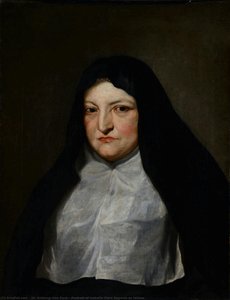
Portrait of Isabella Clara Eugenia as Widow (1628) aut. Anthony van Dyck

Portrait of Isabella Clara Eugenia as Widow

1628 · Oil On Canvas · Museo de Arte de Ponce, Ponce

Sir Anthony van Dyck’s “Portrait of Isabella Clara Eugenia as Widow” is more than just a depiction of a noblewoman; it's a carefully constructed tableau of power, grief, and the enduring legacy of a formidable ruler. Painted in 1628, this oil-on-canvas work transports us to the heart of the Spanish Netherlands during a period of significant political and personal upheaval. Isabella Clara Eugenia, daughter of Philip II of Spain, served…

4
Jacqueline van Caestre (1622) aut. Anthony van Dyck

Jacqueline van Caestre

1622 · Oil On Panel · Royal Łazienki Museum, Varšuva

The portrait of Jacqueline van Caestre, painted in 1622 by the masterful Sir Anthony van Dyck, is more than a mere likeness; it’s a carefully constructed tableau of wealth, status, and burgeoning domesticity. Within its richly layered composition lies a captivating story of a noblewoman navigating the complexities of marriage and courtly life in 17th-century Antwerp. Van Dyck, already establishing his signature style—characterized by an almost sensual realism and a…

5
Susanna and the Elders (1622) aut. Anthony van Dyck

Susanna and the Elders

1622 · Aliejus ant drobės · Alte Pinakothek, Miunchenas

In the grand tapestry of the Flemish Baroque, few works capture the visceral intersection of vulnerability and voyeurism as profoundly as Sir Anthony van Dyck’s Susanna and the Elders. Painted around 1622, this monumental canvas is far more than a mere biblical illustration; it is a psychological drama frozen in time. The scene centers on Susanna, a figure of profound grace and purity, caught in a moment of harrowing intrusion.…

6
Genoese Noblewoman (1622) aut. Anthony van Dyck

Genoese Noblewoman

1622 · Oil On Canvas · The Frick Collection, Niujorkas

Anthony van Dyck's "Genoese Noblewoman," painted circa 1625-1627, isn’t merely a portrait; it’s a meticulously crafted window into the opulent world of early 17th-century Genoa. This captivating work, now residing within The Frick Collection in New York City, offers a rare glimpse into the refined tastes and social dynamics of a wealthy Italian city-state – a vibrant hub of commerce, art, and cultural exchange during a period of immense artistic…

7
Henrietta Maria (1635) aut. Anthony van Dyck

Henrietta Maria

1635 · Oil On Canvas

The gaze of Henrietta Maria meets the viewer through this commanding portrait by Anthony van Dyck. Executed in 1636, the work captures Henrietta Maria of France in a moment of poised royal dignity. She exists here as the Queen of England, a position she holds through her marriage to King Charles I. The painting functions as a visual declaration of her status and her presence within the English court.

8
Portrait of Queen Henrietta-Maria (1638) aut. Anthony van Dyck

Portrait of Queen Henrietta-Maria

1638 · Oil On Canvas · Ermitažas, Šv. Peterburgas

To stand before this portrait is to encounter the quiet gravity of the seventeenth-century English court. The Queen stands slightly off-center, her figure anchored by the heavy weight of crimson drapery and a draped table. There is a certain stillness here, a moment caught between the political tensions of 1638 and the personal dignity of the sitter. Van Dyck uses light to sculpt her form, pulling her face and chest…

9
The healing of the paralytic (1620) aut. Anthony van Dyck

The healing of the paralytic

1620 · Oil On Canvas · Bavarijos valstybinės paveikslų kolekcijos, Miunchas

In this oil painting, titled The healing of the paralytic, Anthony van Dyck explores a moment of profound spiritual intervention. The work, which dates to about 1618-20, captures the immediate aftermath of a miracle. We find ourselves witnessing the precise instant of transition between infirmity and restoration. The subject matter is drawn from the New Testament, specifically the narratives found in Matthew 9:1-8 or John 5:1-15.

10
Portrait of Alexandre della Faille (1589-1653) (1632) aut. Anthony van Dyck

Portrait of Alexandre della Faille (1589-1653)

1632 · Oil On Canvas · Belgijos Karališkųjų dailės muziejų kompleksas, Briuselis

A dignified three-quarter length portrait, this work captures a middle-aged man positioned centrally against a dark, atmospheric background. The subject, Alexandre della Faille, is rendered with a sense of quiet authority and formal composure. A voluminous white ruff collar acts as the primary focal point, its crisp texture contrasting sharply against the heavy, dark fabric of his cloak. Light enters from the upper left, casting soft shadows across the right…

Anthony van Dyck darba rinkinys tęsiamas, nuo 11 iki 100

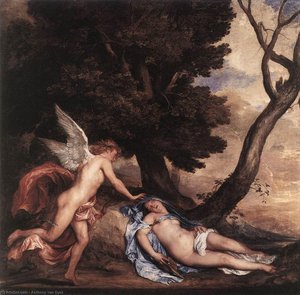
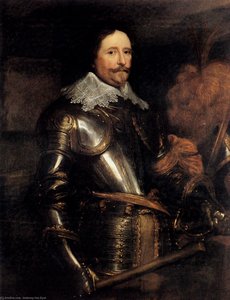
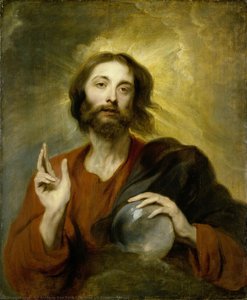
11Equestrian Portrait of Charles I of England (1620) aut. Anthony van DyckEquestrian Portrait of Charles I of England1620 · Bavarijos valstybinės paveikslų kolekcijos 12The Pietà (1629) aut. Anthony van DyckThe Pietà1629 · Museo del Prado 13Portrait of Charles Louis, Elector Palatine (1617-1680), in exile (1637) aut. Anthony van DyckPortrait of Charles Louis, Elector Palatine (1617-1680), in exile1637 14Portrait of Charles, Marquis de Vieuville (1635) aut. Anthony van DyckPortrait of Charles, Marquis de Vieuville1635 · Chrysler Museum of Art 15Portrait of Charles I, King of the Great Britain (1600-1649) (1638) aut. Anthony van DyckPortrait of Charles I, King of the Great Britain (1600-1649)1638 · Ermitažas 16The Lomellini Family (1627) aut. Anthony van DyckThe Lomellini Family1627 17Queen Henrietta Maria (1640) aut. Anthony van DyckQueen Henrietta Maria1640 · Wallace Collection 18Portrait of Henrietta Maria of France, Queen of England, Scotland and Ireland (1637) aut. Anthony van DyckPortrait of Henrietta Maria of France, Queen of England, Scotland and Ireland1637 19Moses and the Brazen Serpent (1530) aut. Anthony van DyckMoses and the Brazen Serpent1530 20Christ on the Cross (1625) aut. Anthony van DyckChrist on the Cross1625 · Courtauld Gallery 21Portrait of Queen Henriëtta Maria (1632) aut. Anthony van DyckPortrait of Queen Henriëtta Maria1632 22Portrait of a Family (1620) aut. Anthony van DyckPortrait of a Family1620 23Thomas Hamilton, 2nd Earl of Haddington, 1600 - 1640 (1637) aut. Anthony van DyckThomas Hamilton, 2nd Earl of Haddington, 1600 - 16401637 · Škotijos nacionalinė portretų galerija 24Samson and Delilah (1630) aut. Anthony van DyckSamson and Delilah1630 · Kunsthistorisches Museum 25Portrait of a Lady with her Daughter (1632) aut. Anthony van DyckPortrait of a Lady with her Daughter1632 26Charles I (1600-49) on Horseback (1635) aut. Anthony van DyckCharles I (1600-49) on Horseback1635 · Hampton Court Palace 27Cupid and Psyche (1640) aut. Anthony van DyckCupid and Psyche1640 · Royal Collection 28Queen Henrietta Maria of England (1620) aut. Anthony van DyckQueen Henrietta Maria of England1620 · Bavarijos valstybinės paveikslų kolekcijos 29A Family Group (1634) aut. Anthony van DyckA Family Group1634 · Detroito meno institutas 30Queen Henrietta Maria of England (1639) aut. Anthony van DyckQueen Henrietta Maria of England1639 · Statens Museum For Kunst 31Saint Sebastian and the Angel (1631) aut. Anthony van DyckSaint Sebastian and the Angel1631 · Galleria Sabauda 32Portrait of a painter (1640) aut. Anthony van DyckPortrait of a painter1640 · Kunstmuseum Basel 33Queen Henrietta Maria (1635) aut. Anthony van DyckQueen Henrietta Maria1635 · Staatliche Kunstsammlungen Dresden 34Christ on the Cross with Saint Catherine of Siena, Saint Dominic and an Angel (1620) aut. Anthony van DyckChrist on the Cross with Saint Catherine of Siena, Saint Dominic and an Angel1620 · Antverpio karališkasis gražiųjų menų muziejus 35St Jerome (1620) aut. Anthony van DyckSt Jerome1620 · Nationalmuseum 36Venetia, Lady Digby (1634) aut. Anthony van DyckVenetia, Lady Digby1634 37Christ and the Penitent Magdalene (1620) aut. Anthony van DyckChrist and the Penitent Magdalene1620 · Bavarijos valstybinės paveikslų kolekcijos 38Crucifixion (1622) aut. Anthony van DyckCrucifixion1622 · San Zaccaria 39Portrait Of Frederik Hendrik (1632) aut. Anthony van DyckPortrait Of Frederik Hendrik1632 · Baltimore Museum of Art 40Ottaviano Canevari (1627) aut. Anthony van DyckOttaviano Canevari1627 · The Frick Collection 41Lamentation of Christ (1620) aut. Anthony van DyckLamentation of Christ1620 · Bavarijos valstybinės paveikslų kolekcijos 42Portrait of an English Gentleman (1635) aut. Anthony van DyckPortrait of an English Gentleman1635 · Palazzo Pitti 43Portrait of James Hay, 2nd Earl of Carlisle (c1612-1660) (1636) aut. Anthony van DyckPortrait of James Hay, 2nd Earl of Carlisle (c1612-1660)1636 44Saint Sebastian (1620) aut. Anthony van DyckSaint Sebastian1620 · Bavarijos valstybinės paveikslų kolekcijos 45The Martyrdom of Saint Sebastian (1616) aut. Anthony van DyckThe Martyrdom of Saint Sebastian1616 · Bavarijos valstybinės paveikslų kolekcijos 46Sir Algernon Percy (1602–1668), 10th Earl of Northumberland, KG, His First Wife Lady Anne Cecil (d.1637), and Their Eldest Daughter, Lady Catherine Percy (1630–1638) (1635) aut. Anthony van DyckSir Algernon Percy (1602–1668), 10th Earl of Northumberland, KG, His First Wife Lady Anne Cecil (d.1637), and Their Eldest Daughter, Lady Catherine Percy (1630–1638)1635 47Sir Kenelm Digby (1640) aut. Anthony van DyckSir Kenelm Digby1640 · National Portrait Gallery 48Lord John Stuart and his Brother, Lord Bernard Stuart (1638) aut. Anthony van DyckLord John Stuart and his Brother, Lord Bernard Stuart1638 49Portrait of an Old Man (1618) aut. Anthony van DyckPortrait of an Old Man1618 · Liechtenstein Museum 50Portrait of a Man (1922) aut. Anthony van DyckPortrait of a Man1922 · Bavarijos valstybinės paveikslų kolekcijos 51Portrait of a Genovese Gentleman (1621) aut. Anthony van DyckPortrait of a Genovese Gentleman1621 · Gemäldegalerie 52James Stuart (1612–1655), 1st Duke of Richmond and 4th Duke of Lennox (1636) aut. Anthony van DyckJames Stuart (1612–1655), 1st Duke of Richmond and 4th Duke of Lennox1636 · English Heritage 53Mountjoy Blount (1597–1665), 1st Earl of Newport George (1608–1657), Lord Goring, and a Page (1639) aut. Anthony van DyckMountjoy Blount (1597–1665), 1st Earl of Newport George (1608–1657), Lord Goring, and a Page1639 · Petworth House 54The Martyrdom of Saint Sebastian (1620) aut. Anthony van DyckThe Martyrdom of Saint Sebastian1620 · Bavarijos valstybinės paveikslų kolekcijos 55Portrait of a Man (1618) aut. Anthony van DyckPortrait of a Man1618 · Liechtenstein Museum 56Marie de Raet (1631) aut. Anthony van DyckMarie de Raet1631 · Wallace Collection 57Mozes and the brass snake (1620) aut. Anthony van DyckMozes and the brass snake1620 58Portrait of Prince Charles Louis, Elector Palatine (1641) aut. Anthony van DyckPortrait of Prince Charles Louis, Elector Palatine1641 59Charles Seton (1615–1672), 2nd Earl of Dunfermline, Lord Privy Seal (1640) aut. Anthony van DyckCharles Seton (1615–1672), 2nd Earl of Dunfermline, Lord Privy Seal1640 60The Virgin and Child (1631) aut. Anthony van DyckThe Virgin and Child1631 · Buckingham Palace 61Lord George Stuart (1638) aut. Anthony van DyckLord George Stuart1638 · National Portrait Gallery 62Portrait of Wolfgang William of Palatine-Neuburg (1630) aut. Anthony van DyckPortrait of Wolfgang William of Palatine-Neuburg1630 · Kunsthalle Bremen 63Queen Henrietta Maria (1760) aut. Anthony van DyckQueen Henrietta Maria1760 · Birmingham Museum and Art Gallery 64Portrait of Emmanuel Philibert (1624) aut. Anthony van DyckPortrait of Emmanuel Philibert1624 65Portrait of Charles V on Horseback (1620) aut. Anthony van DyckPortrait of Charles V on Horseback1620 · Galleria degli Uffizi 66The Polish Rider (1620) aut. Anthony van DyckThe Polish Rider1620 · Bavarijos valstybinės paveikslų kolekcijos 67Charles I and the Knights of the Garter in Procession (1638) aut. Anthony van DyckCharles I and the Knights of the Garter in Procession1638 · The Ashmolean Museum of Art And Archaeology 68Christus als Salvator Mundi (1620) aut. Anthony van DyckChristus als Salvator Mundi1620 · Sanssouci paveikslų galerija 69Charles I (1600–1649) (1639) aut. Anthony van DyckCharles I (1600–1649)1639 · National Trust 70Karalienė Henrietta Maria (1636) aut. Anthony van DyckKaralienė Henrietta Maria1636 · Metropolitano meno muziejus 71Lady Dacre (1633) aut. Anthony van DyckLady Dacre1633 · Denver Art Museum 72Francis Junius (1591–1677) (1640) aut. Anthony van DyckFrancis Junius (1591–1677)1640 · Bodleian Libraries 73Charles i - (16) aut. Anthony van DyckCharles i - (16) 74Deux têtes d (1650) aut. Anthony van DyckDeux têtes d1650 · Lyon grožio muziejus 75Princess Henrietta of Lorraine (1611–1660), Attended by a Page (1634) aut. Anthony van DyckPrincess Henrietta of Lorraine (1611–1660), Attended by a Page1634 · English Heritage 76Portrait of Father Jean-Charles della Faille, S.J. (1629) aut. Anthony van DyckPortrait of Father Jean-Charles della Faille, S.J.1629 77Equestrian Portrait of Charles I, King of England (1640) aut. Anthony van DyckEquestrian Portrait of Charles I, King of England1640 78François Langlois (1589–1647) (1637) aut. Anthony van DyckFrançois Langlois (1589–1647)1637 · The Barber Institute of Fine Arts 79Portrait of Charles I, King of England (1640) aut. Anthony van DyckPortrait of Charles I, King of England1640 · USC Fisher Museum of Art 80Christ carrying the Cross aut. Anthony van DyckChrist carrying the CrossMusei di Strada Nuova 81Portrait of the Painter Cornelis de Wae (1627) aut. Anthony van DyckPortrait of the Painter Cornelis de Wae1627 · Koninklijk Museum voor Schone Kunsten 82Ecce Homo (1626) aut. Anthony van DyckEcce Homo1626 · The Barber Institute of Fine Arts 83Margareta Snyders (1620) aut. Anthony van DyckMargareta Snyders1620 84Margareta de Vos (1620) aut. Anthony van DyckMargareta de Vos1620 · The Frick Collection 85Portrait of Anna Dalkeith, Countess of Morton, and Lady Anna Kirk (1631) aut. Anthony van DyckPortrait of Anna Dalkeith, Countess of Morton, and Lady Anna Kirk1631 · Ermitažas 86Portrait Of Philip, Lord Wharton (1630) aut. Anthony van DyckPortrait Of Philip, Lord Wharton1630 87Portrait of a Man (1618) aut. Anthony van DyckPortrait of a Man1618 · Liechtenstein Museum 88Portrait of Henrietta Maria (1609–1699), Queen of England aut. Anthony van DyckPortrait of Henrietta Maria (1609–1699), Queen of EnglandNacionalinis muziejus Varšuvoje 89Portrait of James Hamilton (1630) aut. Anthony van DyckPortrait of James Hamilton1630 · Liechtenstein Museum 90Charles I on Horseback (1635) aut. Anthony van DyckCharles I on Horseback1635 · National Gallery 91Thomas Killigrew and (.) William, Lord Croft (1638) aut. Anthony van DyckThomas Killigrew and (.) William, Lord Croft1638 · Royal Collection 92Alexander Henderson (c.1583–1646), Presbyterian Divine and Diplomatist (1641) aut. Anthony van DyckAlexander Henderson (c.1583–1646), Presbyterian Divine and Diplomatist1641 · Škotijos nacionalinė portretų galerija 93The Lomellini Family (1626) aut. Anthony van DyckThe Lomellini Family1626 · Škotijos nacionalinė galerija 94Samsonas ir Dalila (1620) aut. Anthony van DyckSamsonas ir Dalila1620 95Abraham and Isaac (1617) aut. Anthony van DyckAbraham and Isaac1617 · Narodinis galerija 96Portrait of Anna van Craesbecke (1635) aut. Anthony van DyckPortrait of Anna van Craesbecke1635 · Staatliche Museen 97A wooded ridge (1630) aut. Anthony van DyckA wooded ridge1630 · Art Gallery of South Australia 98Charles I, King of England at the Hunt (1635) aut. Anthony van DyckCharles I, King of England at the Hunt1635 · Liuvro muziejus 99Pentecost (1618) aut. Anthony van DyckPentecost1618 · Staatliche Museen zu Berlin 100Equestrian portrait of the Emperor Charles V (1620) aut. Anthony van DyckEquestrian portrait of the Emperor Charles V1620 · Galleria degli Uffizi

žymios Anthony van Dyck tapiojamos, pagal laikotarpį

Temos, kurios domino Anthony van Dyck

Ketverios temos, dažniausiai pasikrausto originaluose, kiekvienos su savo puikiausiu pavyzdžiu.

Muziejai, kuriuose saugomi Anthony van Dyck originalūs darbai

8 muziejai, kuriuose saugoma daugiausia šioje pusėje esamų paveikslų.

Muzejaus Miestas Anthony van Dyck darbai Šiojo sąrašo paveikslai
Bavarijos valstybinės paveikslų kolekcijos, MiunchasBavarijos valstybinės paveikslų kolekcijos Miunchas 57 The healing of the paralytic, Equestrian Portrait of Charles I of England, Queen Henrietta Maria of England
Liechtenstein Museum, VienaLiechtenstein Museum Viena 23 Portrait of an Old Man, Portrait of a Man, Portrait of a Man
Ermitažas, Šv. PeterburgasErmitažas Šv. Peterburgas 22 Family Portrait, Portrait of Queen Henrietta-Maria, Portrait of Charles I, King of the Great Britain (1600-1649)
Royal Collection, LondonasRoyal Collection Londonas 28 Charles I Šiuose Tris Pozicijose, Cupid and Psyche, Thomas Killigrew and (.) William, Lord Croft
The Frick Collection, NiujorkasThe Frick Collection Niujorkas 8 Genoese Noblewoman, Ottaviano Canevari, Margareta de Vos
Wallace Collection, LondonasWallace Collection Londonas 8 Queen Henrietta Maria, Marie de Raet
National Portrait Gallery, LondrasNational Portrait Gallery Londras 6 Sir Kenelm Digby, Lord George Stuart
Škotijos nacionalinė portretų galerija, EdinburgasŠkotijos nacionalinė portretų galerija Edinburgas 5 Thomas Hamilton, 2nd Earl of Haddington, 1600 - 1640, Alexander Henderson (c.1583–1646), Presbyterian Divine and Diplomatist

Anthony van Dyck dešimtmetėms po dešimtmetės: originalus kūrinys, apibūdinantis kiekvieną iš jų

Darbai pagal dešimtmečius

Pasirinkite dešimtmetį, kad pamatytėte jį apibrėžusį originalą.

Kolekcjonerų klausimai apie Anthony van Dyck paveikslus

Kuriu darbu Anthony van Dyck yra labiausiai garsus?Atsakymas

Charles I Šiuose Tris Pozicijose (1636), Royal Collection, Londonas. Toliau seka Family Portrait (1621) ir Portrait of Isabella Clara Eugenia as Widow (1628).

Kokia buvo Anthony van Dyck amžius, kai buvo sukurtas Charles I Šiuose Tris Pozicijose?Atsakymas

37 metų amžiaus: Charles I Šiuose Tris Pozicijose sukurta 1636 m. Nr. Anthony van Dyck gimė 1599.

Kokie yra 10 garsiausių Anthony van Dyck paveikslų?Atsakymas

Charles I Šiuose Tris Pozicijose, Family Portrait, Portrait of Isabella Clara Eugenia as Widow, Jacqueline van Caestre, Susanna and the Elders, Genoese Noblewoman, Henrietta Maria, Portrait of Queen Henrietta-Maria, The healing of the paralytic ir Portrait of Alexandre della Faille (1589-1653). Viršuje esančioje reitingo sąraše nurodyta kiekvieno kūrinio metis ir muziejus.

Kiek paveikslų paliko Anthony van Dyck?Atsakymas

Mūsų kataloge yra 1,620 Anthony van Dyck darbų, skirtų laikotarpiui nuo 1616 iki 1641.

Kuriuose muziejuose eksponuojami Anthony van Dyck šedevrai?Atsakymas

Daugiausia – Bavarijos valstybinės paveikslų kolekcijos (Miunchas), Liechtenstein Museum (Viena) ir Ermitažas (Šv. Peterburgas). Viršuje esančiame muziejų sąraše yra visi jie.

Kuriomis metais Anthony van Dyck tapo savo garsiausius kūrinius?Atsakymas

1630s laikotarpiu: 43 iš 100 šioje pusėje esančių darbų buvo sukurtos tada, iš jų Charles I Šiuose Tris Pozicijose.

Kokie yra pirmasis ir paskutinis garsieji Anthony van Dyck originalūs darbai?Atsakymas

Šioje pusėje seniausias darbas yra The Martyrdom of Saint Sebastian (1616), o naujausias – Portrait of Prince Charles Louis, Elector Palatine (1641).

Kurią temą Anthony van Dyck rinkosi dažniausiai?Atsakymas

Man (22), Portraiture (21) ir Portrait (16) iš 100 šioje pusėje esamų darbų.

Kurią techniką Anthony van Dyck naudojo dažniausiai?Atsakymas

Oil On Canvas, iš 100 šios puslapio darbų – 73.

Kelią meno kryptį priklauso Anthony van Dyck?Atsakymas

Baroque realism, vadovaujantis šios puslapio originalais kūriniais.

Kurių Anthony van Dyck darbai eksponuojami Bavarijos valstybinės paveikslų kolekcijos?Atsakymas

The healing of the paralytic, Equestrian Portrait of Charles I of England ir Queen Henrietta Maria of England: Bavarijos valstybinės paveikslų kolekcijos, Miunchas kolekcijoje yra 10 šioje pusėje esančių darbų.

Anthony van Dyck: gyvenimas ir kūryba

Early Life, Family and Training

Born in Antwerp on 22 March 1599, Sir Anthony van Dyck entered a world of commerce and craft. He was the seventh of twelve children born to Maria Cupers and Francoïs "Frans" van Dijck, a silk merchant. This upbringing in a prosperous household provided a stable foundation for a child who showed an early, precocious aptitude for the visual arts. By the age of ten, his formal education in the painterly arts began under the guidance of Hendrick van Balen the Elder.

His development was marked by a rapid ascent through the traditional structures of the Flemish art world. He did not linger long in the status of a mere student; his technical proficiency allowed him to move toward independence with remarkable speed. By 18 October 1617, he had achieved the significant milestone of being admitted to the Antwerp Guild of Saint Luke as a free master. This early professional recognition signaled the arrival of a talent that would soon move beyond the borders of his native city.

  • Self-portrait (dated 1613–14)

The Influence of Peter Paul Rubens

The trajectory of van Dyck’s career was fundamentally shaped by his time in the studio of Peter Paul Rubens. This was no mere apprenticeship; the young artist rose to become the chief assistant to the master, a position that required both technical precision and an ability to absorb a complex visual language. Rubens himself recognized the exceptional talent of his protégé, describing the young man as the best of his pupils. This mentorship provided van Dyck with a direct connection to the leading artistic currents of the seventeenth century, allowing him to observe firsthand the creation of large-scale compositions and the management of a prolific workshop.

Rubens’ influence was wielded over the young artist through a shared focus on expression, gesture, and form. While van Dyck would eventually develop a more refined and composed manner, his early years were spent emulating the energy and observation of his mentor. He learned to translate the vitality of life into oil and pigment, a skill that would later allow him to move beyond the robust energy of the Rubens style toward something more subtle. The technical foundations laid in this studio provided the necessary tools for his eventual ascent to the royal courts of Europe.

Artistic Travels in Italy and Genoa

By his late teens, van Dyck had already achieved success as an independent painter, a feat that provided the momentum necessary for his departure from the Low Countries. Between 1621 and late 1627, he traveled through Italy, a period that would refine his ability to navigate the complex social hierarchies of European nobility. This era of travel was less a wandering and more a strategic immersion into the visual language of the Mediterranean elite.

His time in Genoa proved particularly significant. He found a steady clientele among the Genoese patricians, whose aristocratic sensibilities matched his developing style. His renderings of these local families were received with great favor in the city, establishing him as a painter capable of capturing the specific dignity required by high society. In these portraits, he moved beyond mere likeness to address the social standing and character of his sitters.

Service to the English Court

Van Dyck’s connection to the English crown began well before his permanent settlement in London. In 1620, he entered the service of King James I, a brief engagement that preceded his extensive travels through Italy and the Spanish Netherlands. These years of movement and varied commissions prepared him for a more profound arrival. By 1632, he had returned to England, settling at the court where his reputation as a premier portraitist would be solidified. He was appointed 'principalle Paynter in Ordinary to their Majesties' that same year, a position that placed him at the center of royal life.

His presence in London transformed the visual language of the monarchy. He moved away from the rigid, formal portraiture of the past, opting instead to present the king and the aristocracy with a sense of effortless grace and authority. His ability to capture the character of his sitters allowed him to become the leading court painter in England. He did not merely record faces; he constructed an image of power that would influence the English court for generations. His work during this period provided a sense of dignity and poise that defined the era's aesthetic.

Technique and Artistic Style

Van Dyck possessed a technical versatility that allowed him to move seamlessly between the heavy application of oil paint and the precise, sharp lines of etching. As an accomplished draughtsman, he understood the structural necessity of a strong foundation before applying color. His compositions often relied on a masterful arrangement of form, utilizing a dramatic interplay of light and shadow to define the contours of his subjects. This use of chiaroscuro provided a sense of depth and volume, particularly in his religious and mythological scenes where light seemed to emerge from the darkness to highlight a specific gesture or expression.

His palette was characterized by deep, saturated colors and an attention to the minute details of texture. Whether rendering the sheen of silk or the subtle grain of skin, he maintained a sense of refinement that avoided the heavy-handedness of some of his contemporaries. This precision was not limited to his formal commissions; his ability to capture movement and character allowed him to excel in various genres, from the grandiosity of mythological narratives to the intimate psychological depth of his portraiture. He had a particular talent for using light to suggest a sitter's social standing or inner temperament, often employing sweeping gestures and carefully chosen backgrounds to frame the individual.

Legacy and Enduring Influence

The death of Sir Anthony van Dyck in London on 9 December 1641 marked the end of a career that had already reshaped the visual language of European courts. Following in the wake of Peter Paul Rubens, he emerged as the most significant Flemish painter of the seventeenth century. His presence in the English court established a standard of portraiture that would influence the direction of art for the next 150 years. He possessed a specific ability to define the social standing and character of his subjects through a refined technique that became a benchmark for subsequent generations of painters.

His impact reached far beyond the borders of England. Throughout the period, his work exerted a profound influence over the art produced across Europe. This reach was fueled by his versatility, moving between the demands of religious narratives and the sophisticated requirements of the aristocracy. He did not merely record faces; he constructed an image of authority and grace that became the preferred aesthetic for those seeking to project power and status.