Alfredas Philippe Rollas portretas

49 garsiausių Alfredas Philippe Rollas paveikių rinkinys: galerijos išboru

Atnaujinta lapkritis 2026 · pagal mūsų populiarumumo koeficientą (paieškos, lankytojai ir užsakymai kiekvienam kūriniui) · 50 Alfredas Philippe Rollas darbai mūsų kataloge

Trumpai tariant

Iš visų originalų, kuriuos paliko Alfredas Philippe Rollas, garsiausias yra Portrait de Mme Roll. Tiesiog už jų seka Retour du bal ir The feast of Silenus (1871). Mūsų kataloge yra 50 darbų autoriaus Alfredas Philippe Rollas; galerija išsaugojo 49 labiausiai pasaulyje žyminiausių kūrinių – kiekvienas jų pateikiamas su datos, muziejaus ir istorijos aprašymu.

1845 – 1919, Parisas Daugiausia darbų: Petit Palais

Alfredas Philippe Rollas geriausios 10 paveikslų: galerijos pasirinkimas

1
Portrait de Mme Roll aut. Alfredas Philippe Rollas

Portrait de Mme Roll

Oil On Canvas

The portrait depicts a woman, identified as Madame Roll, positioned in a vertical orientation. She is situated slightly off-center within a domestic interior, appearing to stand near a window. The figure is rendered with a muted color palette, primarily composed of blacks, grays, and browns. Subtle ochre and muted red tones appear in the highlights and the background. Her attire is formal, and her expression remains serene with a slight…

2
Retour du bal aut. Alfredas Philippe Rollas

Retour du bal

Oil On Canvas · Musée d'Arts de Nantes, Nantas

The air in the room feels heavy with the scent of perfume and the soft rustle of silk as two women move through an opulent interior. We watch them from behind, catching only the graceful curve of their backs and the sweeping lines of their attire. They are poised, perhaps caught in a moment of transition between the excitement of a social gathering and the quietude of their private quarters.…

3
The feast of Silenus (1871) aut. Alfredas Philippe Rollas

The feast of Silenus

1871 · Oil On Canvas · Museum of Fine Arts Ghent (MSK), Gentas

The feast of Silenus emerges from the brush of Alfred Philippe Roll, a painter whose life spanned the transformative decades of the late nineteenth century. Born in the former 8th arrondissement of Paris, France, in 1845, Roll carries the weight of a changing era within his lineage. He remains a figure of the French tradition, having departed this world in 1919. This specific work, The feast of Silenus, captures a…

4
Marianne Orfrey, Green Crier (1880) aut. Alfredas Philippe Rollas

Marianne Orfrey, Green Crier

1880 · Oil On Canvas · Musée des Beaux-Arts de Pau, Pau

In this 1880 oil on canvas, we find ourselves standing at eye-level with a solitary woman, a street vendor whose presence commands a quiet, stoic dignity. She is positioned slightly off-center, a choice that lends a sense of naturalism to the vertical composition. There is a certain weight to her figure, anchored by the heavy folds of her skirt and the rounded, organic form of the basket she carries. The…

5
July 14, 1880, Inauguration of the Monument to the République (1882) aut. Alfredas Philippe Rollas

July 14, 1880, Inauguration of the Monument to the République

1882 · Oil · Petit Palais, Paris

The canvas depicts a dense, wide-angle view of a Parisian square during a large-scale public celebration. In the center of the composition, a monument rises toward a sky filled with fluttering flags. The scene is populated by a vast, diverse crowd of figures that extend from the immediate foreground into the distance. These people are rendered with varied postures, some standing in groups and others moving through the space. The…

6
Henri Rochefort (Victor-Henri, marquis de Rochefort-Luçay, 1831-1913), journalist, politician and writer (1879) aut. Alfredas Philippe Rollas

Henri Rochefort (Victor-Henri, marquis de Rochefort-Luçay, 1831-1913), journalist, politician and writer

1879 · Oil On Canvas · Carnavalet muziejus, Paris

The portrait emerges from a period of transition in French art, moving away from the rigid constraints of academic tradition toward a more grounded, empathetic realism. The visible layering of paint suggests a preoccupation with the authentic human form rather than an idealized version of it. There is a palpable sense of the man's internal life, a quiet intensity that lingers in the way the light interacts with his features.…

7
Woman and bull (1885) aut. Alfredas Philippe Rollas

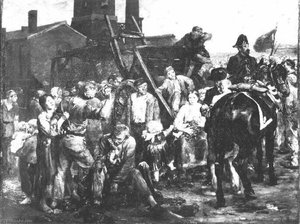
Woman and bull

1885 · Oil · T nacionalinis dailės muziejus, Buenos Aires

The air feels heavy and still within this shadowed woodland, where the light filters through a dense canopy in soft, dappled patches. A nude woman rests in an intimate, quiet moment, her pale skin glowing against the deep, earthy tones of the surrounding meadow. Beside her, the muscular form of a bull emerges from the darkness, its presence a powerful counterpoint to her vulnerability. There is a profound sense of…

8
Alsatian and Lorrainer (1891) aut. Alfredas Philippe Rollas

Alsatian and Lorrainer

1891 · Oil · Museum of the French Revolution, Vizille

In the work Alsatian and Lorrainer by Alfred Philippe Roll, the composition is structured as a tight, intimate close-up of two female figures. The primary subject is positioned in the foreground, presented in a sharp profile facing toward the left side of the frame. Behind her, a second woman is partially visible, also oriented toward the left. This overlapping arrangement creates a sense of depth within the narrow field of…

9
Portrait of Thaulow and His Wife (1890) aut. Alfredas Philippe Rollas

Portrait of Thaulow and His Wife

1890 · Oil On Canvas · Petit Palais, Paris

In this intimate oil on canvas, Alfred Philippe Roll presents Portrait of Thaulow and His Wife. Painted about 1890, the work captures a quiet moment between a man and a woman. The subjects are likely the artist's acquaintances, Thaulow and his wife, rendered with a sense of naturalism that suggests a close proximity to the figures. There is a palpable sense of companionship in the way they are positioned together.

10
Portrait of Jane Hading (1890) aut. Alfredas Philippe Rollas

Portrait of Jane Hading

1890 · Oil On Canvas · Petit Palais, Paris

The portrait presents a woman seated centrally within a luxurious interior. She is positioned in a vertical orientation, wearing a sleeveless black gown that features shimmering, light-colored patterns suggestive of sequins or embroidery. A large, dark, textured element, resembling a fur mantle or heavy drapery, surrounds the upper portion of her chair. Her skin is rendered with smooth, luminous textures, and her reddish-brown hair is styled softly around her face.…

Alfredas Philippe Rollas darba rinkinys tęsiamas, nuo 11 iki 49

11André Manaut (1890) aut. Alfredas Philippe RollasAndré Manaut1890 · Municipal museum (Saverne) 12Au trot (1888) aut. Alfredas Philippe RollasAu trot1888 · Municipal museum (Saverne) 13Adolphe Alphand (1888) aut. Alfredas Philippe RollasAdolphe Alphand1888 · Petit Palais 14Centenary of the Estates General at the Neptune Basin (May 3, 1889) (1889) aut. Alfredas Philippe RollasCentenary of the Estates General at the Neptune Basin (May 3, 1889)1889 15Exodus (1893) aut. Alfredas Philippe RollasExodus1893 · Petit Palais 16Louise Cattel, wet nurse (1894) aut. Alfredas Philippe RollasLouise Cattel, wet nurse1894 · Palais des Beaux-Arts de Lille 17Alexandre Dumas fils (1895) aut. Alfredas Philippe RollasAlexandre Dumas fils1895 · Musée des Beaux-Arts 18Roll Painting (1900) aut. Alfredas Philippe RollasRoll Painting1900 · Petit Palais 19Portrait de Mme Henriette Roll (1900) aut. Alfredas Philippe RollasPortrait de Mme Henriette Roll1900 · Municipal museum (Saverne) 20Nu couché (1900) aut. Alfredas Philippe RollasNu couché1900 · Musée d'Art Moderne et Contemporain de Strasbourg 21In Summer, Woman with Dog (1909) aut. Alfredas Philippe RollasIn Summer, Woman with Dog1909 · Petit Palais 22Sketch for the Petit Palais, south gallery: Apotheosis (central ceiling) (1909) aut. Alfredas Philippe RollasSketch for the Petit Palais, south gallery: Apotheosis (central ceiling)1909 · Petit Palais 23Sketch for the Petit Palais, south gallery: Poetry - Drama (1910) aut. Alfredas Philippe RollasSketch for the Petit Palais, south gallery: Poetry - Drama1910 · Petit Palais 24Sketch for the Petit Palais, south gallery: Fantastic Music (1911) aut. Alfredas Philippe RollasSketch for the Petit Palais, south gallery: Fantastic Music1911 · Petit Palais 25Sketch for the South Gallery of the Petit Palais: Apotheosis (central ceiling) (1913) aut. Alfredas Philippe RollasSketch for the South Gallery of the Petit Palais: Apotheosis (central ceiling)1913 · Petit Palais 26The Big Bed (1912) aut. Alfredas Philippe RollasThe Big Bed1912 · Municipal museum (Saverne) 27Bourgeoisie (1913) aut. Alfredas Philippe RollasBourgeoisie1913 · Municipal museum (Saverne) 28Portrait of Miss Amélie Diéterle, in 1913. Title : In June, Amélie Diéterle. (1913) aut. Alfredas Philippe RollasPortrait of Miss Amélie Diéterle, in 1913. Title : In June, Amélie Diéterle.1913 · Petit Palais 29The Tea Cup (1918) aut. Alfredas Philippe RollasThe Tea Cup1918 · Municipal museum (Saverne) 30CHEMIN SOUS BOIS aut. Alfredas Philippe RollasCHEMIN SOUS BOIS 31July 14, 1880, Inauguration of the Monument to the Republic (1881) aut. Alfredas Philippe RollasJuly 14, 1880, Inauguration of the Monument to the Republic1881 · Petit Palais 32Esquisse pour La fête nationale du 14 juillet 1880 (1881) aut. Alfredas Philippe RollasEsquisse pour La fête nationale du 14 juillet 18801881 · Municipal museum (Saverne) 33Sketch for the Hôtel de Ville de Paris: Art, Movement, Work, Lights (1897) aut. Alfredas Philippe RollasSketch for the Hôtel de Ville de Paris: Art, Movement, Work, Lights1897 · Petit Palais 34The Vigil under the Arc de Triomphe (1903) aut. Alfredas Philippe RollasThe Vigil under the Arc de Triomphe1903 · Musée Victor Hugo 35The Wave (1911) aut. Alfredas Philippe RollasThe Wave1911 · Petit Palais 36Sketch for the Petit Palais, south gallery: Fantastic Music (1911) aut. Alfredas Philippe RollasSketch for the Petit Palais, south gallery: Fantastic Music1911 · Petit Palais 37Peder Severin Kröyer (1851-1909) aut. Alfredas Philippe RollasPeder Severin Kröyer (1851-1909)Nationalmuseum 38Petite République (1907) aut. Alfredas Philippe RollasPetite République1907 · Municipal museum (Saverne) 39La grève de mineurs aut. Alfredas Philippe RollasLa grève de mineurs 40Portrait de Léon Bourgeois aut. Alfredas Philippe RollasPortrait de Léon Bourgeois 41PORTRAIT DE JEUNE FILLE aut. Alfredas Philippe RollasPORTRAIT DE JEUNE FILLE 42Portrait de jeune femme aut. Alfredas Philippe RollasPortrait de jeune femme 43L'Exécution d'un trompette sous la Commune aut. Alfredas Philippe RollasL'Exécution d'un trompette sous la CommuneCarnavalet muziejus 44Les baigneuses Panneau décoratif (Ancien titre) aut. Alfredas Philippe RollasLes baigneuses Panneau décoratif (Ancien titre) 45Bathers aut. Alfredas Philippe RollasBathersMusée des Beaux-Arts de Dijon 46Chevaux à l'écurie aut. Alfredas Philippe RollasChevaux à l'écurie 47Manda Lamétrie, fermière (1887) aut. Alfredas Philippe RollasManda Lamétrie, fermière1887 · Musée d'Orsay 48The Young Republic (1908) aut. Alfredas Philippe RollasThe Young Republic1908 · Musée d'Orsay 49The Striker's Wife aut. Alfredas Philippe RollasThe Striker's WifeMusee Baron Martin

žymios Alfredas Philippe Rollas tapiojamos, pagal laikotarpį

Temos, kurios domino Alfredas Philippe Rollas

Ketverios temos, dažniausiai pasikrausto originaluose, kiekvienos su savo puikiausiu pavyzdžiu.

Muziejai, kuriuose saugomi Alfredas Philippe Rollas originalūs darbai

8 muziejai, kuriuose saugoma daugiausia šioje pusėje esamų paveikslų.

Muzejaus Miestas Alfredas Philippe Rollas darbai Šiojo sąrašo paveikslai
Petit Palais, ParisPetit Palais Paris 16 July 14, 1880, Inauguration of the Monument to the République, Portrait of Thaulow and His Wife, Portrait of Jane Hading
Municipal museum (Saverne), SaverneMunicipal museum (Saverne) Saverne 8 André Manaut, Au trot, Portrait de Mme Henriette Roll
Carnavalet muziejus, ParisCarnavalet muziejus Paris 2 Henri Rochefort (Victor-Henri, marquis de Rochefort-Luçay, 1831-1913), journalist, politician and writer, L'Exécution d'un trompette sous la Commune
Musée d'Orsay, ParisMusée d'Orsay Paris 2 Manda Lamétrie, fermière, The Young Republic
Musée d'Arts de Nantes, NantasMusée d'Arts de Nantes Nantas 1 Retour du bal
Museum of Fine Arts Ghent (MSK), GentasMuseum of Fine Arts Ghent (MSK) Gentas 1 The feast of Silenus
Musée des Beaux-Arts de Pau, PauMusée des Beaux-Arts de Pau Pau 1 Marianne Orfrey, Green Crier
T nacionalinis dailės muziejus, Buenos AiresT nacionalinis dailės muziejus Buenos Aires 1 Woman and bull

Alfredas Philippe Rollas dešimtmetėms po dešimtmetės: originalus kūrinys, apibūdinantis kiekvieną iš jų

Darbai pagal dešimtmečius

Pasirinkite dešimtmetį, kad pamatytėte jį apibrėžusį originalą.

Kolekcjonerų klausimai apie Alfredas Philippe Rollas paveikslus

Kuriu darbu Alfredas Philippe Rollas yra labiausiai garsus?Atsakymas

Portrait de Mme Roll. Toliausiai eina Retour du bal ir The feast of Silenus (1871).

Kokie yra 10 garsiausių Alfredas Philippe Rollas paveikslų?Atsakymas

Portrait de Mme Roll, Retour du bal, The feast of Silenus, Marianne Orfrey, Green Crier, July 14, 1880, Inauguration of the Monument to the République, Henri Rochefort (Victor-Henri, marquis de Rochefort-Luçay, 1831-1913), journalist, politician and writer, Woman and bull, Alsatian and Lorrainer, Portrait of Thaulow and His Wife ir Portrait of Jane Hading. Viršuje esančioje reitingo sąraše nurodyta kiekvieno kūrinio metis ir muziejus.

Kiek paveikslų paliko Alfredas Philippe Rollas?Atsakymas

Mūsų kataloge yra 50 Alfredas Philippe Rollas darbų, skirtų laikotarpiui nuo 1871 iki 1918.

Kuriuose muziejuose eksponuojami Alfredas Philippe Rollas šedevrai?Atsakymas

Daugiausia – Petit Palais (Paris), Municipal museum (Saverne) (Saverne) ir Carnavalet muziejus (Paris). Viršuje esančiame muziejų sąraše yra visi jie.

Kuriomis metais Alfredas Philippe Rollas tapo savo garsiausius kūrinius?Atsakymas

1880s laikotarpiu: 9 iš 49 šioje pusėje esančių darbų buvo sukurtos tada, iš jų Marianne Orfrey, Green Crier.

Kokie yra pirmasis ir paskutinis garsieji Alfredas Philippe Rollas originalūs darbai?Atsakymas

Šioje pusėje seniausias darbas yra The feast of Silenus (1871), o naujausias – The Tea Cup (1918).

Kurią temą Alfredas Philippe Rollas rinkosi dažniausiai?Atsakymas

Woman (19), Man (8) ir Skin tones (5) iš 49 šioje pusėje esamų darbų.

Kurią techniką Alfredas Philippe Rollas naudojo dažniausiai?Atsakymas

Oil On Canvas, iš 49 šios puslapio darbų – 17.

Kurių Alfredas Philippe Rollas darbai eksponuojami Petit Palais?Atsakymas

July 14, 1880, Inauguration of the Monument to the République, Portrait of Thaulow and His Wife ir Portrait of Jane Hading: Petit Palais, Paris kolekcijoje yra 16 šioje pusėje esančių darbų.

Alfredas Philippe Rollas: gyvenimas ir kūryba

Trečiosios Respublikos siela: Alfredas Philippe Rollas meninis kelias

Gyvybingoje, nuolatosiai besikejančioje XIX aklai metų Prancūzijos aplinkoje nedarbis nė vienas menininkas nepažymėjo keičančios šalies pulso taip jautriai kaip Alfredas Philippe Rollas. Prancūzijoje, 1846 m. gimęs Rollas išėjo iš prestižinių École des Beaux-Arts mokyklos, būdamas Jean-Léon Gérôme, Léon Bonnat ir Charles-François Daubigny meistrų griežtosios akademinės tradicijos mokinys. Jo ankstyvieji metai žymėjo romantiška jautrumo era – stiliaus laikotarpis, kai jo plėtmai kvapavo epochai būdinga didybe ir vaizdingu žavesiu. Šio formatyvo etapo metu jo darbai dažnai atpasaginėjo beržius Bolognai tradicijos emocionalumą bei augantį Gustave'o Courbet realizmą, kurdami subtilią įtampą tarp klasikinio grožio ir grynos stebėjimo.

Rollas karjeros kryptis buvo negrįžtamai pakeičta turbulentiškų istorijos vėjų. Franco-Prusų karas, kurio metu jis tarnavo milicijos leitenantu, į jo suvokimą įterpė gilią supratimą apie žmogaus atkaklumą ir visuomenės sukrėtimus. Šis konfliktų laikotarpis tapo tyrimo žindeniu, išvalančiu jo žvilgsnį nuo grynai romantiško link labiau įžemitos, empatiškos realizmo. Jo 1875 metų šedevras, Toulouse upė, stovi kaip ši trumpalaikė perėjimo liudijimas; užfiksuvęs skubų kančios ir gyvybės trapumo prigimtį per siaužą, jis peržengė paprasto dekoratyvumo ribas ir prisirėlė prie kolektyvinės Prancūzijos žmonių psichikos. Šis darbas, dabar esantis Musée Malraux kolekcijoje, paskelbė jo atėjimą kaip menininką, gebantį kurti gilią vizualinę istoriją.

Iš romantizmo į grynąjį realizmą

Laikui bėgant Rollas savo brushio trauktams pradėjo atiduoti romantiškus kraštus, vietoj to priimdamas Naturalizmo judėjimo grytumą ir tiesą. Jis tapo žmonių paineruotoju, nukreipdamas dėmesį į Trečiosios Respublikos socio-politinę dinamiką. Šis evoliucijos procesas nebuvo tik stilistinis, bet ir gilus ideologinis. Jis siekė dokumentuoti autentišką žmogaus patirtį, ypač darbo klasės kovas ir triumfus. Jo stabiliškas ir išskirtinis paveikslas Kopystorių streikas (1880) išlieka vienu iš svarbiausių jo pasiekimų, įkelvius jį į aukščiausius Prancūzijos meno pasaulio aukštumas. Šiame darbe jis ne tik aprašė darbo neelgiamumą; jis humanizavo kovą, suteikdamas figūroms orumą, kuris peržengė galerijų sienas.

Šis atsidavimas socialiniam realizmui leido Rollui su neįtikėtina lankstomybe naviguoti sudėtingoje savo laikotarpio aplinkoje. Jo repertuaras išsiplėto iki:

  • Miestų peizažų: Tikslių Paryžiaus gyvenimo ir besikeičančio miesto veido aprašymų.
  • Intymių portretų: Studijų, atspindinčių buržuanterijos ir darbo klasės identitetų niuansus.
  • Socialinių naratyvų: Didelių mastų kompozicijų, kurios aptarė šiuolaikines politines ir socialines problemas.

Gebėjimas suderinti akademinių mokytojų išmokėtą techninį tikslumą su progresyviu, beveik dokumentaristiniu požiūriu į temą, padarė jį esminiu balsu Prancūzijos meno pasaulyje. Jis nebuvo tik gyvenimo stebėtojas, bet ir jo svarbiausių transformacijų kronikaras.

Palikimas ir istorinė reikšmė

Alfredas Philippe Rollas palikimas apibrėžtas jo vaidmeniu kaip tilto tarp senojo akademinės tradicijos pasaulio ir naujojo socialinės įsipareigojimo pasaulio. Būdamas Société Nationale des Beaux-Arts bendrikėju, jis vaidino esminę vaidmenį performuojant Prancūzijos meno institucinį kravažuvą, propagavdamas erdvę, kurioje galėtų koegisti įvairūs stiliai. Jo darbai išlieka gyvuojantis istorinis įrašas, įtvirtinantis Prancūzijos esmę, užsięmusį tarp romantizmo a echoes ir griežtos industrializacijos bei socialinių reformų realybės.

Per savo šviesos, tekstūros ir kompozicijos meistriškumą Rollas užtikrino, kad kasdienio gyvenimo struggles ir grožis būtų amžininti. Nesvarbu, ar tai per plačius Champagne regiono peizažus, ar šalts tonus darbo streiko, jo menas toliau kviečia žiūrovus į gilią dialogą su praeimi. Jis išlieka svarbi figūra visiems, siekiantiems suprasti XIX a. Prancūzijos širdies plakimą – menininkas, kuris žvelgė į pasaulį ne tik tokią, kokia jis atrodo, bet ir tokį, koks jis yra jaučiamas.