Alessandro Varotari portretas

Alessandro Varotari tapiai: 30 garsiausi πίναšiai, galerijos akimis

Atnaujinta lapkritis 2026 · pagal mūsų populiarumumo koeficientą (paieškos, lankytojai ir užsakymai kiekvienam kūriniui) · 34 Alessandro Varotari darbai mūsų kataloge

Trumpai tariant

Galerijos akimais, garsiausias Alessandro Varotari tapas yra Portrait of a Lady with a Vase (1640), kurio originalas eksponuojamas Staatliche Kunstsammlungen Dresden, Dresno. Judith (1640) ir Cornelia mother of the Gracchi (1620) užbaia trio, kurį atpažįsta kiekvienas ž)/\ Iš 34 Alessandro Varotari darbų mūsų kataloge, galerija žemiau pristato 30 garsiausius – kiekvienas yra originalus, su nurodytu metais, muziejumi bei unikaliu aprašymu.

1588 – 1649, Paduva Baroque Daugiausia darbų: Kunsthistorisches Museum

10 geriausių galerijos Alessandro Varotari paveikslų

1
Portrait of a Lady with a Vase (1640) aut. Alessandro Varotari

Portrait of a Lady with a Vase

1640 · Oil On Canvas · Staatliche Kunstsammlungen Dresden, Dresno

A young woman sits in a moment of stillness, her gaze meeting the observer with a sense of quiet dignity. She is positioned slightly off-center, her body turned toward the left while her eyes hold a steady, direct connection with the viewer. The light, descending from the upper left, carves her features out of the darkness, casting soft shadows that give her face and neck a palpable, three-dimensional weight. She…

2
Judith (1640) aut. Alessandro Varotari

Judith

1640 · Oil On Canvas · Staatliche Kunstsammlungen Dresden, Dresno

Alessandro Varotari executed this religious work, titled Judith, during the 1640s. Also identified as Judith with the Head of Holofernes, the painting focuses on the biblical figure of the same name. The subject is a central figure in various theological narratives, here rendered through the lens of seventeenth-century dramatic tradition.

3
Cornelia mother of the Gracchi (1620) aut. Alessandro Varotari

Cornelia mother of the Gracchi

1620 · Oil · Museum of 18th-century Venice, Venice

In this 1620 oil painting, a noblewoman gestures toward her children, presenting them as her greatest treasures. The composition centers on Cornelia, whose posture leans toward the right, creating a dynamic, asymmetrical movement. She is draped in heavy crimson and magenta fabrics that catch the light, contrasting sharply against a bright blue sky. To the left, the metallic sheen of a helmet rests near the bottom of the frame, while…

4
Venus and Cupid (1625) aut. Alessandro Varotari

Venus and Cupid

1625 · Oil

The composition is anchored by the reclining nude of Venus, whose form extends diagonally across the canvas. She rests upon heavy white drapery, her skin rendered with a luminous quality that contrasts sharply against the dark, atmospheric background. Beside her, a small, winged Cupid leans inward, his presence creating a focal point of interaction near her face and neck. The scene is defined by a strong chiaroscuro effect, where a…

5
Cupid with Roses (1624) aut. Alessandro Varotari

Cupid with Roses

1624 · Oil · Kingston Lacy, Wimborne Minster

This Baroque-style oil painting features a youthful, winged Cupid in a dynamic, mid-motion pose. The composition centers on the luminous, fleshy body of the cherub, which occupies most of the vertical space against an indistinct, dark background. The figure is depicted in a close-up view, utilizing chiaroscuro to highlight the back and side of the form while casting much of the background into deep shadow, creating a sense of three-dimensional…

6
A Variant of the D'Avalos Allegory (after Titian) (1624) aut. Alessandro Varotari

A Variant of the D'Avalos Allegory (after Titian)

1624 · Oil

This 1624 oil painting presents a crowded, dynamic grouping of figures arranged in a tight, overlapping composition. A central woman, clad in a dark green bodice and blue mantle, acts as the anchor of the scene while holding a small, dark vase. To her left, a young child clings to her shoulder, creating a sense of immediate, physical connection. To her right, another woman gestures toward her chest, her expression…

7
Judith with the head of Holofernes (1636) aut. Alessandro Varotari

Judith with the head of Holofernes

1636 · Oil On Canvas · Kunsthistorisches Museum, Viena

In this 1636 oil on canvas, we find ourselves drawn into a singular, visceral moment of the biblical narrative. Judith, the heroine of her people, holds the severed head of the Assyrian general Holofernes. The composition is vertical, focusing our attention on her waist-up figure as she stands slightly off-center. There is a striking tension between the violence of the act and the composure of the woman. Her expression is…

8
Justice and Peace (1649) aut. Alessandro Varotari

Justice and Peace

1649 · Oil · Pinacoteca Querini Stampalia, Venice

In Justice and Peace, Alessandro Varotari presents a quiet, heavy intimacy through two female figures. Painted about 1649, the work centers on their close embrace, a physical connection that anchors the composition. A small, cherub-like child rests near the women, adding a sense of soft, youthful presence to the grouping. The figures are bound by more than just touch; they are linked by the symbols of their names. An olive…

9
Mater Dolorosa (1673) aut. Alessandro Varotari

Mater Dolorosa

1673 · Print

This monochrome print, likely an engraving or etching, presents a vertical portrait of a single female figure from the chest upward. The subject, identified as Mater Dolorosa, is positioned against a dark, textured, non-descript background. Her head is tilted upward, her gaze directed toward the upper left corner of the frame. The facial features and hands are defined by subtle modeling, achieved through fine, dense cross-hatching and stippling. Light enters…

10
Christ and the Woman Taken in Adultery (1630) aut. Alessandro Varotari

Christ and the Woman Taken in Adultery

1630 · Oil On Canvas · Kunsthistorisches Museum, Viena

The tension of a profound biblical encounter unfolds across this large-scale oil on canvas, titled Christ and the Woman Taken in Adultery. Created by the artist Alessandro Varotari, the work captures a moment of intense spiritual and human drama. Known also by his epithet Il Padovanino, Alessandro Varotari brings a narrative weight to this religious art piece, which dates to the 1630s. The scene pulses with the gravity of the…

Alessandro Varotari tapiai, rangos nuo 11 iki 30

Temos, kurios domino Alessandro Varotari

Ketverios temos, dažniausiai pasikrausto originaluose, kiekvienos su savo puikiausiu pavyzdžiu.

Muziejai, kuriuose saugomi Alessandro Varotari originalūs darbai

8 muziejai, kuriuose saugoma daugiausia šioje pusėje esamų paveikslų.

Muzejaus Miestas Alessandro Varotari darbai Šiojo sąrašo paveikslai
Kunsthistorisches Museum, VienaKunsthistorisches Museum Viena 3 Judith with the head of Holofernes, Christ and the Woman Taken in Adultery, Allegory
Staatliche Kunstsammlungen Dresden, DresnoStaatliche Kunstsammlungen Dresden Dresno 2 Portrait of a Lady with a Vase, Judith
Museum of 18th-century Venice, VeniceMuseum of 18th-century Venice Venice 2 Cornelia mother of the Gracchi, Ceres with Two Putti
Kingston Lacy, Wimborne MinsterKingston Lacy Wimborne Minster 1 Cupid with Roses
Pinacoteca Querini Stampalia, VenicePinacoteca Querini Stampalia Venice 1 Justice and Peace
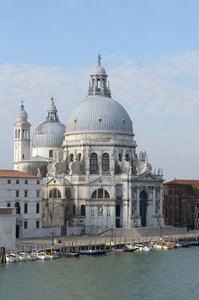
Santa Maria della Salute, VenecijaSanta Maria della Salute Venecija 1 The Madonna with Design of a Shrine
Ermitažas, Šv. PeterburgasErmitažas Šv. Peterburgas 1 Graces and Cupids
Accademia di San Luca, RomaAccademia di San Luca Roma 1 Vanitas

Alessandro Varotari, po vieno ikoninio paveikslio kiekvienam dešimtmenės laikotarpiui

Darbai pagal dešimtmečius

Pasirinkite dešimtmetį, kad pamatytėte jį apibrėžusį originalą.

Alessandro Varotari tapyiniai: galerijos atsakymai

Kuris Alessandro Varotari paveikslas yra pats garsiausias iš visų?Atsakymas

Portrait of a Lady with a Vase (1640), Staatliche Kunstsammlungen Dresden, Dresno. Toliau seka Judith (1640) ir Cornelia mother of the Gracchi (1620).

Kiek metų buvo Alessandro Varotari, kai sukūrė Portrait of a Lady with a Vase?Atsakymas

52 metų amžiaus: Portrait of a Lady with a Vase sukurta 1640 m. Nr. Alessandro Varotari gimė 1588.

Kuriose yra 10 geriausių Alessandro Varotari paveikslų?Atsakymas

Portrait of a Lady with a Vase, Judith, Cornelia mother of the Gracchi, Venus and Cupid, Cupid with Roses, A Variant of the D'Avalos Allegory (after Titian), Judith with the head of Holofernes, Justice and Peace, Mater Dolorosa ir Christ and the Woman Taken in Adultery. Viršuje esančioje reitingo sąraše nurodyta kiekvieno kūrinio metis ir muziejus.

Kiek kūrinių sukūrė Alessandro Varotari?Atsakymas

Mūsų kataloge yra 34 Alessandro Varotari darbų, skirtų laikotarpiui nuo 1620 iki 1649.

Kur kabinami garsiausi Alessandro Varotari originalūs darbai?Atsakymas

Daugiausia – Kunsthistorisches Museum (Viena), Staatliche Kunstsammlungen Dresden (Dresno) ir Museum of 18th-century Venice (Venice). Viršuje esančiame muziejų sąraše yra visi jie.

Kada Alessandro Varotari sukūrė savo garsiausias paveikslus?Atsakymas

1620s laikotarpiu: 5 iš 30 šioje pusėje esančių darbų buvo sukurtos tada, iš jų Cornelia mother of the Gracchi.

Kokie yra ankstyviausi ir vėliausi garsieji Alessandro Varotari kūriniai?Atsakymas

Šioje pusėje seniausias darbas yra Cornelia mother of the Gracchi (1620), o naujausias – Justice and Peace (1649).

Kurią temą Alessandro Varotari kūrė dažniausiai?Atsakymas

Woman (10), Drapery (4) ir Skin tones (4) iš 30 šioje pusėje esamų darbų.

Kurią techniką Alessandro Varotari naudojo dažniausiai?Atsakymas

Oil, iš 30 šios puslapio darbų – 6.

Su kokiu kierliu siejama Alessandro Varotari?Atsakymas

Baroque, vadovaujantis šios puslapio originalais kūriniais.

Kurių Alessandro Varotari originalų turi Kunsthistorisches Museum?Atsakymas

Judith with the head of Holofernes, Christ and the Woman Taken in Adultery ir Allegory: Kunsthistorisches Museum, Viena kolekcijoje yra 3 šioje pusėje esančių darbų.

Alessandro Varotari: menininkas

Alessandro Varotari (Padovanino) – Life & Legacy

Early Life and Training

  • Born: Padua, Italy in 1588.
  • Family Background: Padovanino was born into a family of artists. His father, Dario Varotari the Elder, was a local painter and architect who provided his initial training.
  • Early influences included the style of Titian, which would remain central to his artistic approach throughout his career.

Career Development & Artistic Style

  • Padovanino moved to Venice in 1614 and quickly established himself as a skilled painter.
  • Artistic Period: He worked during the transition between Late Mannerism and Early Baroque, blending elements of both styles.
  • He traveled to Rome twice (mid-1610s & 1625), gaining recognition for his ability to create high-quality copies of works by Renaissance masters.
  • Key Characteristics: His paintings are known for their narrative strength, sensuality, and faithful adherence to the Titianesque tradition. He excelled in depicting mythological and historical scenes.

Major Works & Commissions

Influence & Legacy

  • Mentorship: Padovanino was a respected teacher, mentoring several prominent Venetian painters including Pietro Liberi, Bartolomeo Scaliger, Pietro della Vecchia, and Giulio Carpioni.
  • His sister, Chiara Varotari, was also a well-known portraitist, further cementing the family’s artistic reputation.
  • Caterina Tarabotti: A notable female intellectual of the time, was among his students.
  • Although celebrated for his copying skills, Padovanino's original compositions and influence on subsequent generations secure his place in art history.

Historical Significance

  • Bridging Styles: He represents a crucial link between the Mannerist and Baroque periods, adapting earlier traditions to evolving artistic tastes.
  • His work reflects the vibrant cultural climate of 17th-century Venice, a major center for art and commerce.
  • Preservation of Tradition: His dedication to Titian’s style helped preserve and disseminate the legacy of one of Italy's greatest masters.