Alessandro Allori portretas

92 garsiausių Alessandro Allori paveikių – kiekvienas yra unikalus

Atnaujinta lapkritis 2026 · pagal mūsų populiarumumo koeficientą (paieškos, lankytojai ir užsakymai kiekvienam kūriniui) · 98 Alessandro Allori darbai mūsų kataloge

Trumpai tariant

Portrait of a Young Man yra viena矚 most žiūrėlių pritraukiančių Alessandro Allori tapierių; originalas saugomas Ermitažas, Šv. Peterburgas. Po to akmuo patenka į Portrait of a young Man (1560) ir Portrait of a Lady (1560). Iš 98 Alessandro Allori darbų mūsų kataloge šios 92 yra garsiausios – kiekvienas yra unikali originali dai̇lia, pateikta su jos metais, muziejumi ir priežastimi, kodėl ji išlieka per amžius.

1535 – 1607, Florencija Manierizmas Daugiausia darbų: Santa Maria Novella

10 geriausių Alessandro Allori paveikslų: galerijos akimais

1
Portrait of a Young Man aut. Alessandro Allori

Portrait of a Young Man

Oil On Canvas · Ermitažas, Šv. Peterburgas

Alessandro Allori's “Portrait of a Young Man,” painted circa 1560-65, is more than just a likeness; it’s a carefully constructed meditation on status, contemplation, and the burgeoning spirit of the Italian Renaissance. This arresting portrait, currently residing in the Ashmolean Museum in Oxford, immediately draws the viewer into a world of restrained elegance and subtle psychological depth – a testament to Allori's mastery of capturing not just appearance but also…

2
Portrait of a young Man (1560) aut. Alessandro Allori

Portrait of a young Man

1560 · Oil On Canvas · The Ashmolean Museum of Art And Archaeology, Oksfordas

Alessandro Allori's “Portrait of a Young Man,” painted around 1560, is more than just a depiction of an individual; it’s a carefully constructed window into the artistic sensibilities of late Mannerism and the burgeoning Renaissance spirit. This oil-on-canvas masterpiece, currently residing in the Ashmolean Museum in Oxford, immediately draws the viewer in with its serene composure and subtle yet profound details. It's a painting that whispers stories of status, contemplation,…

3
Portrait of a Lady (1560) aut. Alessandro Allori

Portrait of a Lady

1560 · Oil On Canvas · Ermitažas, Šv. Peterburgas

A young woman occupies the center of this medium close-up, her presence commanding a quiet, dignified space against a dark, indistinct background. She is positioned slightly off-center, her gaze meeting the viewer with an air of poise and introspection. The light, soft and directional from the upper left, traces the gentle contours of her face and catches the subtle sheen of her attire. Her skin appears smooth, almost marble-like, a…

4
Portrait of Grand Duchess Bianca Capello de Medici with Her Son (1597) aut. Alessandro Allori

Portrait of Grand Duchess Bianca Capello de Medici with Her Son

1597 · Oil On Canvas · Dallas Museum of Art, Dallas

The Portrait of Grand Duchess Bianca Capello de Medici with Her Son brings us into the intimate presence of a noblewoman and her child. Alessandro Allori captures the likeness of Bianca Cappello alongside her son, Antonio de' Medici, who lived from 1576 to 1621. The scene holds a quiet, maternal gravity, freezing a moment of familial connection within the high-stakes atmosphere of the Medici court. Through his brush, Allori renders…

5
Allegorical Portrait of a Young Man in the Guise of Mercury Slaying Argus (1577) aut. Alessandro Allori

Allegorical Portrait of a Young Man in the Guise of Mercury Slaying Argus

1577 · Oil On Canvas · Harvard Art Museums, Kembrižas

A young man hangs suspended in the air, caught in a moment of divine transition. He is Mercury, his skin possessing the cool, polished sheen of white marble against a backdrop of soft, rolling clouds. In his raised left hand, he holds a wooden flute, while his right hand grips a staff entwined by two snakes. His feet, tipped with small wings, suggest a weightless descent. Below him, the earth…

6
Portrait of a Young Man (1537) aut. Alessandro Allori

Portrait of a Young Man

1537 · Oil On Canvas · Bode Museum, Berlin

The young man sits in a quiet, heavy stillness, his presence filling the space with a sense of dignified reserve. Light spills from an unseen source above and to the left, carving the contours of his face and catching the subtle textures of his skin. He holds a small object with a precision that suggests both status and a quiet, internal contemplation. There is a certain weight to his gaze,…

8
Descent from the Cross (1560) aut. Alessandro Allori

Descent from the Cross

1560 · Oil On Copper · Museo del Prado, Madridas

The painting titled Descent from the Cross by Alessandro Allori captures a heavy, silent moment of transition. It is a piece of religious art centered upon the figure of Jesus Christ. The scene focuses on the physical weight of the body as it is lowered from the wood.

10
Allegory of the Christian Church (1601) aut. Alessandro Allori

Allegory of the Christian Church

1601 · Oil On Canvas · Ermitažas, Šv. Peterburgas

The composition centers on a Madonna and Child, rendered with the polished, sculptural quality characteristic of the late Mannerist school. A woman with flowing reddish-blonde hair, crowned with delicate petals, cradles a young child. Her heavy drapery, a deep ultramarine blue, contrasts sharply against a crimson bodice. These saturated primary colors anchor the figures against a soft, muted landscape of distant hills and trees. The lighting, descending from the upper…

žinomi Alessandro Allori paveikslai, nuo 11 iki 92 numerio

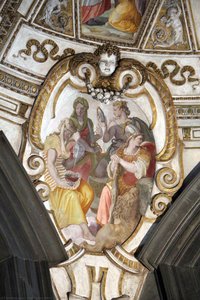
11Birth of the Virgin (1602) aut. Alessandro AlloriBirth of the Virgin1602 · Santissima Annunziata 12Portrait of a Woman (1590) aut. Alessandro AlloriPortrait of a Woman1590 · Harvard Art Museums 13Cosimo I Medici, Grand Duke of Tuscany (1519-1574) (1560) aut. Alessandro AlloriCosimo I Medici, Grand Duke of Tuscany (1519-1574)1560 · Kunsthistorisches Museum 14Christ and the Adulteress (1577) aut. Alessandro AlloriChrist and the Adulteress1577 · Santo Spirito 15Charity (1560) aut. Alessandro AlloriCharity1560 · Minneapolis Institute of Art 16Portrait of a Young Man Writing (1562) aut. Alessandro AlloriPortrait of a Young Man Writing1562 · Museum of Fine Arts 17Portrait of Ortensia de Bardi di Montauto, formerly identified as Giulia de' Medici (1559) aut. Alessandro AlloriPortrait of Ortensia de Bardi di Montauto, formerly identified as Giulia de' Medici1559 18Portrait of a Couple (1560) aut. Alessandro AlloriPortrait of a Couple1560 · Strasburgos gražiųjų rūšų muziejus 19Fresco decoration (detail) (1560) aut. Alessandro AlloriFresco decoration (detail)1560 20Portrait of a Lady, probably Camilla Martelli de’Medici (1570) aut. Alessandro AlloriPortrait of a Lady, probably Camilla Martelli de’Medici1570 · Saint Louis Art Museum 21Portrait of Francesco I de' Medici (1570) aut. Alessandro AlloriPortrait of Francesco I de' Medici1570 · Museum Mayer van den Bergh 22The Holy Family of Cardinal Fernando de’ Medici (1584) aut. Alessandro AlloriThe Holy Family of Cardinal Fernando de’ Medici1584 · Museo del Prado 23The Abduction of Proserpine (1570) aut. Alessandro AlloriThe Abduction of Proserpine1570 · J. Paul Getty muziejus 24Odysseus and Ino (1580) aut. Alessandro AlloriOdysseus and Ino1580 25Portrait of Eleanora of Toledo (1600) aut. Alessandro AlloriPortrait of Eleanora of Toledo1600 · Gemäldegalerie 26The Penitent Saint Jerome (1606) aut. Alessandro AlloriThe Penitent Saint Jerome1606 27Rest on the Flight to Egypt (1602) aut. Alessandro AlloriRest on the Flight to Egypt1602 · Liaudies senovės meno nacionalinis muziejus 28Stories of St. Jerome (1577) aut. Alessandro AlloriStories of St. Jerome1577 · Santa Maria Novella 29Portrait of a Woman (1570) aut. Alessandro AlloriPortrait of a Woman1570 · Galleria degli Uffizi 30Madonna with Little Saint John (1606) aut. Alessandro AlloriMadonna with Little Saint John1606 · Antverpio karališkasis gražiųjų menų muziejus 31Portrait of a Young Man (1565) aut. Alessandro AlloriPortrait of a Young Man1565 32Stories of St. Jerome (1577) aut. Alessandro AlloriStories of St. Jerome1577 · Santa Maria Novella 33Stories of St. Jerome (1577) aut. Alessandro AlloriStories of St. Jerome1577 · Santa Maria Novella 34Stories of St. Jerome (1577) aut. Alessandro AlloriStories of St. Jerome1577 · Santa Maria Novella 35Stories of St. Jerome (1577) aut. Alessandro AlloriStories of St. Jerome1577 · Santa Maria Novella 36Stories of St. Jerome (1577) aut. Alessandro AlloriStories of St. Jerome1577 · Santa Maria Novella 37Fresco decoration (detail) (1560) aut. Alessandro AlloriFresco decoration (detail)1560 38Portrait of Joan of Austria, wife of Francesco I de 'Medici (1570) aut. Alessandro AlloriPortrait of Joan of Austria, wife of Francesco I de 'Medici1570 39Portrait of Francesco I De' Medici (1580) aut. Alessandro AlloriPortrait of Francesco I De' Medici1580 40Last Supper (Carmine, Florence) (1582) aut. Alessandro AlloriLast Supper (Carmine, Florence)1582 41Women on a Terrace (1589) aut. Alessandro AlloriWomen on a Terrace1589 42Virgin and Child with Saints Francis and Lucy (1583) aut. Alessandro AlloriVirgin and Child with Saints Francis and Lucy1583 43The Preaching of St John the Baptist (1601) aut. Alessandro AlloriThe Preaching of St John the Baptist1601 44Stories of St. Jerome (1577) aut. Alessandro AlloriStories of St. Jerome1577 · Santa Maria Novella 45Portrait of Bianca Cappello, Second Wife of Francesco I de' Medici (1580) aut. Alessandro AlloriPortrait of Bianca Cappello, Second Wife of Francesco I de' Medici1580 · Galleria degli Uffizi 46The Body of Christ with Two Angels (1600) aut. Alessandro AlloriThe Body of Christ with Two Angels1600 · Szépművészeti Múzeum 47The Body of Christ with Two Angels (1590) aut. Alessandro AlloriThe Body of Christ with Two Angels1590 · Szépművészeti Múzeum 48Allegory of Human Life (1570) aut. Alessandro AlloriAllegory of Human Life1570 · Galleria degli Uffizi 49Stories of St. Jerome (1577) aut. Alessandro AlloriStories of St. Jerome1577 · Santa Maria Novella 50Stories of St. Jerome (1577) aut. Alessandro AlloriStories of St. Jerome1577 · Santa Maria Novella 51Portrait of a Man aut. Alessandro AlloriPortrait of a Man 52The Temptation of St Benedict (1587) aut. Alessandro AlloriThe Temptation of St Benedict1587 · Fitzwilliam College 53The Madonna and Child with Saint Catherine of Alexandria and Saint Francis of Assisi (1590) aut. Alessandro AlloriThe Madonna and Child with Saint Catherine of Alexandria and Saint Francis of Assisi1590 · National Trust 54Portrait of a florentine lady aut. Alessandro AlloriPortrait of a florentine ladyThe Ema Klabin House Museum 55Trinity aut. Alessandro AlloriTrinitySantissima Annunziata 56The Virgin and Child with a Floral Wreath and a Crown of Thorns aut. Alessandro AlloriThe Virgin and Child with a Floral Wreath and a Crown of ThornsMuseum of Fine Arts Ghent (MSK) 57Portrait of Isabella De’ Medici aut. Alessandro AlloriPortrait of Isabella De’ Medici 58Ritratto di giovane uomo aut. Alessandro AlloriRitratto di giovane uomoErmitažas 59Portrait of Bianca Cappello aut. Alessandro AlloriPortrait of Bianca Cappello 60Ritratto Di Nobildonna aut. Alessandro AlloriRitratto Di Nobildonna 61Porträt Isabella De' Medici aut. Alessandro AlloriPorträt Isabella De' Medici 62Portrait of Francesco De' Medici aut. Alessandro AlloriPortrait of Francesco De' MediciKaraliaus Vavelio pilis 63Portrait of An Unknown Young Man aut. Alessandro AlloriPortrait of An Unknown Young Man 64Francesco De' Medici aut. Alessandro AlloriFrancesco De' MediciArt Institute of Chicago 65Portrait of Eleonora Di Toledo aut. Alessandro AlloriPortrait of Eleonora Di ToledoGemäldegalerie 66VIERGE A L'ENFANT AVEC SAINTE ELISABETH aut. Alessandro AlloriVIERGE A L'ENFANT AVEC SAINTE ELISABETHCondé muziejus 67Portrait of Isabella De' Medici aut. Alessandro AlloriPortrait of Isabella De' MediciGalleria Palatina 68Self-Portrait aut. Alessandro AlloriSelf-Portrait 69Stories of St. Jerome (1577) aut. Alessandro AlloriStories of St. Jerome1577 · Santa Maria Novella 70The Penitent Magdalen in the Wilderness aut. Alessandro AlloriThe Penitent Magdalen in the WildernessNational Trust 71Pearl Fishers (1570) aut. Alessandro AlloriPearl Fishers1570 · Palazzo Vecchio 72Stories of St. Jerome (1577) aut. Alessandro AlloriStories of St. Jerome1577 · Santa Maria Novella 73St Peter Walking on the Water (1590) aut. Alessandro AlloriSt Peter Walking on the Water1590 · Galleria degli Uffizi 74Stories of St. Jerome (1577) aut. Alessandro AlloriStories of St. Jerome1577 · Santa Maria Novella 75Portrait of Cosimo I De Medici aut. Alessandro AlloriPortrait of Cosimo I De Medici 76Untitled (726) aut. Alessandro AlloriUntitled (726) 77Portrait of Francesco I De' Medici aut. Alessandro AlloriPortrait of Francesco I De' Medici 78Portrait of Maria De' Medici (or Eleonora Di Garzia Di Toledo) aut. Alessandro AlloriPortrait of Maria De' Medici (or Eleonora Di Garzia Di Toledo)Kunsthistorisches Museum 79Untitled (545) aut. Alessandro AlloriUntitled (545) 80Vnus et l'Amour aut. Alessandro AlloriVnus et l'Amour 81Il corpo di Cristo con due angeli aut. Alessandro AlloriIl corpo di Cristo con due angeli 82Venus and Cupid aut. Alessandro AlloriVenus and CupidMusée Fabre 83UN ANGE MONTRE A SAINT FRANCOIS D'ASSISE LE CHRIST DETACHE DE LA CROIX aut. Alessandro AlloriUN ANGE MONTRE A SAINT FRANCOIS D'ASSISE LE CHRIST DETACHE DE LA CROIX 84Isabella Medices Ursina (1542–1576) aut. Alessandro AlloriIsabella Medices Ursina (1542–1576)Touchstones Rochdale 85Dead christ attended by two angels aut. Alessandro AlloriDead christ attended by two angels 86Portrait of Francesco I de aut. Alessandro AlloriPortrait of Francesco I deLegion of Honor 87Christus Bei Martha Und Maria aut. Alessandro AlloriChristus Bei Martha Und MariaKunsthistorisches Museum 88The Last Supper (1582) aut. Alessandro AlloriThe Last Supper1582 89Susanna and The Elders aut. Alessandro AlloriSusanna and The EldersMusée Magnin 90Stories of St. Jerome (1577) aut. Alessandro AlloriStories of St. Jerome1577 · Santa Maria Novella 91Sacrifice of Isaac aut. Alessandro AlloriSacrifice of Isaac 92Annunciation (1603) aut. Alessandro AlloriAnnunciation1603 · Galleria dell'Accademia di Firenze

žymios Alessandro Allori tapiojamos, pagal laikotarpį

Temos, kurios domino Alessandro Allori

Ketverios temos, dažniausiai pasikrausto originaluose, kiekvienos su savo puikiausiu pavyzdžiu.

Muziejai, kuriuose saugomi Alessandro Allori originalūs darbai

8 muziejai, kuriuose saugoma daugiausia šioje pusėje esamų paveikslų.

Muzejaus Miestas Alessandro Allori darbai Šiojo sąrašo paveikslai
Santa Maria Novella, FlorencijaSanta Maria Novella Florencija 13 Stories of St. Jerome, Stories of St. Jerome, Stories of St. Jerome
Ermitažas, Šv. PeterburgasErmitažas Šv. Peterburgas 4 Portrait of a Young Man, Portrait of a Lady, Allegory of the Christian Church
Galleria degli Uffizi, FlorencijaGalleria degli Uffizi Florencija 4 Portrait of a Woman, Portrait of Bianca Cappello, Second Wife of Francesco I de' Medici, Allegory of Human Life
Kunsthistorisches Museum, VienaKunsthistorisches Museum Viena 3 Cosimo I Medici, Grand Duke of Tuscany (1519-1574), Portrait of Maria De' Medici (or Eleonora Di Garzia Di Toledo), Christus Bei Martha Und Maria
Harvard Art Museums, KembrižasHarvard Art Museums Kembrižas 2 Allegorical Portrait of a Young Man in the Guise of Mercury Slaying Argus, Portrait of a Woman
Condé muziejus, ŠantiliCondé muziejus Šantili 2 An Angel Shows Saint Francis of Assisi Christ Detached from the Cross, VIERGE A L'ENFANT AVEC SAINTE ELISABETH
Museo del Prado, MadridasMuseo del Prado Madridas 2 Descent from the Cross, The Holy Family of Cardinal Fernando de’ Medici
Santissima Annunziata, FlorencijaSantissima Annunziata Florencija 2 Birth of the Virgin, Trinity

Alessandro Allori per dešimtmečius: vieniškas originalas kiekvienam

Darbai pagal dešimtmečius

Pasirinkite dešimtmetį, kad pamatytėte jį apibrėžusį originalą.

Alessandro Allori tapų klausimai galerijai

Koks yra garsiausias Alessandro Allori kūrinys?Atsakymas

Portrait of a Young Man, Ermitažas, Šv. Peterburgas. Toliau seka Portrait of a young Man (1560) ir Portrait of a Lady (1560).

Kurios Alessandro Allori dešimt paveikslų yra garsiausi?Atsakymas

Portrait of a Young Man, Portrait of a young Man, Portrait of a Lady, Portrait of Grand Duchess Bianca Capello de Medici with Her Son, Allegorical Portrait of a Young Man in the Guise of Mercury Slaying Argus, Portrait of a Young Man, An Angel Shows Saint Francis of Assisi Christ Detached from the Cross, Descent from the Cross, Portrait of a Lady in Black and White ir Allegory of the Christian Church. Viršuje esančioje reitingo sąraše nurodyta kiekvieno kūrinio metis ir muziejus.

Kiek žinoma Alessandro Allori darbų?Atsakymas

Mūsų kataloge yra 98 Alessandro Allori darbų, skirtų laikotarpiui nuo 1559 iki 1606.

Kur galima pamatyti garsiausių Alessandro Allori originalų?Atsakymas

Daugiausia – Santa Maria Novella (Florencija), Ermitažas (Šv. Peterburgas) ir Galleria degli Uffizi (Florencija). Viršuje esančiame muziejų sąraše yra visi jie.

Kuriuo laikotarpiu Alessandro Allori sukūrė savo žymiausias paveikslus?Atsakymas

1570s laikotarpiu: 22 iš 92 šioje pusėje esančių darbų buvo sukurtos tada, iš jų Allegorical Portrait of a Young Man in the Guise of Mercury Slaying Argus.

Kuris iš garsių Alessandro Allori paveikslų yra pirmasis, o kuris – paskutinis?Atsakymas

Šioje pusėje seniausias darbas yra Portrait of Ortensia de Bardi di Montauto, formerly identified as Giulia de' Medici (1559), o naujausias – The Penitent Saint Jerome (1606).

Kokia temos Alessandro Allori mėgavosi?Atsakymas

Woman (23), Renaissance (20) ir Man (18) iš 92 šioje pusėje esamų darbų.

Kuriomis medžiagomis Alessandro Allori tapė dažniausiai?Atsakymas

Oil On Canvas, iš 92 šios puslapio darbų – 24.

Kelią meno kryžkelę priklauso Alessandro Allori kūryba?Atsakymas

Manierizmas, vadovaujantis šios puslapio originalais kūriniais.

Kurius Alessandro Allori originalius galėčiau pamatyti Santa Maria Novella?Atsakymas

Stories of St. Jerome, Stories of St. Jerome ir Stories of St. Jerome: Santa Maria Novella, Florencija kolekcijoje yra 13 šioje pusėje esančių darbų.

Alessandro Allori: meno kūrinys – autoportretas

Aleksandro Allorio Florencijos palikimas: gyvenimas ir meno kelias

Aleksandras Alloris, gimęs 1535 m. gegužės 31 d. Florencijoje, yra įspūdinga figūra vėlyvojo manierizmo mokykloje. Jo artistinė kelionė buvo smarkiai paveikta aplinkybių; netekęs tėvų jauname amžiuje, jis rado netikrą tėvą ir mentorių Agnolo Bronzino asmenyje – vieno garsiausių Florencijos tapytojų. Ši globa nebuvo tik šeimyninė – tai buvo pasinerimas į rafinuotą techniką, intelektualinę griežtį ir savitus estetinius principus, kurie turėjo apibrėžti paties Allorio stilių. Bronzino įskiepijo jam ne tik techninį meistriškumą, bet ir ypatingą jautrumą: polinkį į poliruotus paviršius, pailgas formas ir vėsų, beveik skulptūrinį figūrų pobūdį. Ši įtaka tapo pagrindiniu Allorio artistinės tapatybės akmeniu, nors per visą karjerą dažnai sulaukdavo kritikos dėl esą atlikimo. Jis papildė šį pamatinį mokymą anatomijos studijomis – netgi atliko dissekcijas Santa Maria Nuova ligoninėje – rodydamas įsipareigojimą suprasti žmogaus kūną, kuris buvo jo stilizuotų vaizdų pagrindas.

Manierizmo aidas ir artistinis tobulėjimas

Allorio darbai yra giliai įsišakniję manierizmo tradicijoje – meno judėjime, kurią apibūdina dirbtinumas, elegancija ir stilistinis sudėtingumas, o ne natūralus vaizdavimas. Tačiau jis nebuvo revoliucionierius; veikiau, jis buvo įgudęs esamų formų interpretatorius ir kūrėjas. Kritikai dažnai pastebėjo jo polinkį remtis esamu menu, tobulinti ir pakartotinai interpretuoti meistrų, tokių kaip Mikelandželas ir Rafaelis, darbus per Bronzino estetinio suvokimo prizmę. Tai nebūtinai yra trūkumas – tai rodo Allorio svarbų vaidmenį perduodant meno žinias Florencijos ratuose. Jo paveikslus pažymi beveik neramūs sklandumai, figūros turi marmurines savybes, suteikiančias joms dvimačio, statuliško pobūdžio išvaizdą. Šis efektas nebuvo tik technikos klausimas; tai buvo sąmoningas estetinio pasirinkimas, atspindintis manieristų troškimą pakelti meną virš gamtos, kurti idealios grožybės ir intelektualinio sudėtingumo vaizdus. Jis vadovavo vienai svarbiausių Florencijos dirbtuvių kartu su Santi di Tito, o jo mokiniais buvo žymūs dailininkai, tokie kaip Cristoforo del Altissimo, Cesare Dandini, Aurelio Lomi ir jo sūnus Cristofano Allori, užtikrindamas šios artistinės linijos tęsinumą.

Pagrindiniai darbai ir mecenatystė

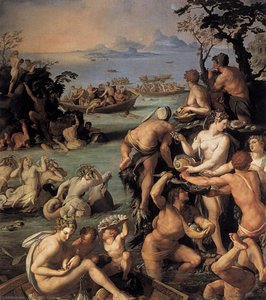
Allorio karjera klestėjo turtingų Florencijos šeimų globodant, ypač Medicų. Jis reikšmingai prisidėjo prie kelių svarbių dekoratyvinių projektų jiems, įskaitant jo darbą Francesco I kabinete Palazzo Vecchio rūmuose. Jo *Perlų gaudytojai*, esantis šioje iškilmingoje kamerijoje, pavyzdžiuoja jo gebėjimą kurti sudėtingas alegorines scenas, kupinas gracingų figūrų ir sudėtingų detalių. Jis taip pat plėtė freskas, pradėtas anksčiau meistrų, tokių kaip Andrea del Sarto ir Franciabigio, Poggio a Caiano viloje, rodydamas tiek savo techninį įgūdį, tiek norą prisidėti prie Florencijos meno paveldo. Be šių didelių užsakymų, Allori sukūrė daugybę portretų, religinių paveikslų ir altorijų, demonstruojančių jo meistriškumą kompozicijoje, spalvoje ir formoje. Pastebimas pavyzdys yra „Žmogaus gyvenimo alegorija“, saugoma Uffizi galerijoje, kuri apima Renesanso humanistines idėjas, vyravusias jo laikais. Jo freska "Šv. Jeronimo istorijos" toliau demonstruoja jo įgūdžius naratyvinėje tapyboje ir iliuzionistinėje erdvėje.

Paveldo ir istorinę reikšmę

Aleksandras Alloris mirė Florencijoje 1607 m. rugsėjo 22 d., palikęs kūrinių rinkinį, kuris ir toliau žavi ir iššaukia meno istorikus. Nors dažnai užgožiamas inovatyvesnių jo laikmečio menininkų, jo reikšmė slypi jo vaidmenyje kaip pagrindinė figūra vėlyvojo manierizmo judėjime ir kaip artistinės tradicijos perdavėjas. Jis nebuvo toks naujatorius, kaip Mikelandželas ar Leonardas da Vinčis, tačiau buvo nepaprastai įgudęs amatininkas, kuris tobulino ir plėtojo esamus stilius, užtikrindamas jų išlikimą ateities kartoms. Istorija apie paveikslą – galbūt portretą Eleonoros di Toledo de' Medici – sugrįžusį į Gemäldegalerie Berlyne po dešimtmečių dingimo, prideda intriguojantį sluoksnį jo palikimui. Jo įtaka išplito per daugybę mokinių, ypač jo sūnų Cristofano Allori, kuris tęsė šeimos artistinę tradiciją. Allorio paveikslai išlieka vertingais Florencijos manierizmo elegancijos ir intelektualinio sudėtingumo liudymais, siūlantis žvilgsnį į pasaulį, kuriame menas nebuvo tik vaizdavimas, bet idealios grožybės ir rafinuoto išreiškimo siekis. Jis lieka svarbia figūra suprantant perėjimą nuo Renesanso meno link Baroko periodo.